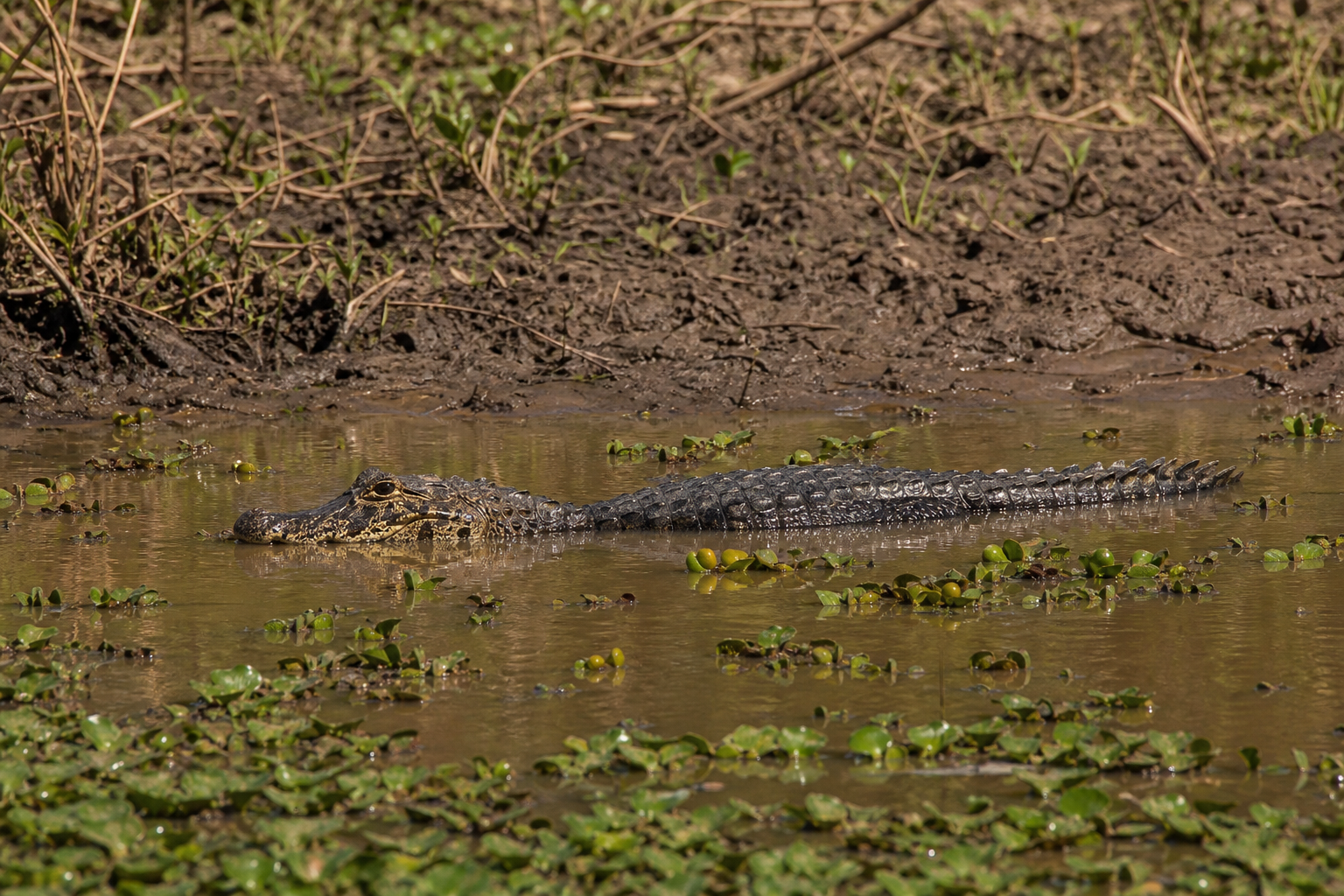
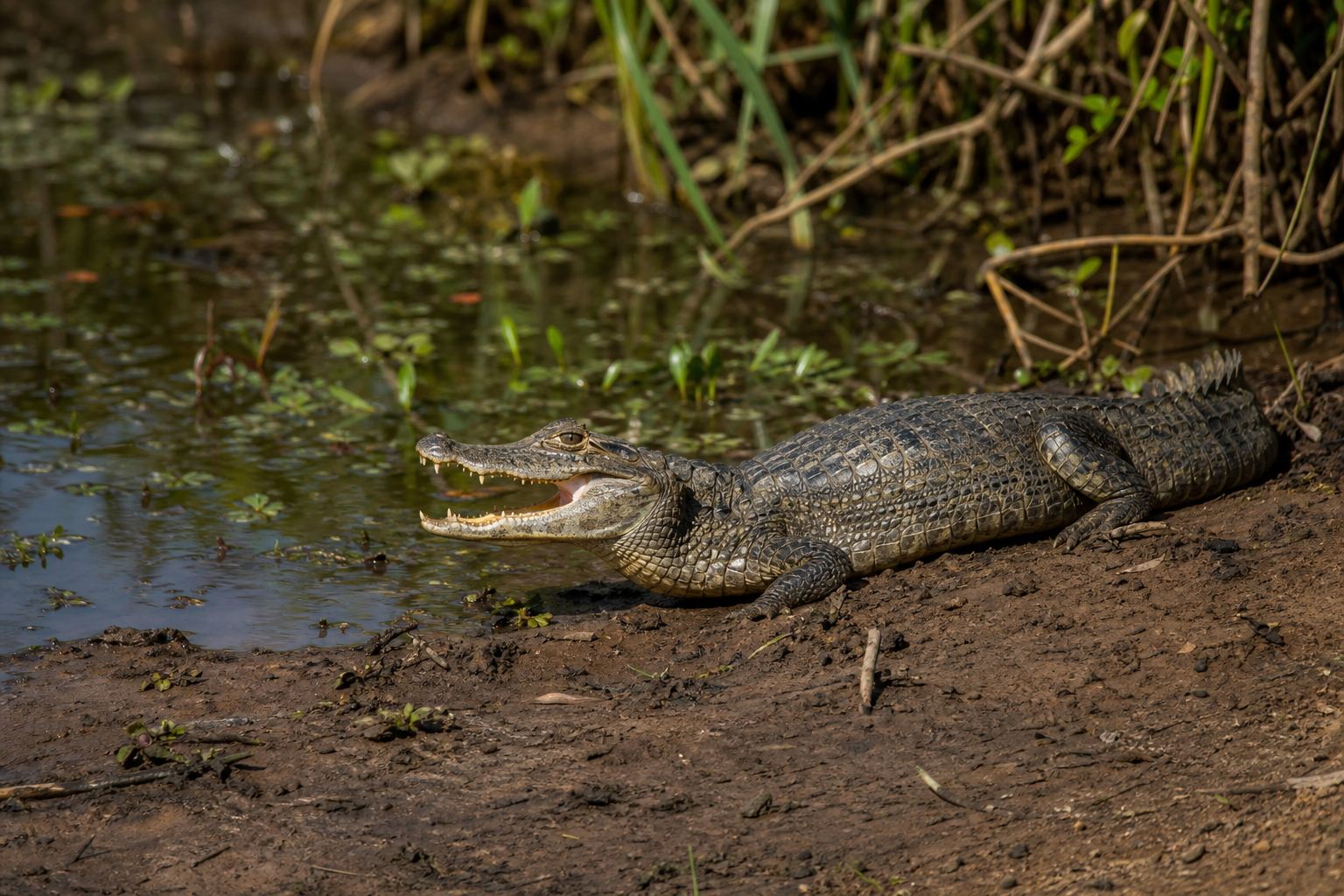
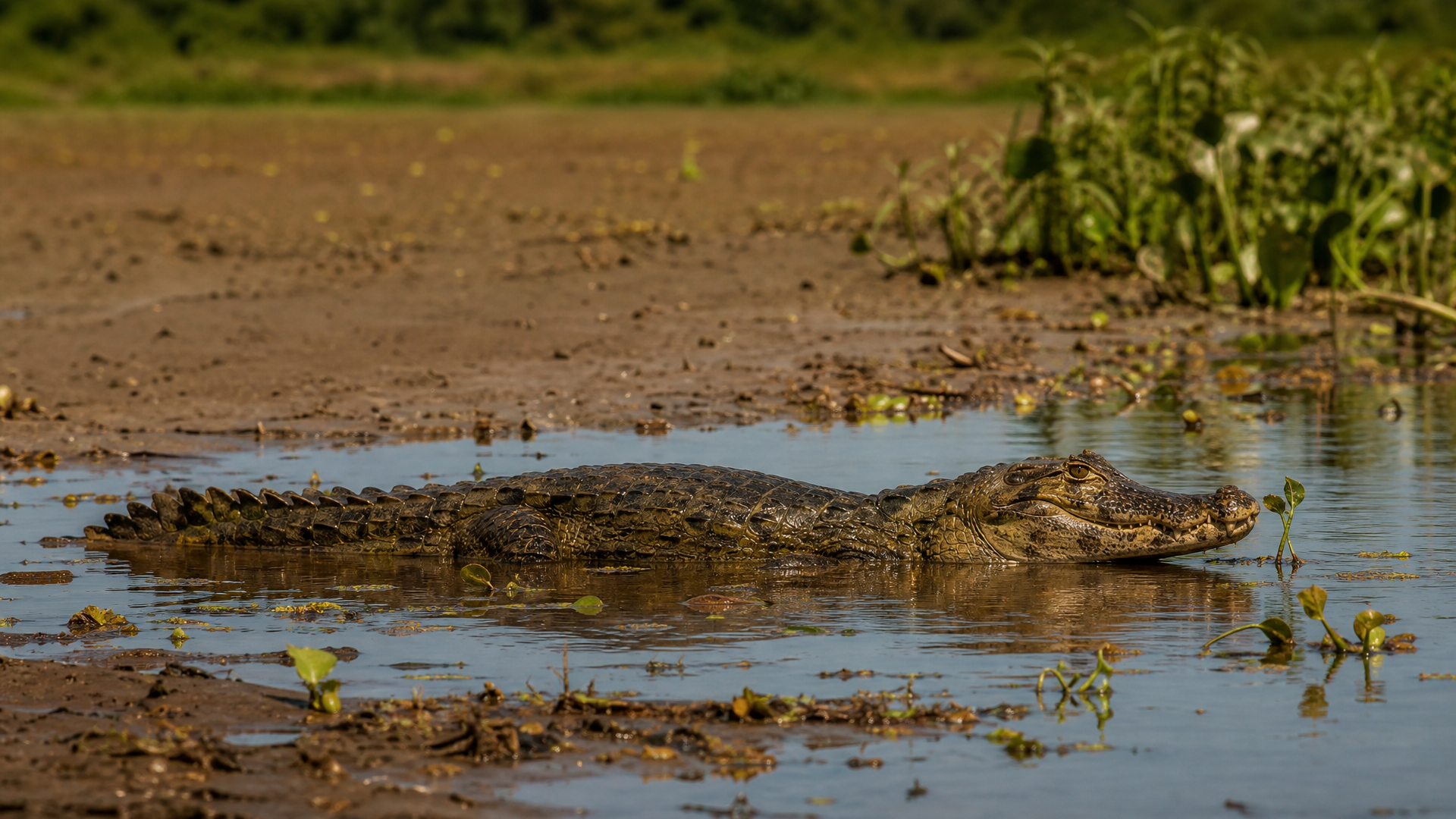
In the Nhecolandia wetlands, a pool shrinks under the dry-season sun until its margins are thick with prints, feathers, and sliding marks. The water looks still from a distance. Up close, it has eyes. Dozens of them hold just above the surface, bronze points set in dark heads, each caiman waiting for the pool to deliver what the season has gathered.
The yacare caiman is patient because the Pantanal teaches patience. During the floods, water spreads across grass and forest, opening channels and hiding places. When it falls back, fish, frogs, birds, and mammals crowd the remaining water, and the caimans become part of the pool's pressure. They bask in ranks on mud, mouths open to the heat, then sink with almost no disturbance. Young ones call from the vegetation in small, urgent sounds. Larger animals lie so still that dragonflies settle near their eyes.
This reptile is one of the wetland's great converters of abundance and scarcity. It feeds other lives as well as taking them: jaguars follow its edges, birds work the same pools, scavengers clean what remains. In years of fire, drought, or damaged water flow, those crowded pools become harsher. A caiman lowers itself into the brown surface, and the water closes like a lid.