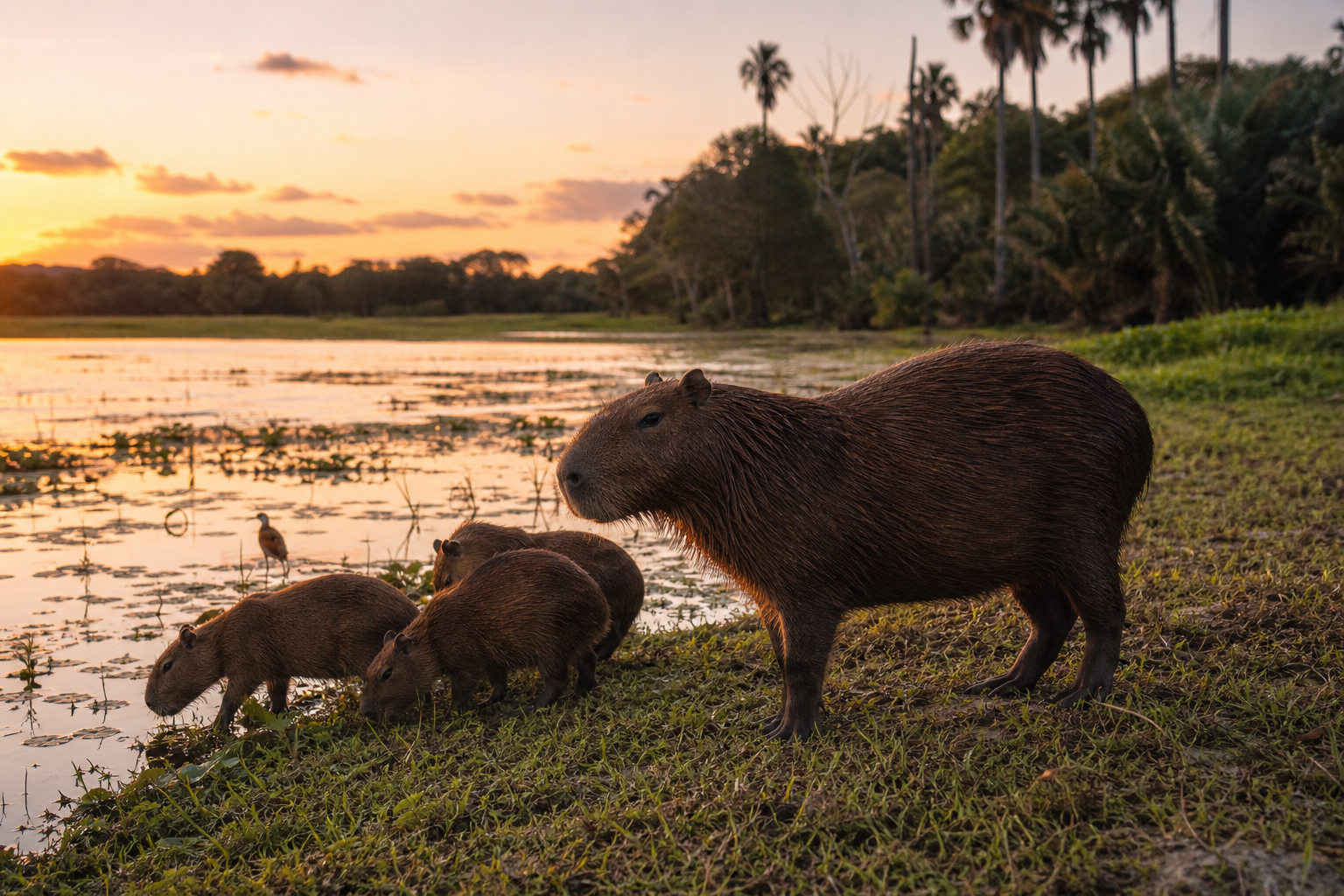
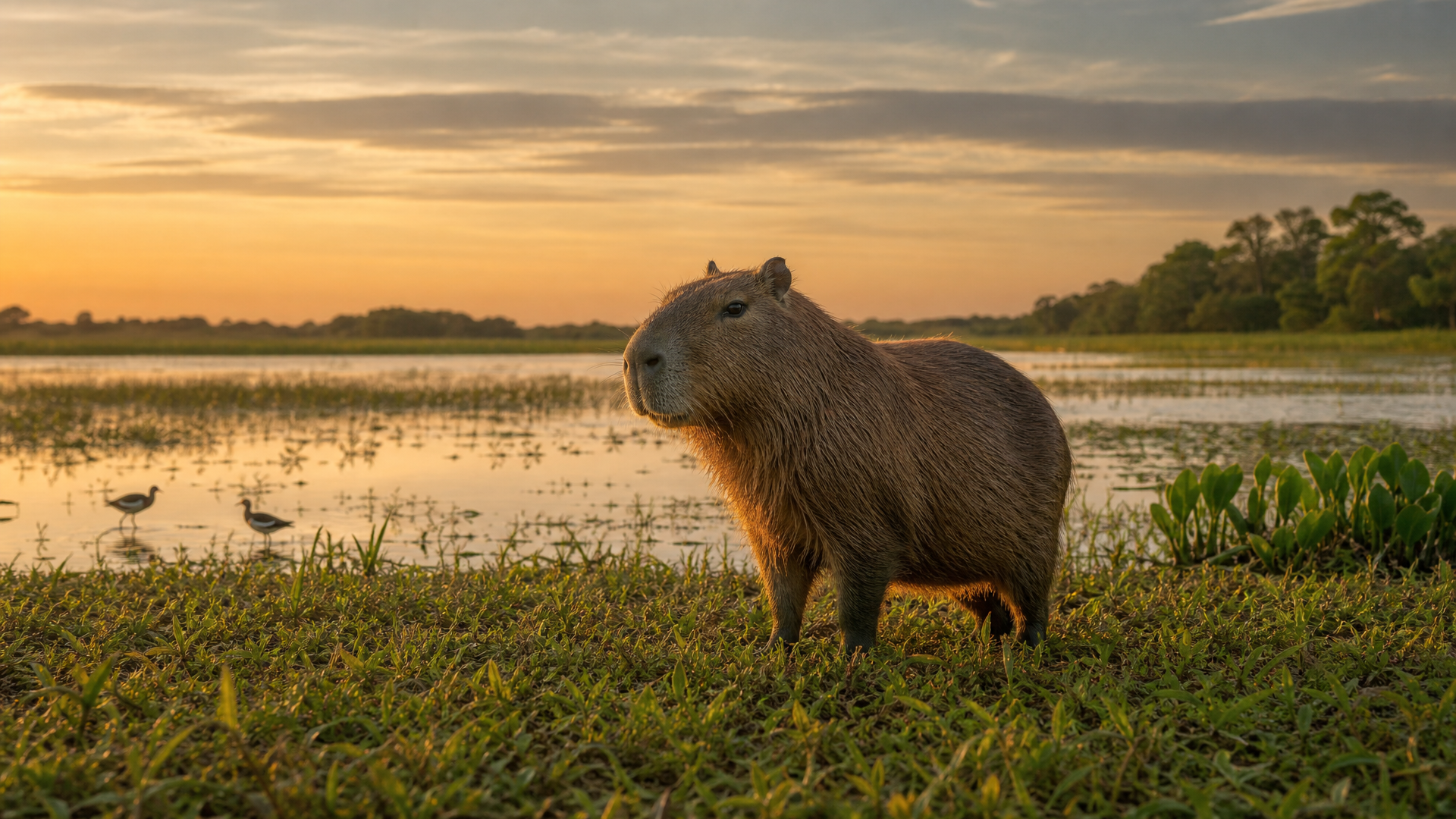
At sunset on the Rio Negro floodplain, a family of capybaras gathers where the grass slopes into water. The young press close to the adults. A bird picks at insects near one broad back. From the reeds comes the soft tick of movement, and every head rises at once, listening.
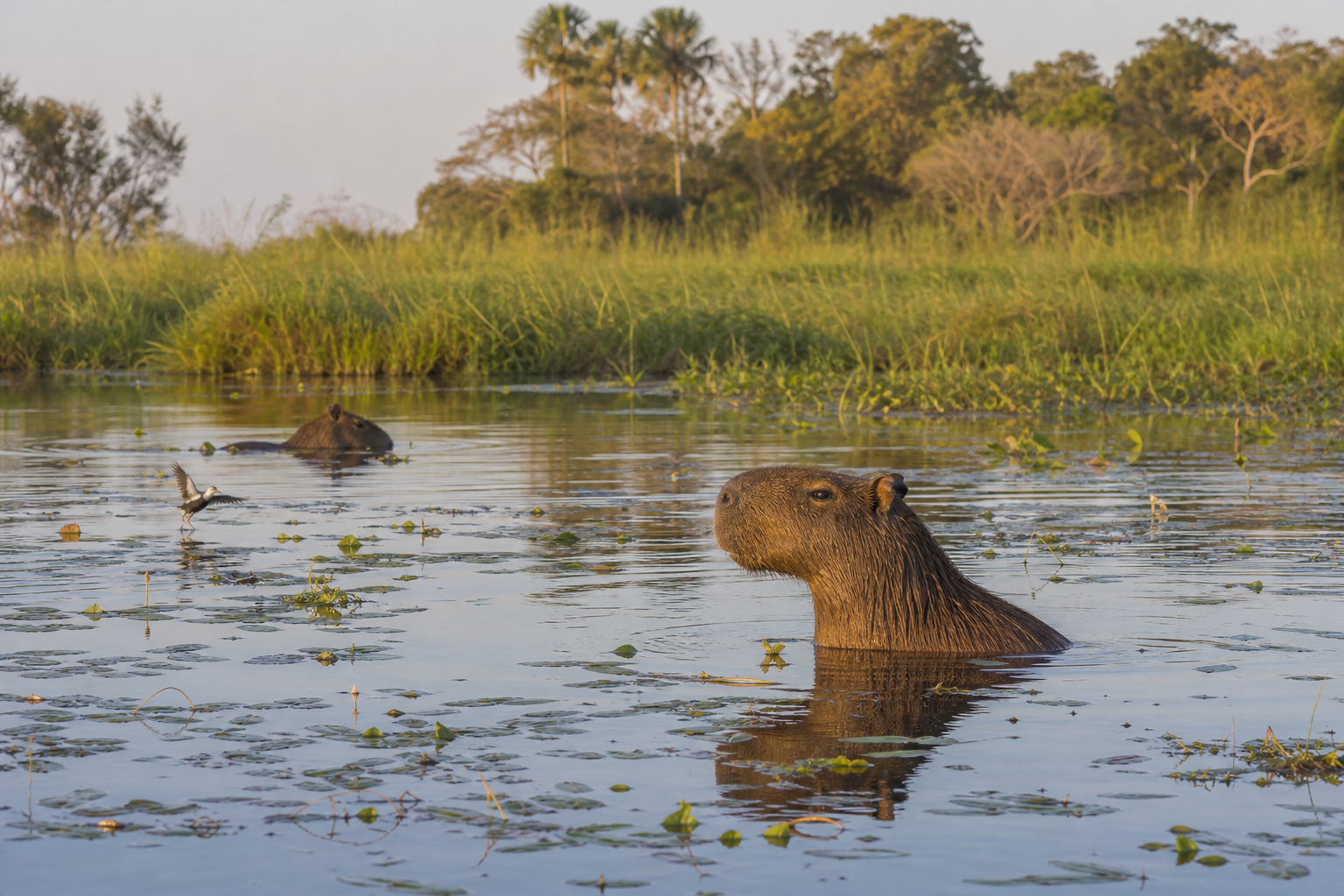
The capybara lives by calm attention. Its body seems built for ease, rounded and heavy, yet the whole animal can change in an instant. One bark from an adult, and the group slides toward the water, nostrils high, eyes level, bodies becoming brown islands among floating leaves. On land they graze in close company, grooming, nursing, dozing, touching noses in small social negotiations. In water they are harder to read. Only the face remains, composed and watchful, while the rest of the body disappears into the refuge that has shaped it.
The Pantanal gathers many lives around the capybara. Jaguars watch them from riverbanks, caimans share their channels, birds follow their movements through trampled grass. They are not merely abundant animals in a wet place; they are a center of gravity. Where floods fail, banks burn, or hunting pressure changes the old patterns, that center shifts. At dusk, one adult gives a low call, and the group moves as one into the darkening water.