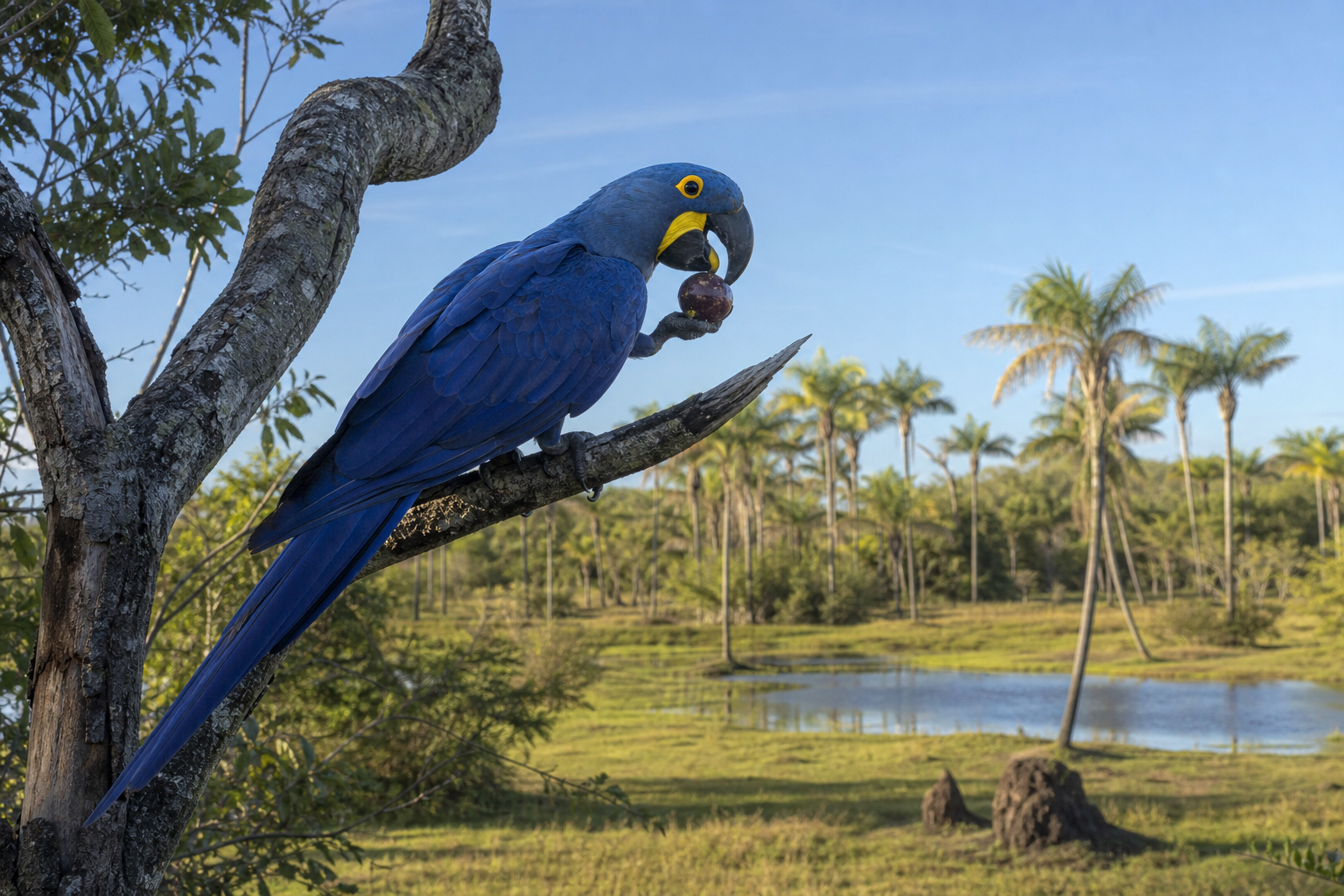
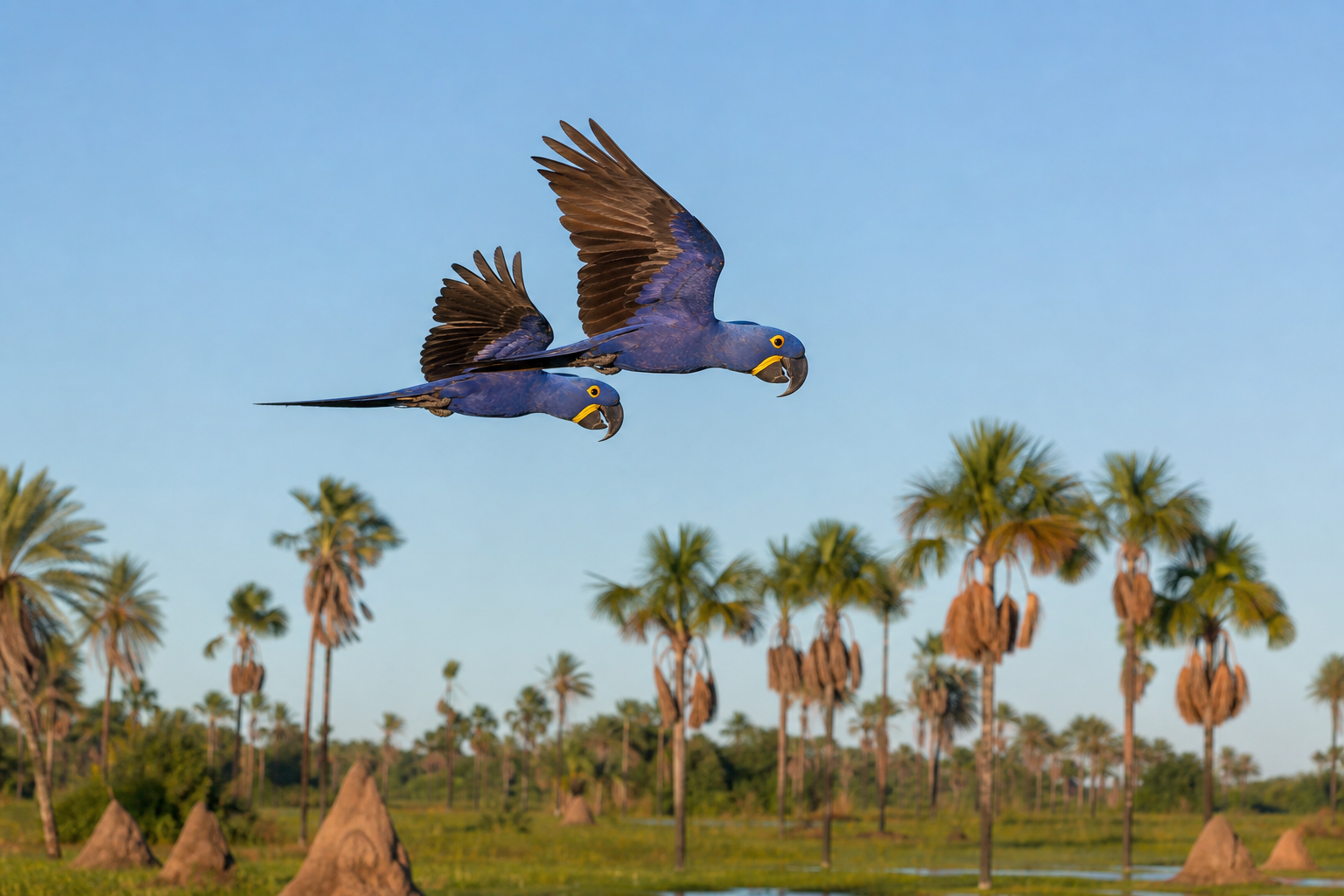
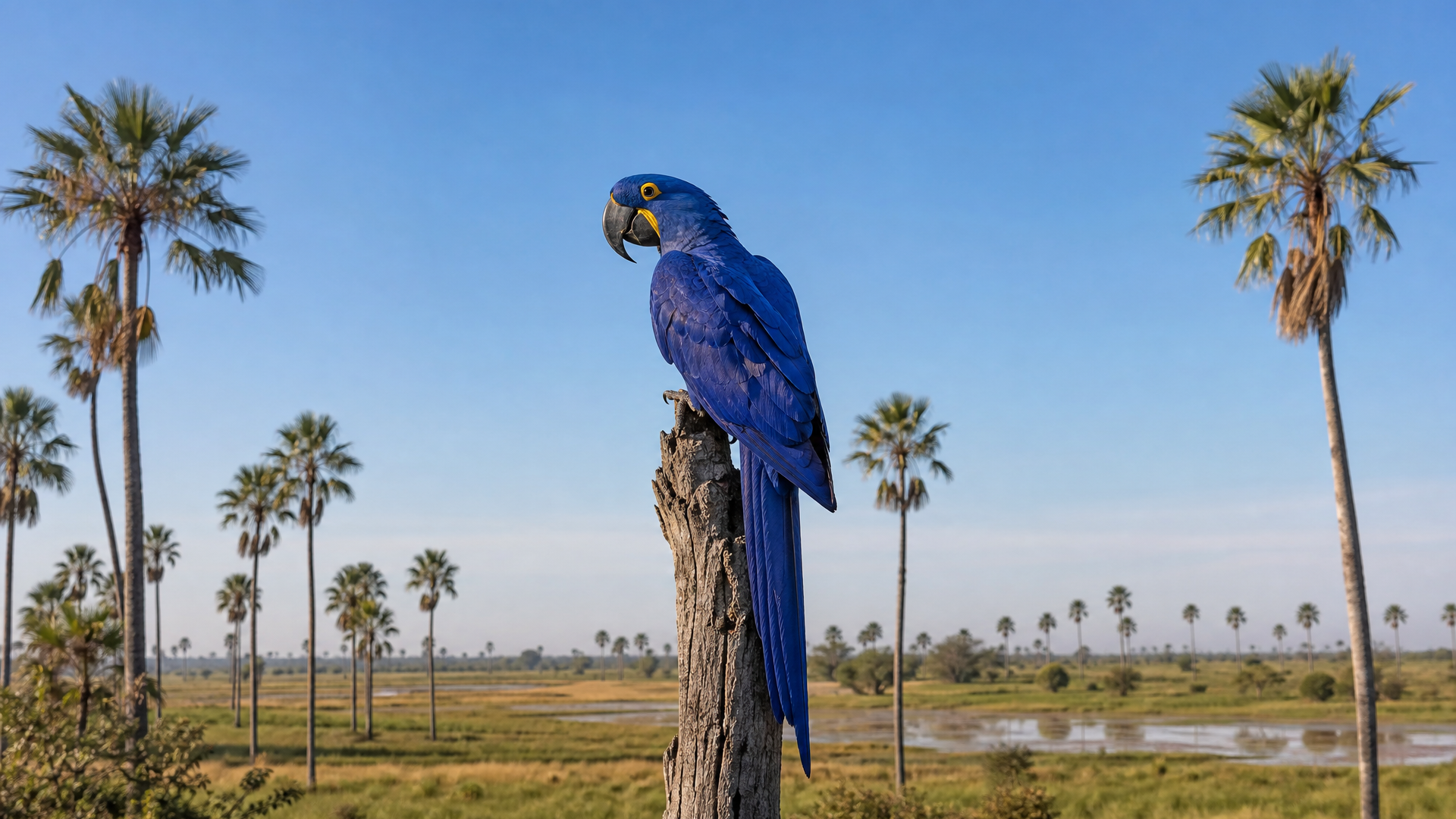
Morning comes blue in the southern Pantanal. Before the heat has lifted from the palms, two great macaws cross the open sky, wings beating with slow confidence, their calls rough and ringing over cattle tracks, termite mounds, and flooded grass. They land in a bare crown, and for a moment the whole tree seems to hold a piece of weather.
The hyacinth macaw carries color with weight. Its blue is not delicate. It is dense, almost mineral, set against the yellow skin around the eye and the powerful curve of the bill. A pair stays close, moving through palm groves and old trees as if tied by an invisible cord. One bird feeds while the other watches. One climbs with beak and feet, then the other follows. In nesting season, a hollow in a manduvi tree becomes the center of a defended world, lined and visited with care while the floodplain shifts around it.
This bird ties the Pantanal to palms, cavities, open flight, and long memory. Nest trees fall, palms are cleared, and the illegal trade once took heavily from the silence of empty hollows. Still, when a pair passes overhead at daybreak, the sound is not decoration. It is the wetland announcing itself in blue.