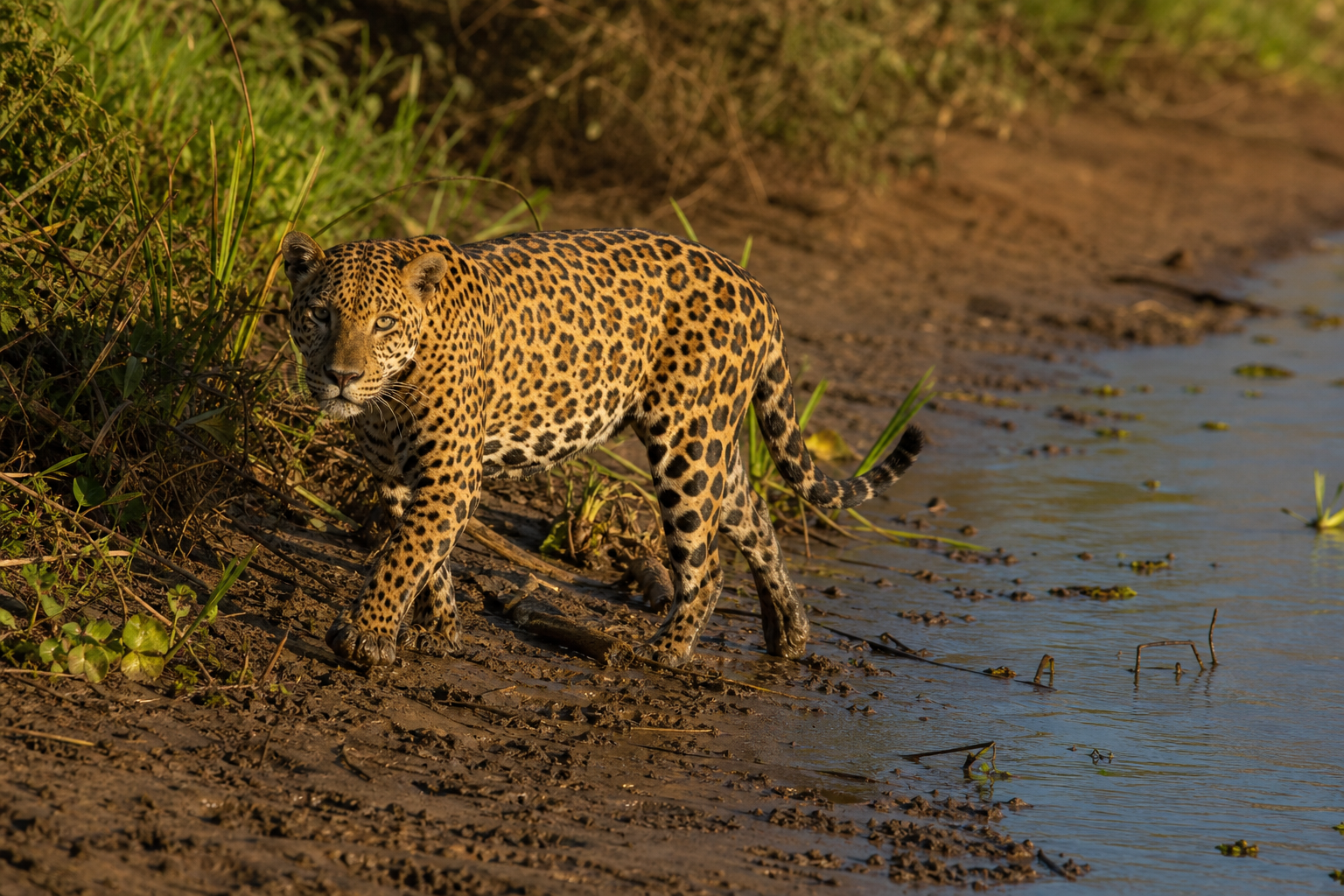
On the banks of the Cuiaba River, the mud is written over with tracks before the sun has cleared the gallery trees. Egrets lift from the shallows. A yacare caiman lies half-submerged at the edge of a sandbar, eyes open, body loose in the heat. Then the reeds part without sound, and a spotted head appears where shadow should be.
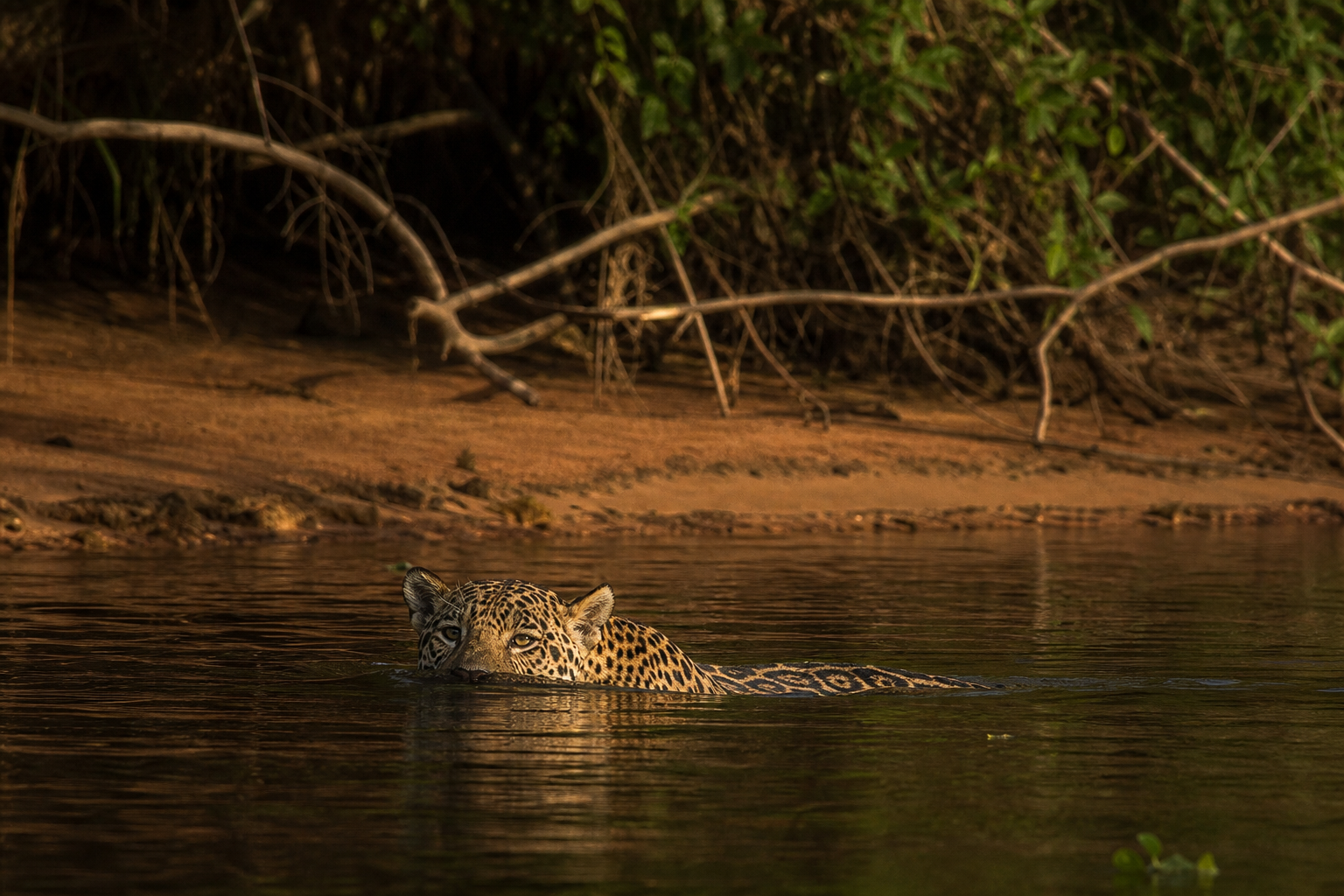
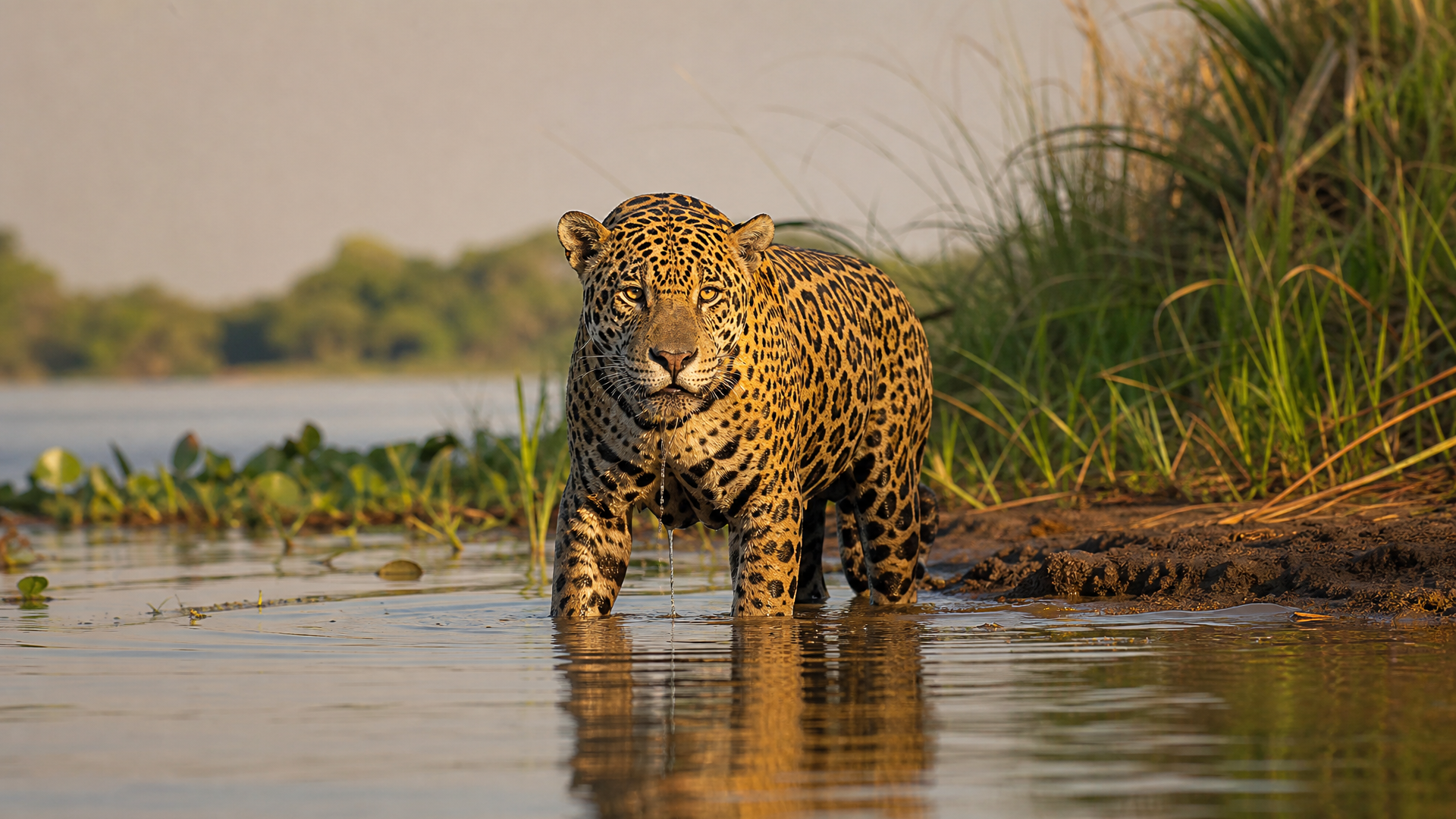
The jaguar in the Pantanal is a cat made visible by water. In deep forest it is more rumor than body, but here the riverbanks draw everything into the open. It walks the margins with the self-contained calm of an animal that can enter almost any element and still remain itself. The paws sink into wet clay. The whiskers test the air. When it swims, only the head shows, gold eyes level with the current. A hunt can seem slow until the final second: one heavy rush, a strike aimed not at panic but at certainty.
Along these rivers, the jaguar gives shape to fear. Caimans, capybaras, deer, and birds all read the bank differently because this cat may be there. Ranch edges, fire, roads, and shrinking cover press the old routes thinner, but at dusk a rosette-patterned body still slips between reeds, and the river remembers who walks beside it.