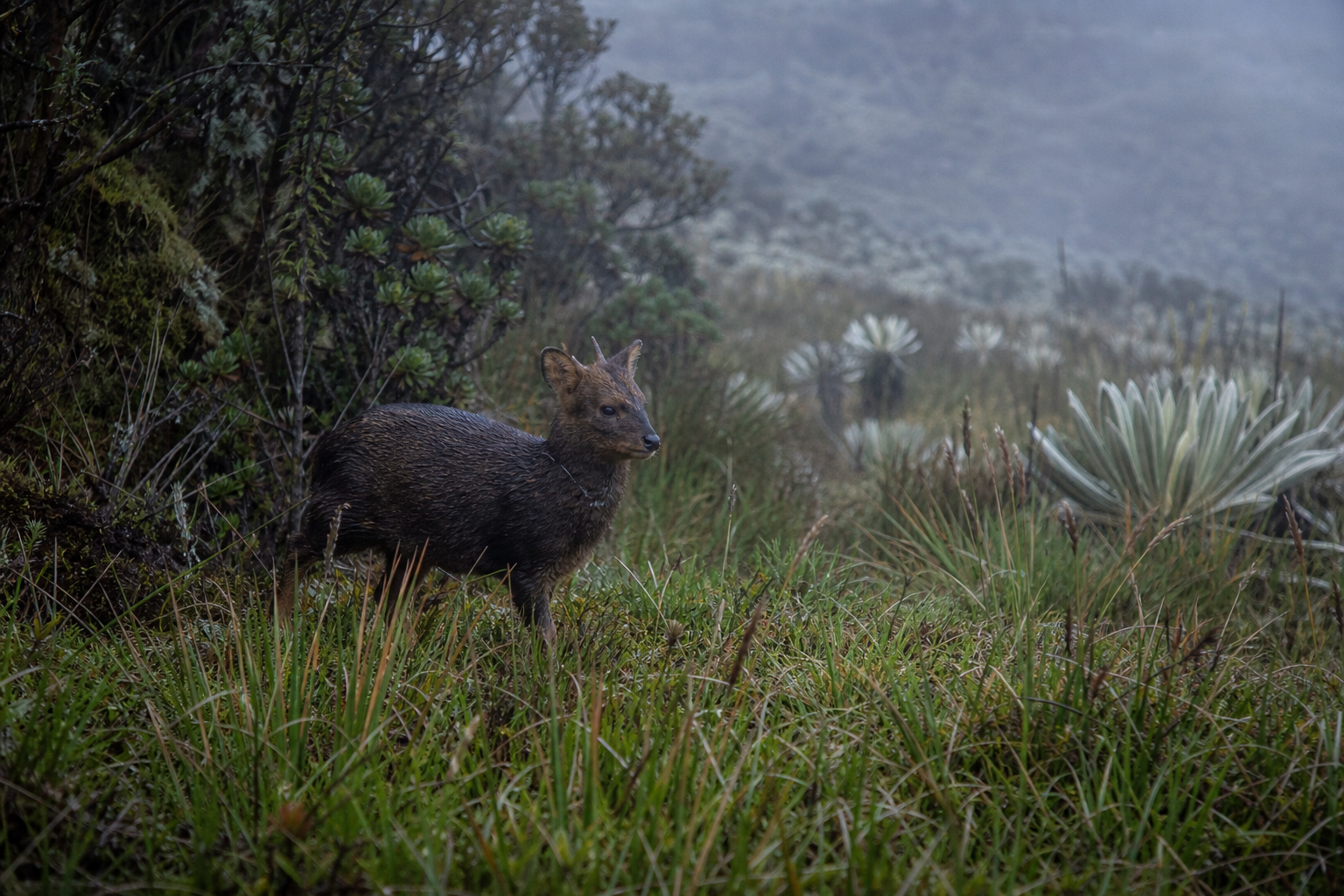
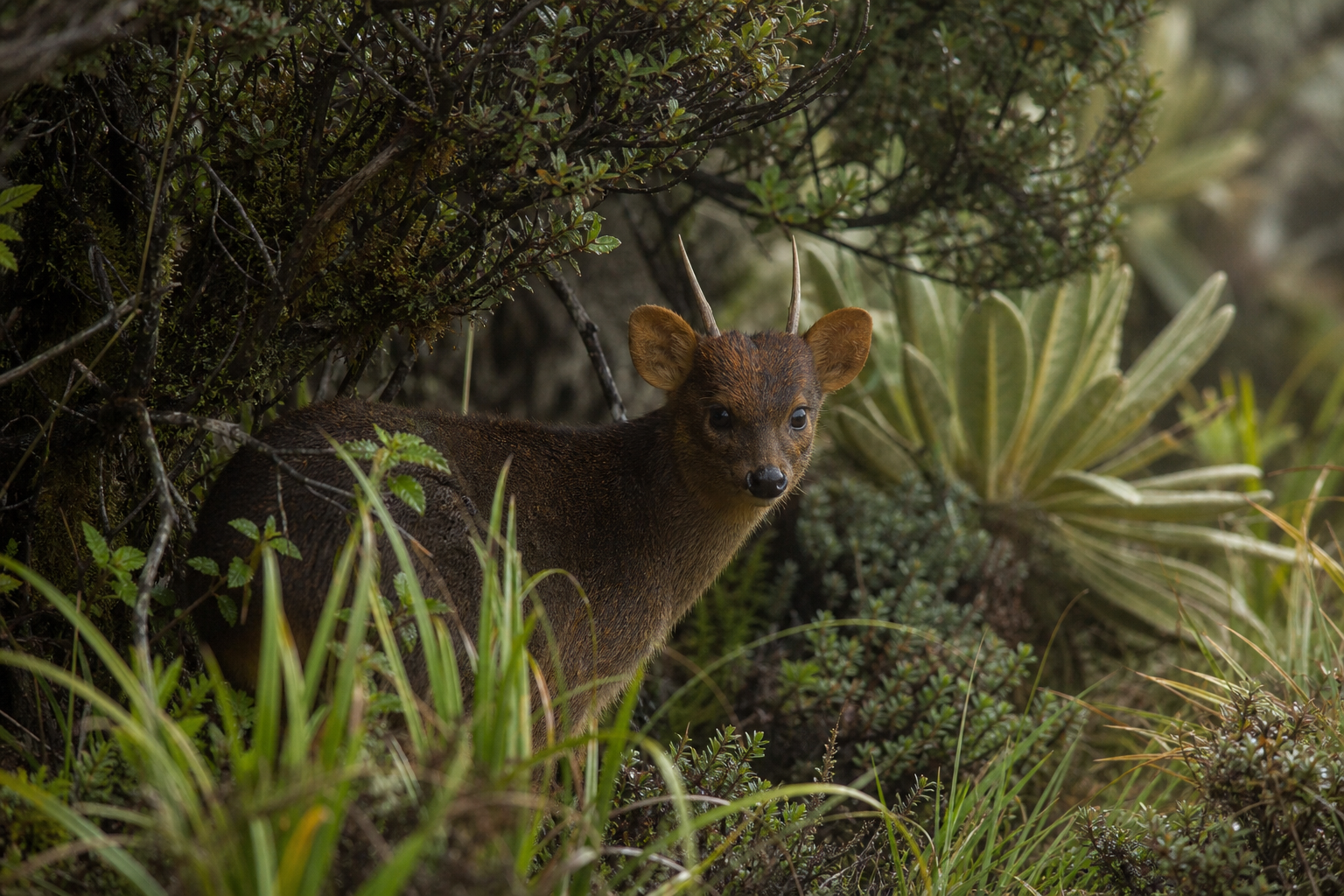
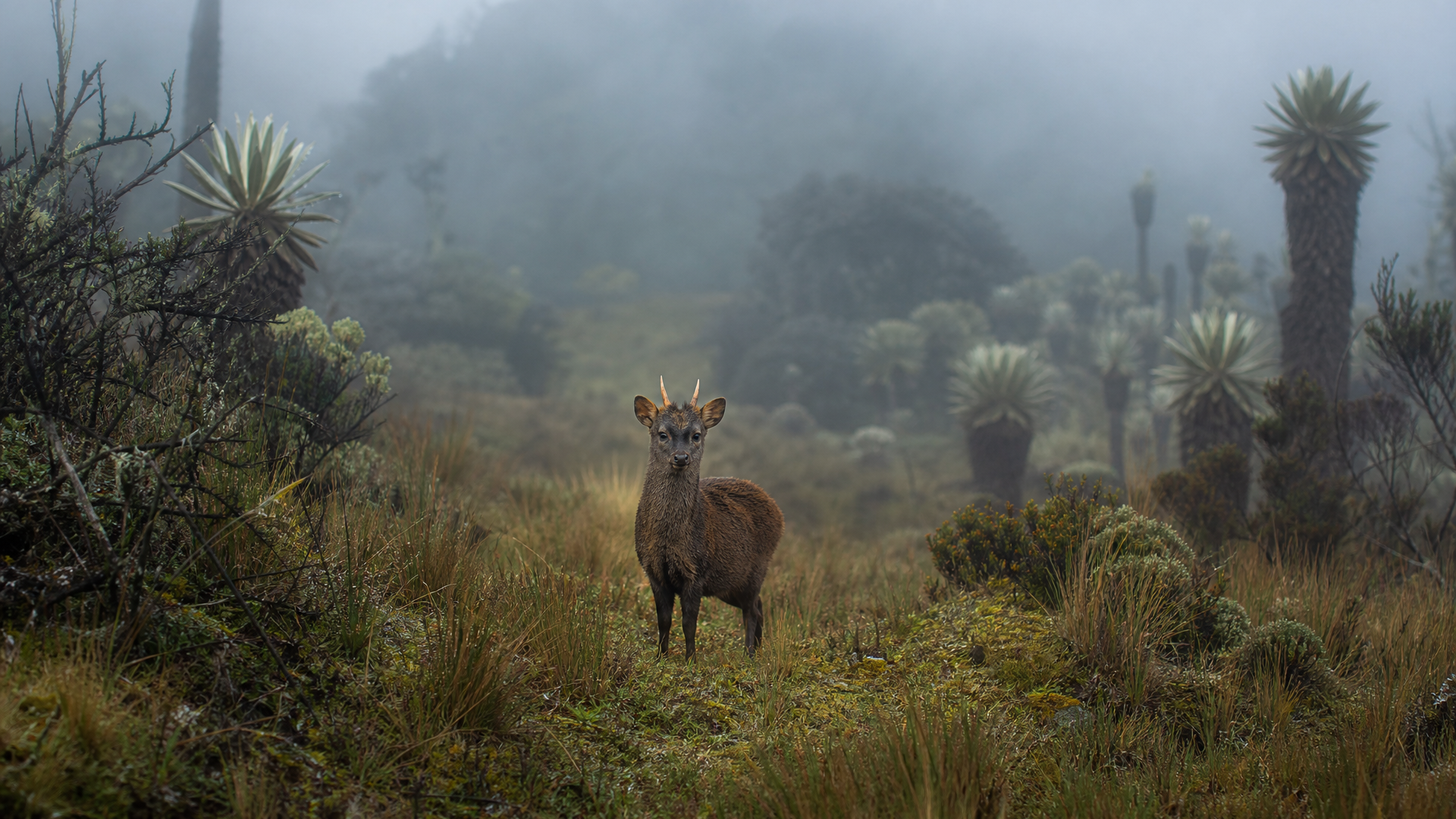
At Papallacta, the paramo is wet with dawn. Grass beads with water, frailejon leaves hold silver light, and a tiny deer steps from the edge of elfin forest into the open for only a few seconds. Its ears turn first. Its body follows. Then it is gone again, folded back into the shrubs.
The northern paramo pudu lives at the scale of hidden passages. It slips beneath branches instead of breaking them, presses through mossy tunnels, and pauses so completely that the eye slides past it. Even its small antlers, when present, seem less like weapons than twigs borrowed from the cloud forest. It browses with quick, selective bites, leaving little sign beyond a clipped shoot, a narrow track in mud, or scent placed low on a stem. In a landscape of cold rain and sudden fog, survival belongs to the animal that can become part of the understory before danger understands what it saw.
High Andean edges are shifting as farms, dogs, roads, and warmer conditions climb toward them. For a creature built around secrecy, disturbance can be as large as any predator. The paramo closes quickly after it passes, but not completely. A bent grass blade remains, shining in the morning.