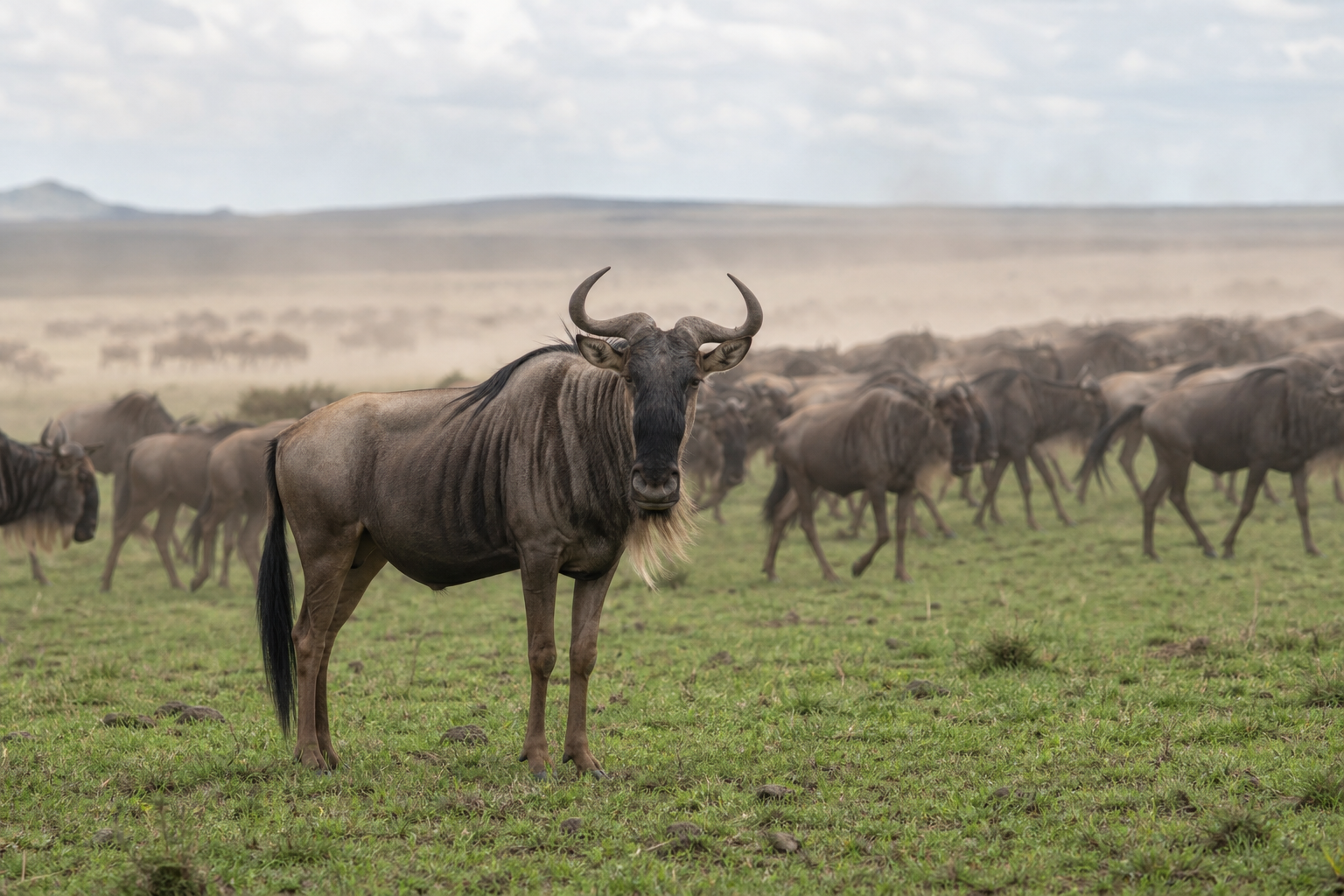
The first sound is not one animal but weather moving across the ground. Hooves drum through dust, calves call from inside the herd, and dark shoulders pour over the Serengeti plain until the horizon itself seems to be traveling. The wildebeest does not merely cross East Africa. It makes the country seasonal.
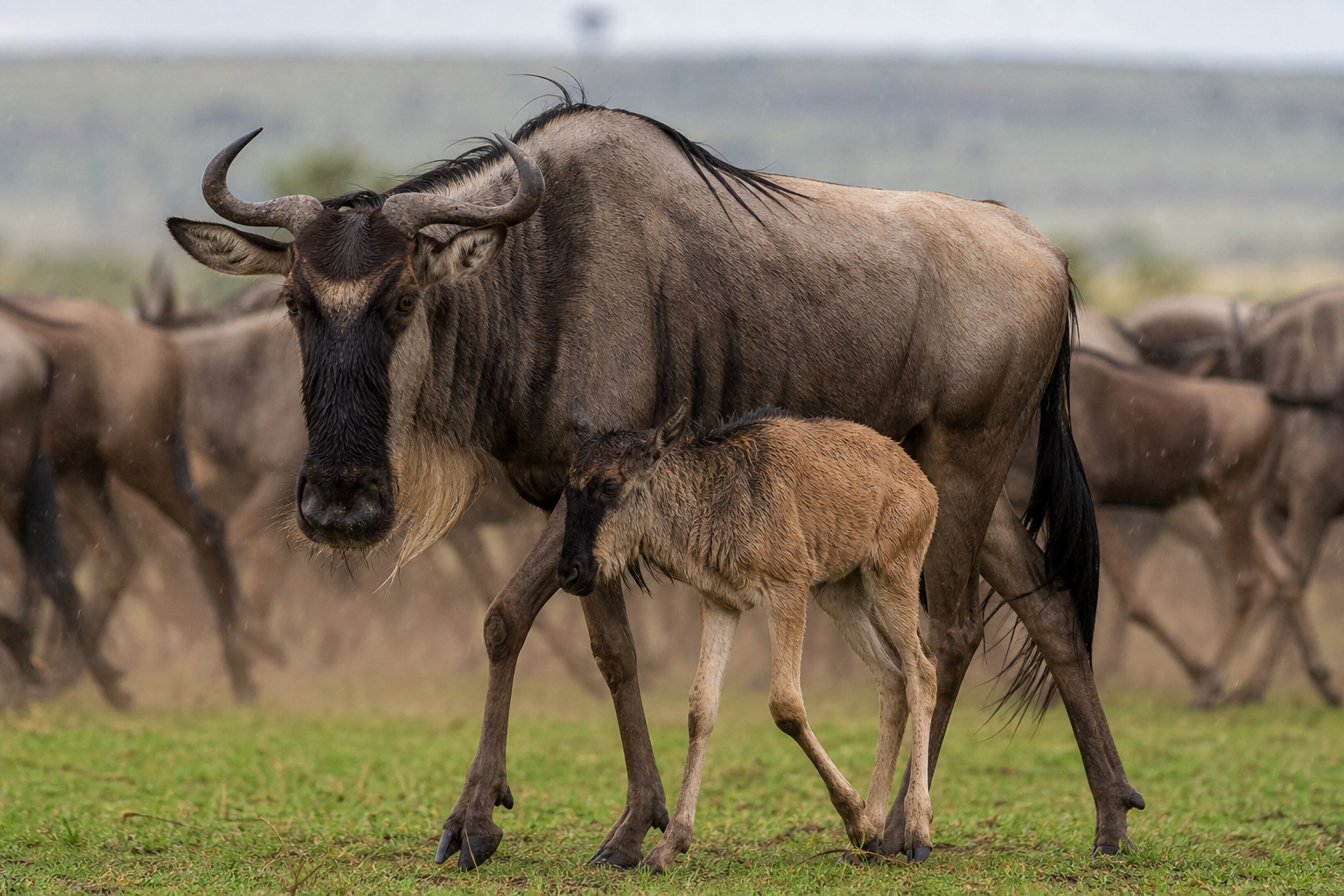
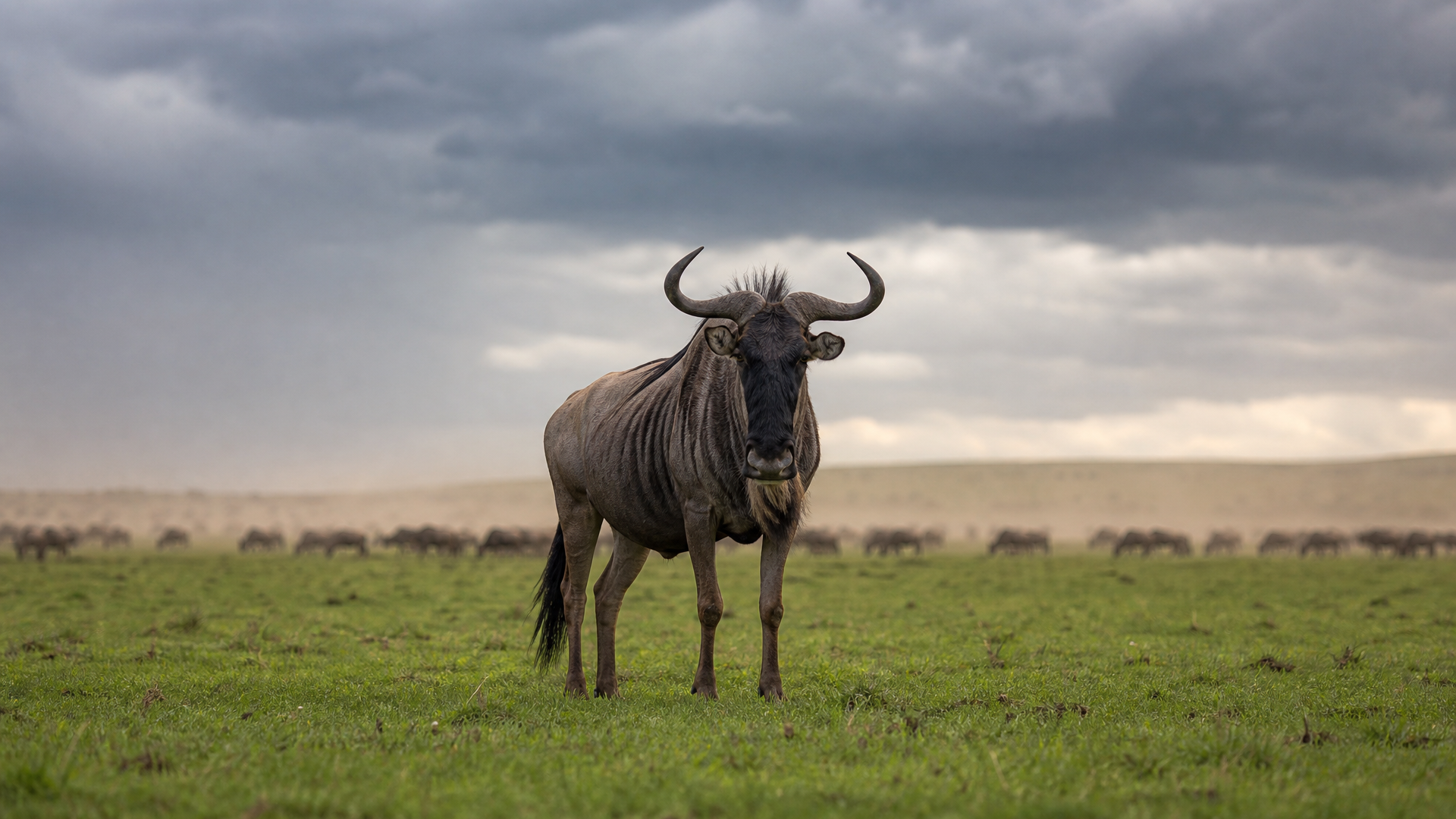
Alone, a wildebeest looks assembled from stubborn parts: high shoulders, narrow hips, beard, horns curved like old tools. In a herd, that awkwardness becomes force. Animals hesitate at a river, surge, pull back, and surge again. Panic travels faster than thought. So does trust. A calf learns the world as movement: keep close, rise quickly, follow the bodies that know where green has returned.
The migration is not scenery for predators. It is one of the engines of the Serengeti-Mara system. Lions, cheetahs, hyenas, crocodiles, vultures, grasses, and soil all answer to its passage. A plain after the herds have moved through is not the same plain.
And still, the story can narrow to one animal at the edge of a crossing, nostrils wide, head turned toward brown water. Behind it, thousands press forward. Ahead, the river waits. The herd moves because the rains have moved first.