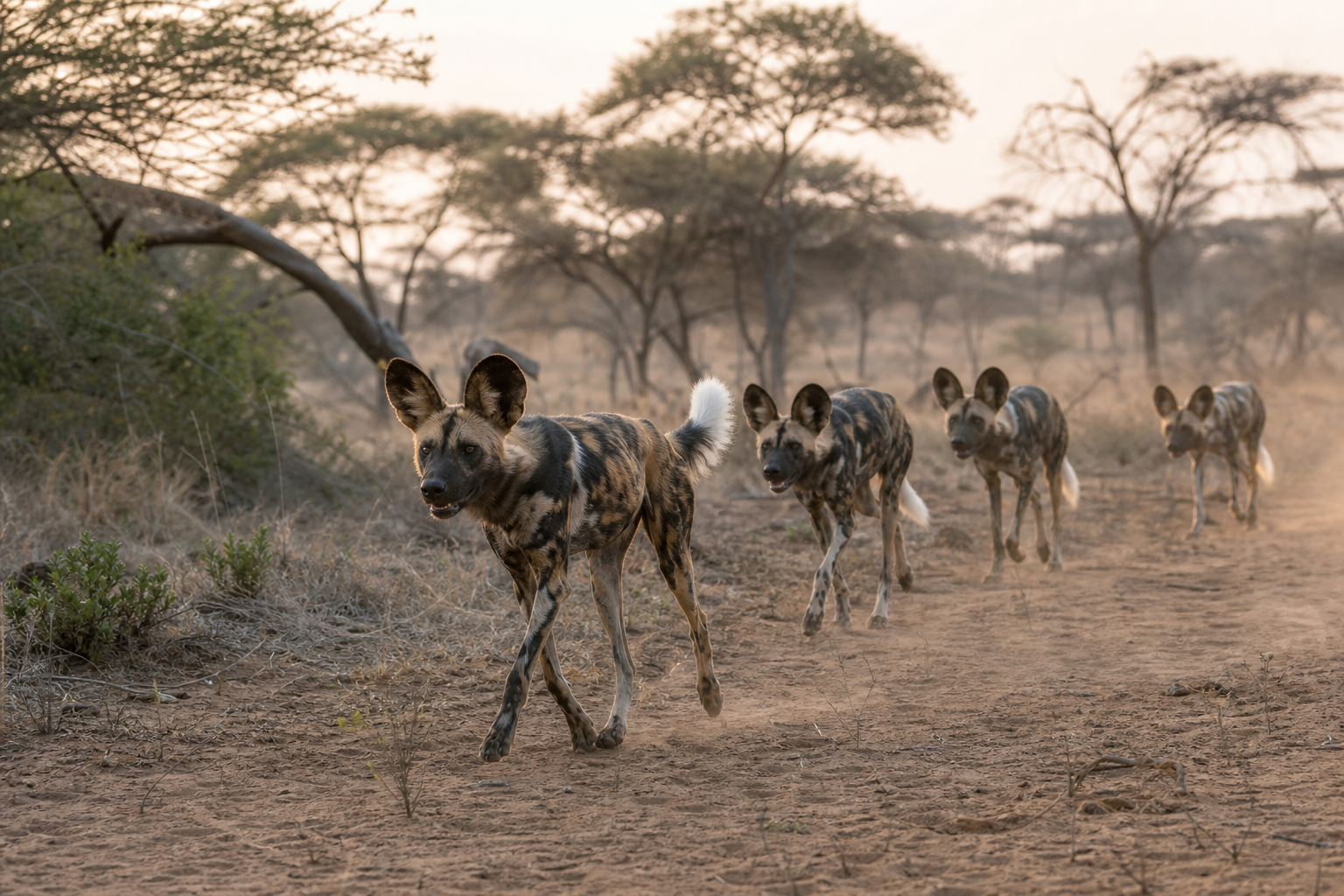
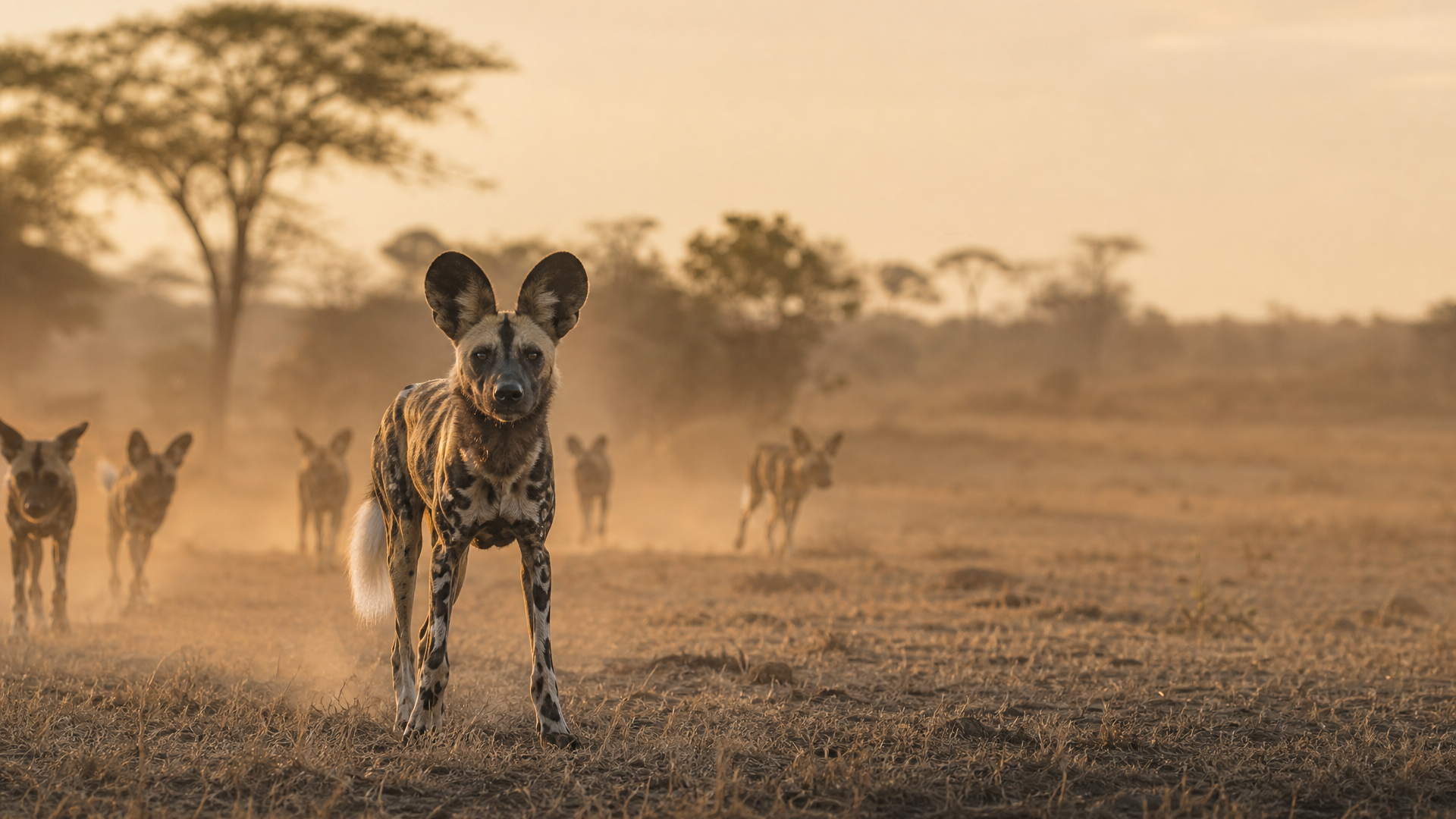
The pack crosses the track in pieces: one animal ahead, two angling wide, others flowing through the grass with white tail tips flashing in the dust. No coat repeats another. Black, tan, white, and ocher break across their bodies like moving light, and for a moment the whole pack seems less like a group than a single thought dividing and rejoining.
African wild dogs bring a different kind of predator power to East Africa. They do not wait like lions or explode like cheetahs. They press. Their hunt is made of stamina, attention, and agreement. A turn from one animal is answered by another. Ears lift. Bodies adjust. The pack reads weakness in motion and keeps the pressure alive until distance begins to fail.
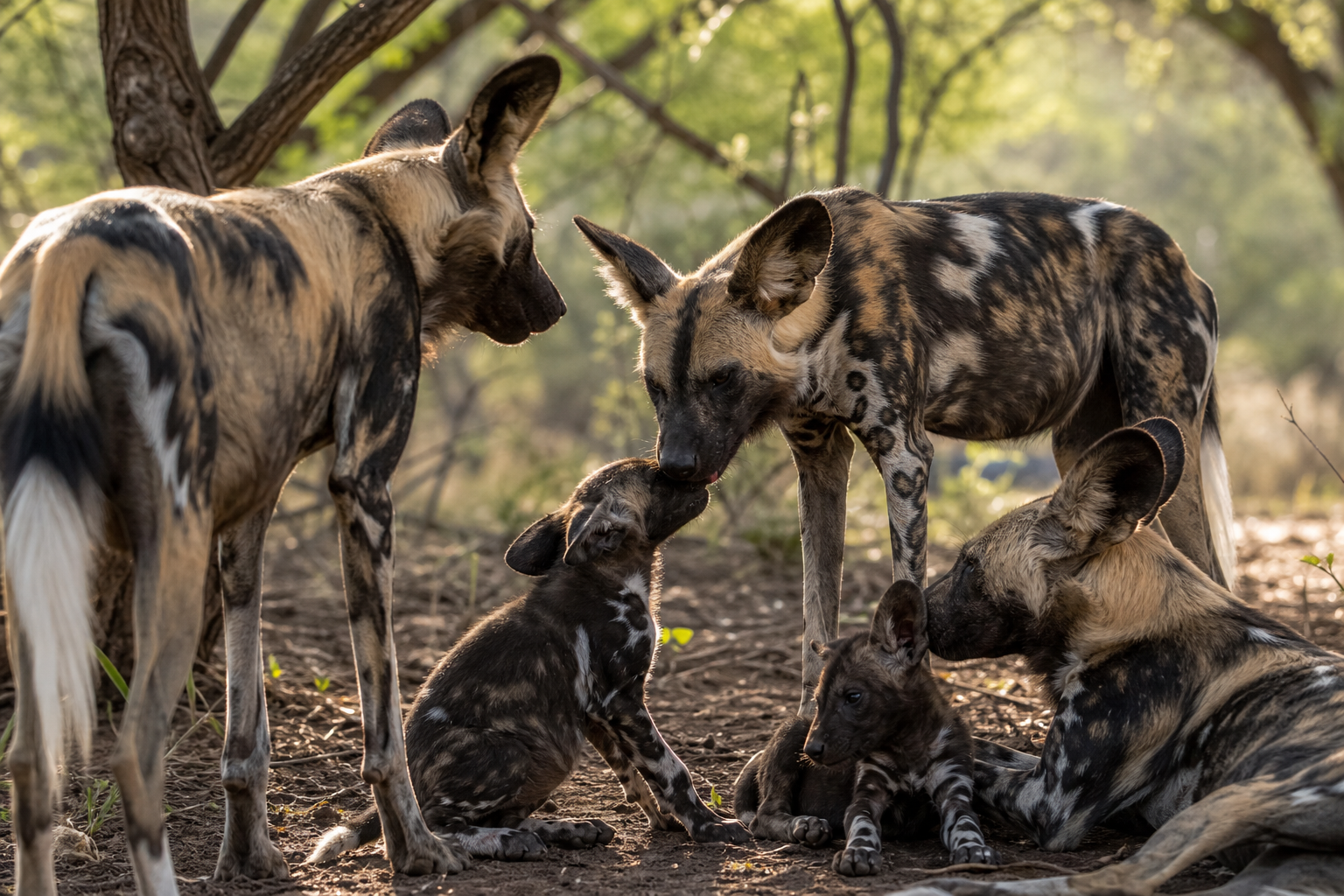
The social life behind that movement is just as important as the chase. Pups feed first. Adults return to those that stayed behind. Injured animals may still be carried by the work of the group. Survival here is not simply strength; it is coordination under a sky where lions, hyenas, heat, and broken ranges can undo a pack quickly.
Where wild dogs run, the savanna feels suddenly quickened. They are pursuit as community, hunger shaped by loyalty. Then the last white tail tip drops into grass, and the road is empty again.