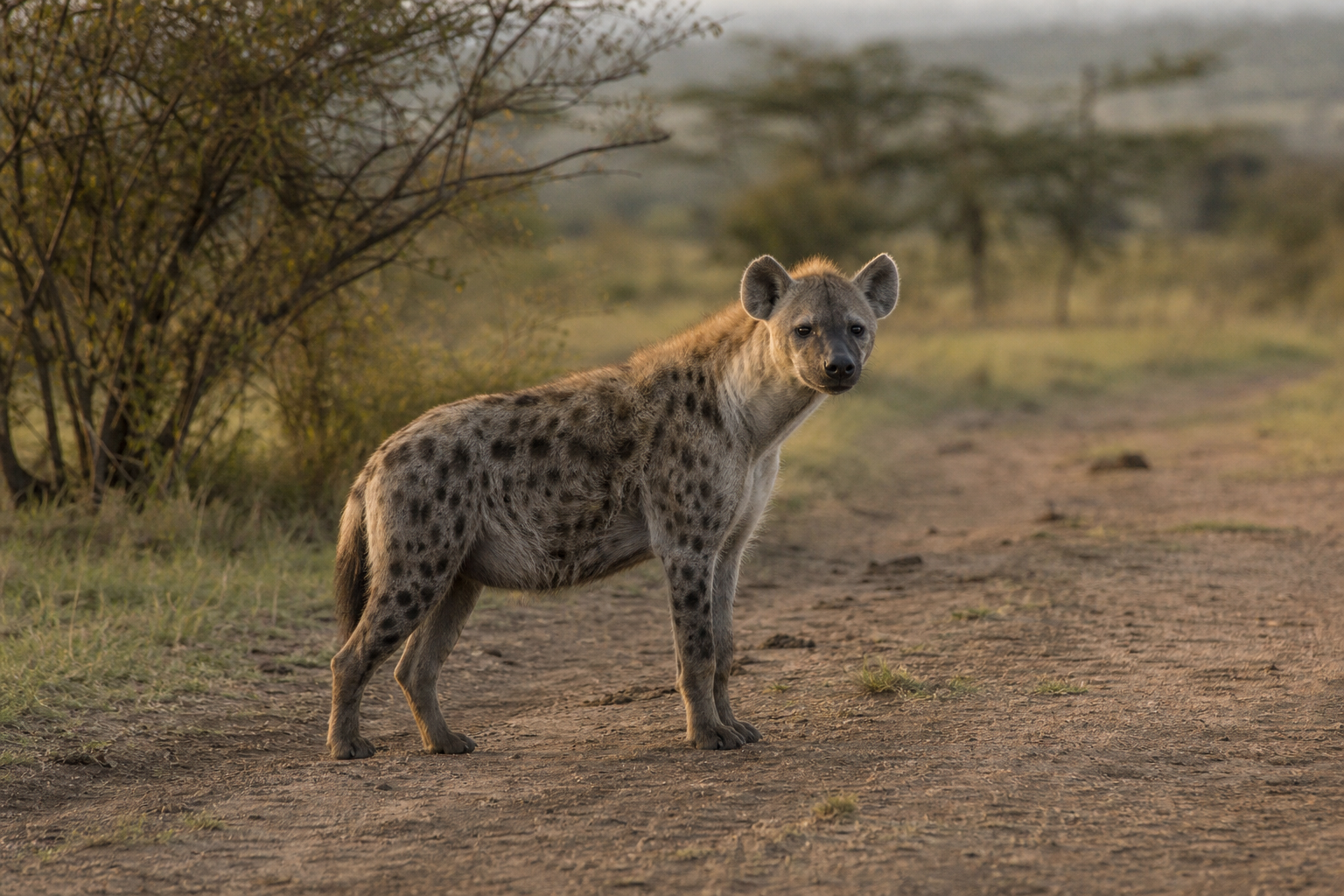
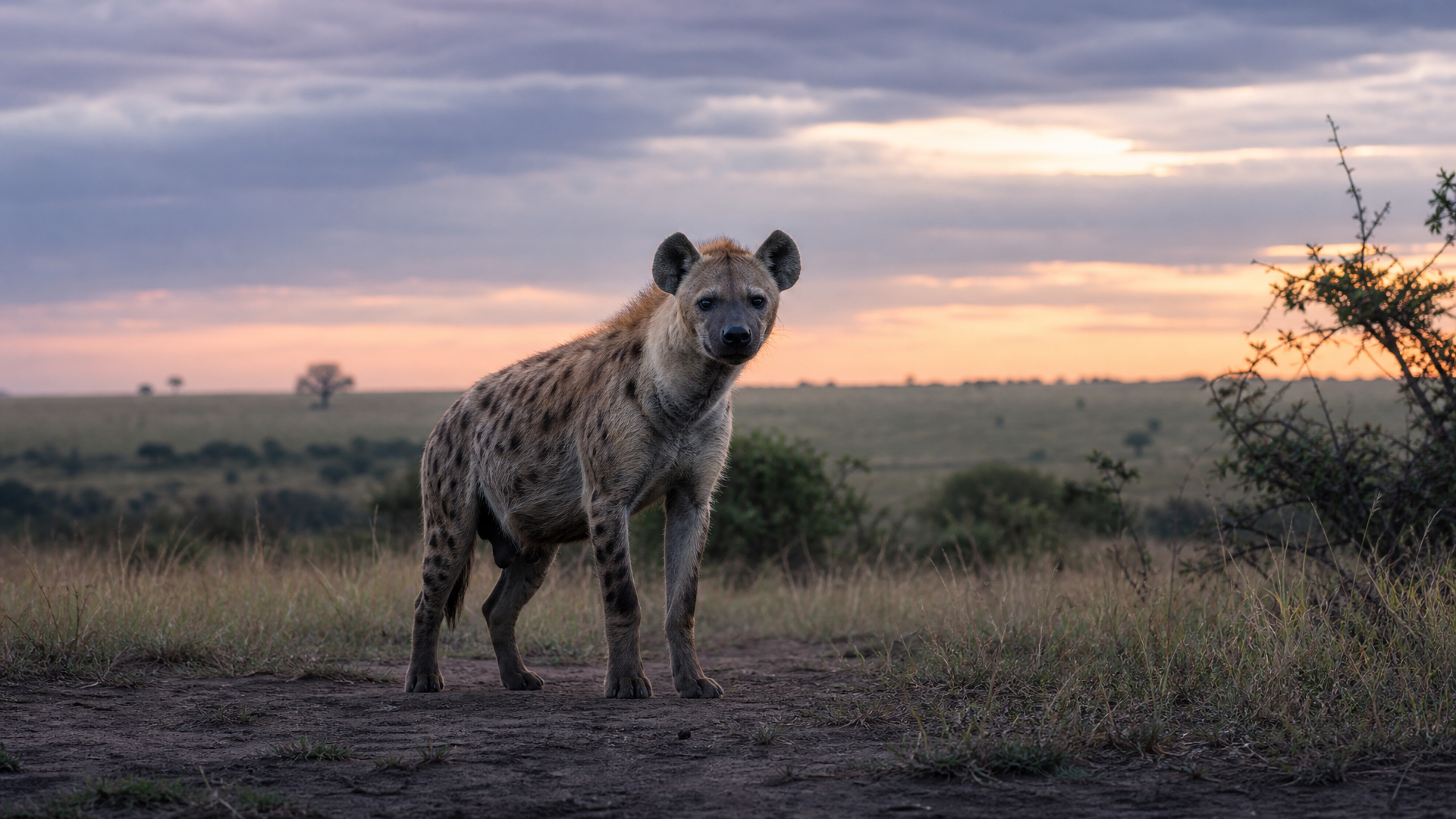
After sunset, the plains become sound. A whoop rises beyond the grass, then another, carrying through the cooling air like a question passed from body to body. The spotted hyena appears at the edge of the track with ears forward and shoulders high, its shape rough in the dusk, its attention exact.
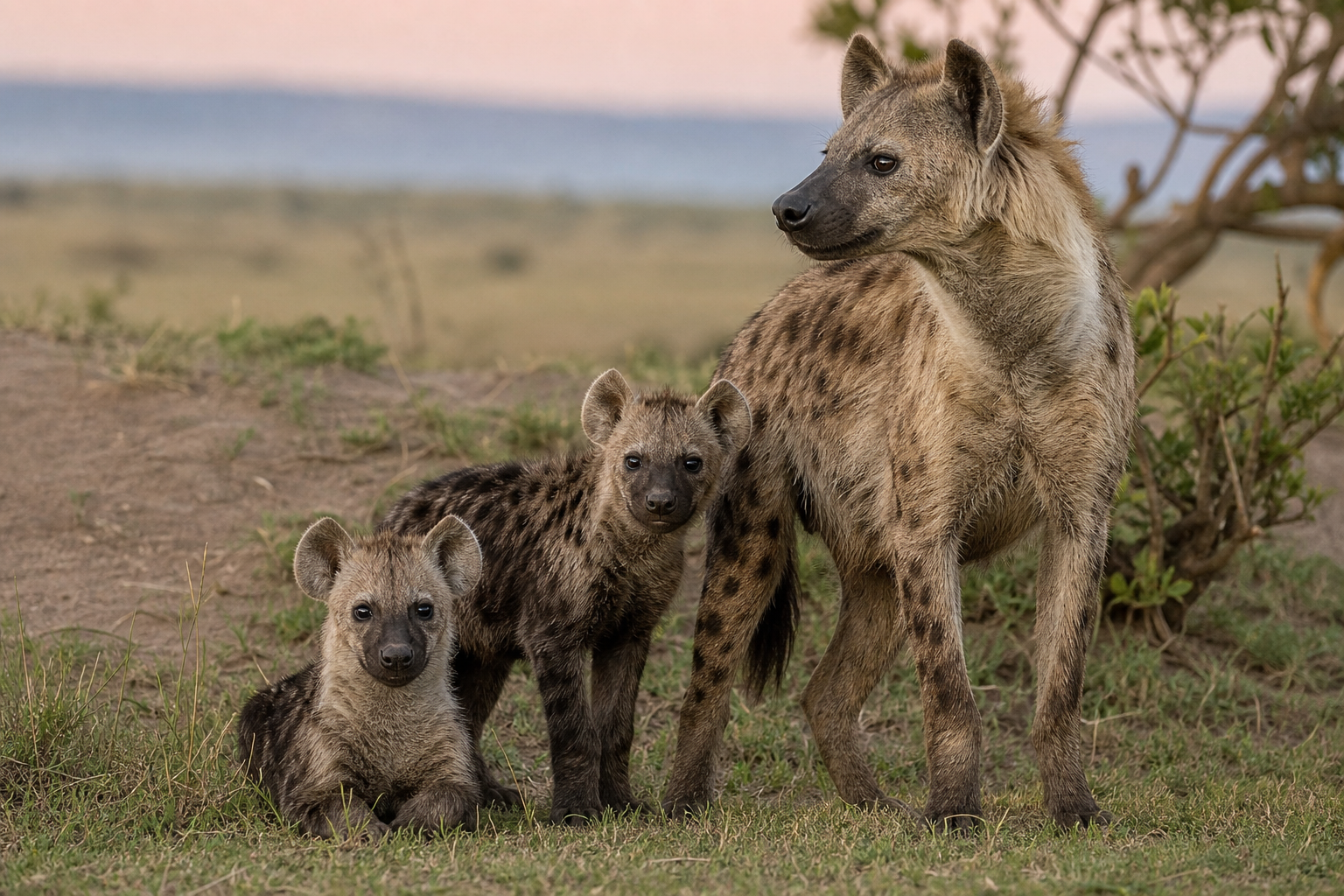
It steps out of the wrong story. This is not a comic scavenger waiting for better hunters to finish. In the Serengeti night, hyenas are hunters, rivals, clan members, mothers, thieves, and defenders. Their societies hold rank and memory. They recognize one another, test alliances, and move through darkness with a confidence that belongs to animals who know how much the day has missed.
The body is built for endurance and force: heavy forequarters, sloping back, jaws that can open bone. But the mind is the thing that changes the scene. A hyena watches lions with calculation. It listens for panic in herds. It arrives at a kill and every animal present feels the rules shift.
Hyenas stitch the plain together after dark. They hunt, clean, scatter remains, and turn death back into motion for beetles, vultures, jackals, grasses, and soil. Their world is pressured by shrinking space and conflict along human edges, but the sound still travels. Somewhere beyond sight, the clan answers, and the night becomes organized around them.