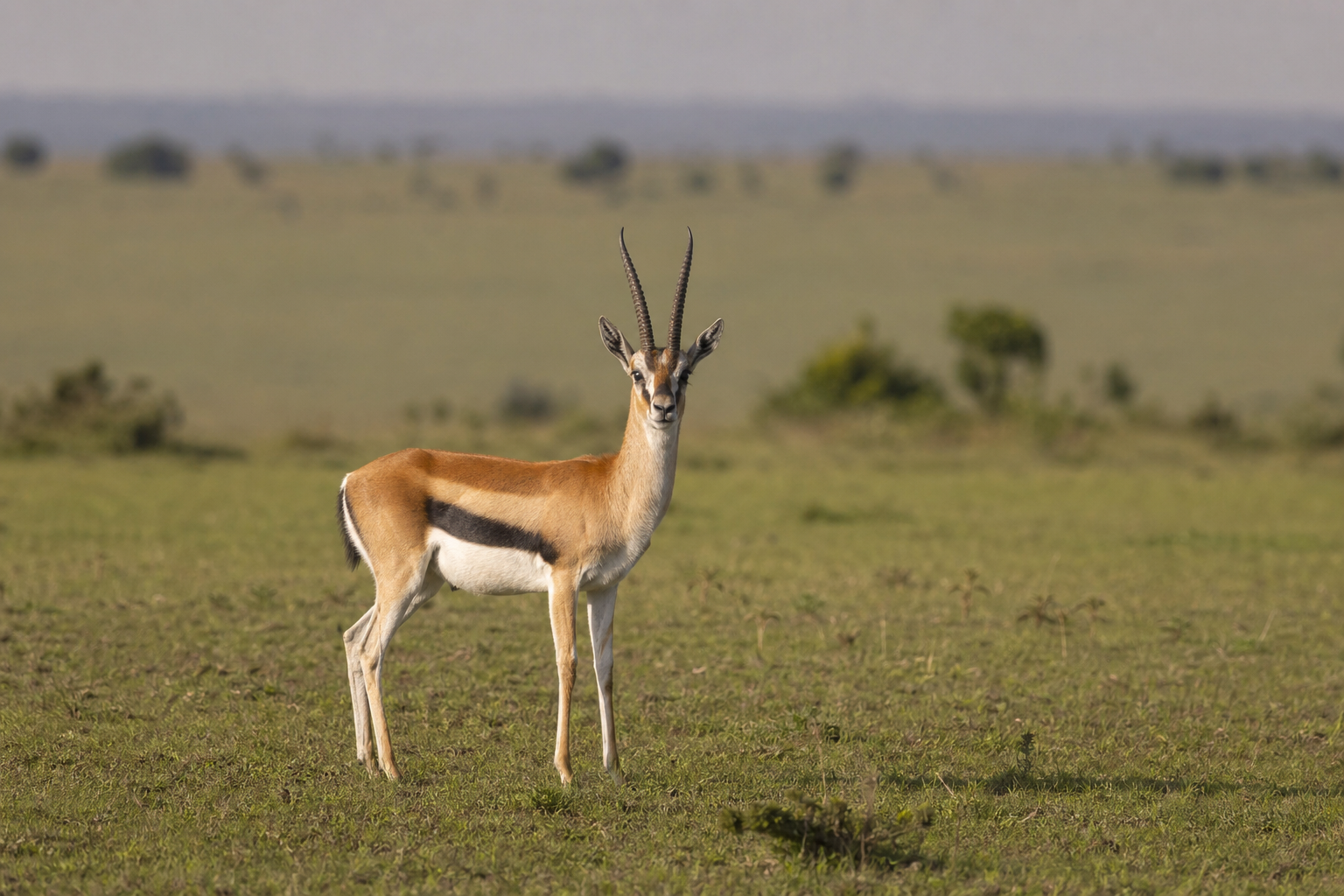
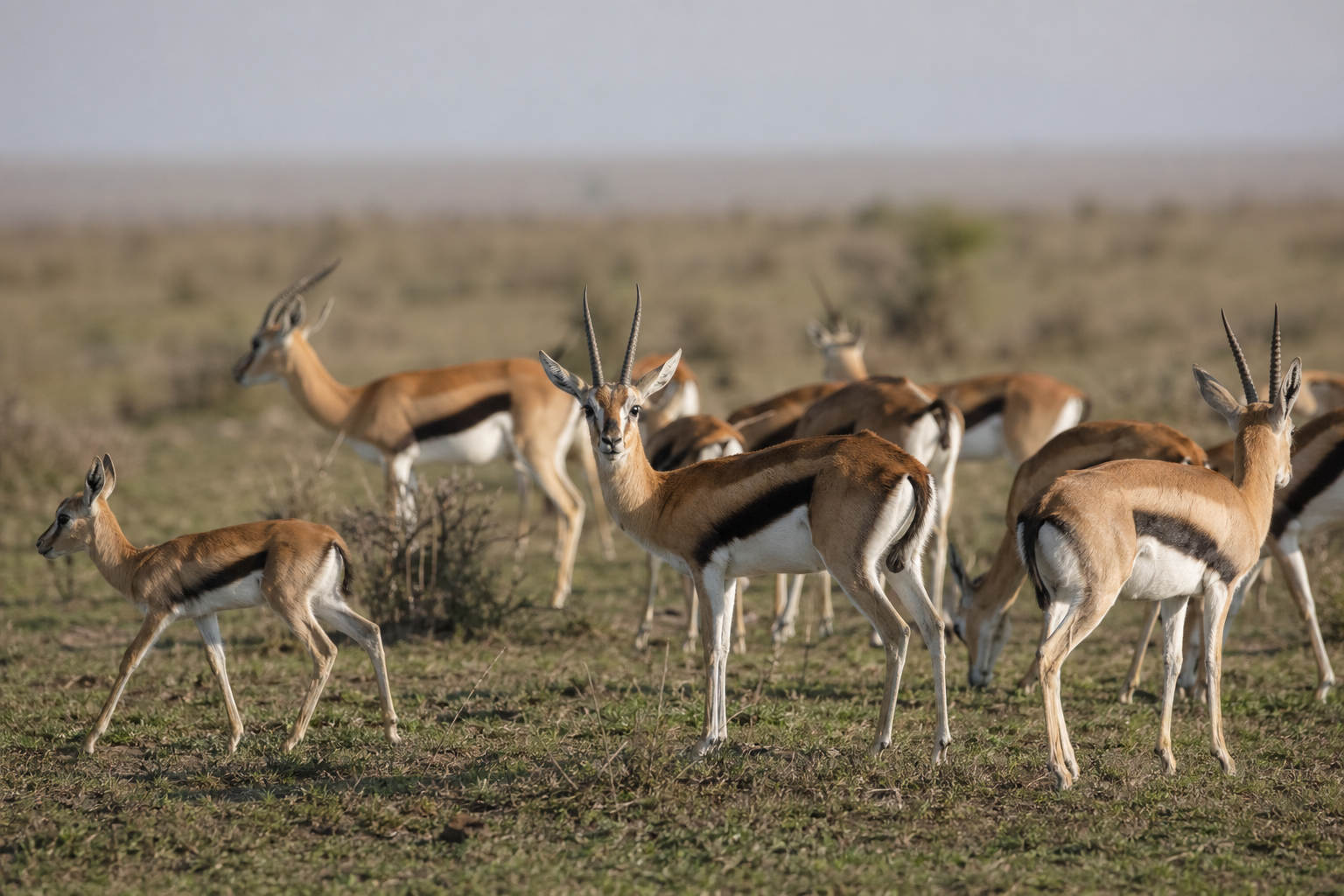
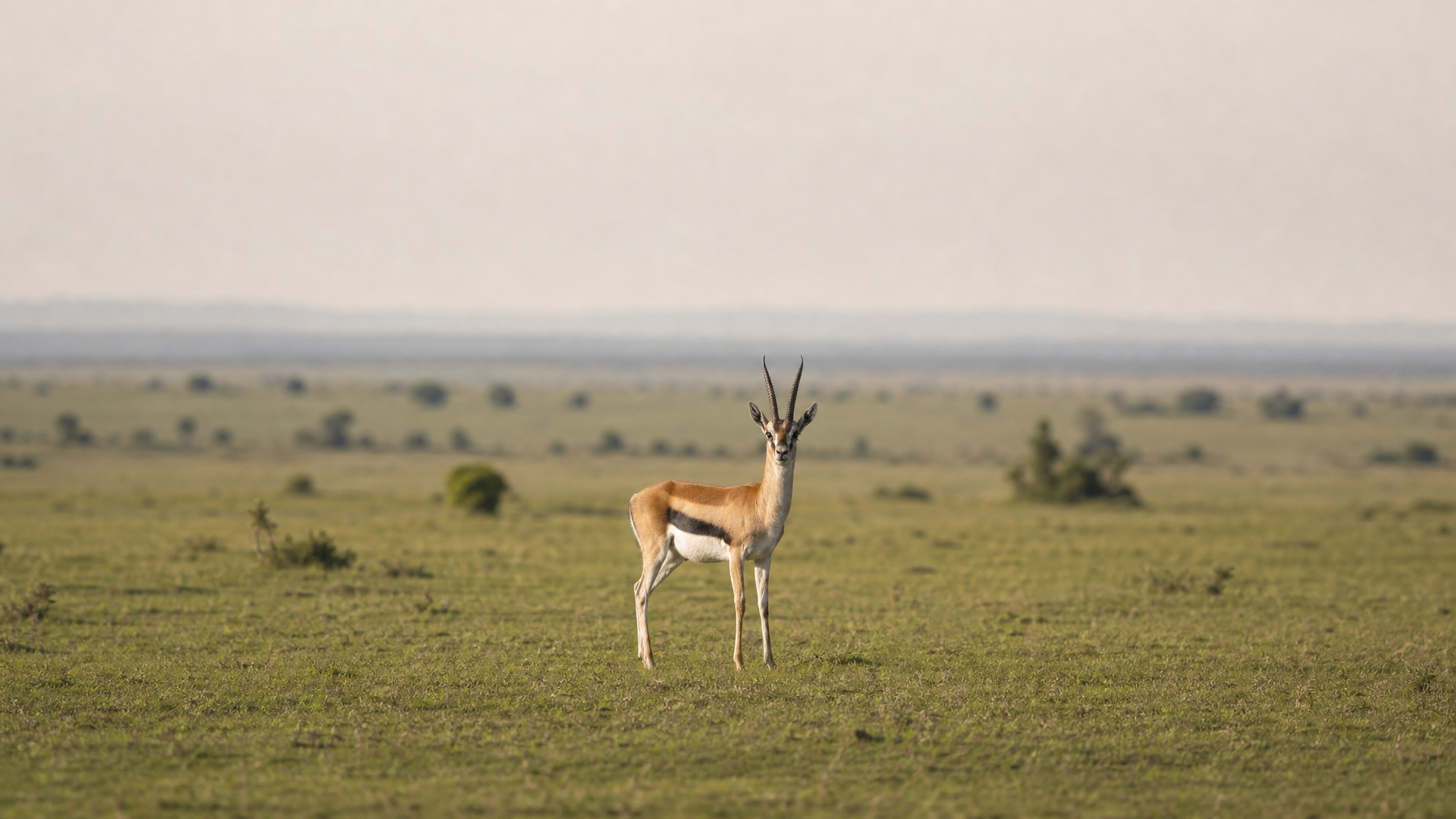
Morning grass brushes the gazelle's knees as it feeds, head lowered, ears turning separately into the wind. Around it, East Africa is full of larger bodies: elephants dark against the distance, buffalo in heavy groups, giraffes above the thorn trees. The Thomson's gazelle seems slight only until danger enters the scene.
It survives by reading distance. A cheetah too far away is information, not panic. A jackal testing the edge of a group is another kind of question. A lion's stillness means something different again. The gazelle carries speed close to the surface, not as spectacle, but as readiness. Even when it grazes, some part of the body remains listening.
When it bounds stiff-legged through the grass, the movement is a signal as much as an escape. It says strength. It says awareness. It tells the hunter that the choice may already be poor. In a landscape famous for force, the gazelle survives through attention.
Its presence gives scale to the great dramas around it. Without these small, quick animals, the plain would lose one of its finest tensions. A tail flicks. A head lifts. In that instant, danger has become visible before it has become violence.