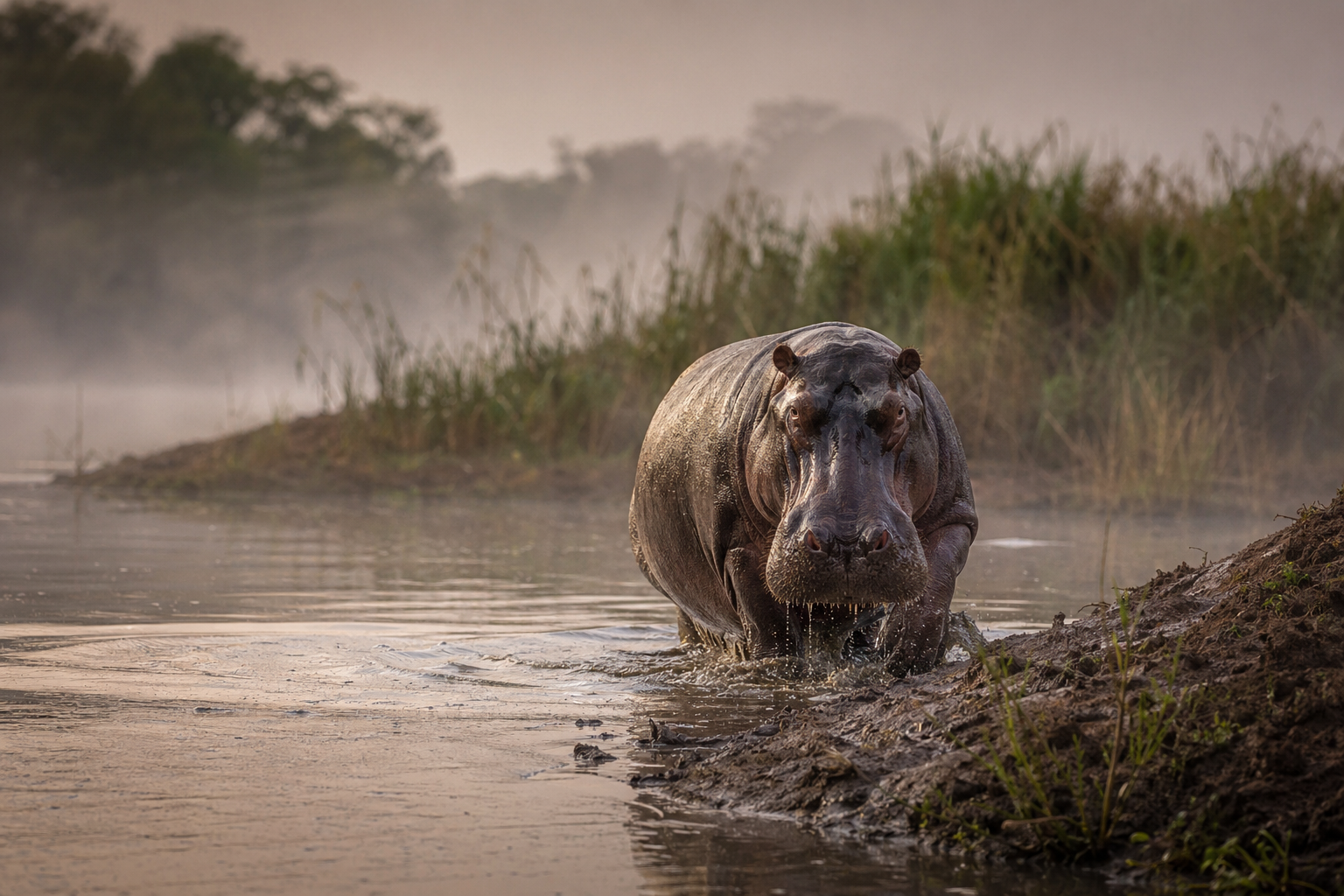
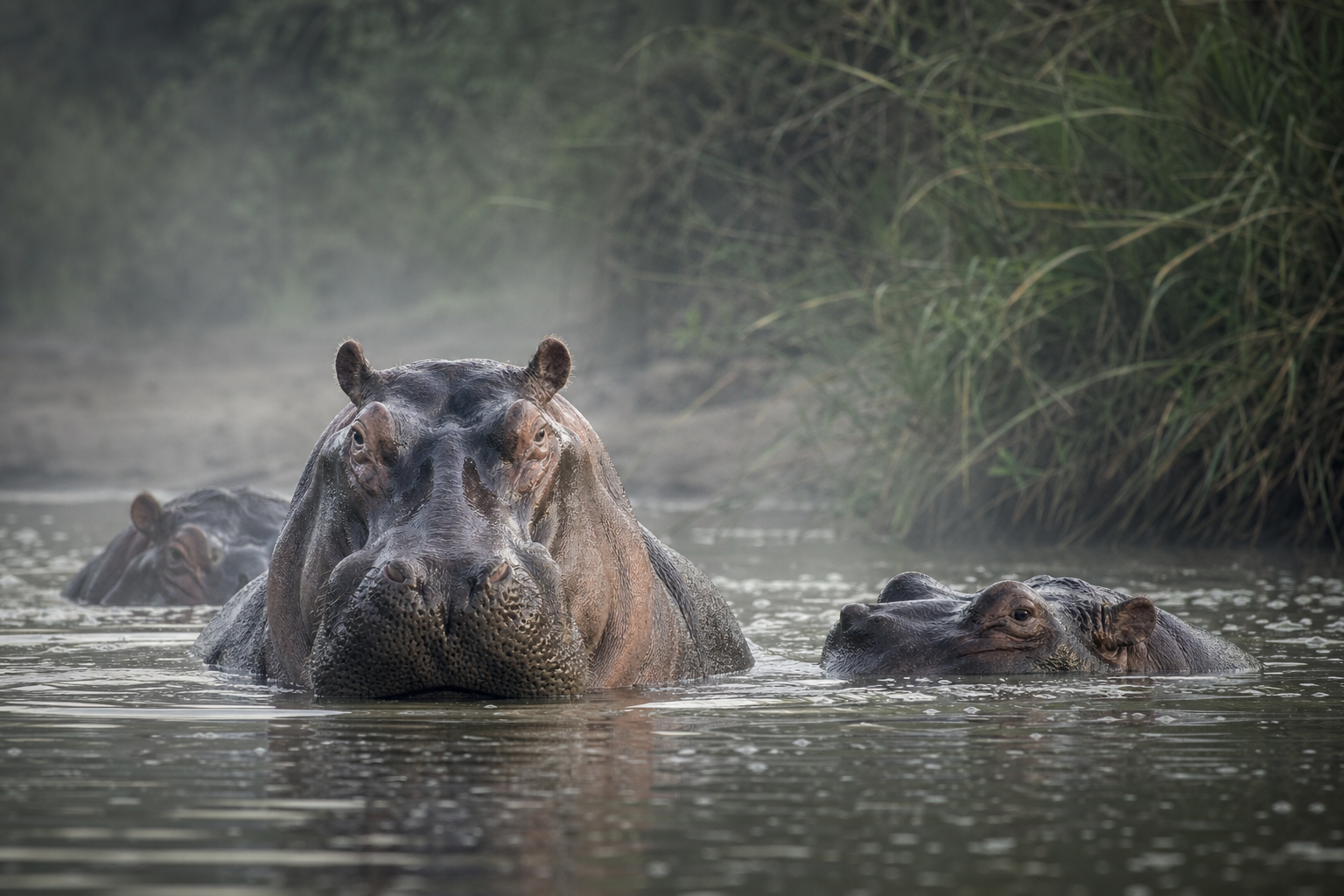
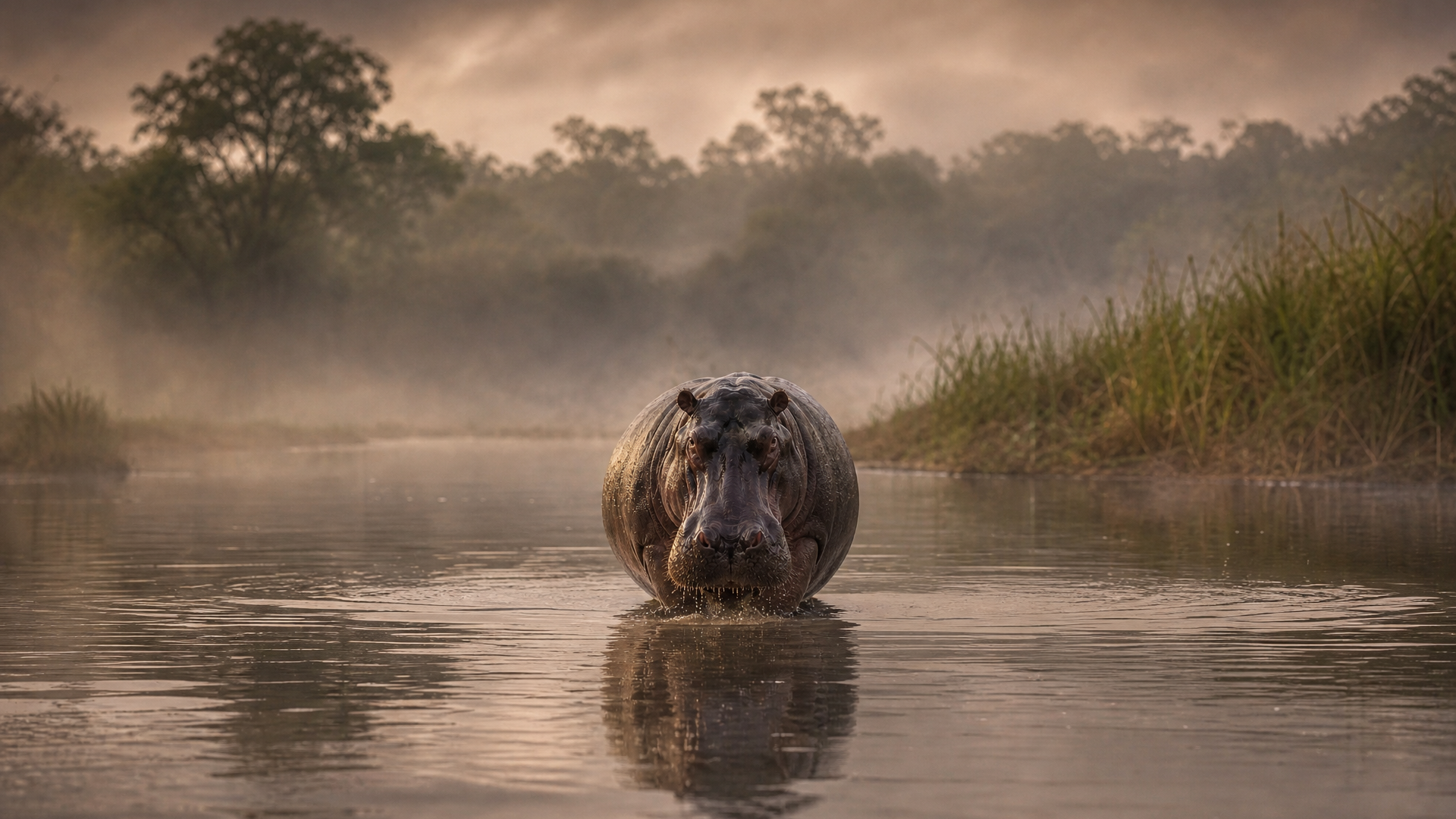
At first the pool seems almost empty. Then a pair of nostrils opens in the brown water, two small ears twitch, and a wet dome of back catches the light. The hippopotamus withholds its size until it chooses otherwise. When it rises, the river changes shape around it.
East Africa is not only grass and dust. It is also banks worn slick by repeated exits, channels crowded with bodies, crossings where every animal comes down to water with caution. Hippos rest through the day packed close together, skin shining, breath lifting in short bursts. Calves press into safer spaces between adults. The air smells of mud, heat, and churned vegetation.
The animal is built from contradiction. It belongs to water by day and to land by night. It can look almost sleepy, then become fast, territorial, and absolute in the space of a few steps. Other animals understand this without needing a lesson. They give the pool room.
Hippos carve paths, stir riverbeds, and carry the energy of grass back into water. But rivers are crowded places now, shared uneasily with farms, boats, and people. The surface closes again. Only the ears remain, turning in the light, while the rest of the animal waits below.