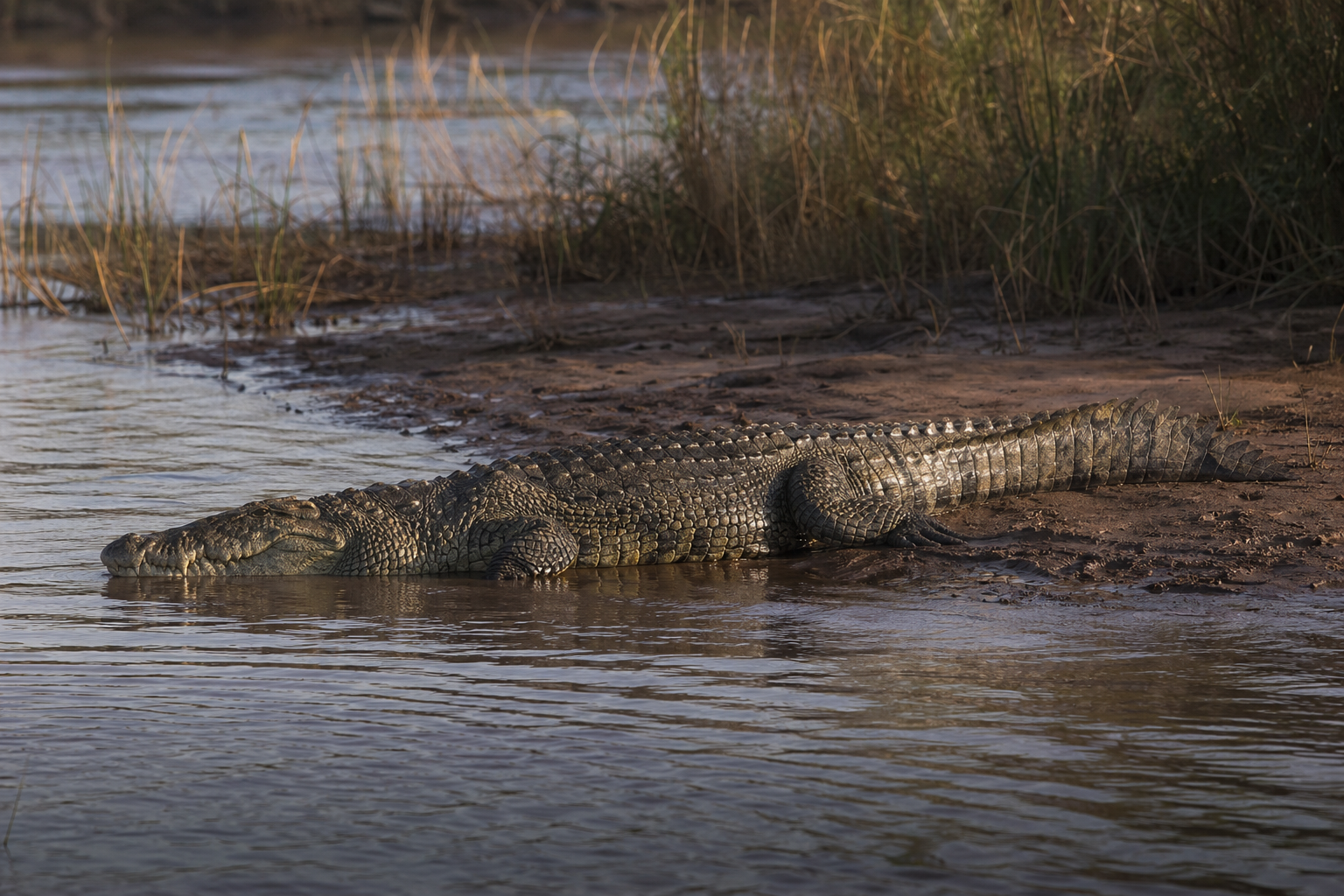
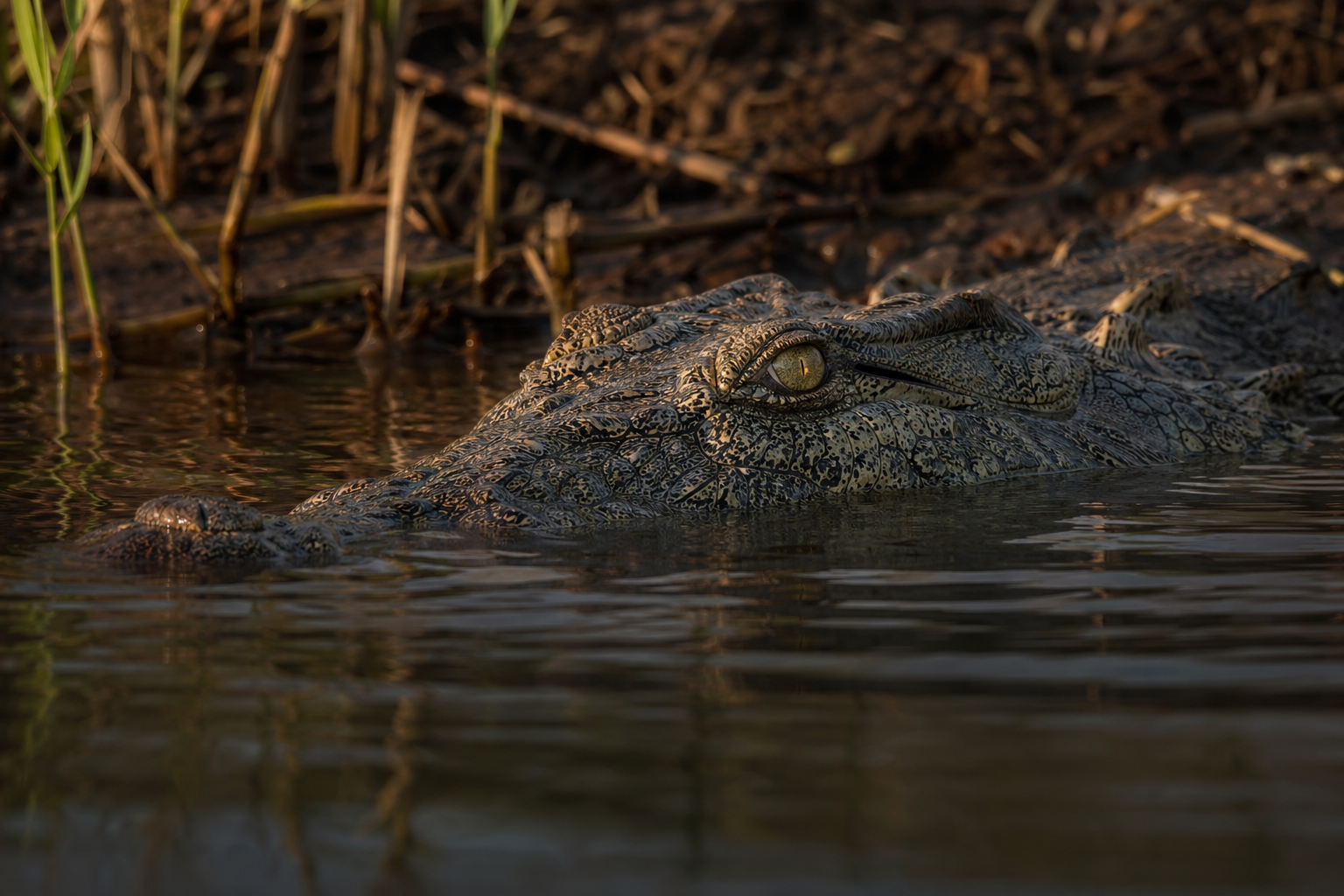
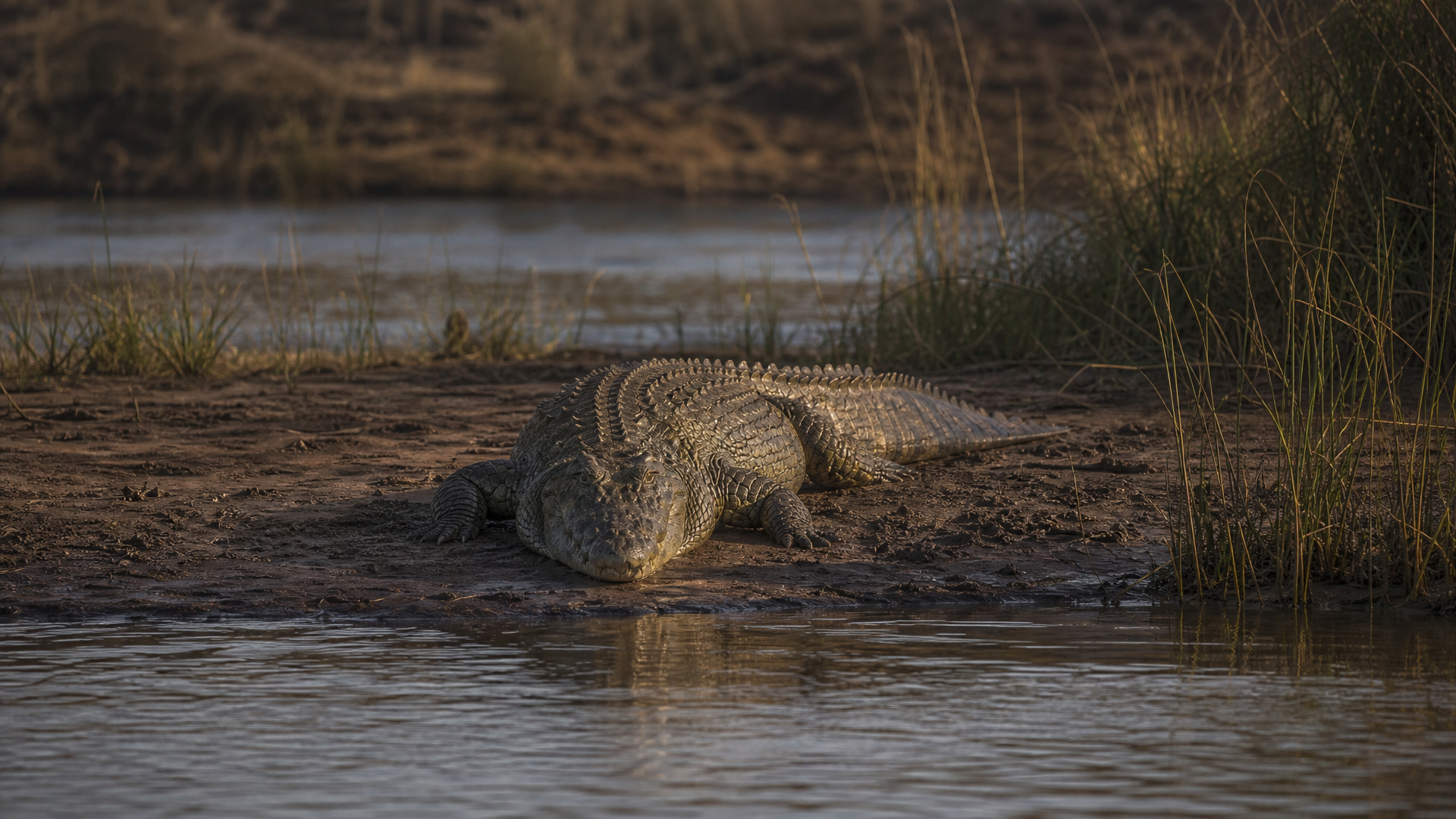
The river gives almost nothing away. A line of bubbles. A slick of current. A shape near the bank that might be wood until the eye finds the nostrils, the armored back, the flat skull just above the brown water. The Nile crocodile can make stillness feel dangerous.
Its power is not only the lunge. It is the long economy before it. At a crossing, wildebeest gather and recoil, zebras press forward and pull back, dust falls from crowded bodies into the channel. Every animal must enter without knowing what waits beneath the surface. The crocodile lives inside that uncertainty.
Out on a sandbank, jaws open to the heat, it can look like a relic from another age. But there is nothing outdated about the design. Eyes high. Tail ready. Body spending little until the river brings movement close enough to matter. Then the water breaks, and the whole bank remembers what patience was for.
Crocodiles shape the river's edge. They take the weak, the unlucky, the animal that chooses the wrong second. They also leave remains for other lives. As rivers narrow under human use, the old danger has less room to disappear. A crossing begins, and the water waits without expression.