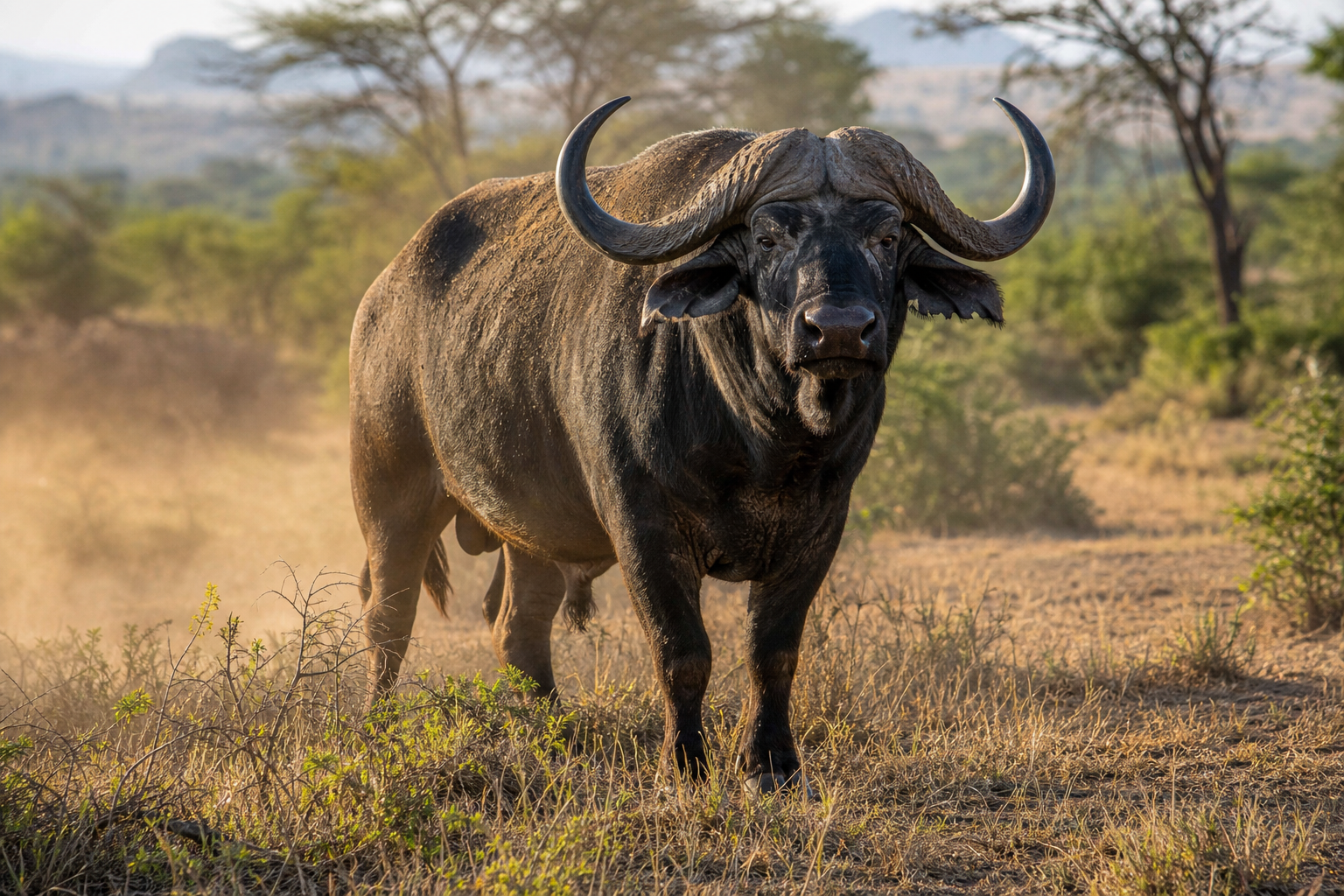
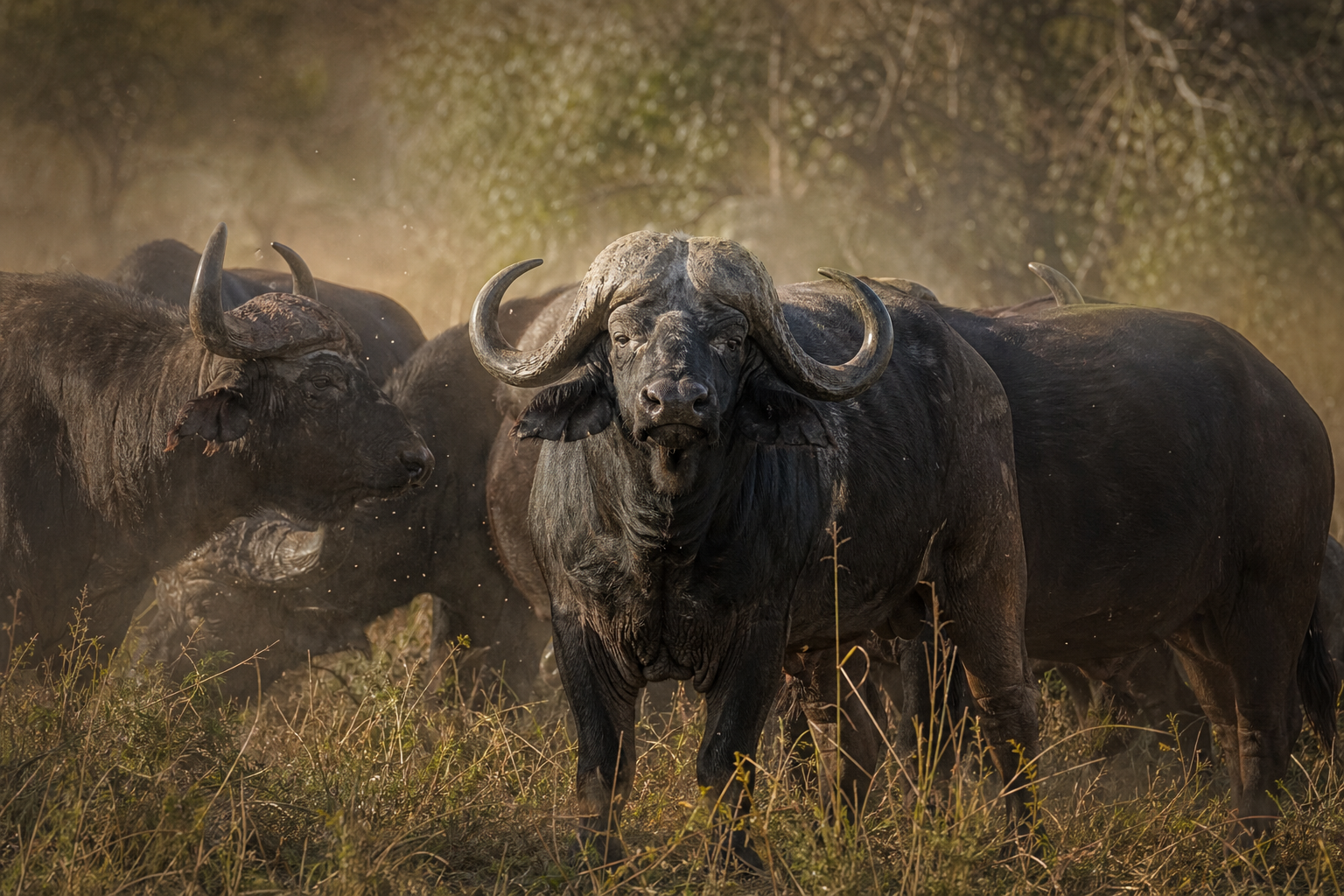
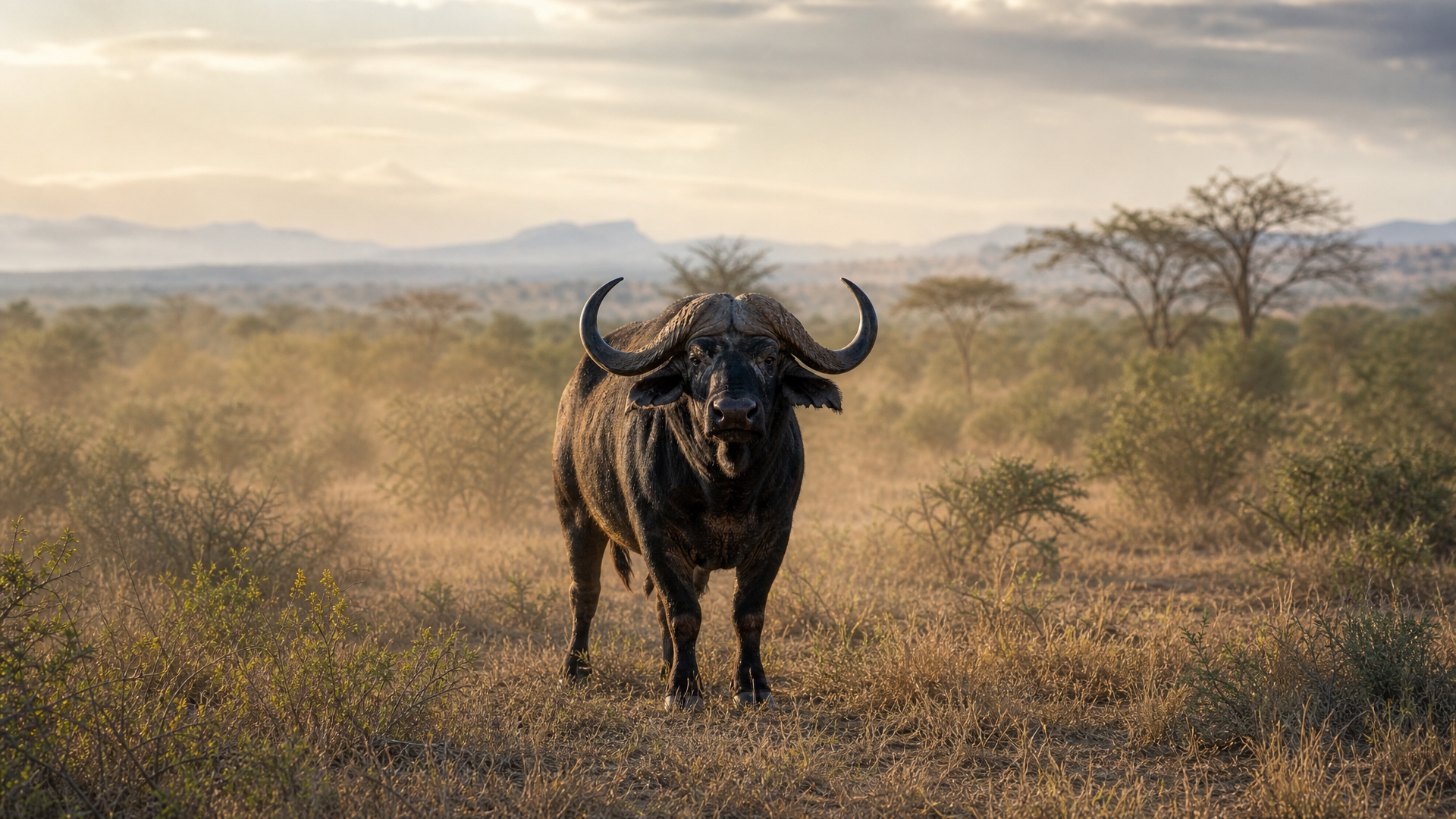
The herd stands half in dust, half in shadow, and the plain seems to grow heavier around it. African buffalo do not offer elegance first. They offer mass, suspicion, and a stare that arrives before the body moves. Oxpeckers work along their backs. Tails flick. Horns catch a dull edge of light.
To be near buffalo is to understand why lions hesitate. The shoulders are thick, the neck powerful, the horns fused into a shield across the skull. Cows hold calves within the herd's dark center. Old bulls carry mud, scars, and a private weather of their own. When buffalo bunch together, open country no longer feels open.
They move through grass and wet edges with blunt purpose, cropping, churning, pressing paths into the ground. Their danger is not theatrical. It comes from an animal that does not yield easily, especially when wounded, cornered, or asked to give up space. Even predators read that truth carefully.
Buffalo give the East African savanna resistance. They feed lions when a hunt succeeds, but they also injure them, test them, turn force back toward force. The herd lowers its heads. Dust lifts. The plain holds still around a decision no one wants to rush.