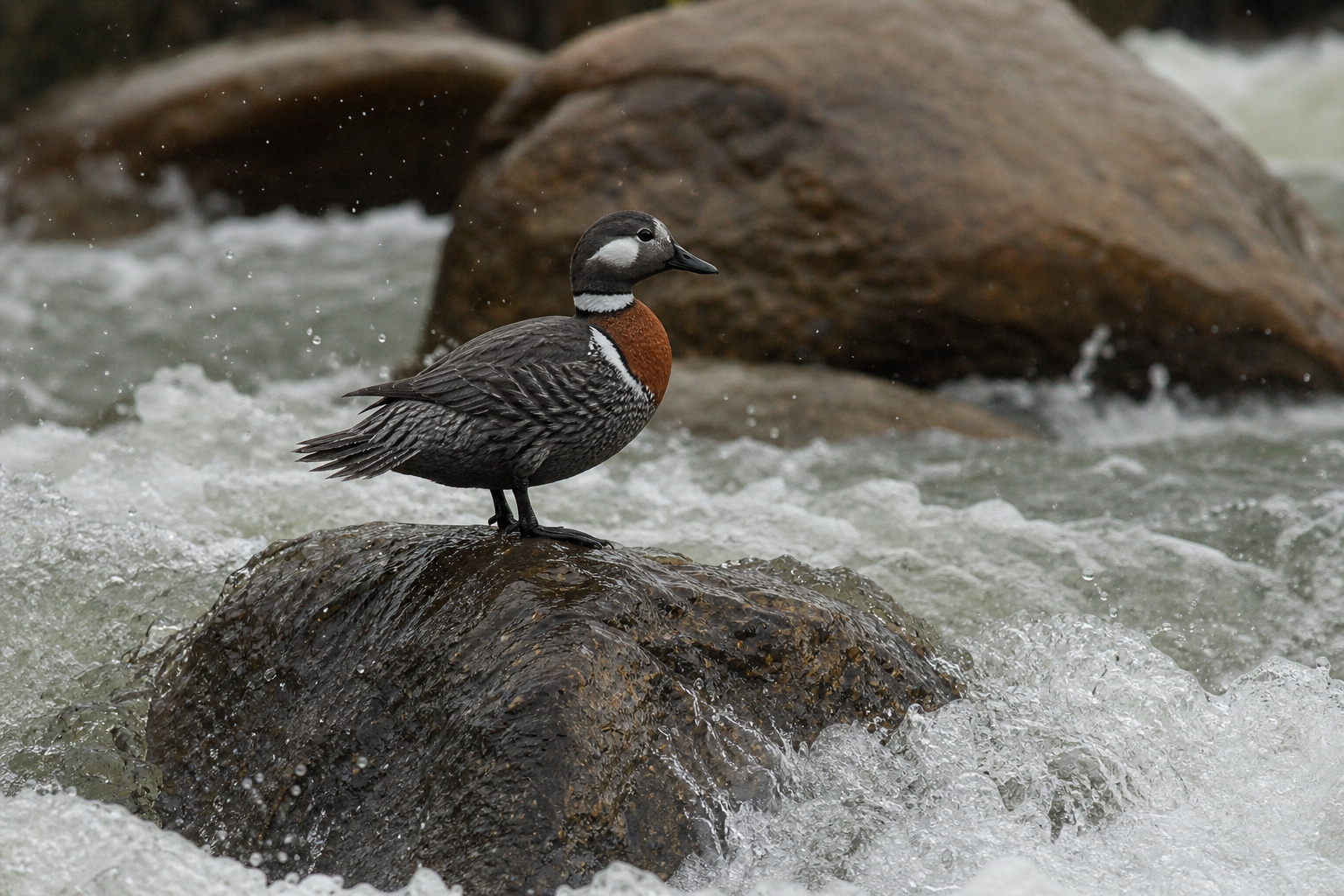
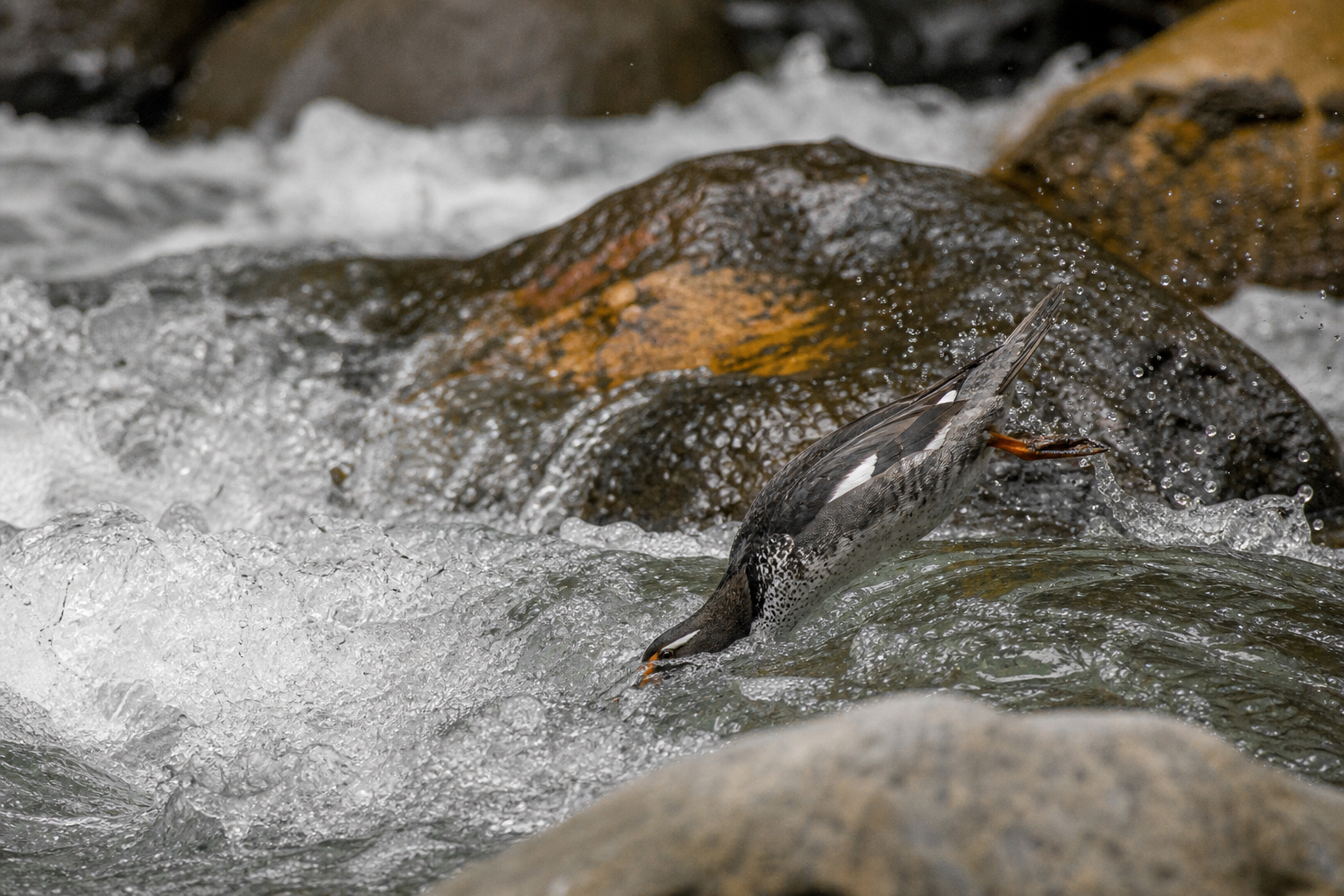
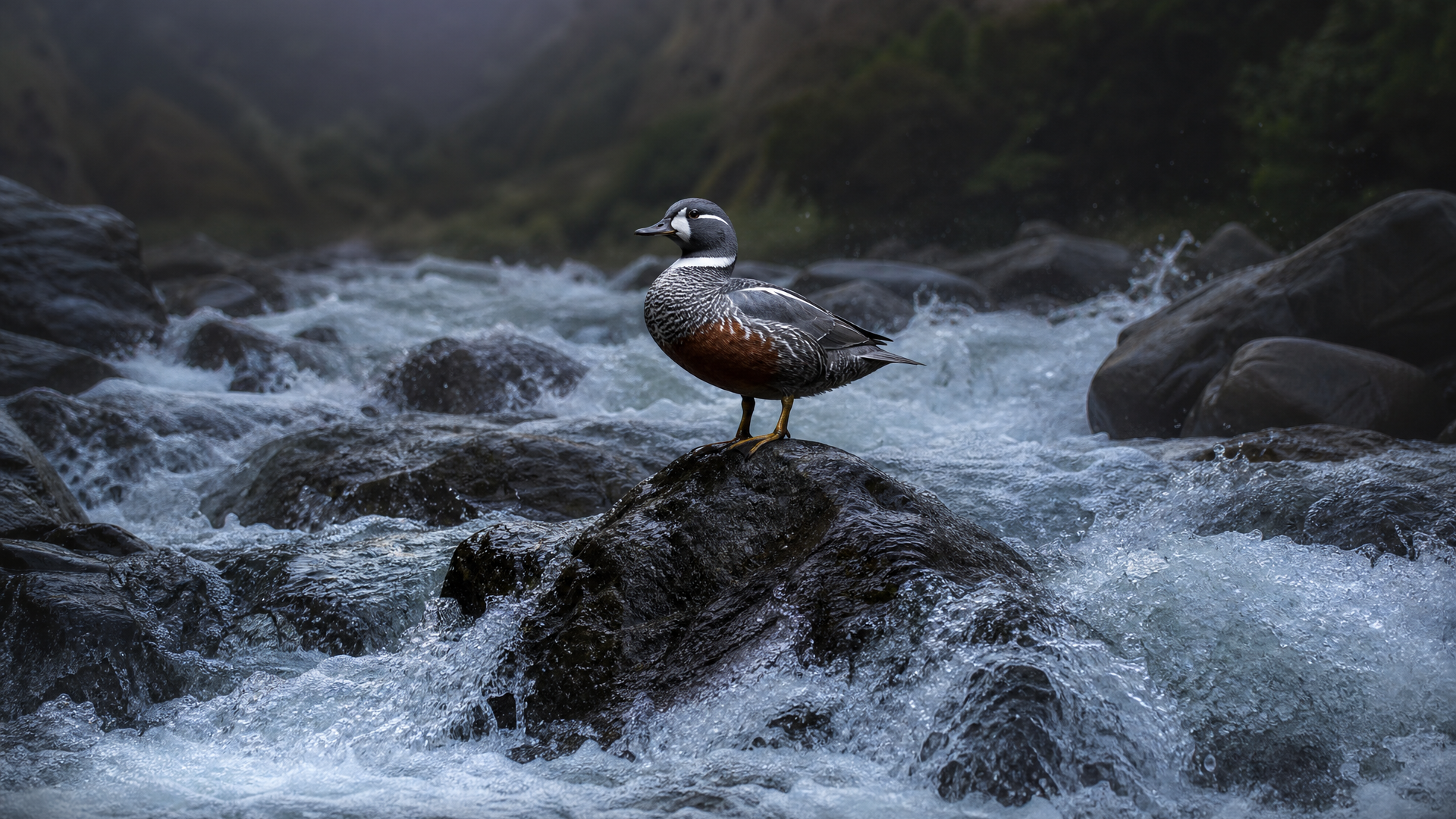
The Urubamba River comes down from the Andes in white water, striking boulders hard enough to fill the gorge with spray. In the middle of that force, a duck stands on a wet stone. Then it drops into the current and disappears.
The torrent duck treats violence as a pathway. Its body is low and compact, its feet grip rock, and its tail braces against water that would sweep a clumsier bird away in an instant. A pair often holds a stretch of river together, calling over the roar in thin whistles, diving through broken water, surfacing behind rocks where the current folds back on itself. The male's clean markings flash between spray and shadow; the female, warmer and darker, seems cut from the riverbank. They search among submerged stones, working upstream with a stubbornness that feels almost impossible until one watches the rhythm long enough.
Mountain rivers carry snowmelt, insects, silt, and the pulse of entire valleys. Dams, mining runoff, and altered flows change that pulse, smoothing or poisoning the roughness these birds require. Still, where the water remains wild, the duck keeps entering the current headfirst, a small body proving that grace can be made from resistance.