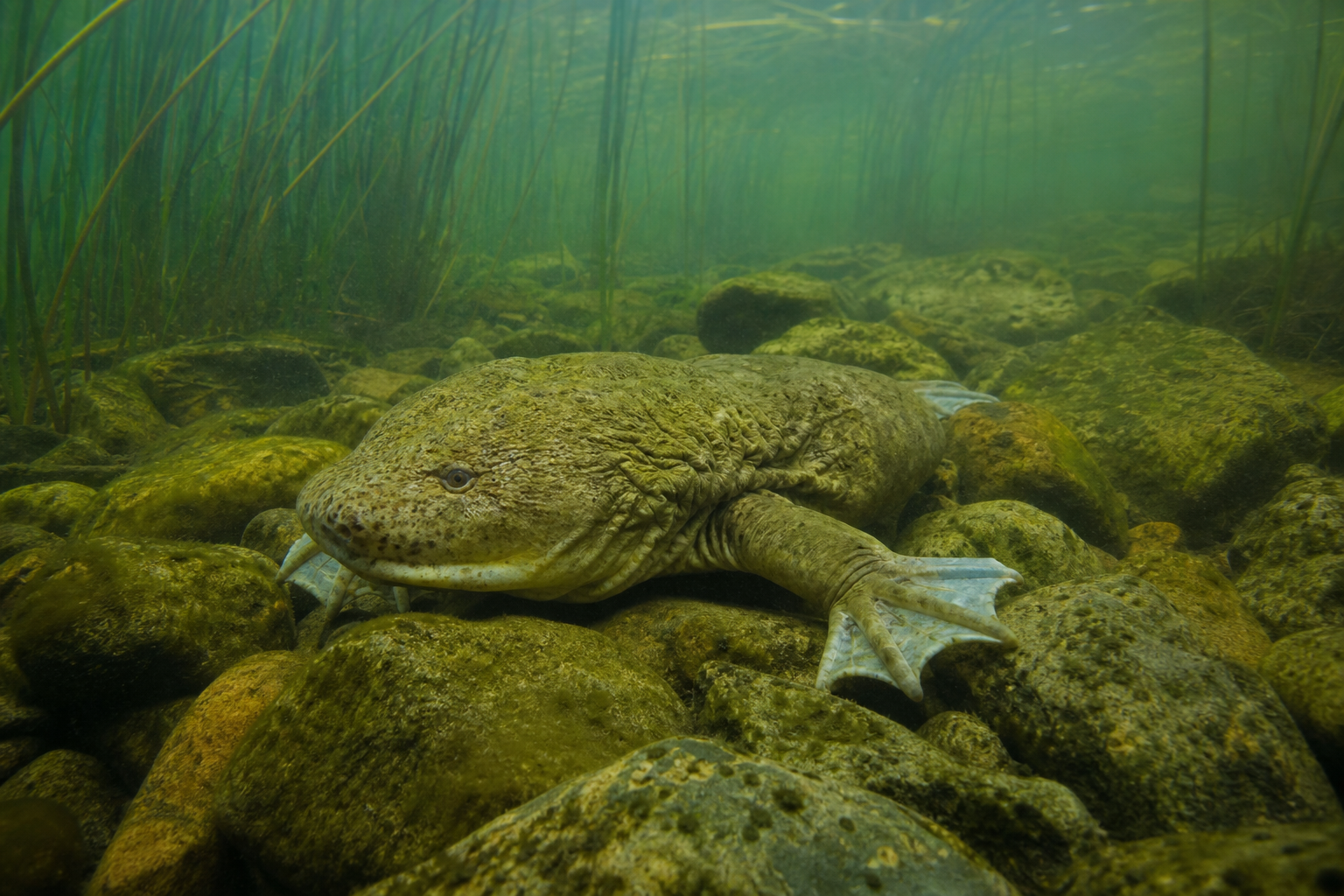
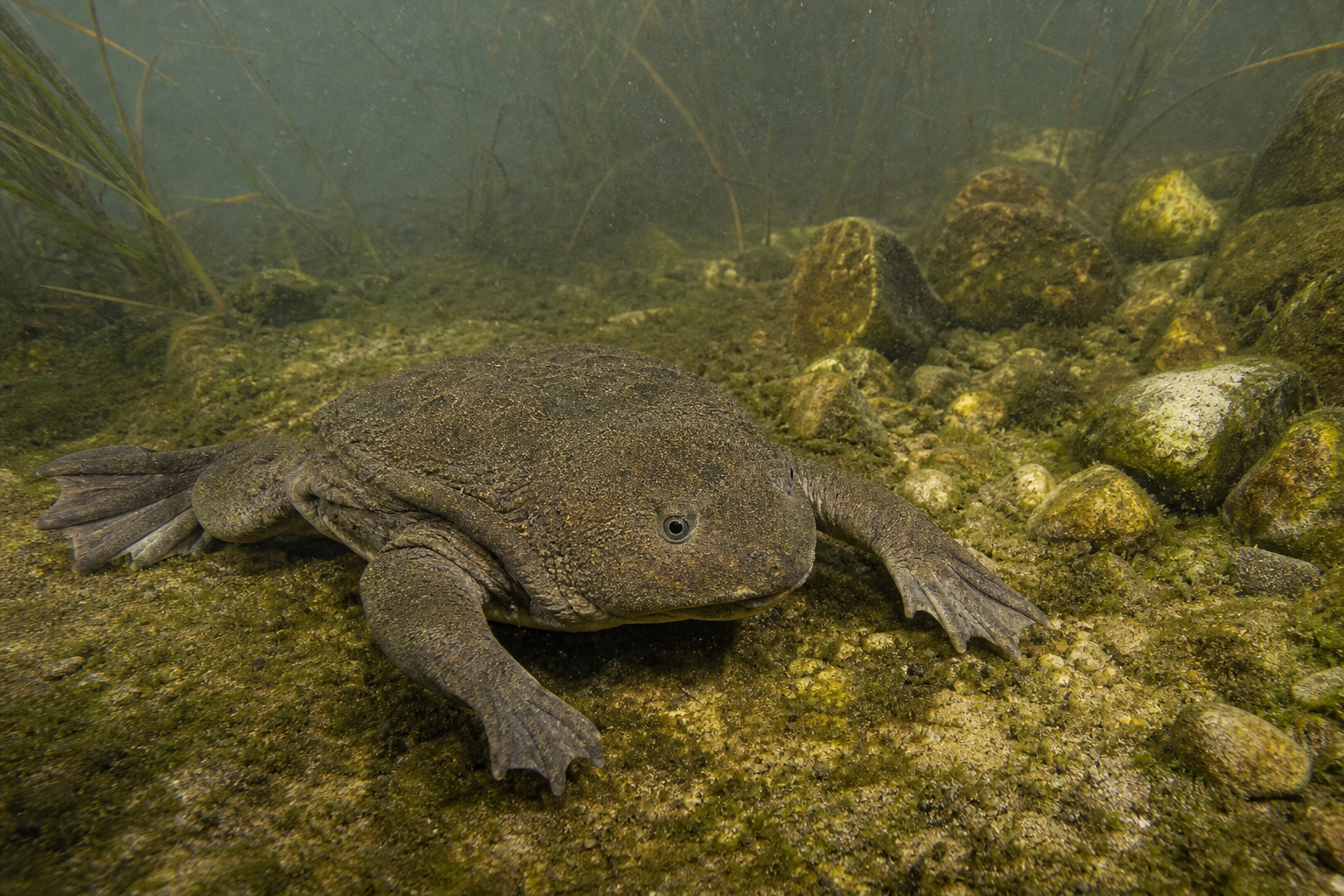
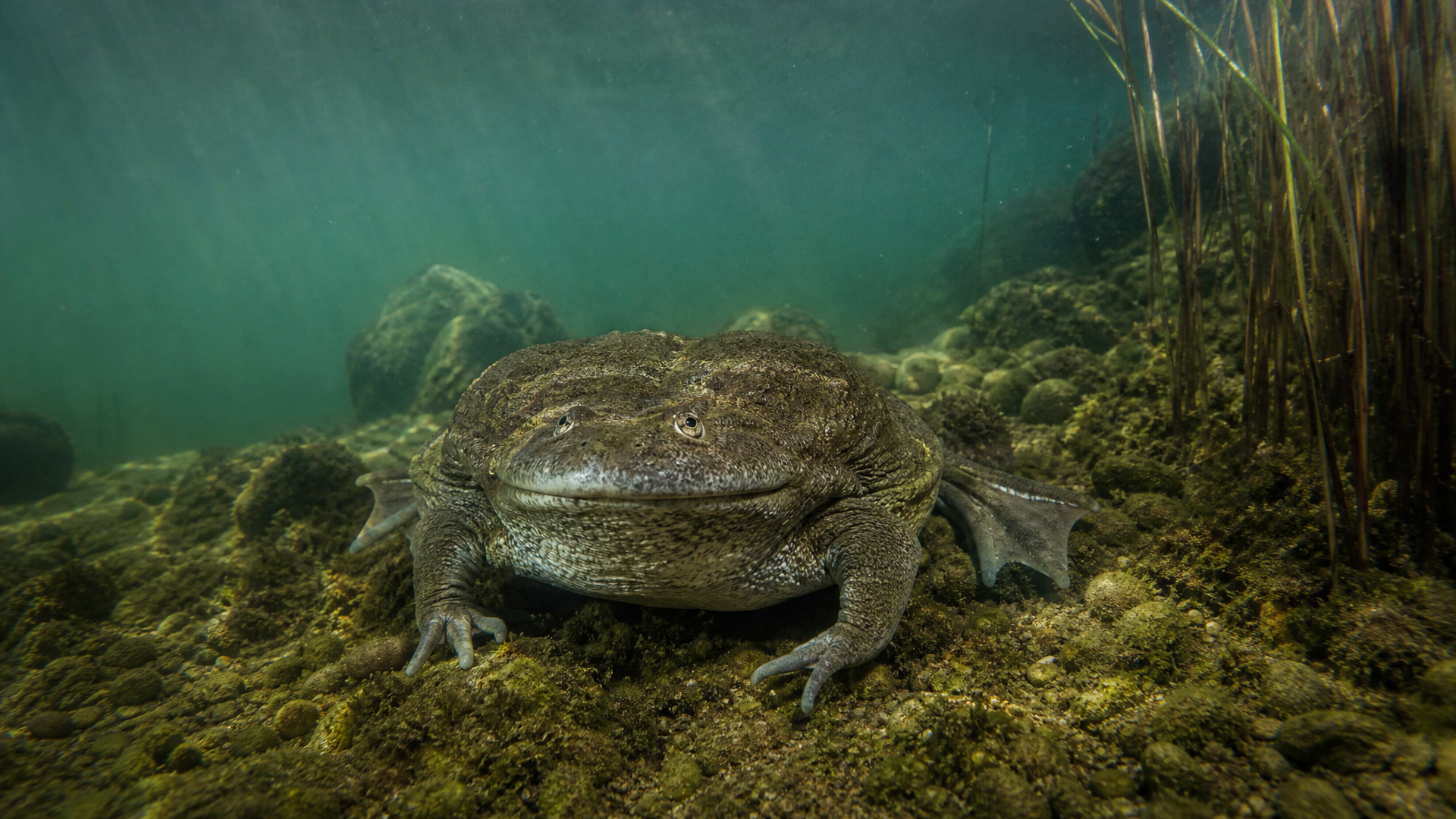
Below the surface of Lake Titicaca, light falls in green columns through cold water. Reeds sway above, stones lie furred with algae, and a broad, folded frog rests on the bottom as if the lake has shaped it from living clay. It does not rush upward for air. It waits, breathing through skin made for water.
The Titicaca water frog is not elegant in the ordinary sense, but it is beautifully suited to its strange, high lake. Loose folds ripple along its sides, increasing the surface through which oxygen can pass. When the water is rich and clean, it can remain submerged for long periods, pushing itself along the bottom with slow limbs, nosing through stones, or rising slightly in a soft, suspended motion. Its world is muffled: boat knocks above, reed stems scraping, the distant stir of fish. To meet it is to understand that a lake floor can be as intimate as a forest path.
Titicaca is vast, but not immune. Pollution, introduced animals, and warming water change the chemistry around every breath this frog takes. The pressure is invisible at first, dissolved into the lake itself. Among the stones, the frog's folded body gathers what oxygen it can, holding an ancient posture in a changing basin.