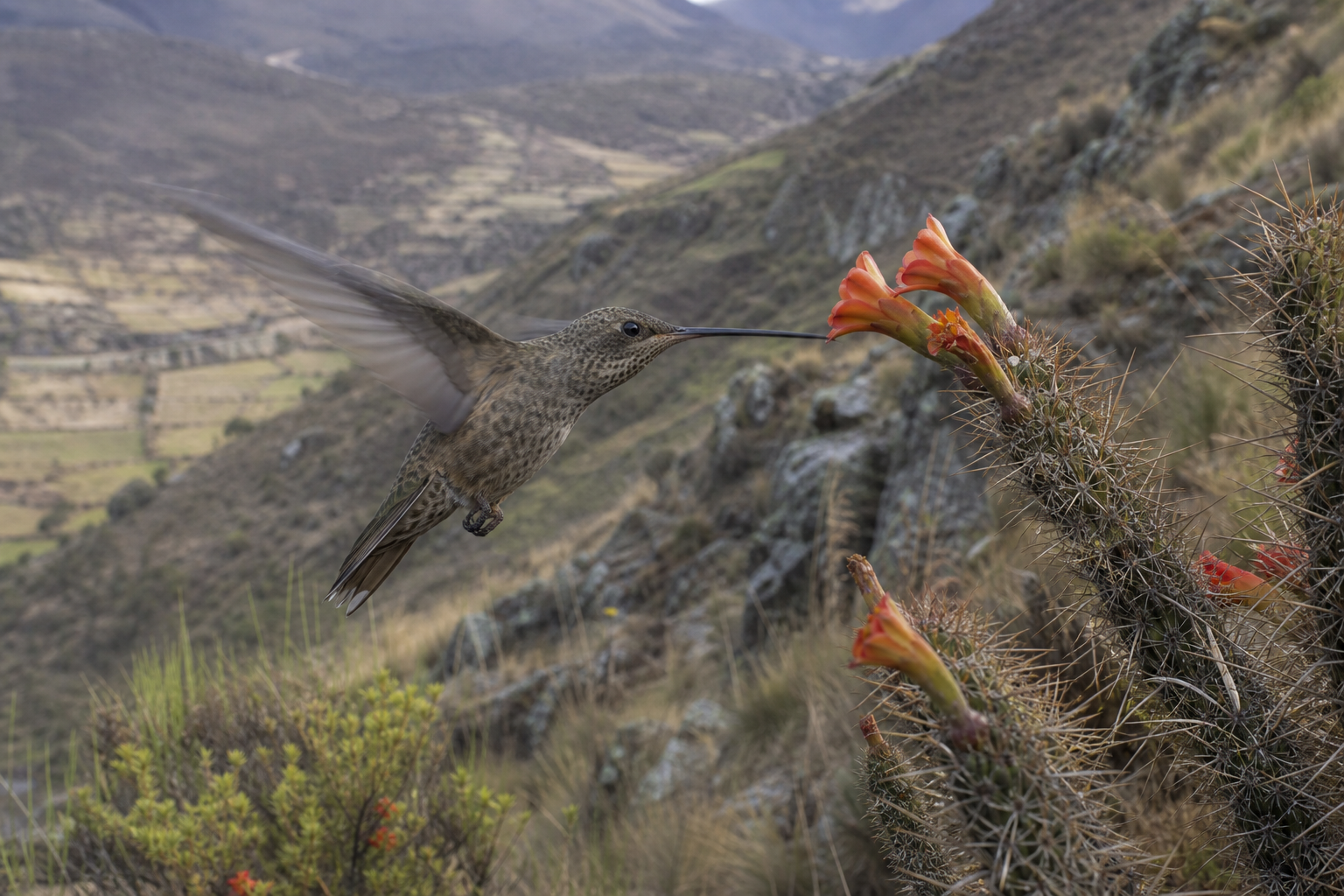
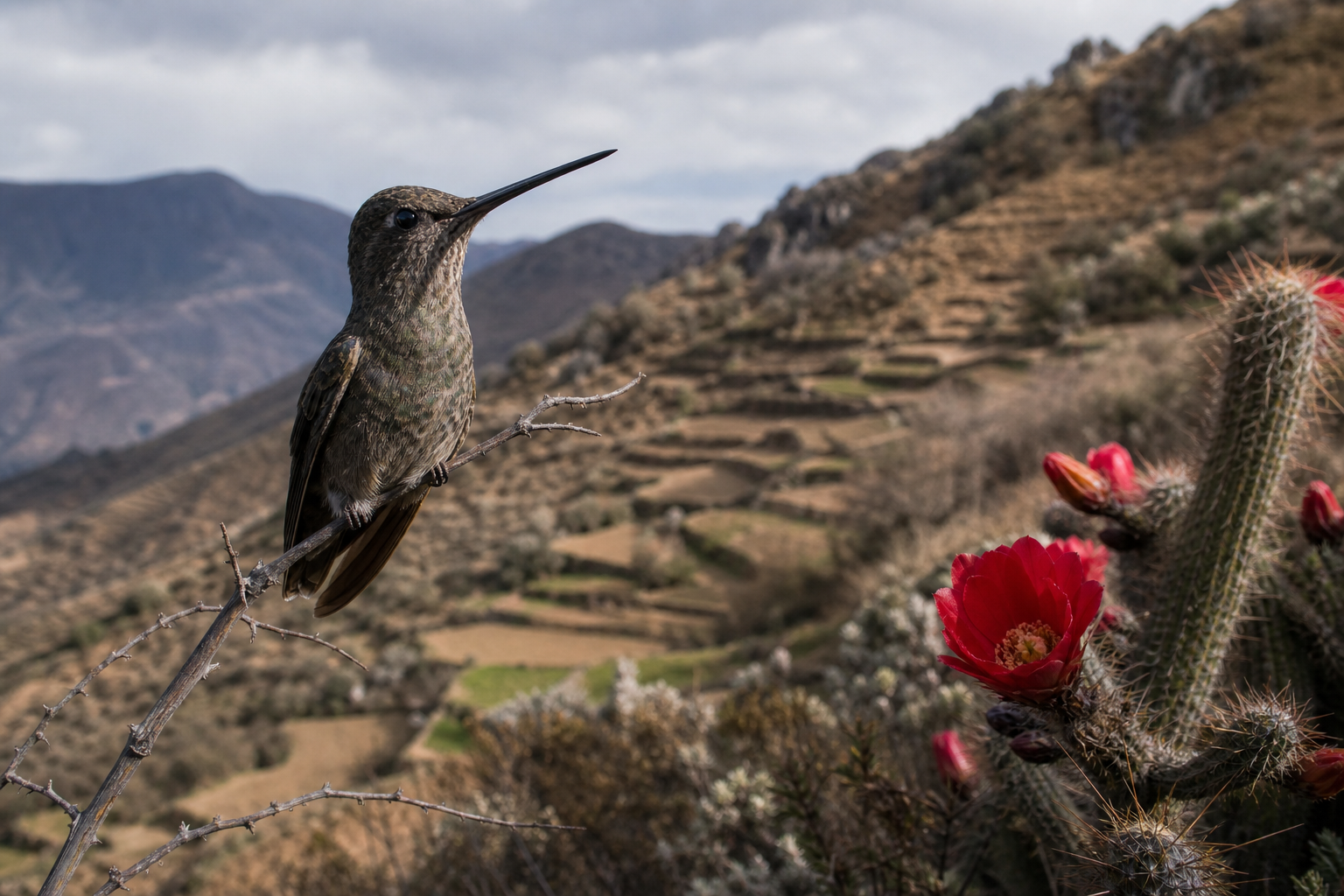
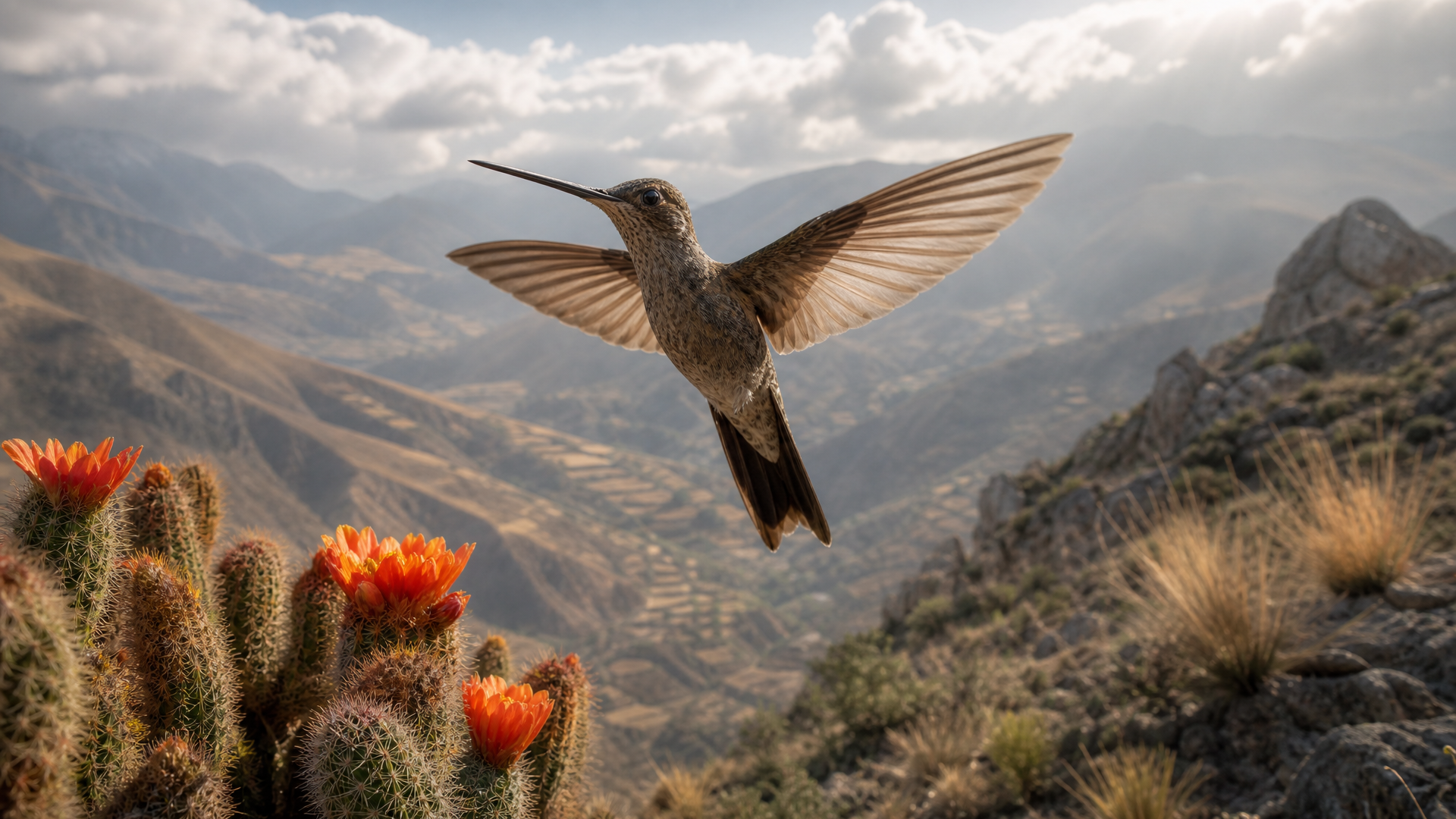
On a dry slope above the Sacred Valley, cactus flowers open to the morning and the air seems too thin for haste. A large hummingbird lifts from a branch with wingbeats so slow they almost deny the name. It does not glitter and vanish. It rows through the light, deliberate as a tiny hawk.
The northern giant hummingbird changes the scale of a familiar thing. Near it, other hummingbirds seem like sparks; this one has weight, presence, and a lower music in flight. It hangs before a flower with steady control, then moves on across terraces, scrub, and stony gullies where nectar appears in scattered places and every visit matters. Its long bill searches tubular blooms, its tongue works faster than the eye can follow, and when it rests, it often chooses an exposed twig, chest rising in the cold Andean air. Migration can carry it between elevations, following flowering seasons across slopes that are never generous.
A bird this tied to timing lives inside a calendar written by plants. Drought, shifting bloom periods, and the thinning of native vegetation can make distance more costly. Yet when the sun reaches the cactus spines, the giant hummingbird returns to the flowers, beating slowly in place as if holding a small door open in the air.