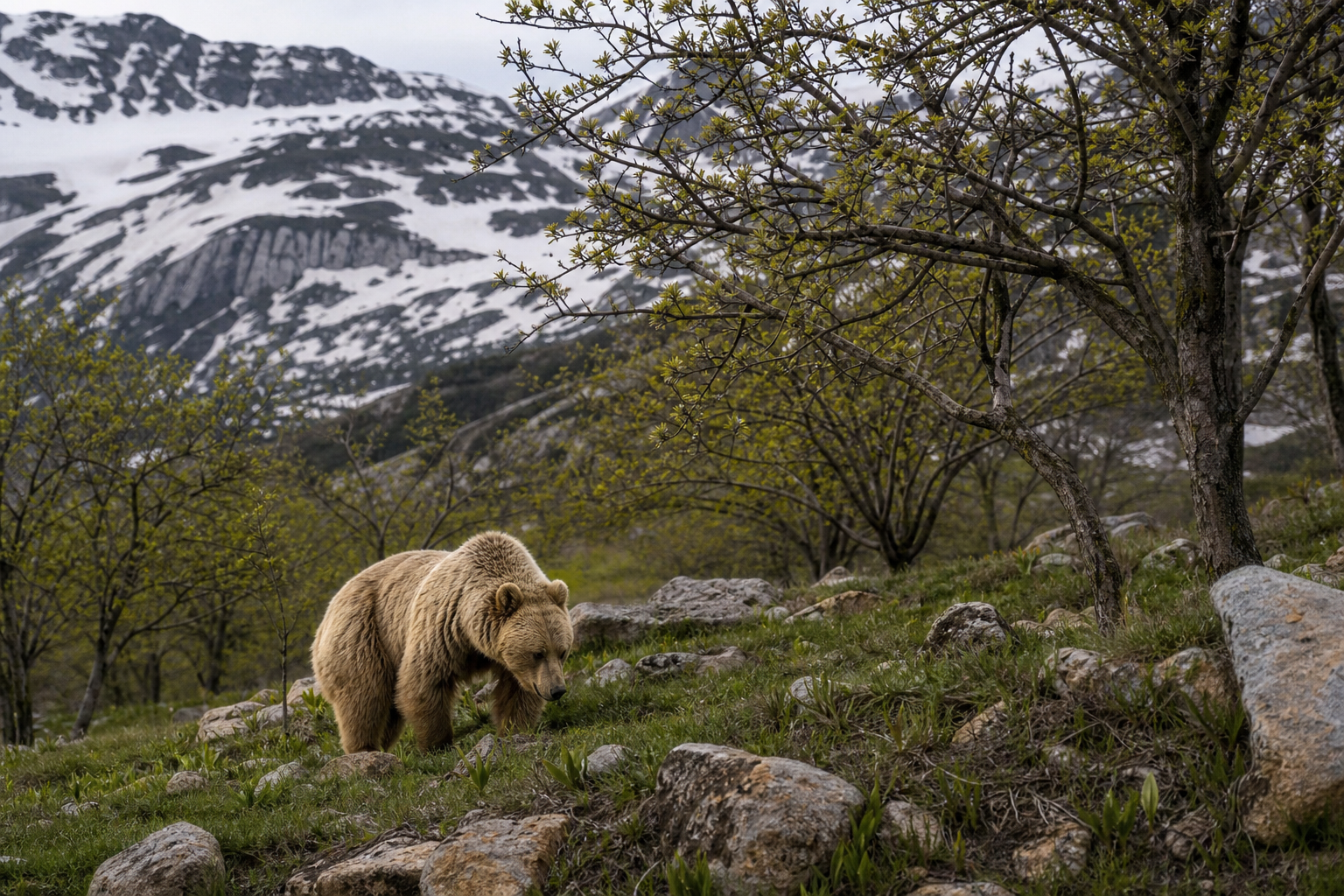
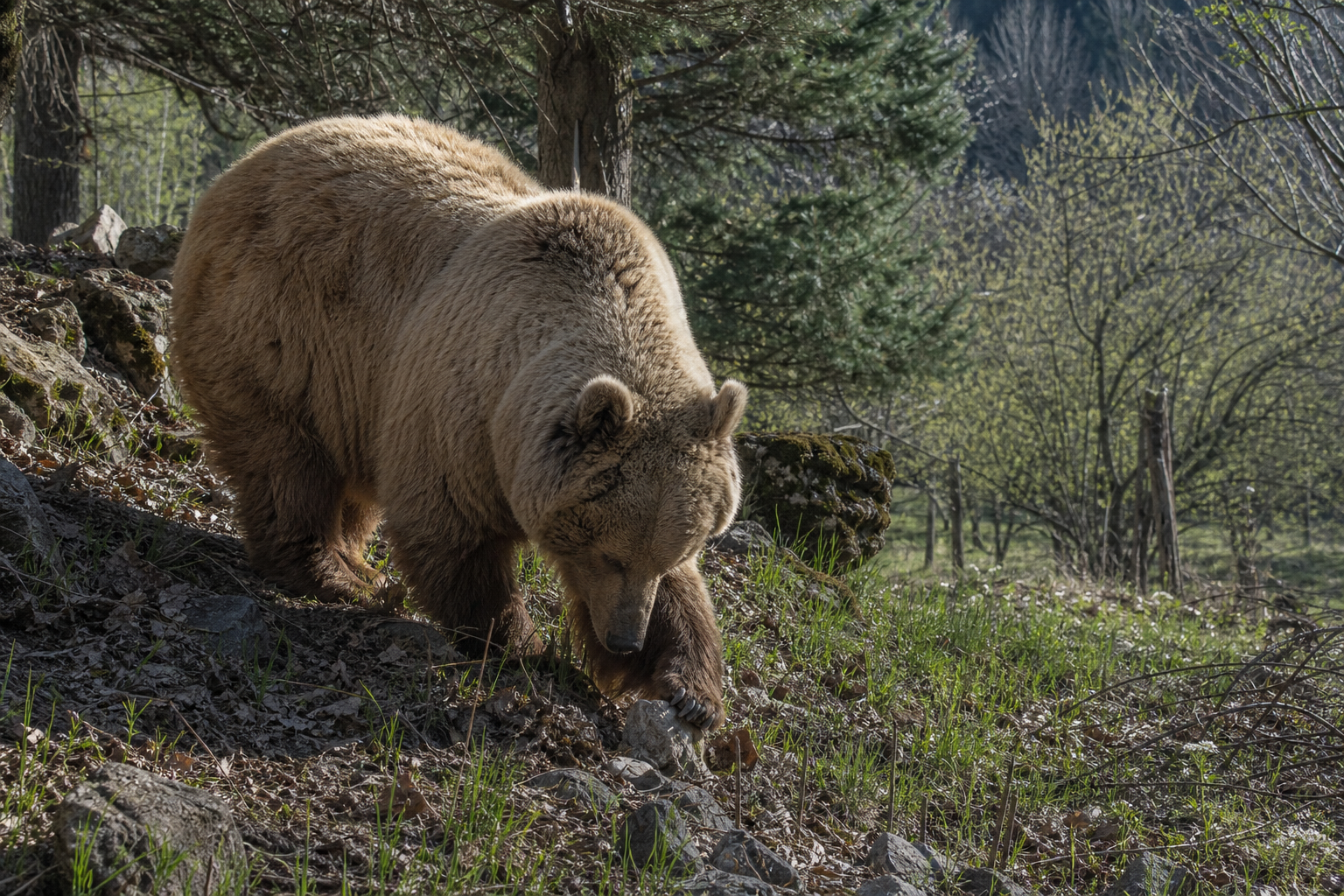
In a high valley of the Caucasus foothills, an apricot tree shakes though no wind has crossed it. A bear stands beneath the branches, pale fur dusty with soil, muzzle working among fallen fruit. Beyond the orchard, snow still lies in the folds of the mountain.
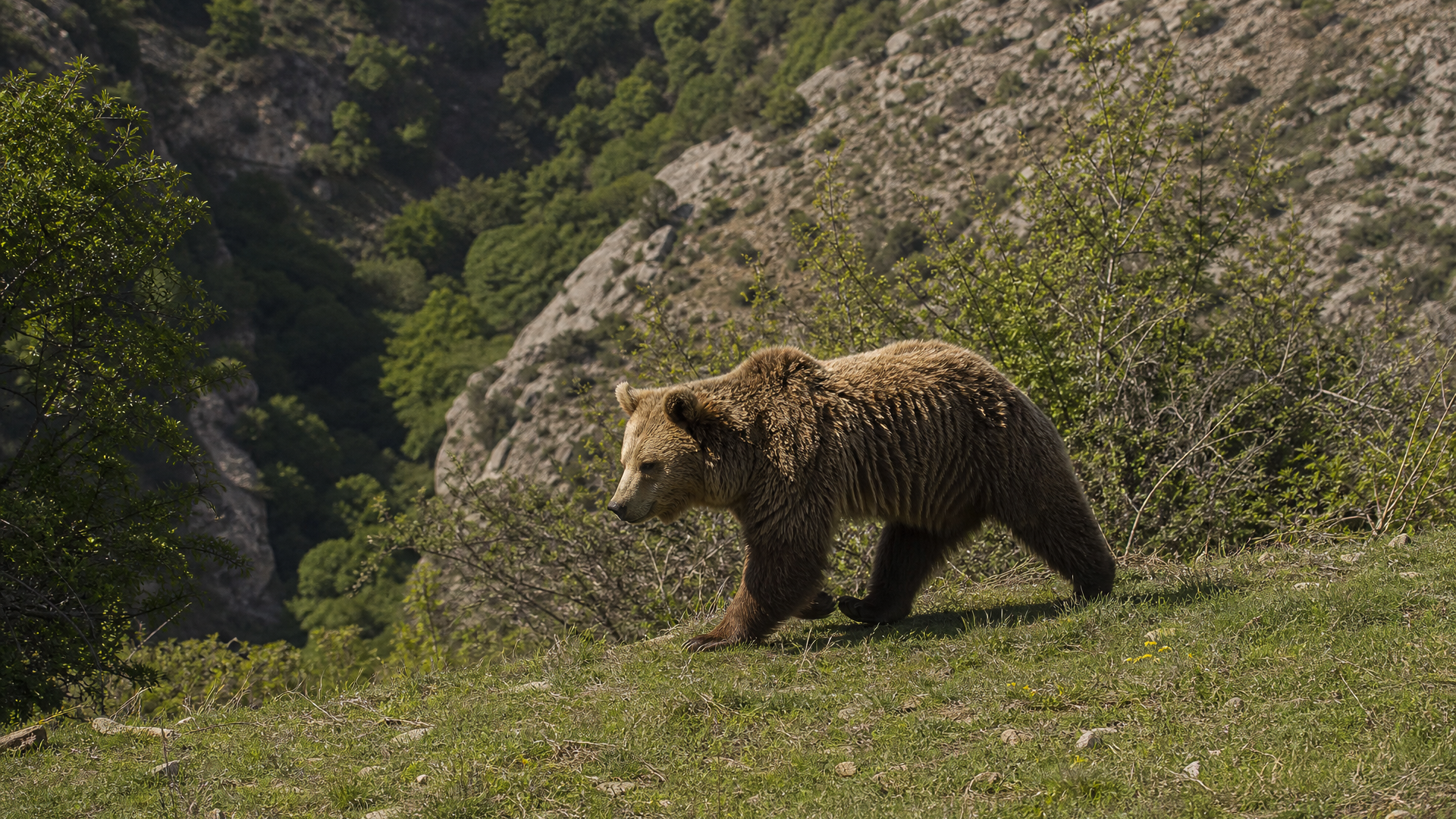
The Syrian brown bear carries contradiction in its body. It can turn stones with slow care, nose through grass, strip fruit, or rise suddenly into a size that changes the meaning of the path. Its coat may be light enough to catch the sun like dry wheat, but the animal itself is secretive, moving between forest, pasture, and cliff country mostly when people are elsewhere. Cubs learn by following the mother through scent and season, from spring roots to summer berries to autumn stores that matter more than any single meal.
Where bears remain in West Asia, they keep the mountains honest. They move seeds, open soil, clean carcasses, and remind villages that wildness still has weight. Conflict, habitat loss, and persecution have pushed them into fragments. A branch cracks in the orchard. The bear lifts its head, then melts uphill into trees.