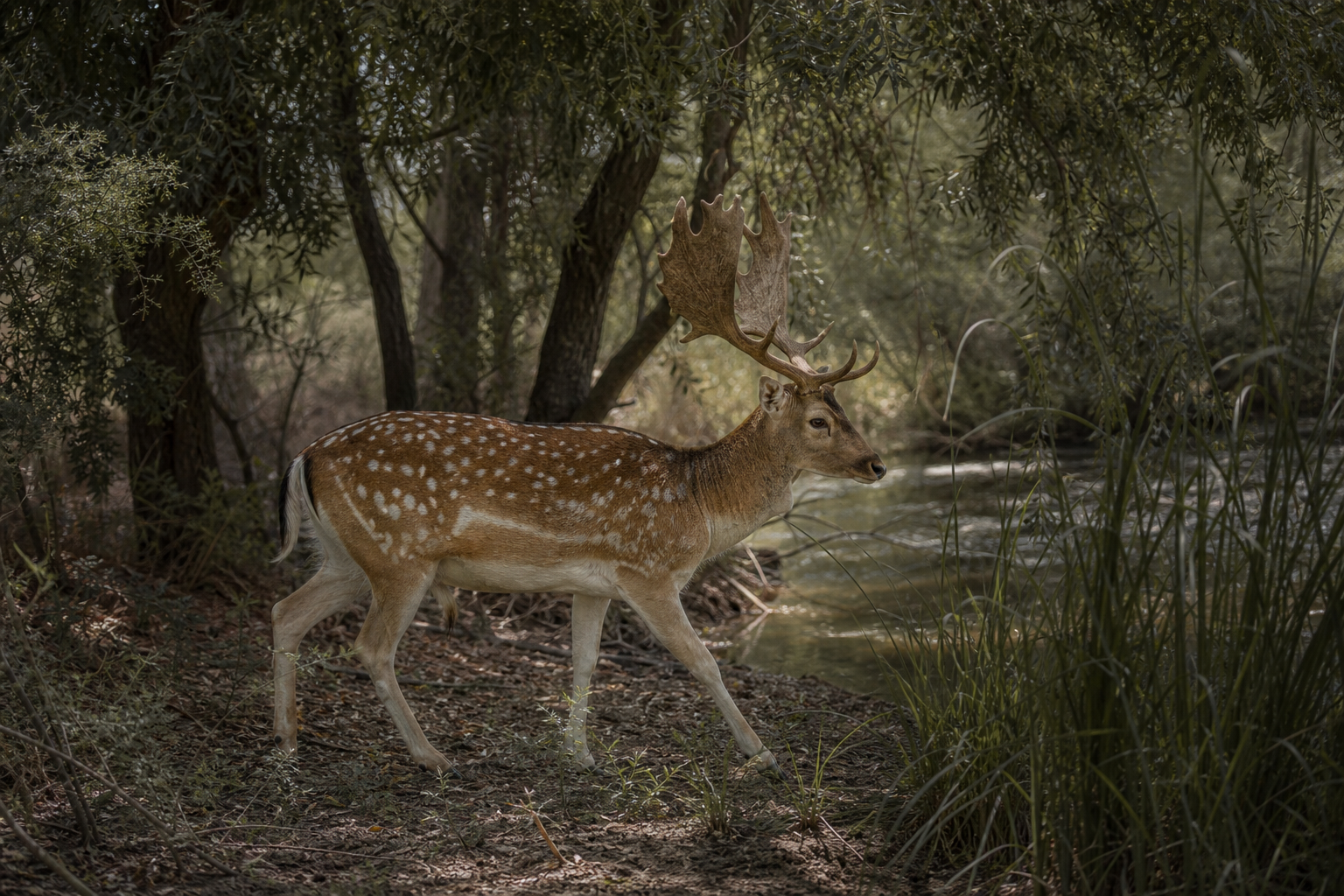
In the shade near the Dez River, leaves tremble before the deer steps out. The coat is warm brown, touched with pale spots, the body partly hidden by reeds and low branches. For an instant, the animal seems made from the same broken light that falls through the trees.
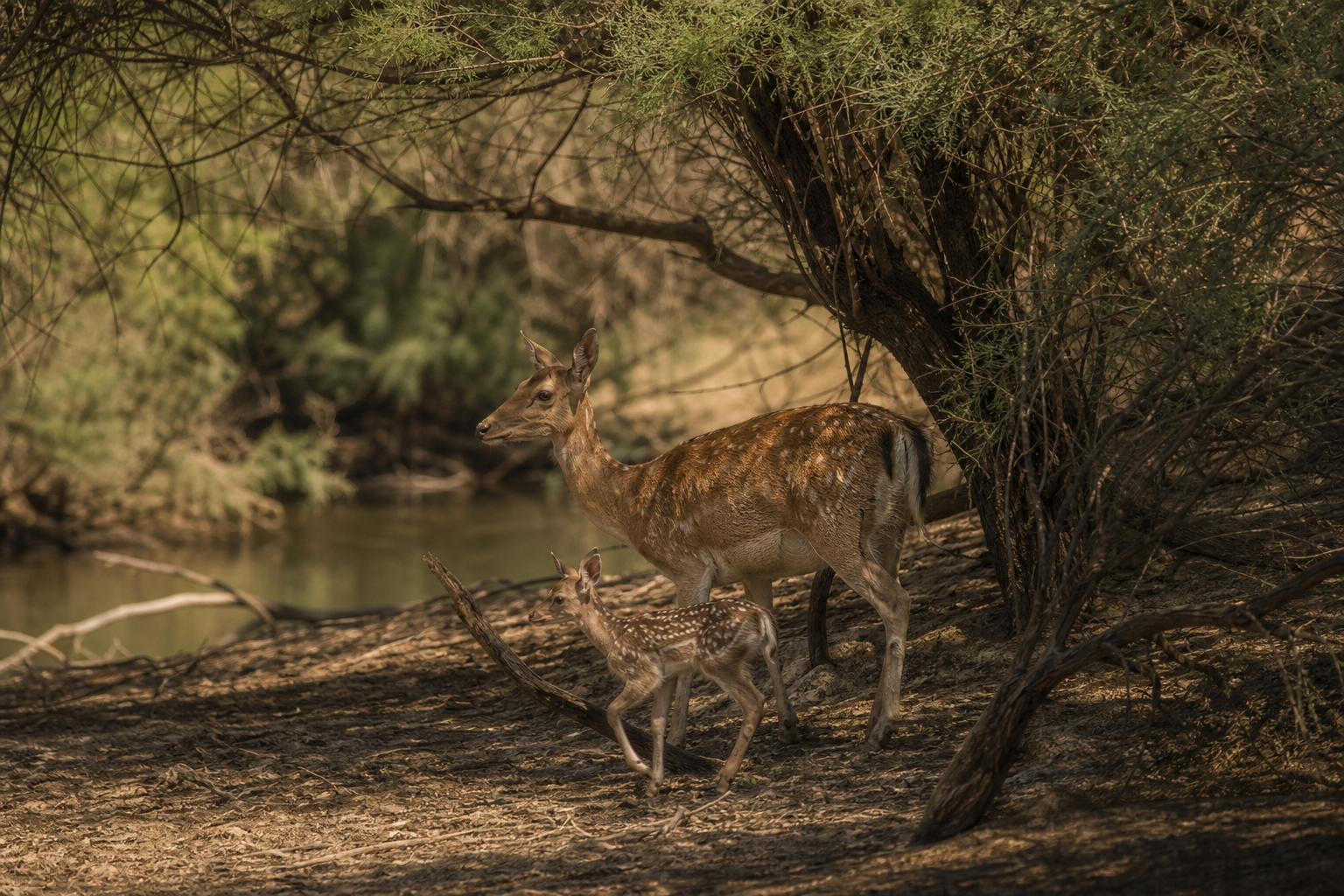
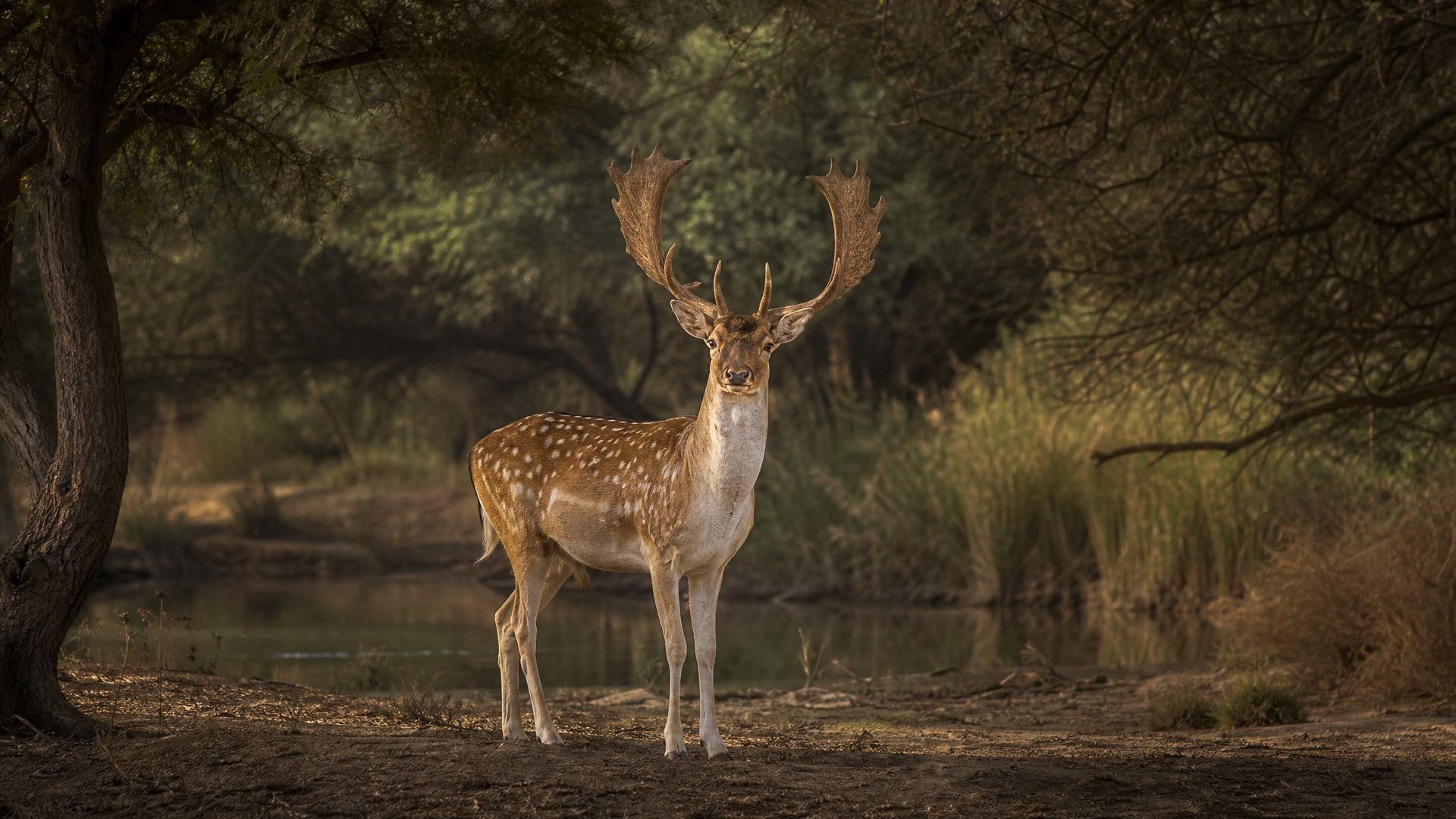
The Mesopotamian fallow deer is a creature of cover and edges. It moves with a deer's caution, head lifting between mouthfuls, legs ready, ears working separately. Males carry broad antlers that make autumn contests feel older than the orchards and fields now pressing close. Females gather where shade, water, and concealment overlap, guiding fawns through thickets dense enough to hold scent and silence.
This deer has come close to absence, and its survival is tied to careful breeding, guarded reserves, and the last suitable river woods. It browses, carries seeds, and belongs to floodplain forests that have been drained, cut, and narrowed for generations. When it withdraws into tamarisk and oak shade, the riverbank looks empty again, but not unchanged.