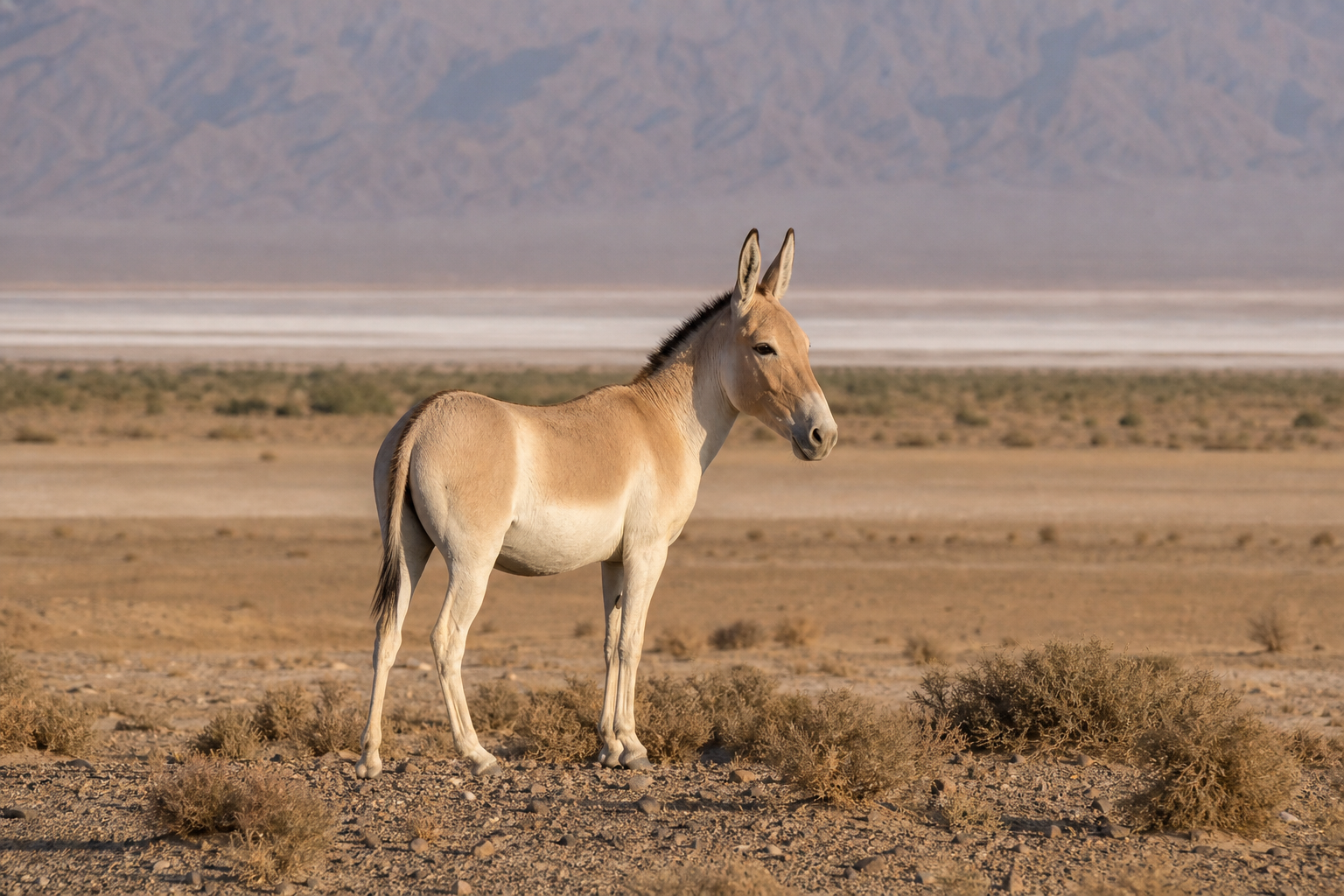
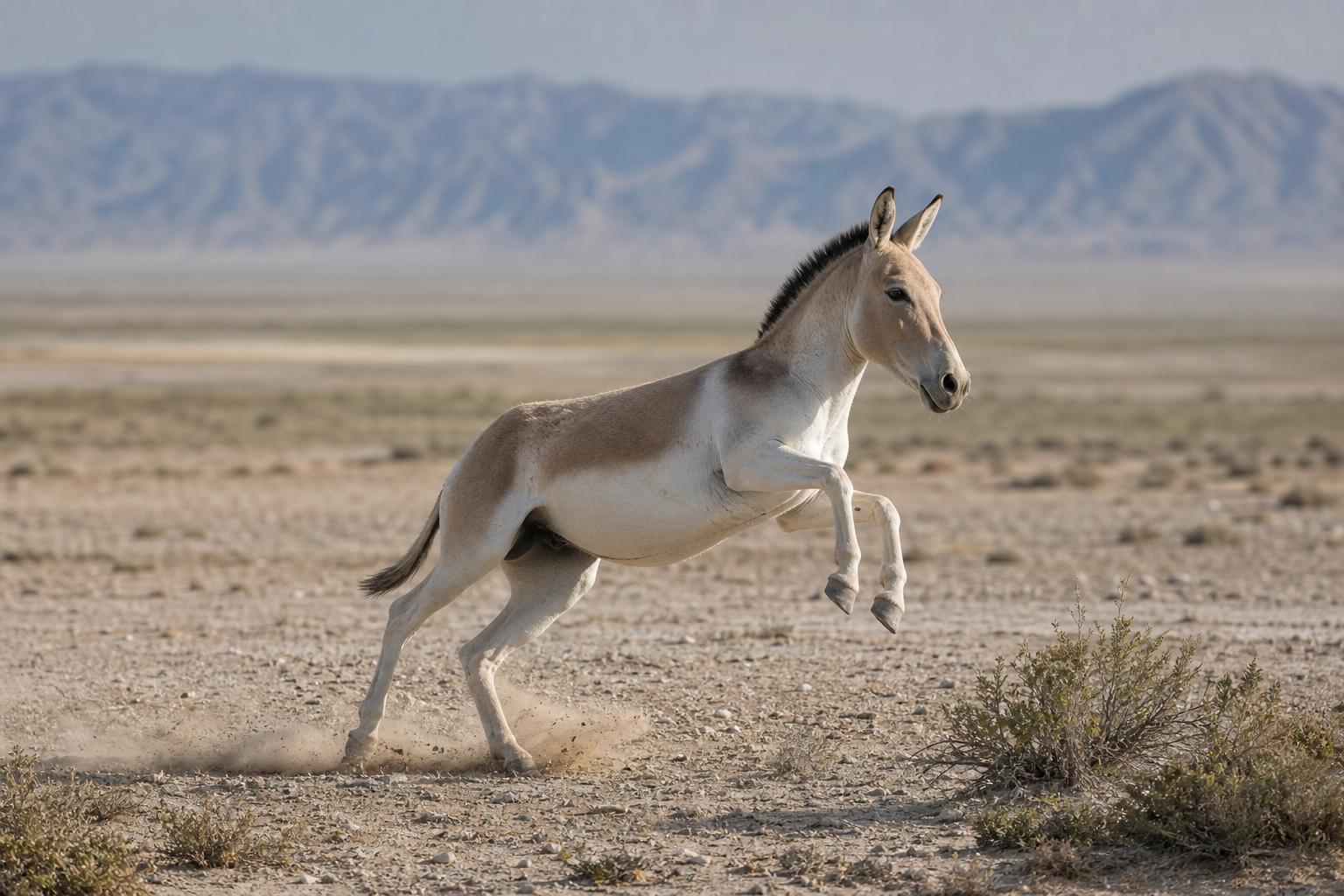
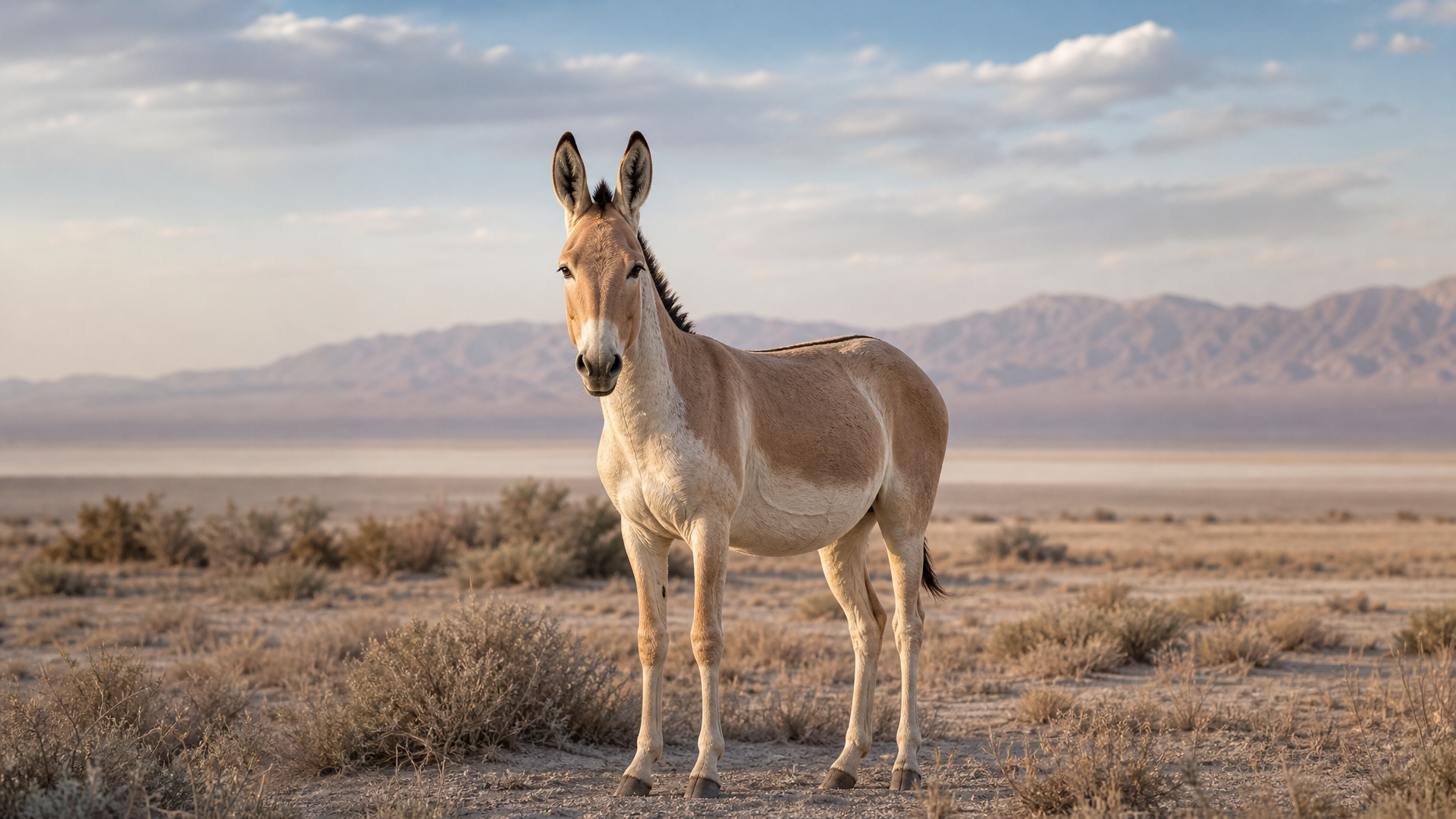
Wind moves over the Kavir plain and lifts powder from the salt flats. Then a group of onagers appears, pale bodies crossing the distance at a trot that can become speed without warning. Their dark manes stand short along the neck, each animal bright against the empty ground.
The Persian onager is not a horse made smaller, nor a donkey made wild in any simple way. It has its own taut design: long legs, clean head, alert ears, and a body tuned for open country where hesitation can be costly. Stallions read the wind and the movement of rivals. Mares keep foals close until the young legs find their strength. At water, every animal becomes watchful. The desert offers little cover, so survival must live in hearing, speed, and distance.
These onagers once moved across a wider dry world. Now their remaining strongholds are separated by roads, fences, and the pressure of people and livestock. They graze, travel, and keep open plains alive for scavengers and hunters alike. A small band breaks into a run, and the horizon briefly has a pulse.