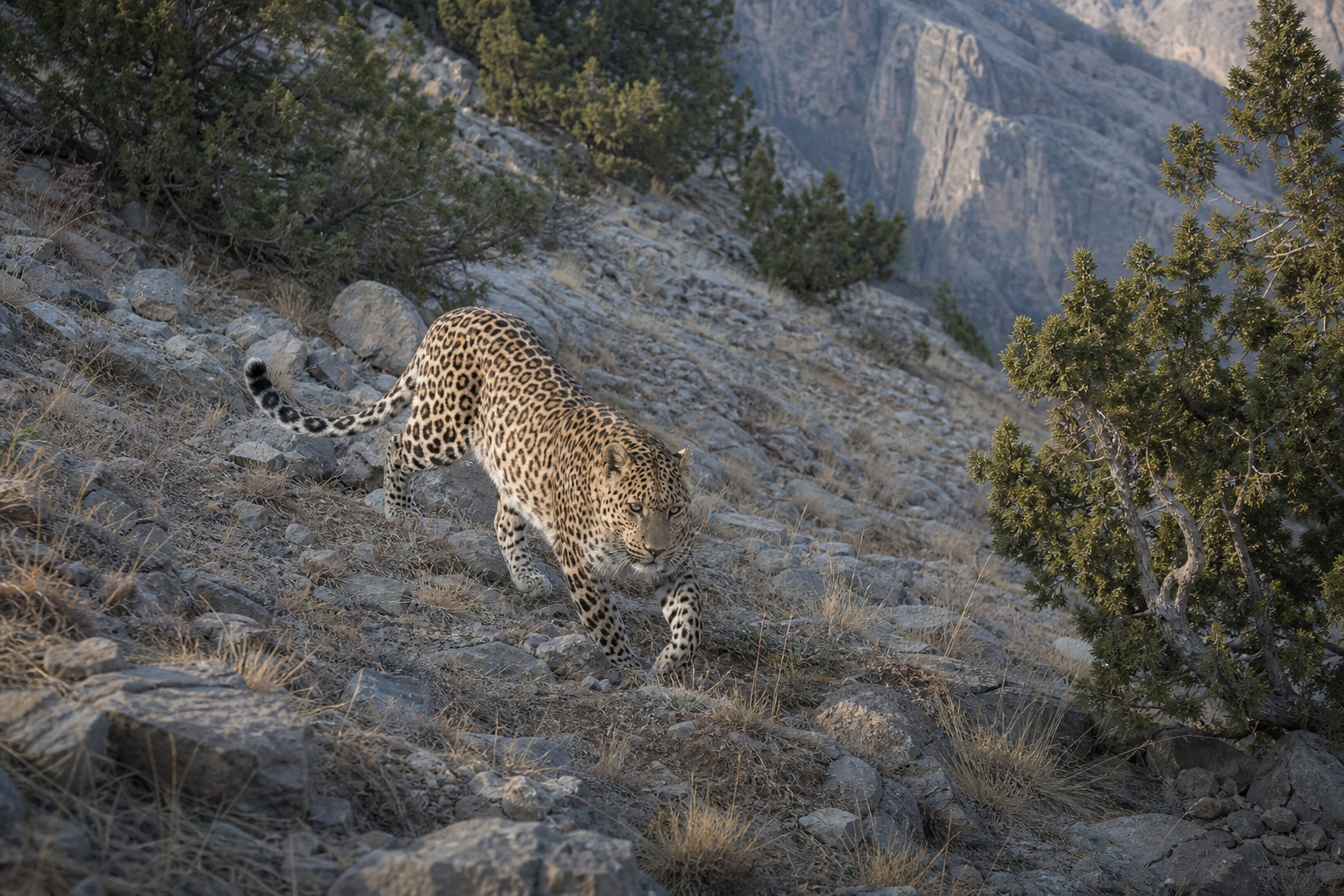
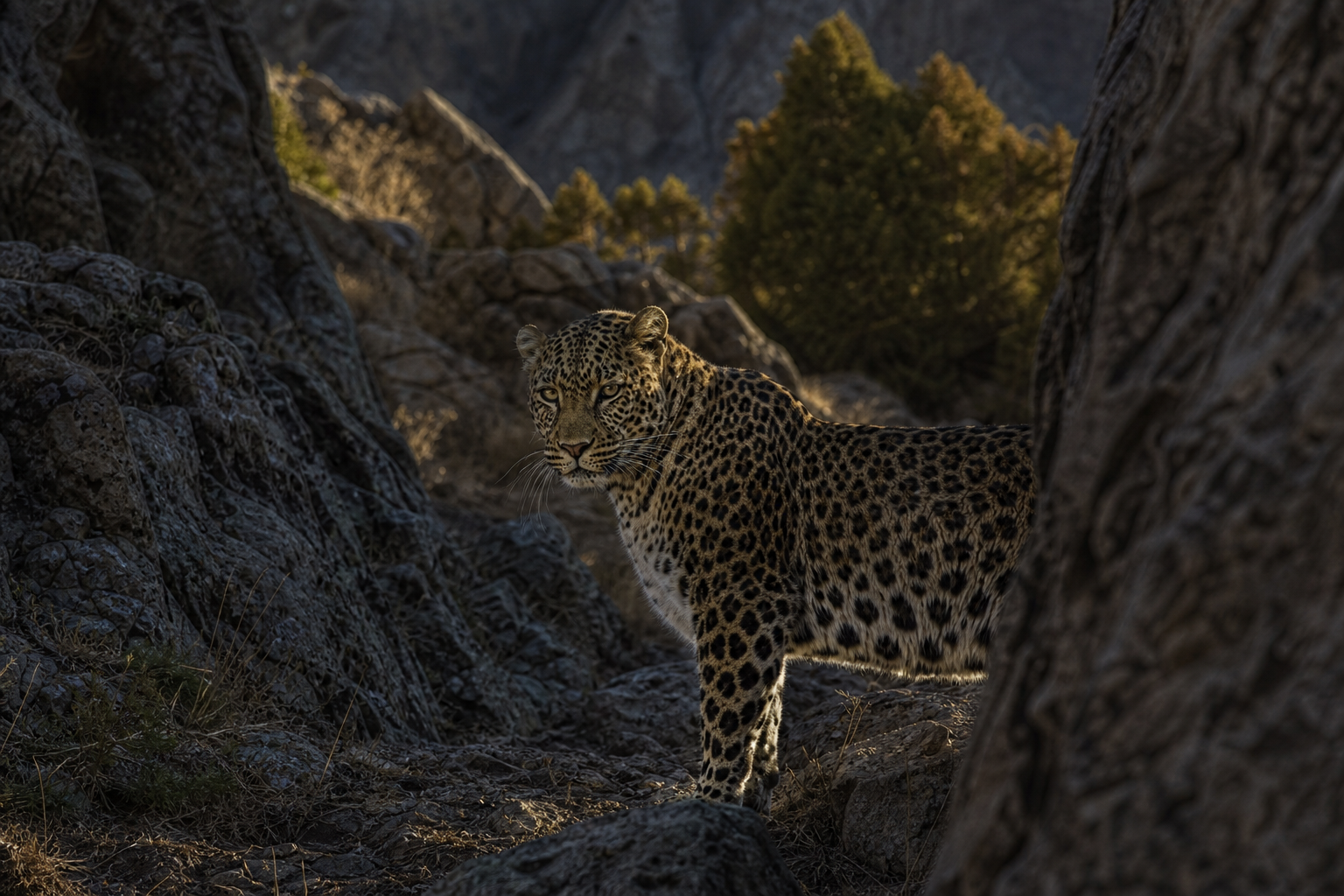
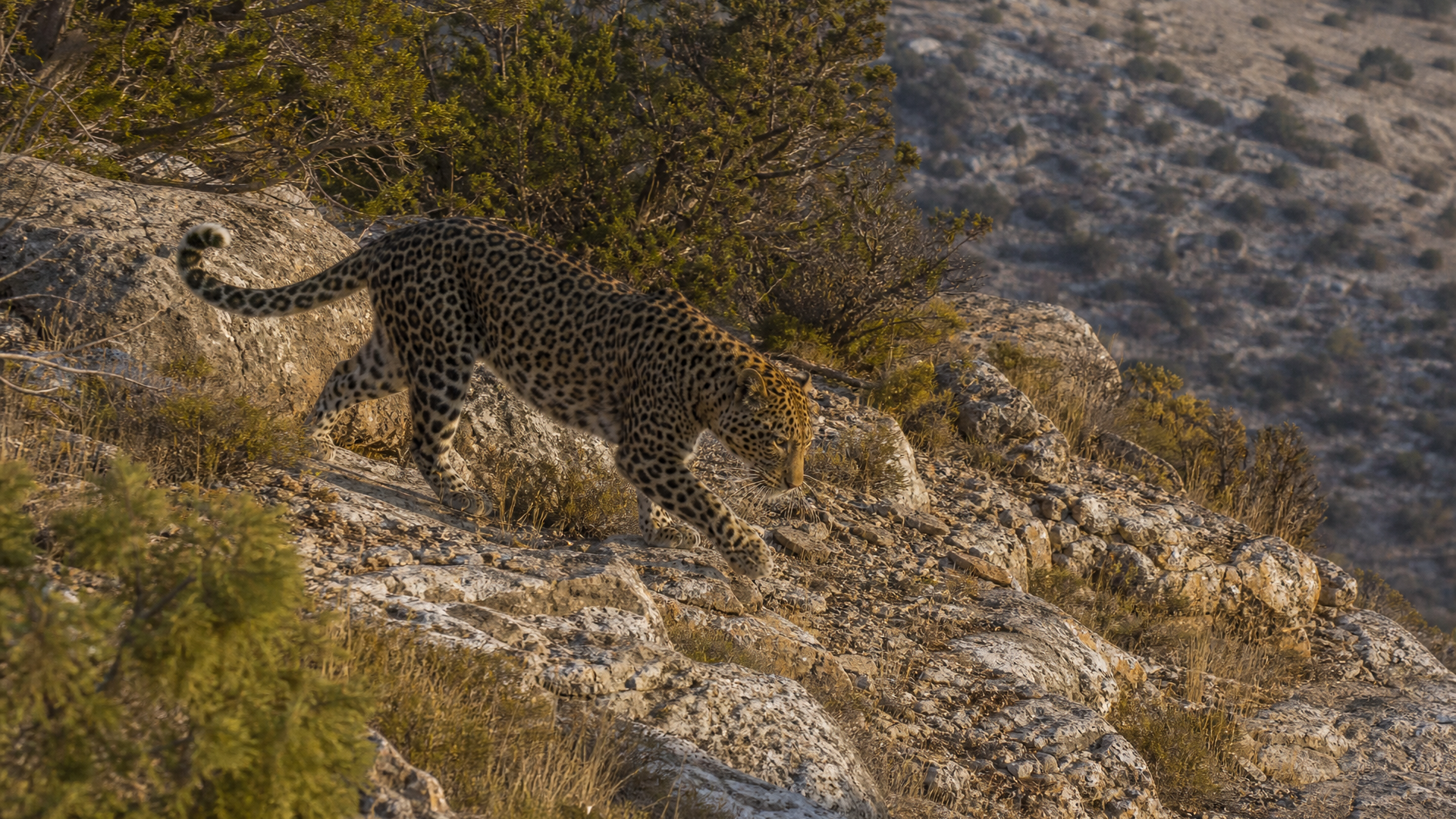
The slope has been empty for an hour, or seemed to be. Then a tail moves between juniper and stone, and the leopard becomes visible by leaving. Its rosettes match the broken light so closely that the mountain appears to have given up one of its own shadows.
The Persian leopard is power held low to the ground. It moves with the liquid patience of a cat that can wait out a valley, placing its paws where loose rock will not speak. The head is broad, the shoulders heavy, the body long enough to fold around cover and vanish behind a single shrub. Ibex, wild goats, boar, and smaller lives share a country shaped by that hidden presence. Even when unseen, the leopard changes where animals feed and how long they linger.
Its range is now a chain of difficult places rather than a continuous kingdom. Poaching, prey loss, roads, and conflict with livestock narrow the paths between mountains. The leopard does not know itself as rare. It knows wind, scent, stone, and hunger. It slips behind a ridge, and the hillside becomes ordinary only to eyes that missed it.