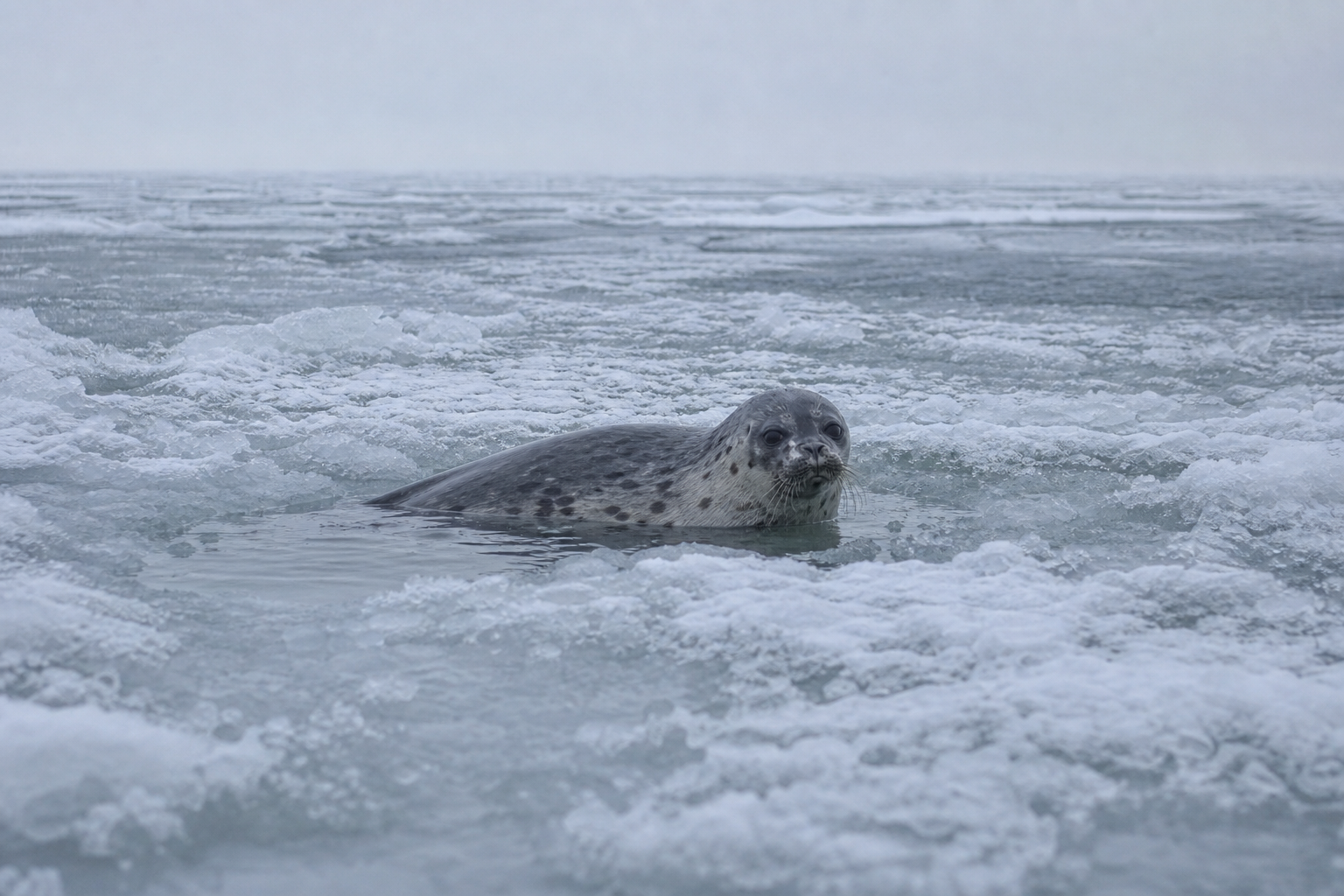
Winter lays a pale skin over the northern Caspian, and a dark head rises through a breathing hole. Steam leaves the nostrils. Around it, the ice creaks softly, holding a sea that has no ocean beyond it.
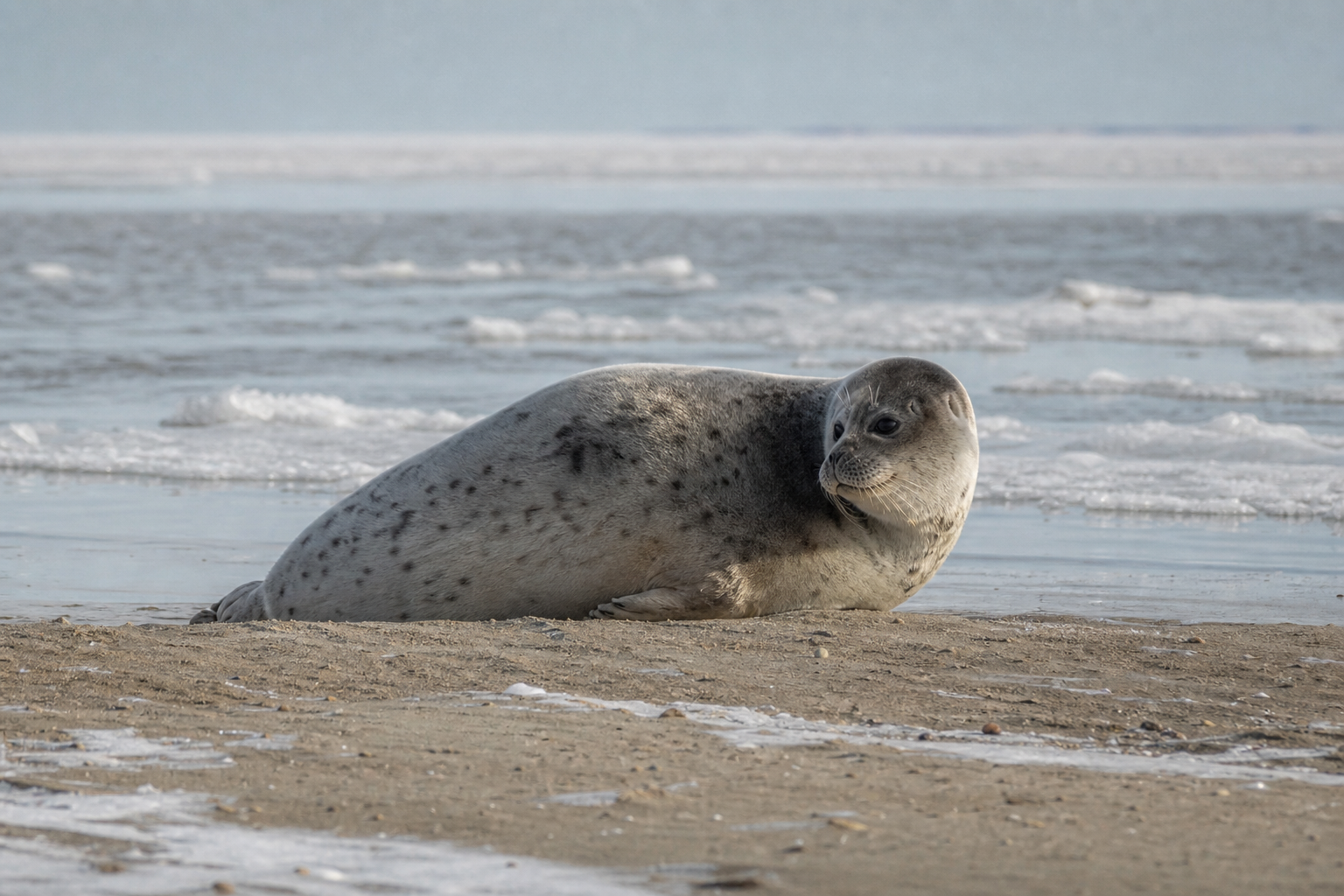
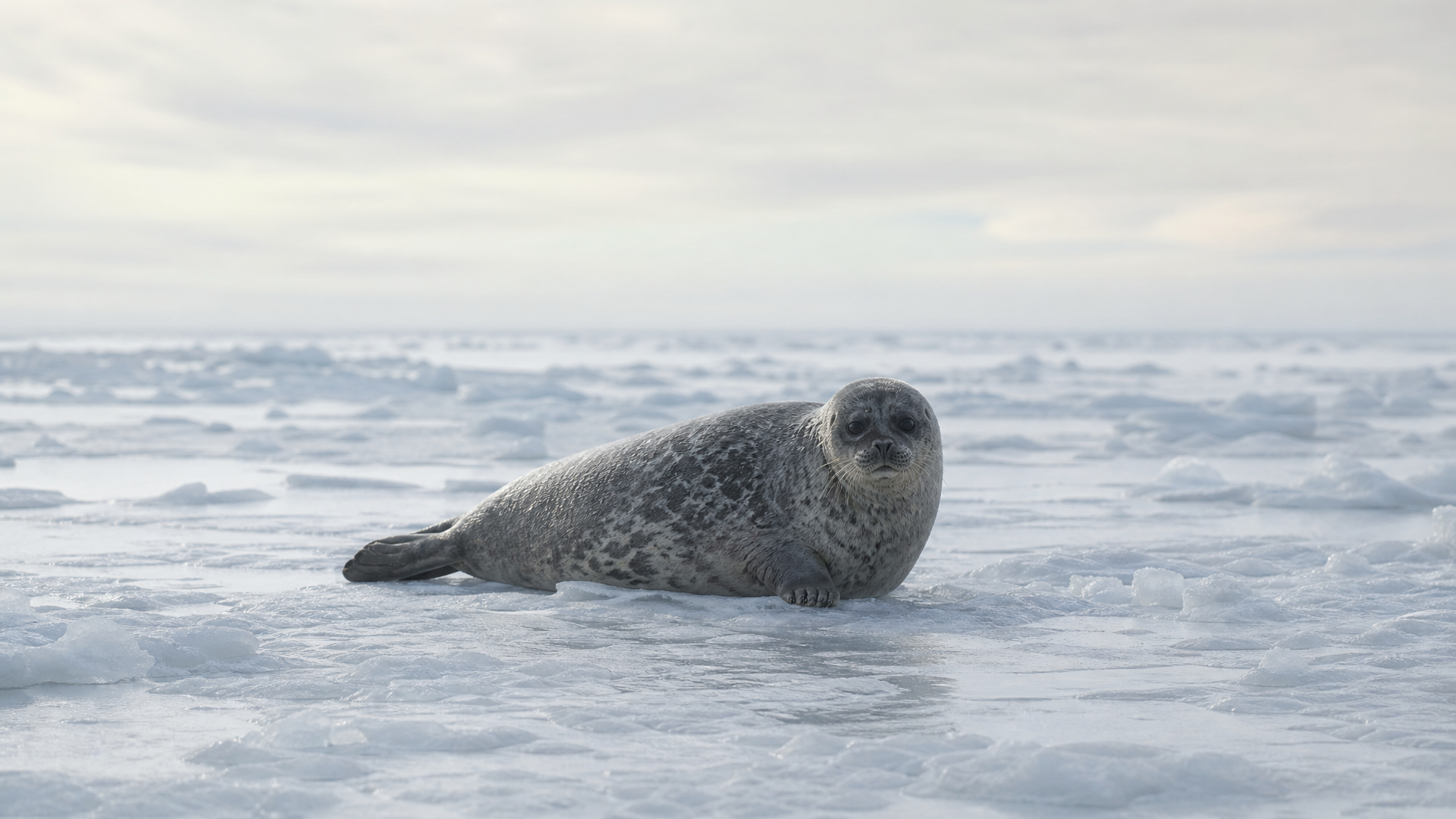
The Caspian seal belongs to a closed world of shifting salinity, shallow northern ice, and long movements over open water. Its body is compact, its face rounded, its eyes dark with the wet shine of an animal that must live between air and depth. Pups are born on ice when the season holds, white coats lying against a surface that can change too quickly now. Adults dive after fish, surface in quiet intervals, and gather on islands or sandbars where rest is never free from alertness.
As the Caspian changes, the seal carries every pressure in its small body: warming ice, pollution, disease, fishing gear, oil work, and disturbance along the shore. It is predator and prey, traveler and measure of water health. The head sinks below the breathing hole, and the inland sea closes over its only seal.