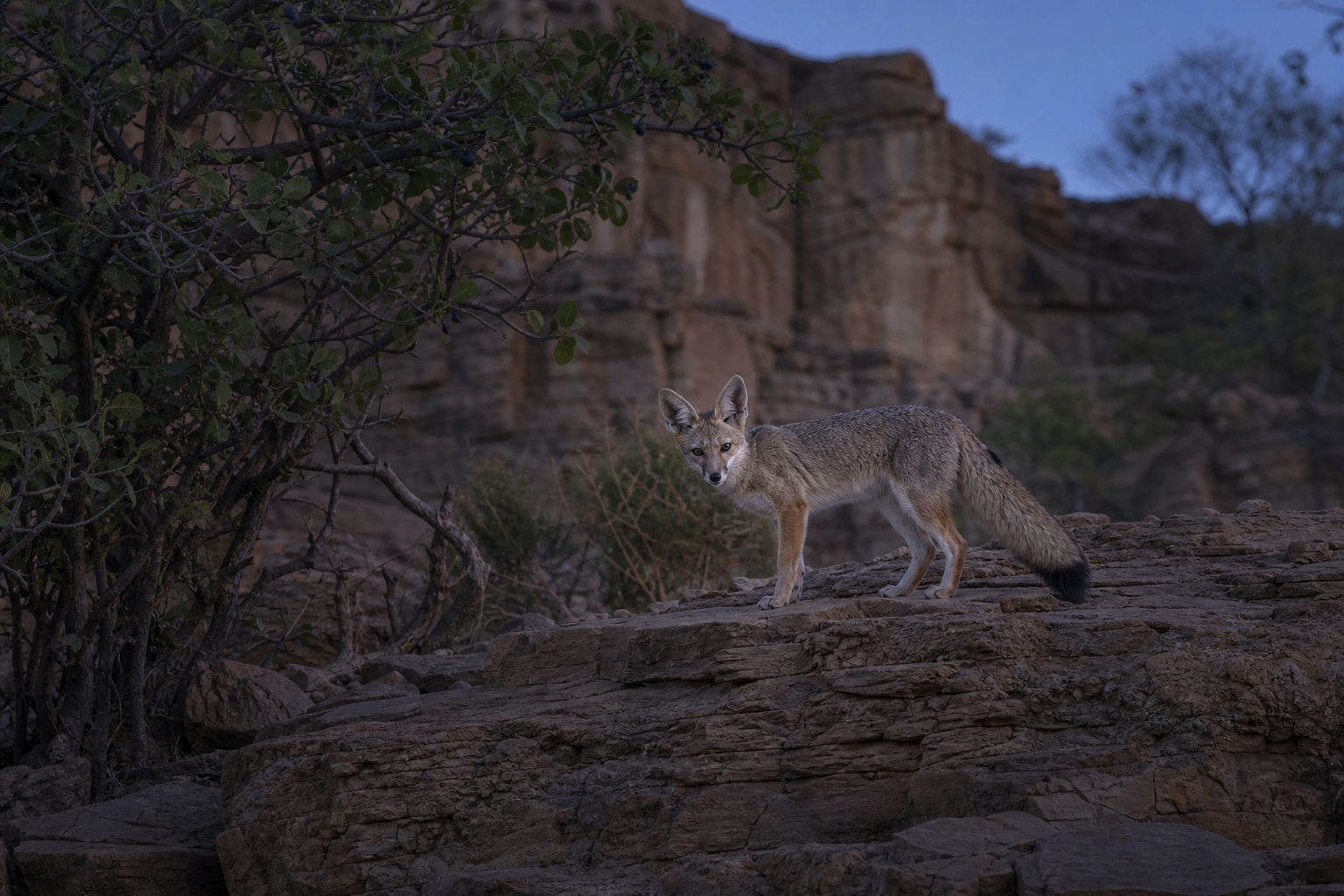
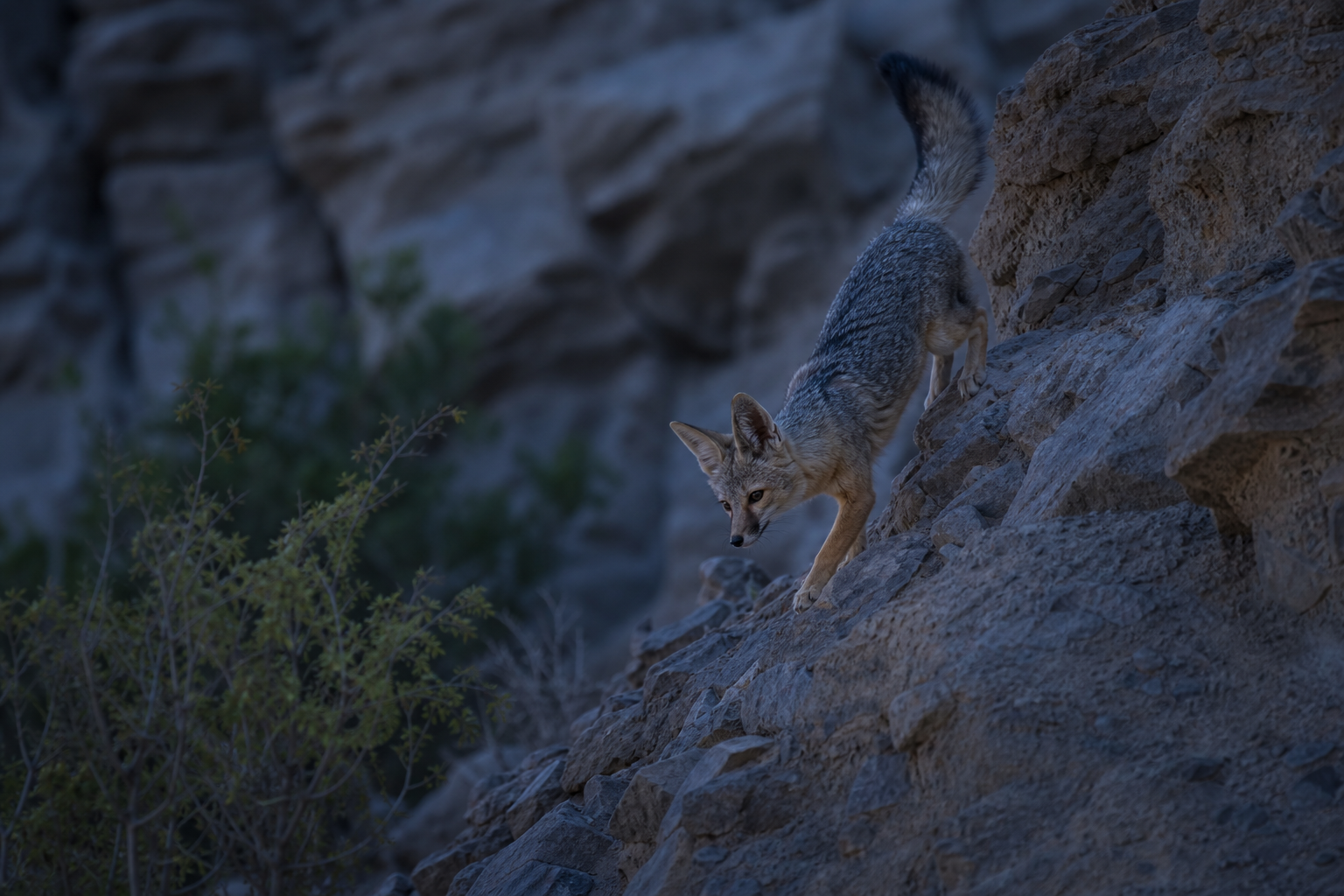
After sunset in a dry wadi, the rock keeps the day's warmth. A small fox appears on a ledge, tail long behind it, ears opened to the dark. It pauses beside a wild fig, then slips down the cliff as lightly as a falling leaf.
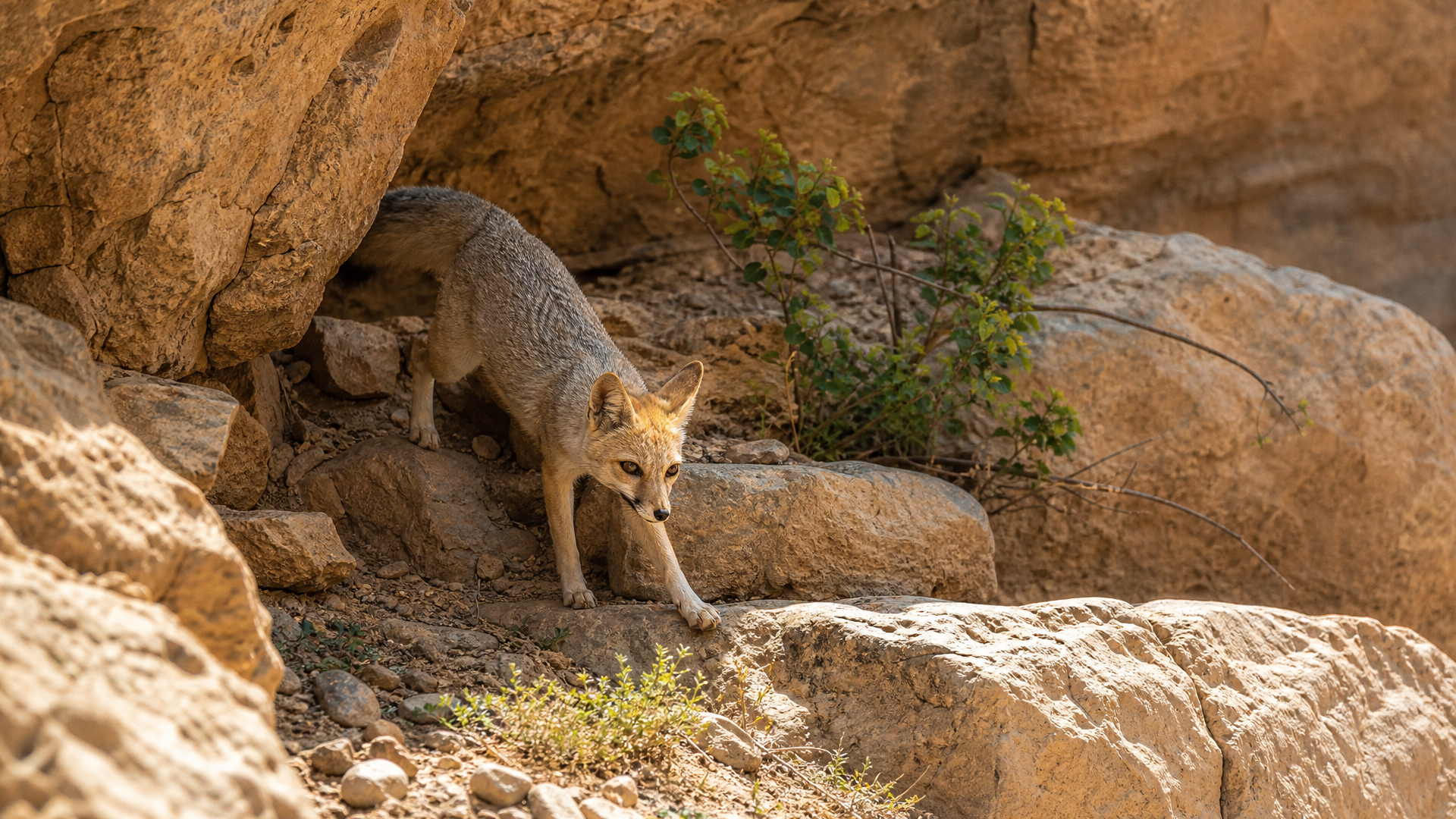
Blanford's fox seems built from the spare parts of difficult country: delicate feet, strong claws, a narrow muzzle, and ears large enough to catch insect movement from stone. It climbs better than a fox appears to have any right to climb, crossing cliffs, terraces, and broken slopes where a heavier body would be trapped. Its nights are full of small choices: fruit, beetles, lizards, a safe crevice, a mate's track, the scent of a caracal or eagle owl in the air.
In West Asia's rocky deserts and wadis, it turns overlooked food into fox life and carries seeds through places too dry for waste. But roads, poisoning, persecution, and the loss of quiet cliffs can shrink even an animal this discreet. The fox looks back once, eyes catching the last light, and is gone into stone.