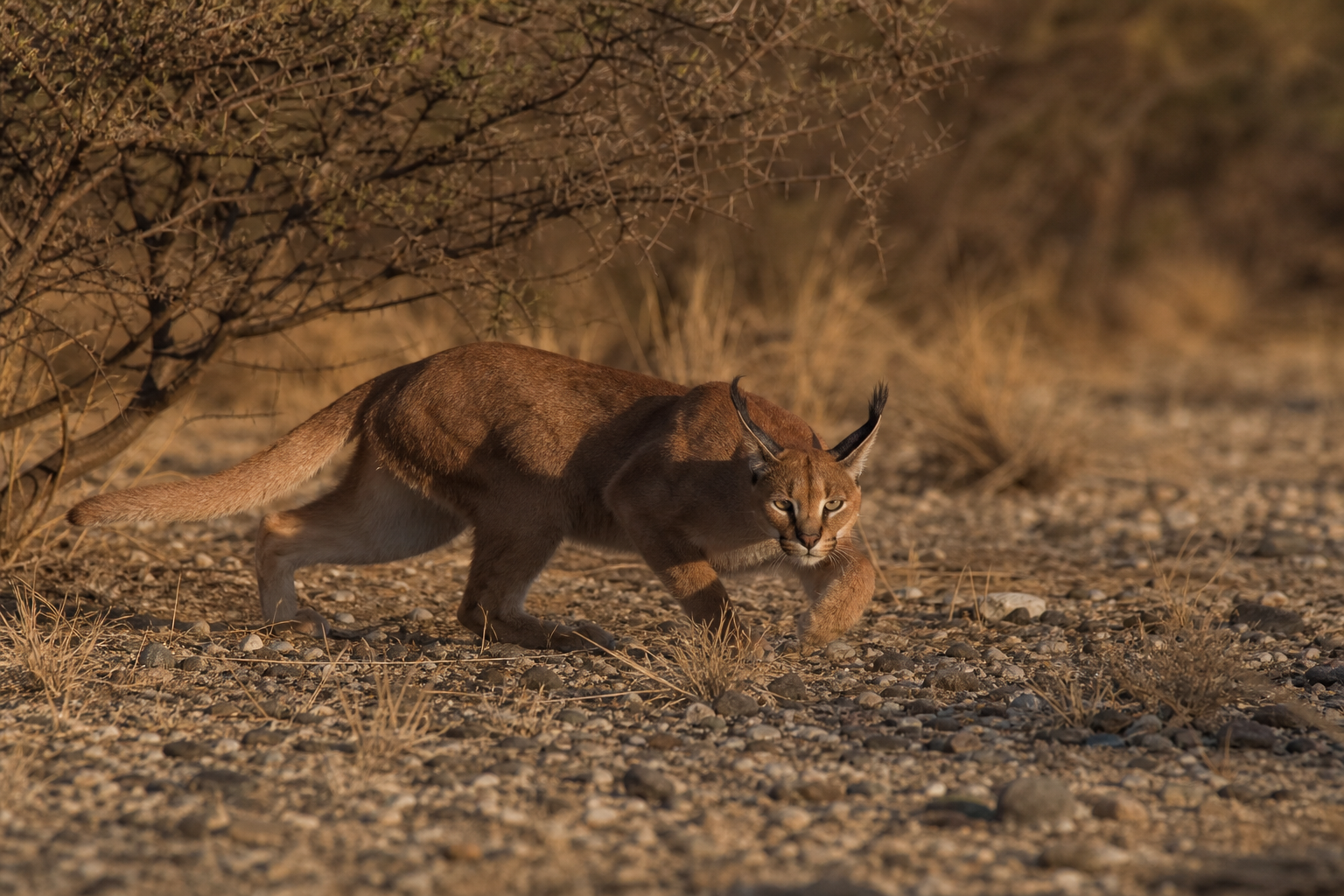
The acacia shadow is empty until it blinks. A caracal lies flat in the tawny grass, ears lifted, black tufts moving with the faintest air. Above it, sandgrouse pass low toward water, their wings whispering over the plain.
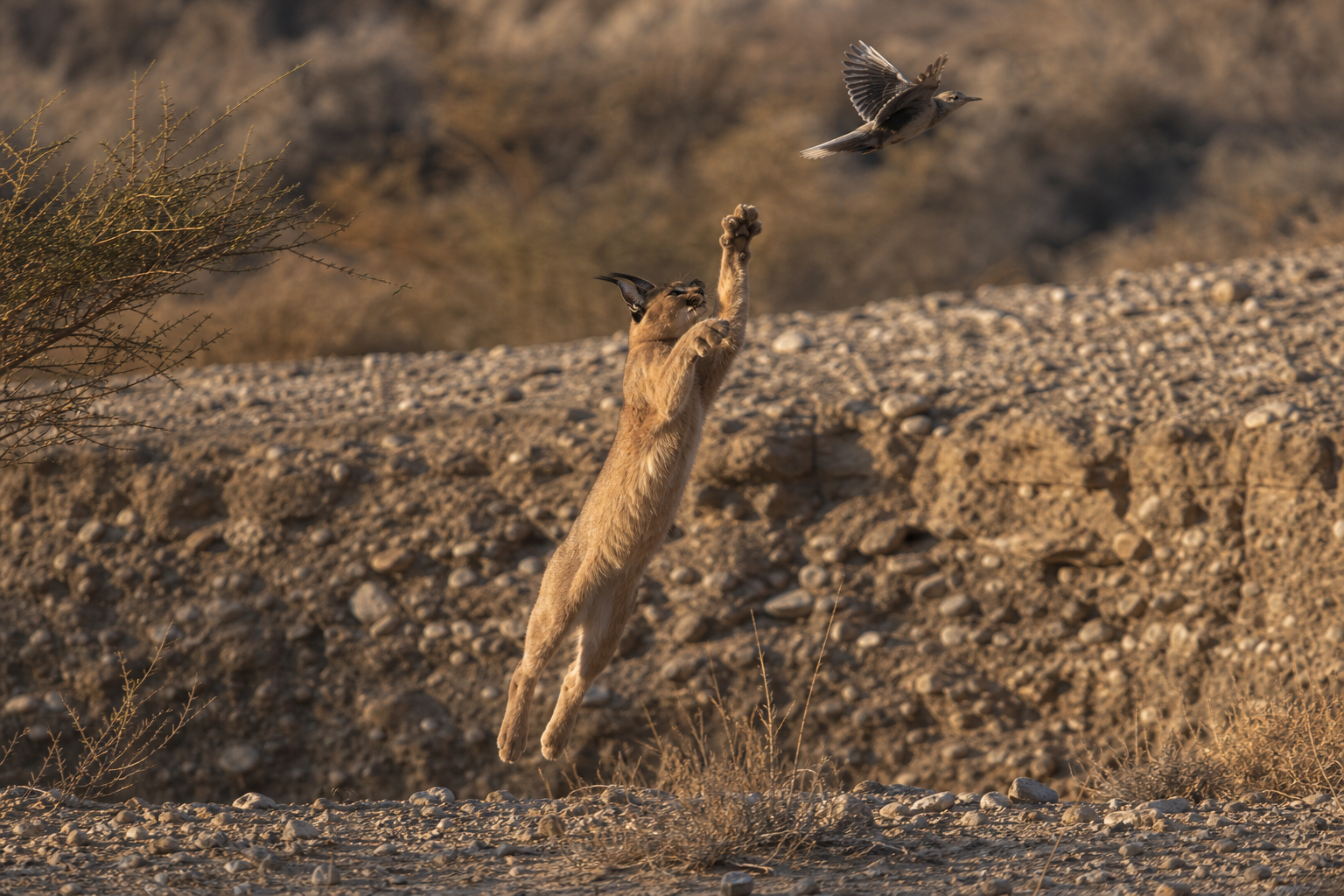
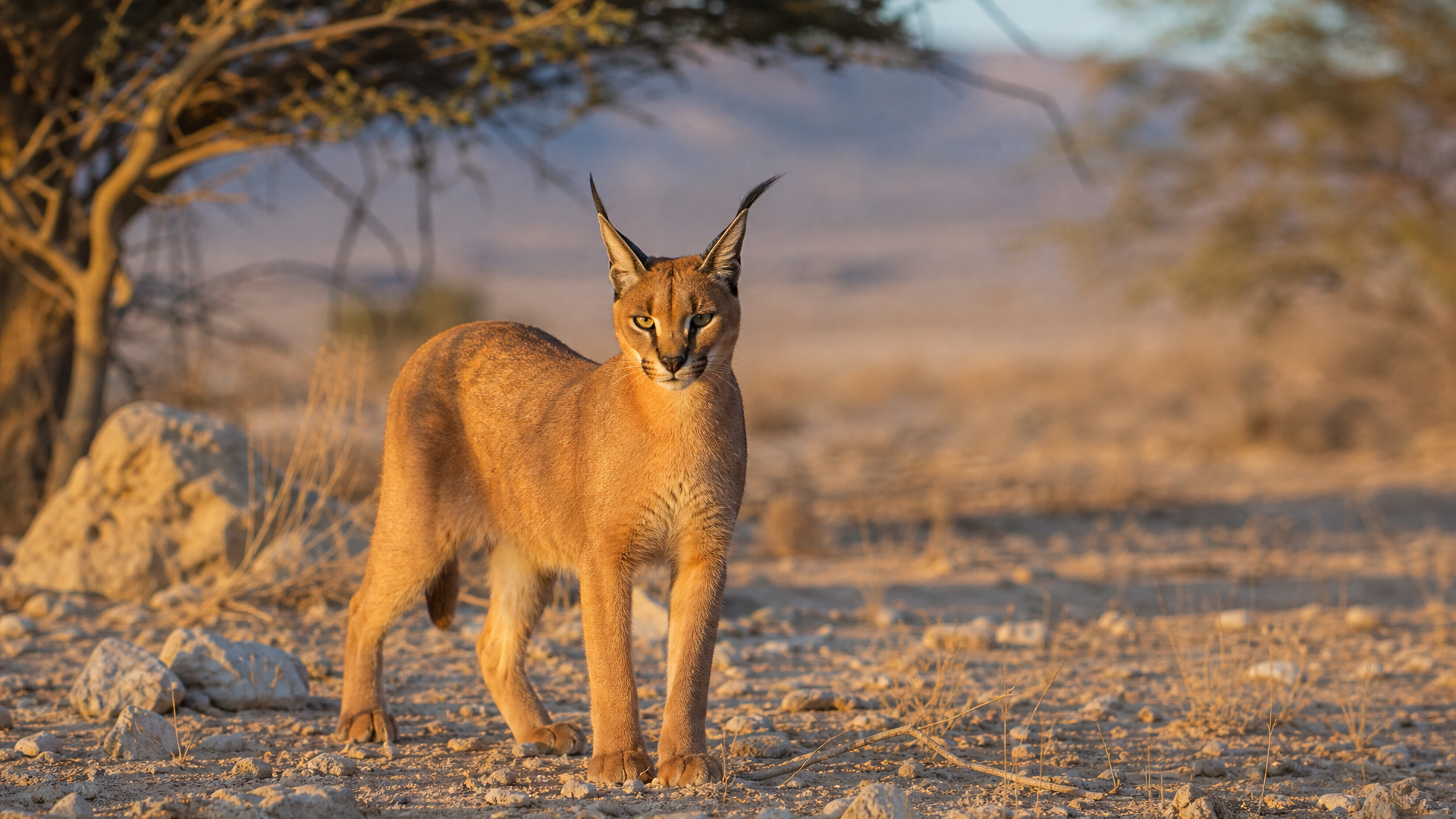
The Arabian caracal is a compact force, all muscle, patience, and sudden height. It hunts close to the ground until the moment asks otherwise, then launches upward with a twist that can take birds from the air. The face is clean and severe, marked by dark lines from eye to muzzle. The ears are more than ornament; they listen, signal, and turn the cat's attention into something visible. By day it may vanish into rock or scrub. By night it works the edges of wadis, farms, dunes, and thorn.
This cat lives between wild country and human margins, taking rodents, birds, hares, and whatever the night offers. It helps keep small lives in balance, but traps, poisoned bait, road deaths, and disappearing cover press hard. The caracal rises from its crouch. For one second, the whole body becomes a vertical line against the sky.