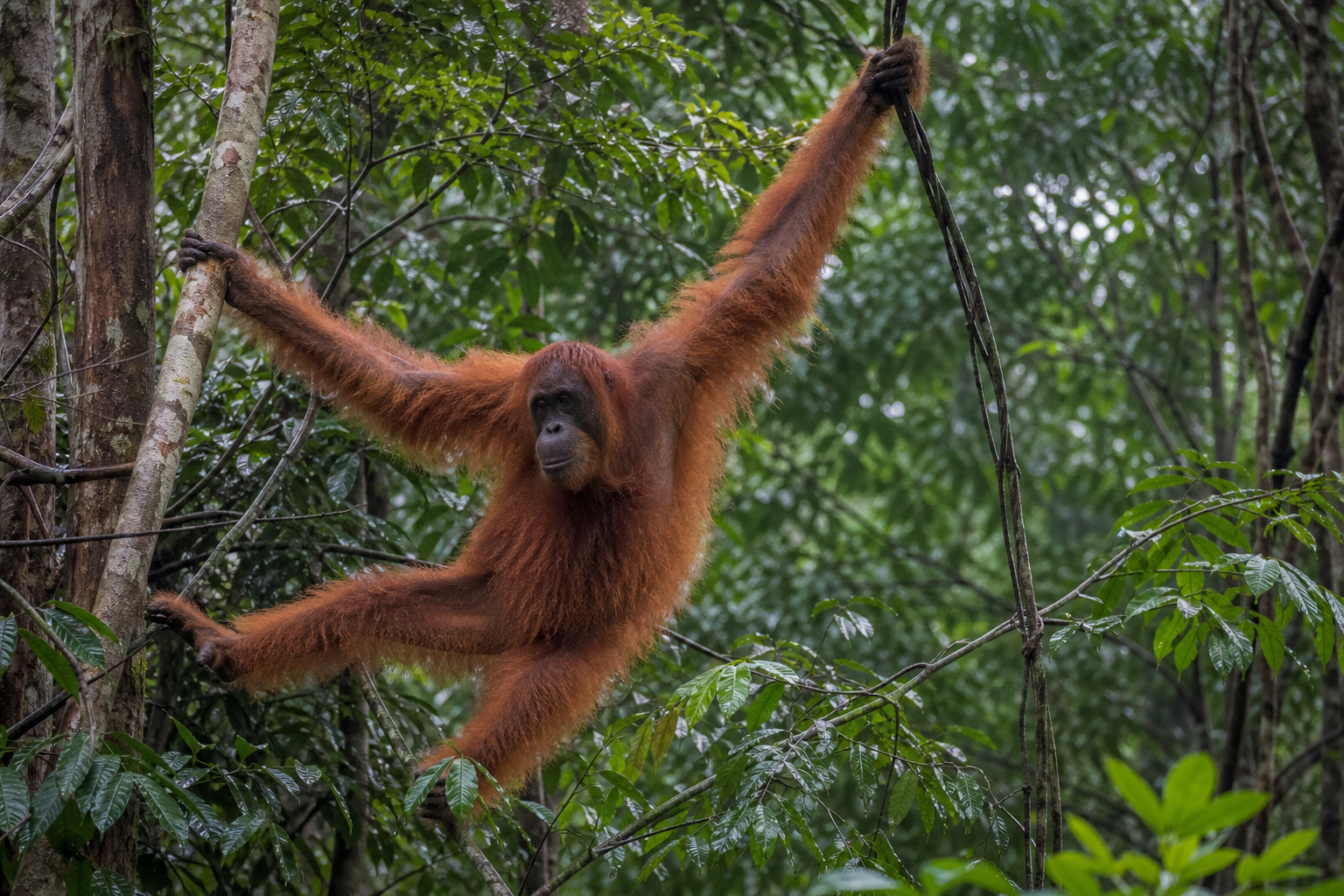
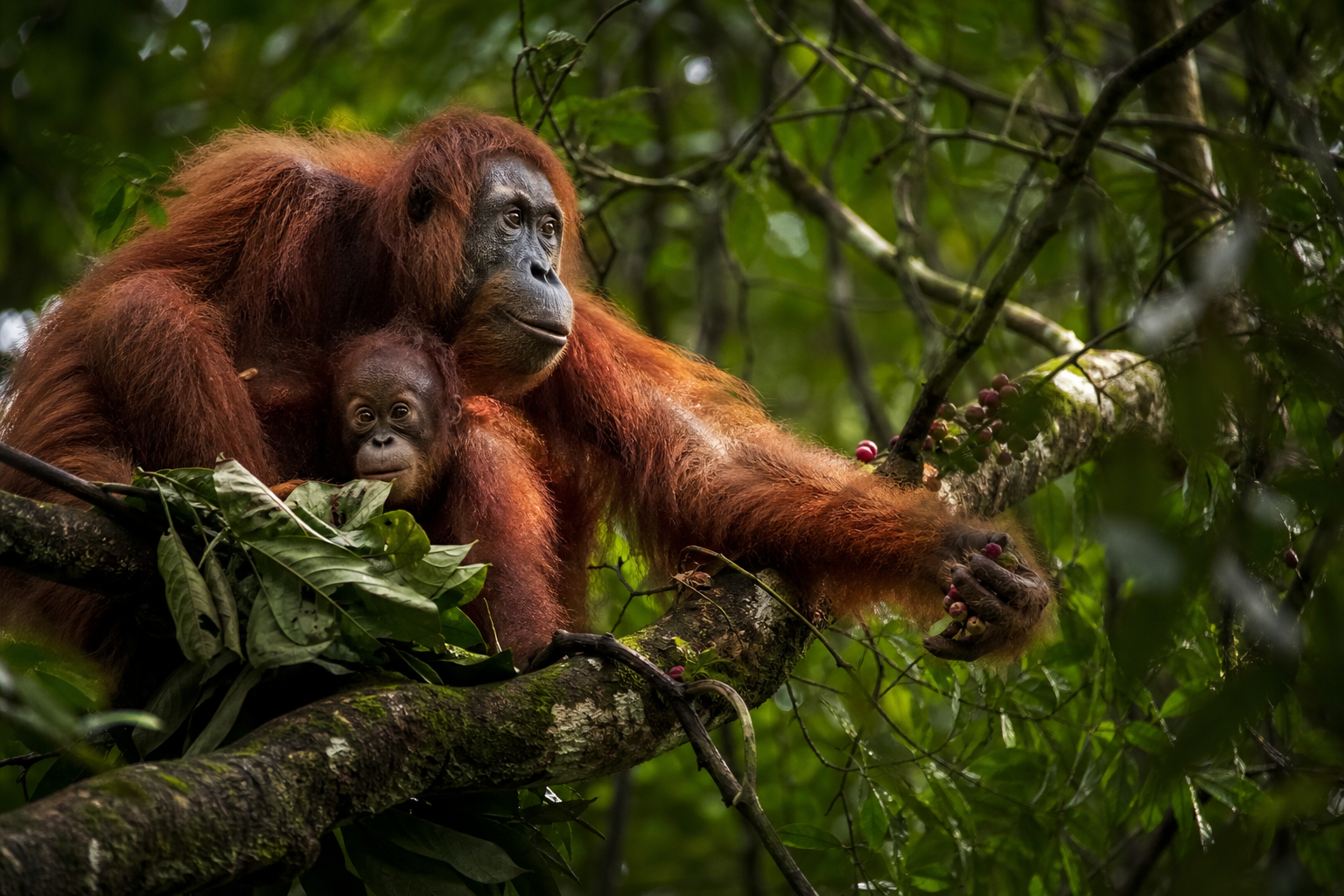
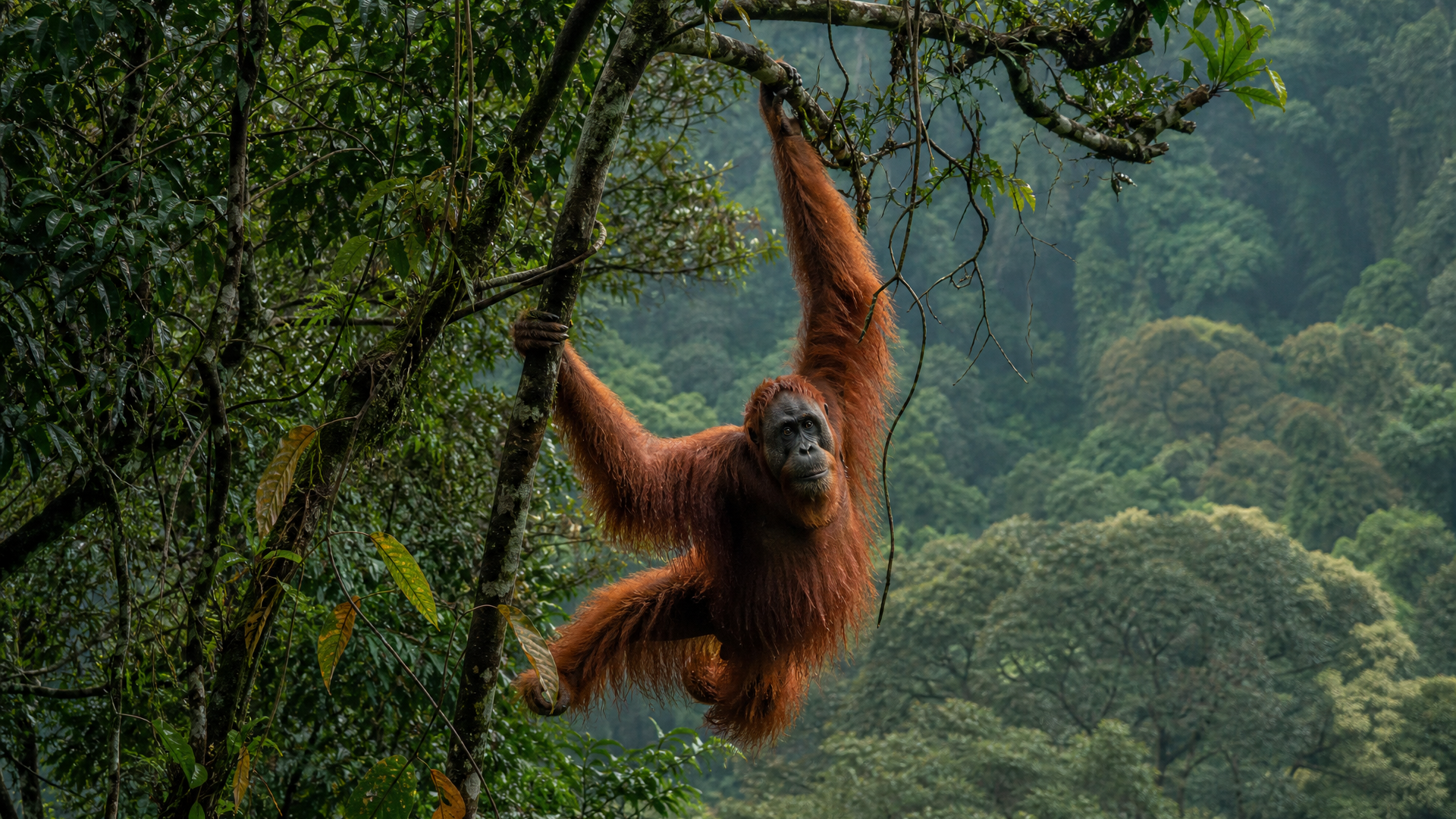
Rain collects in the leaves above Gunung Leuser, then falls in delayed drops through the green. A branch bends, another answers, and a red shape appears where the canopy is thick enough to hold a private world. The orangutan pauses with one hand around a vine, face turned toward fruit hidden deeper in the crowns.
The Sumatran orangutan moves as if every route has been considered before the body follows. Long arms test the forest. Fingers close around bark, pull, release, and reach again. The face is quiet, almost inward, but nothing near it is ignored: the weight of a branch, the ripeness of a fig, the position of a youngster watching from its mother's side. Much of its life happens above the ground, in a shifting architecture of lianas, crowns, nests, and remembered trees. At dusk, leaves are folded into a sleeping platform with a care that feels both practical and intimate.
Where orangutans feed, seeds travel through the canopy and the future of the forest changes direction. But the trees that carry their lives are cut, burned, divided, and replaced by roads and plantations. A red hand reaches for the next branch. If the branch is gone, intelligence has nowhere to go.