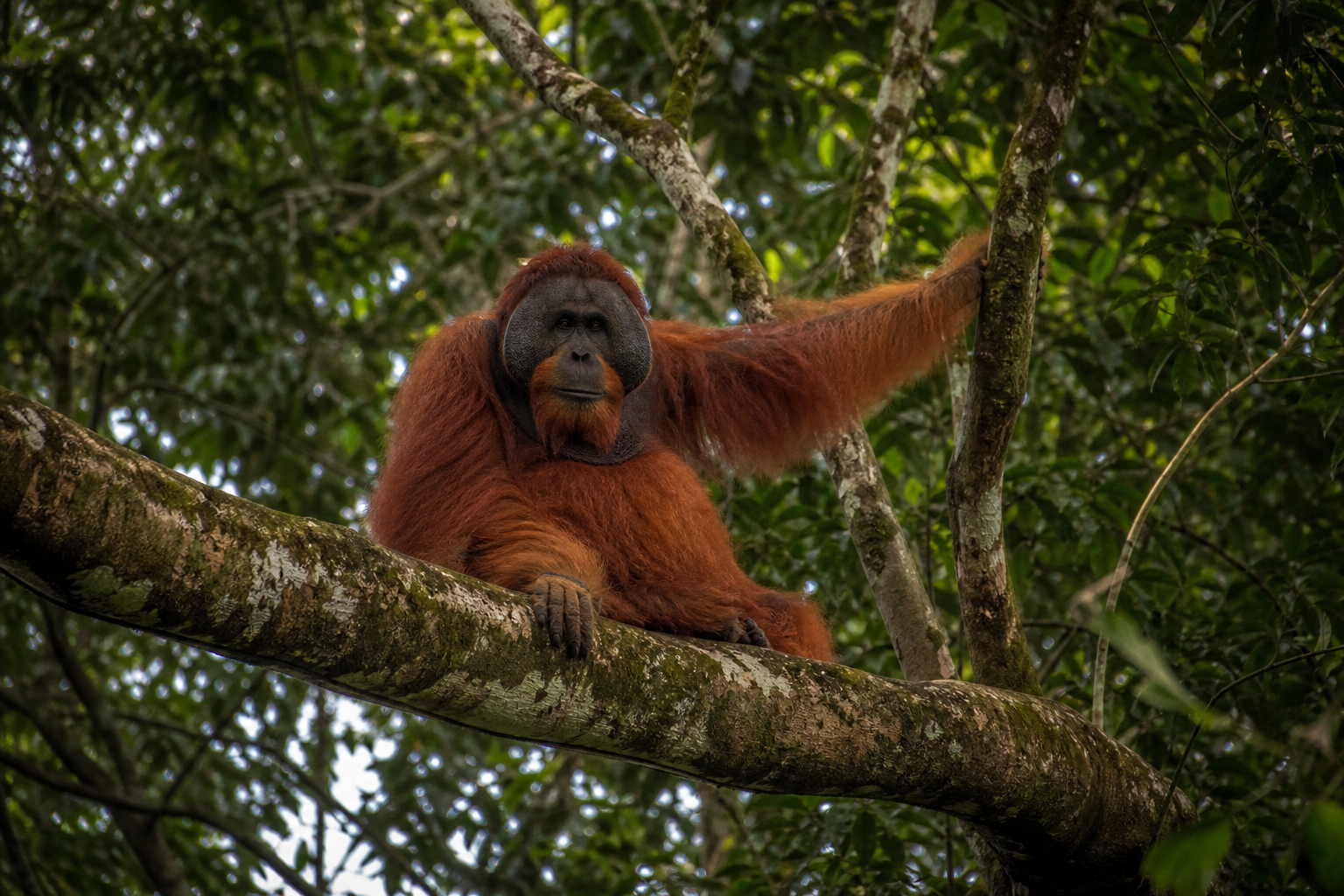
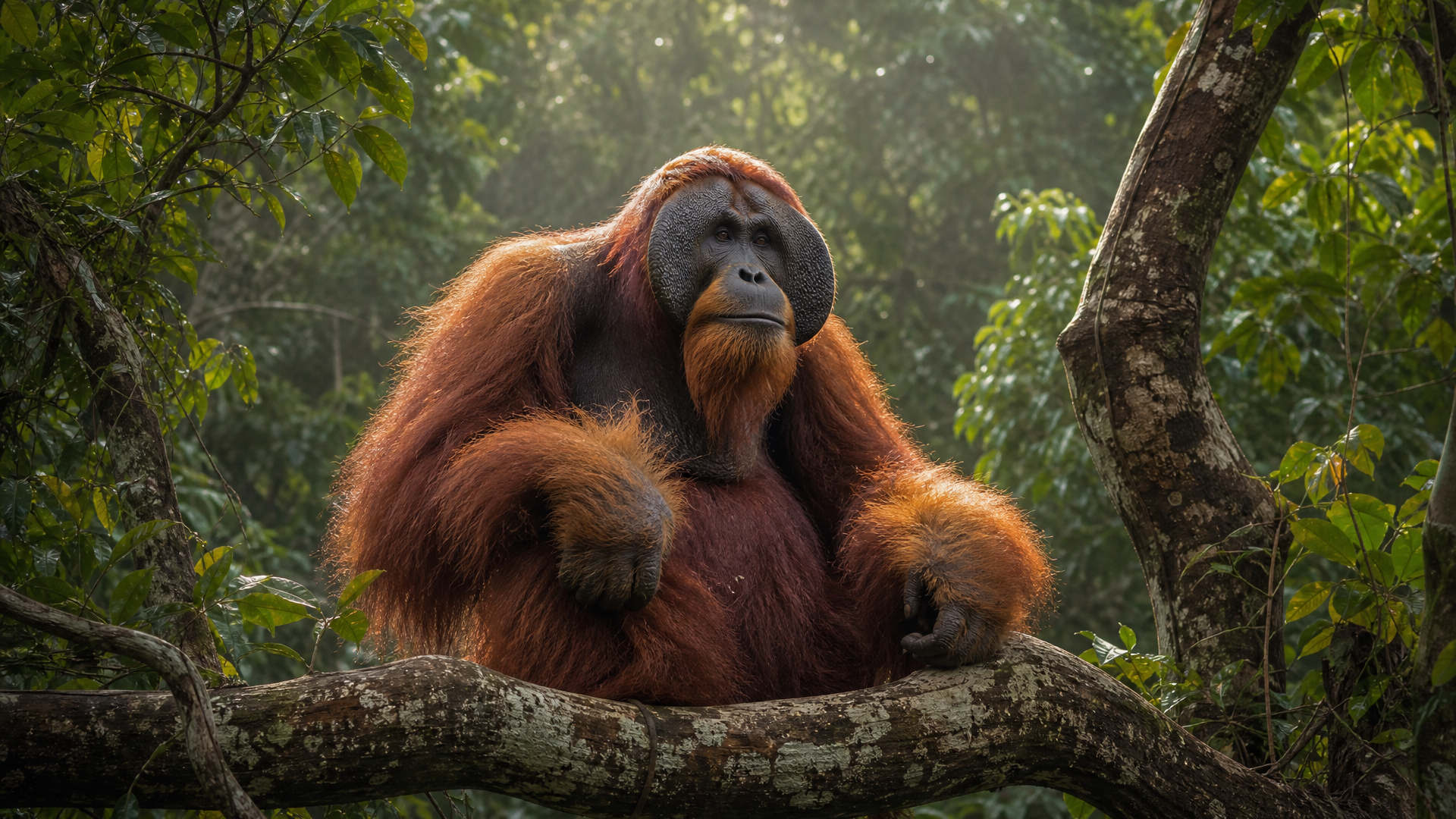
Morning mist lies low in the peat swamp, and the canopy holds its own weather. Leaves tremble before the animal is visible. Then a broad red body shifts between branches, deliberate and heavy, with an infant pressed close like a second heartbeat against the fur.
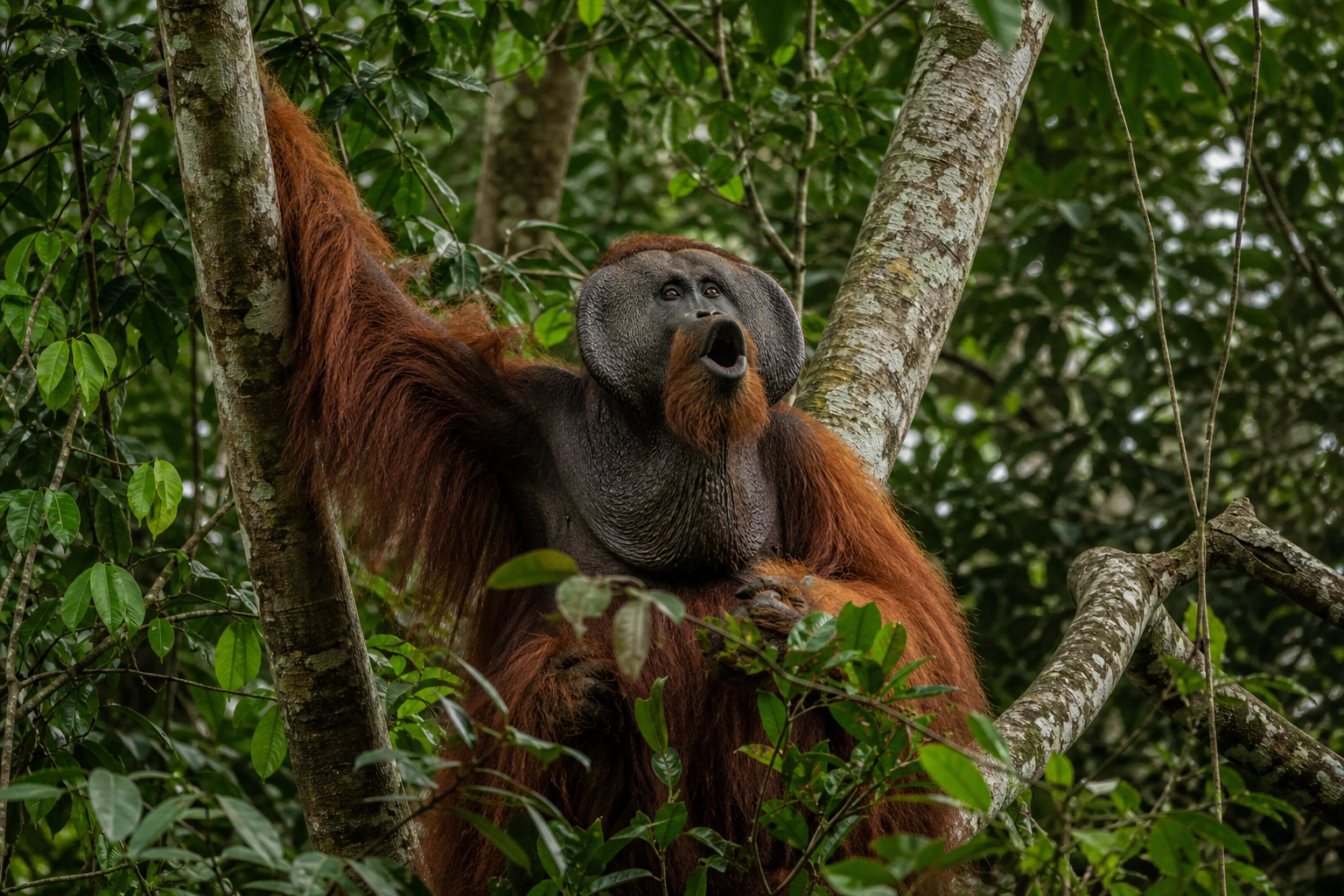
The Bornean orangutan has a gravity different from almost every other life in the forest. It does not hurry to prove itself. A male with cheek pads can seem carved from the tree itself, throat sac swelling before a long call rolls through leaves and distance. A female moves with quieter authority, choosing routes that can hold her weight and her young. Hands do the work of memory. They peel fruit, strip bark, gather leaves, and build the night's bed high above damp ground. The forest becomes a map of touch.
This animal helps the canopy renew itself by carrying fruit from one crown to another and by making old trees matter. Its pressures are close and ordinary: fire in peat, timber roads, fragmented forest, and land converted faster than a slow life can answer. The orangutan settles into a fork of branches. Around it, the whole forest seems to wait for the next decision.