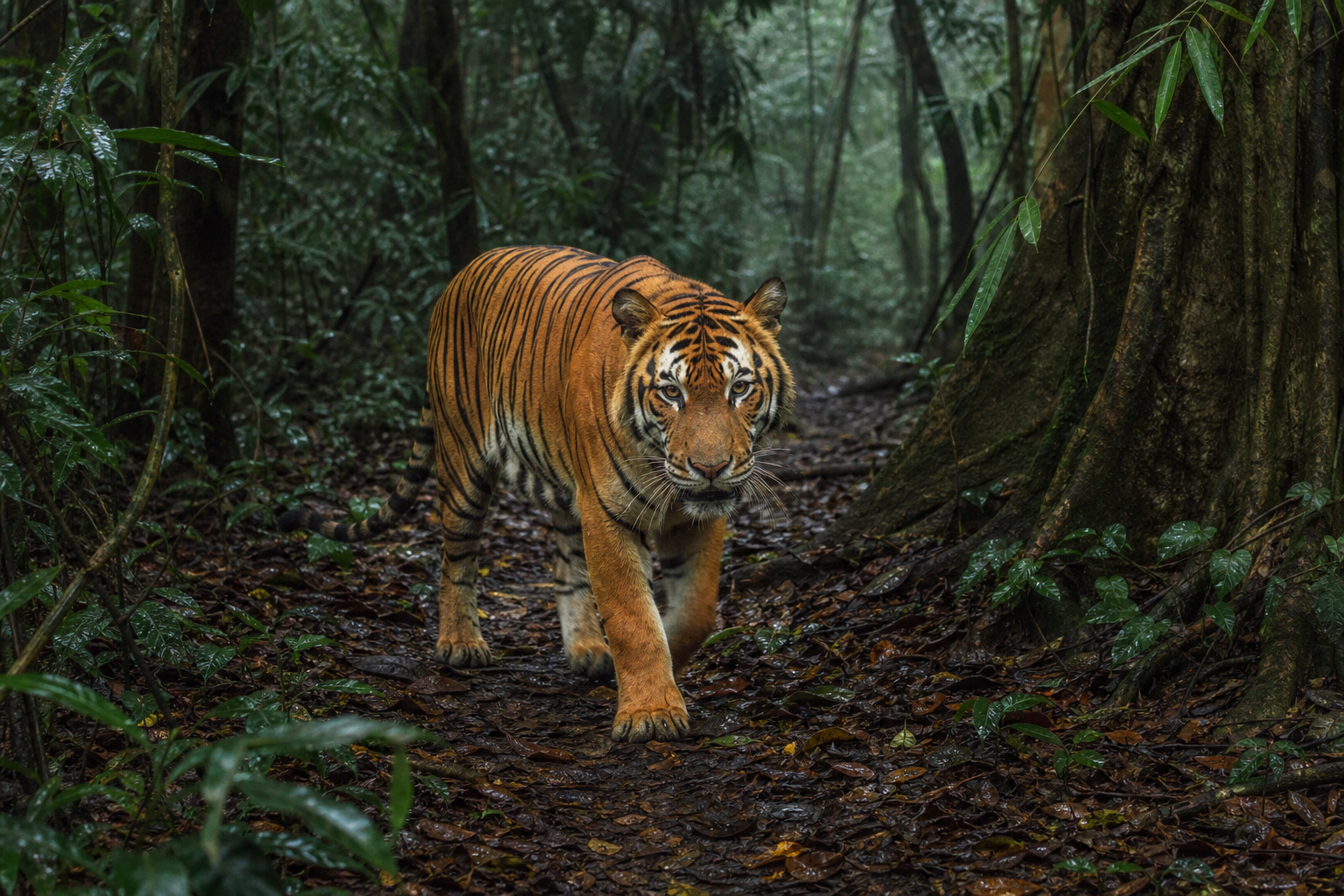
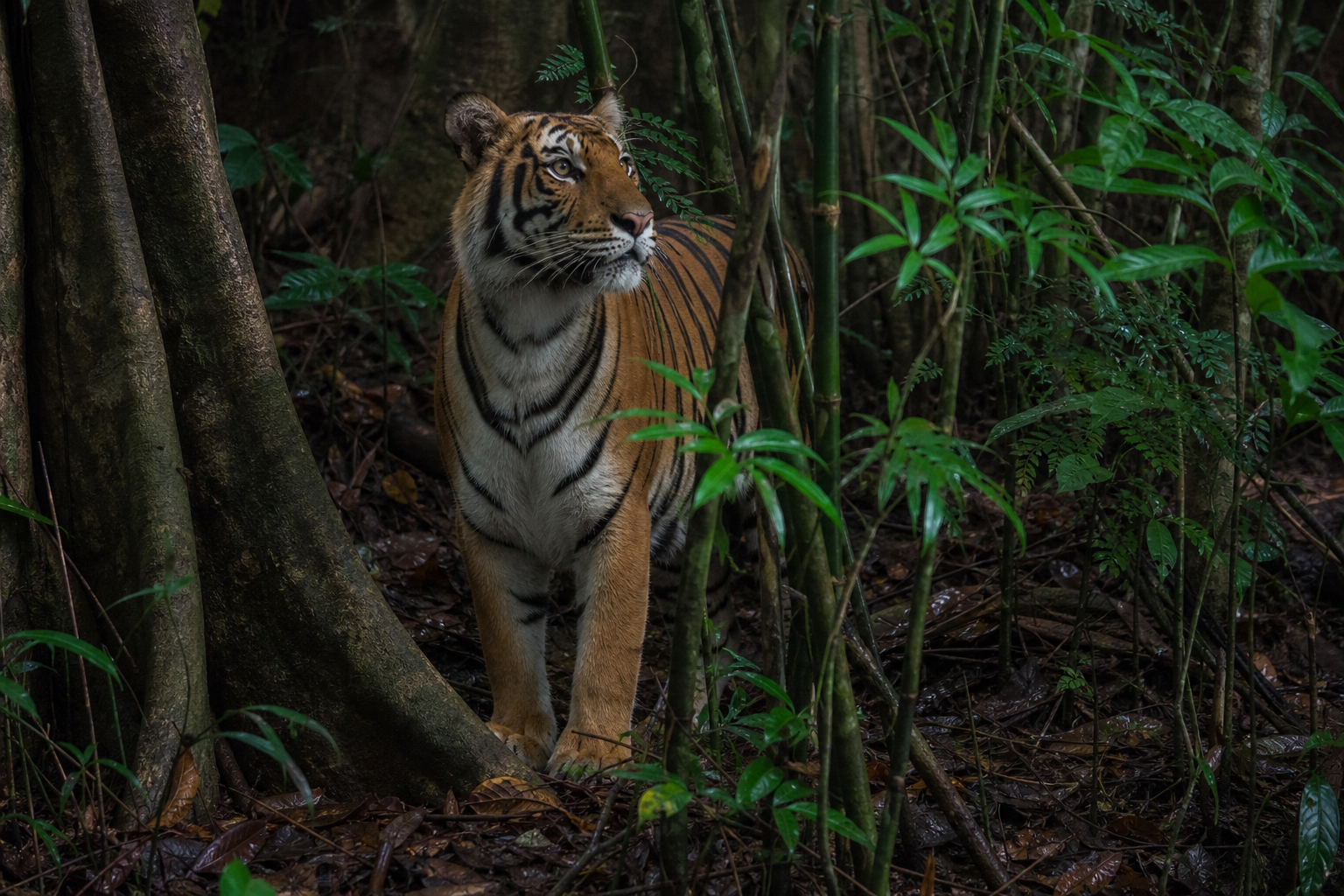
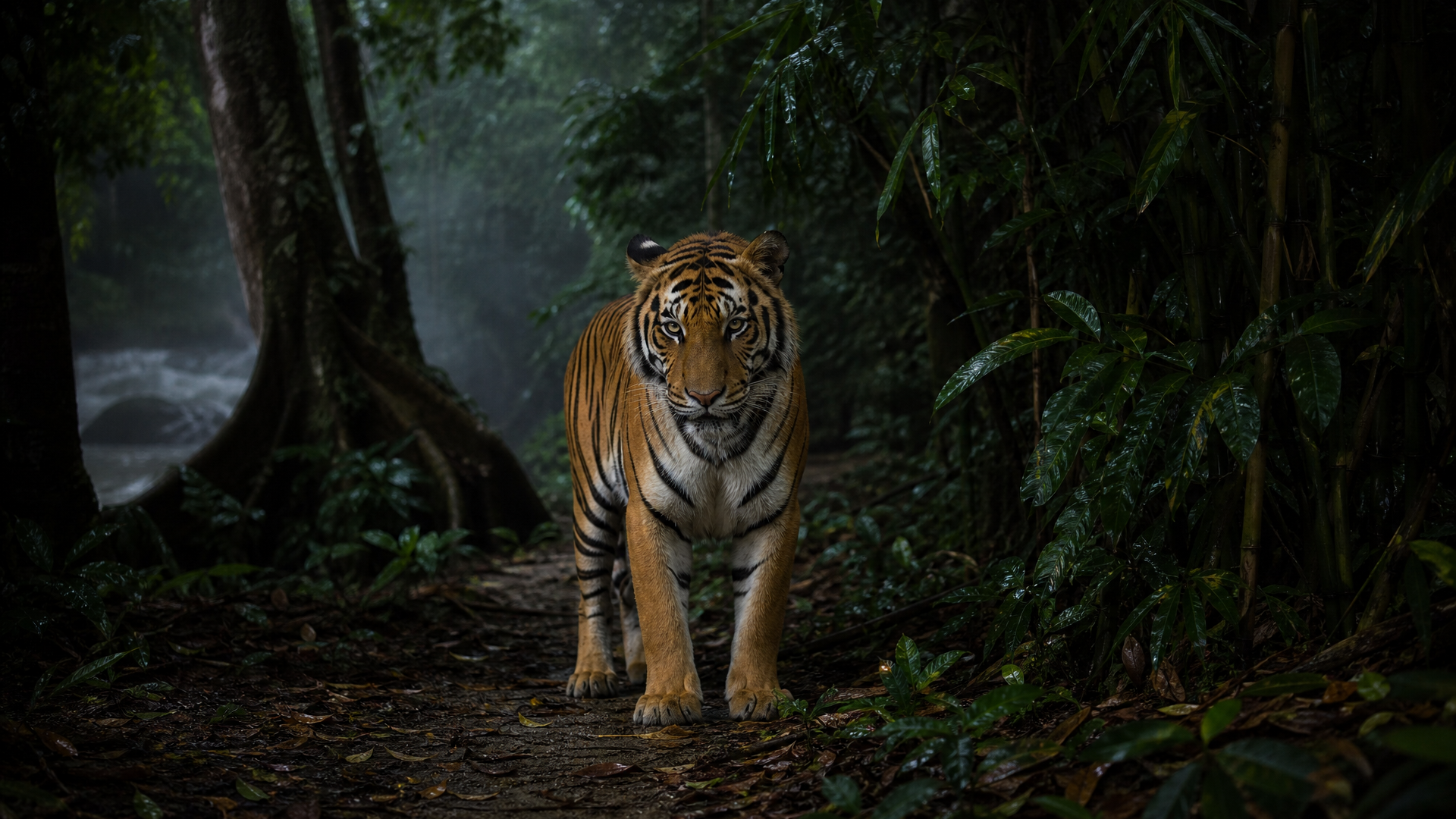
The forest path in Taman Negara is only a darker line through wet leaves. Cicadas press sound into the heat. Then the macaques above stop feeding. Something has passed below them without a branch breaking, and the air keeps the shape of its absence.
A Malayan tiger is not made for open display. Its stripes belong to shadow, bamboo, buttress roots, and rain. The body is compact and powerful, the head low, the paws set down as if the ground has agreed to keep a secret. To be near one is usually to know it only through signs: a print softened by mud, a scrape, a scent mark, alarm calls traveling ahead of an animal that may already have turned away. It hunts by closing the forest around itself, using cover until distance is small enough to become decision.
In Peninsular Malaysia, the tiger gives the forest its deepest tension. Deer, pigs, and smaller lives read the undergrowth differently because it exists. Snares, empty prey trails, and broken habitat have thinned that tension toward silence. Somewhere beyond sight, a striped body moves between trees, and the forest holds its breath around what remains.