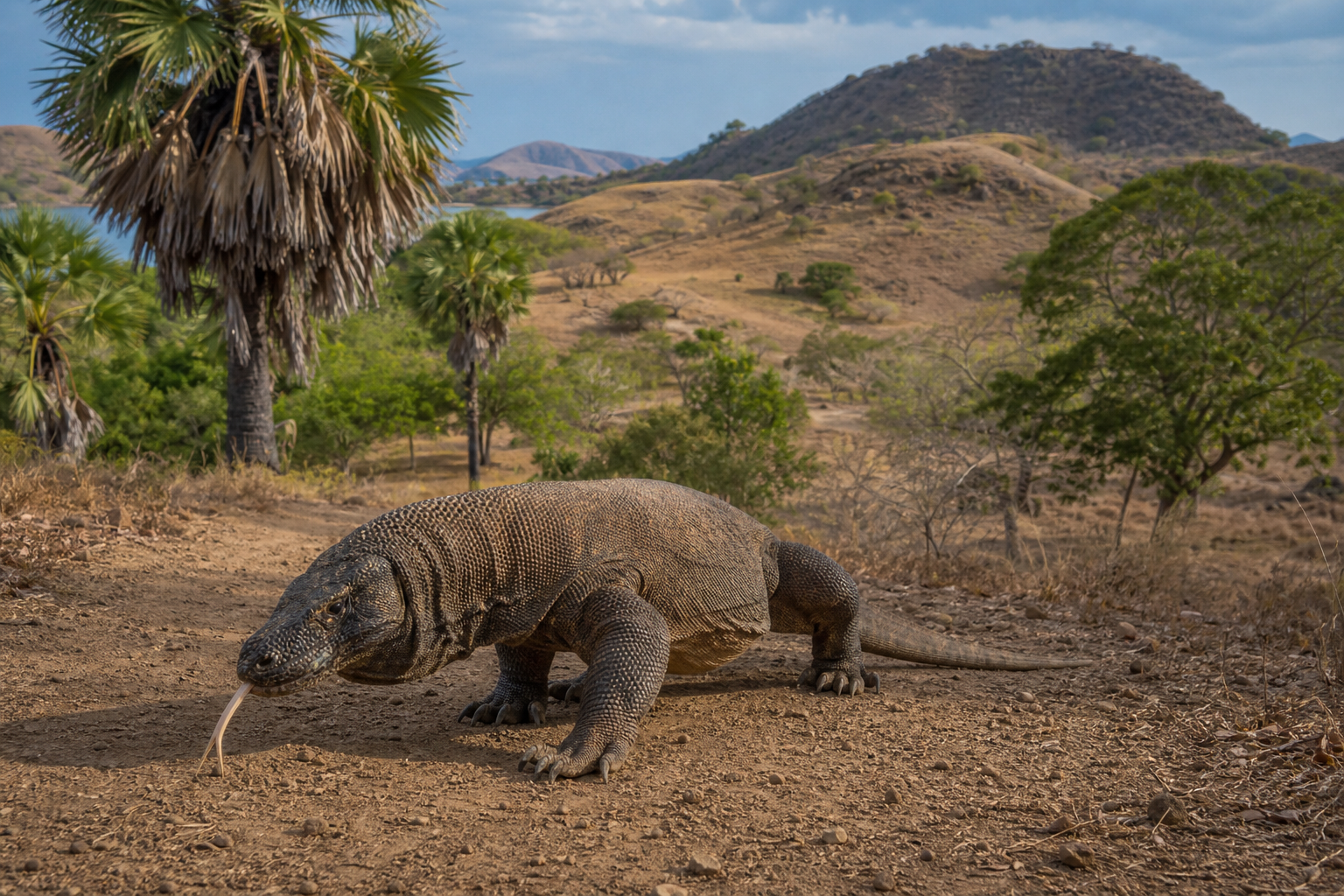
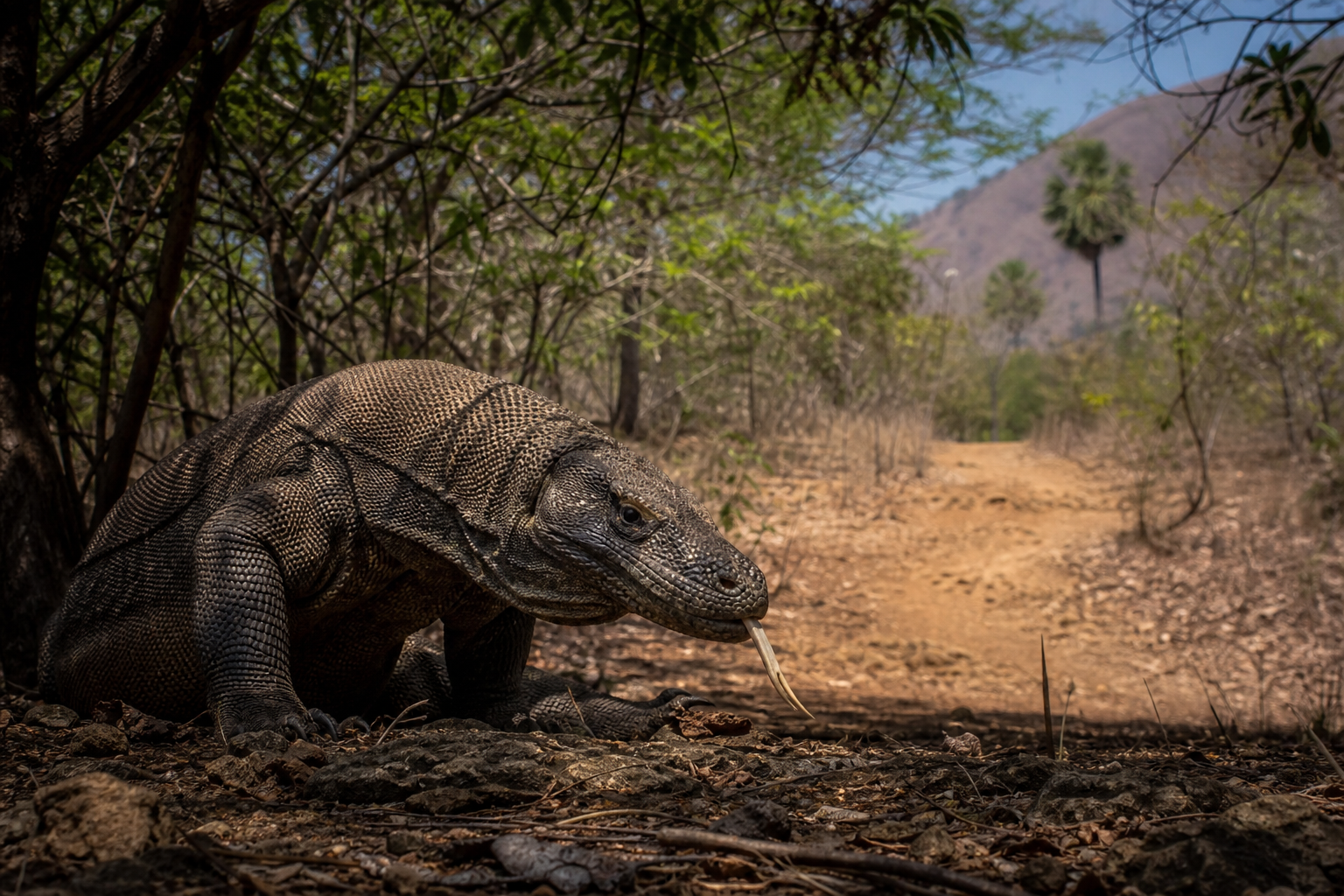
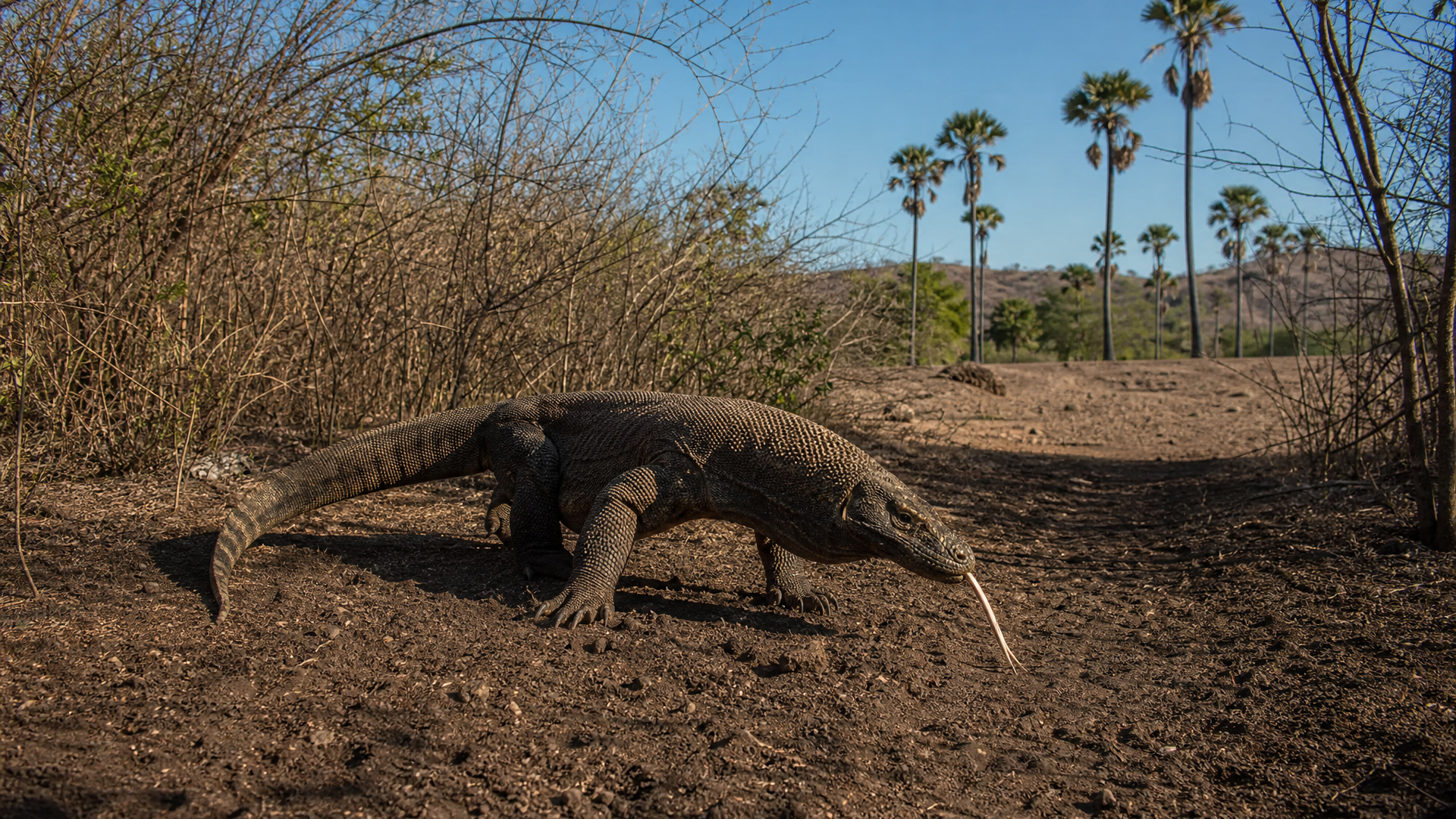
The dry hills above Komodo Island smell of dust, salt, and sun-warmed grass. A deer steps from scrub toward a shaded gully. Below it, a long body lies so still that the earth seems to have grown scales. Only the tongue moves, black and forked, tasting the air.
The Komodo dragon lives without needing to look hurried. Its power is stored in the heavy tail, the bowed legs, the thick neck, the head carried low over the trail. It walks like a slow fire through savanna and monsoon forest, then changes in an instant when opportunity narrows. The tongue gathers information from distance. A carcass, a nest, a wounded animal, a rival male, all enter the world through scent before they are seen. Young dragons climb to escape larger mouths, because even on these islands, danger includes their own kind.
The animal belongs to a small geography where every shoreline, valley, and dry-season water source matters. Tourism, warming seas, prey shifts, and changing land use press on an island system with little room to absorb mistakes. The dragon lifts its head from the dust. The tongue appears again, and the day gives up its secrets.