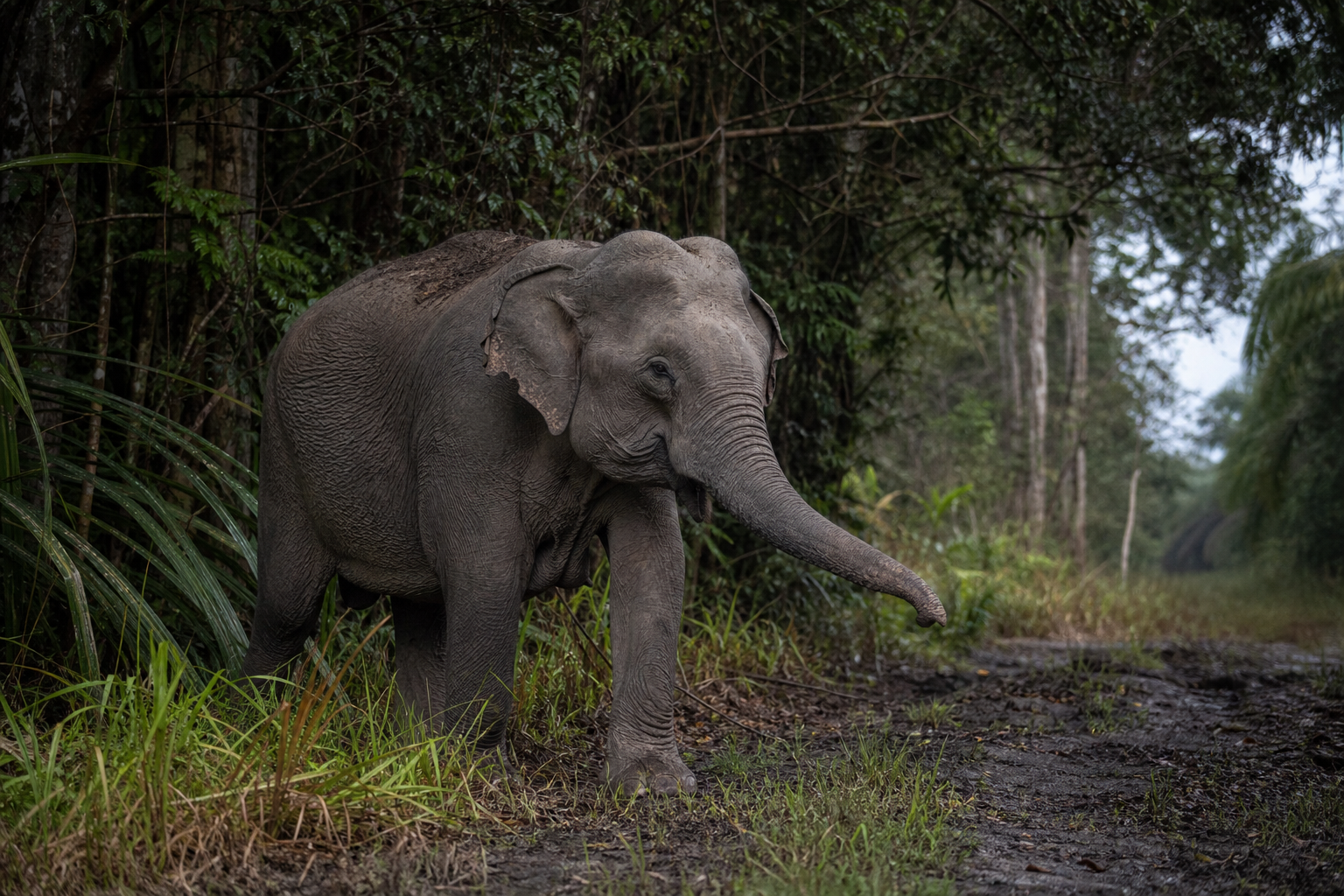
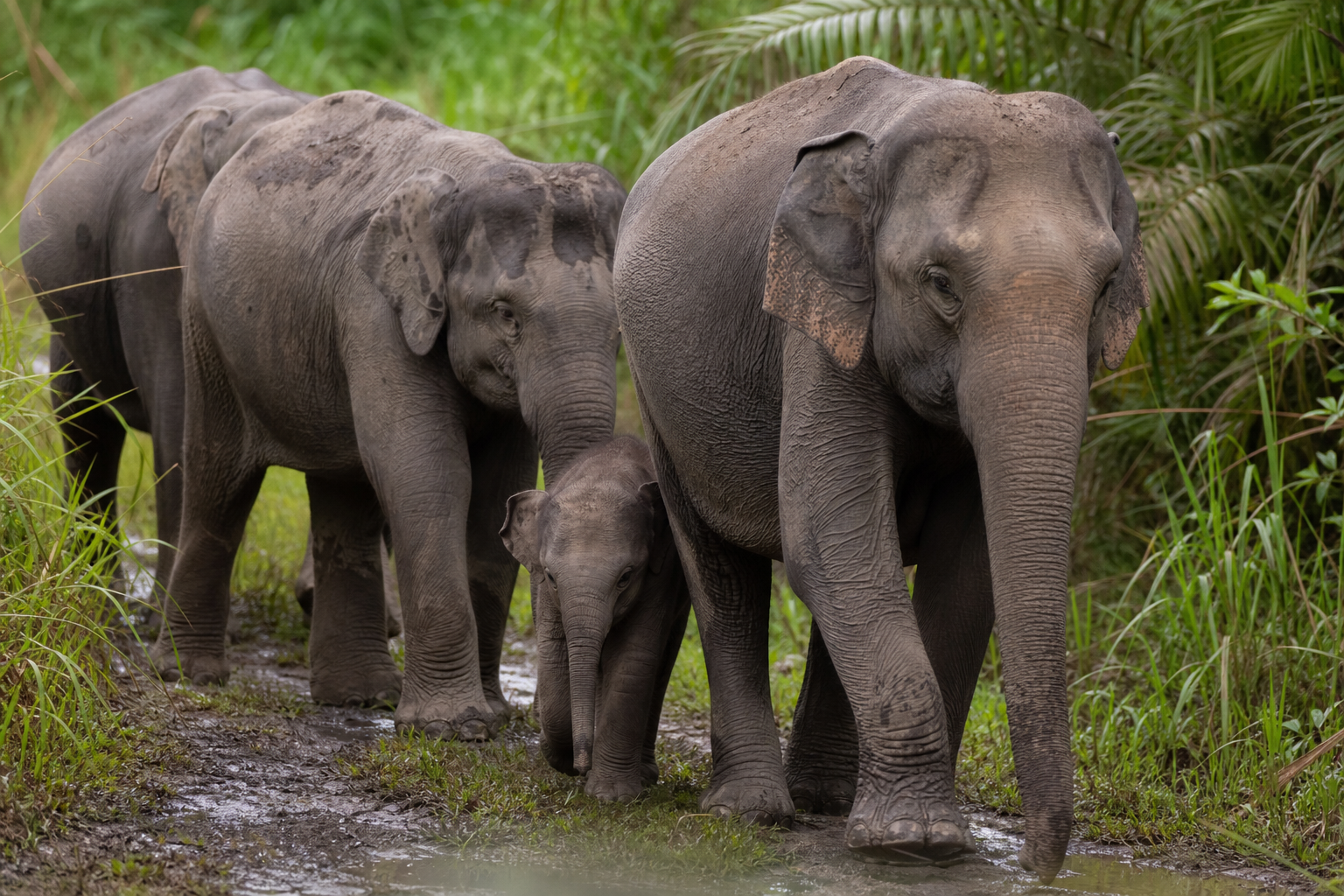
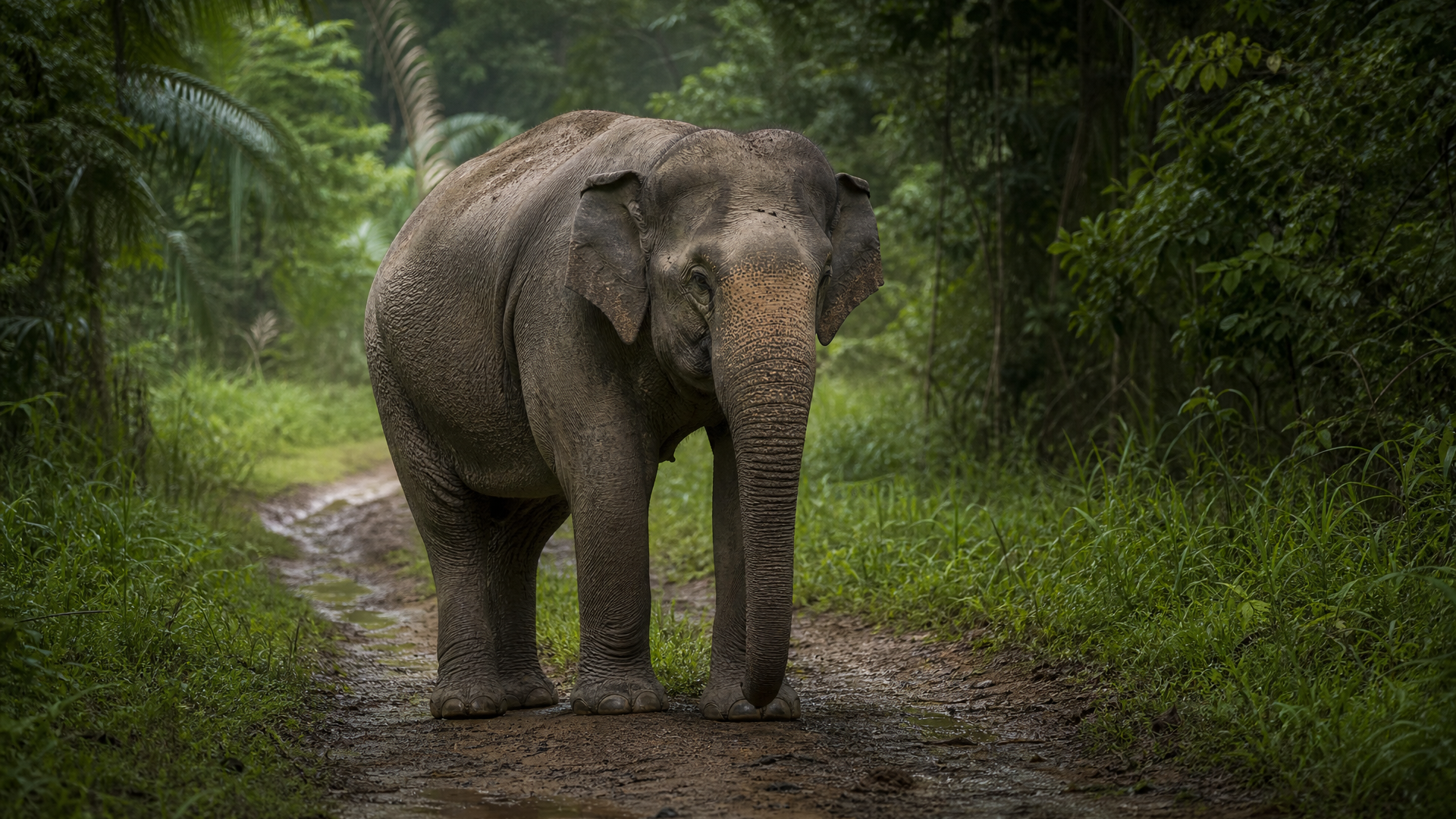
At the edge of Way Kambas, the grass parts before the elephant is fully there. A trunk enters first, curling through humid air, then the head, the ears, the gray body darkened by mud. Behind the matriarch, younger animals follow so closely that the path seems to be moving as one.
The Sumatran elephant lives by remembering passage. Its feet press old routes into soft ground between feeding places, water, shade, and mineral soil. The trunk is both question and hand, touching bark, breaking stems, lifting dust, and resting for a moment against another body. In thick forest, the herd is often heard before it is seen: low rumbles, branches giving way, leaves torn and swallowed, a calf's small uncertainty answered by the bodies around it.
Elephants open trails other animals use and carry seeds farther than many trees could ever send them alone. Yet the lowland forest that shaped those routes has become fields, roads, and hard edges where conflict grows. The herd moves back into shade. Mud closes over the prints slowly, but not slowly enough.