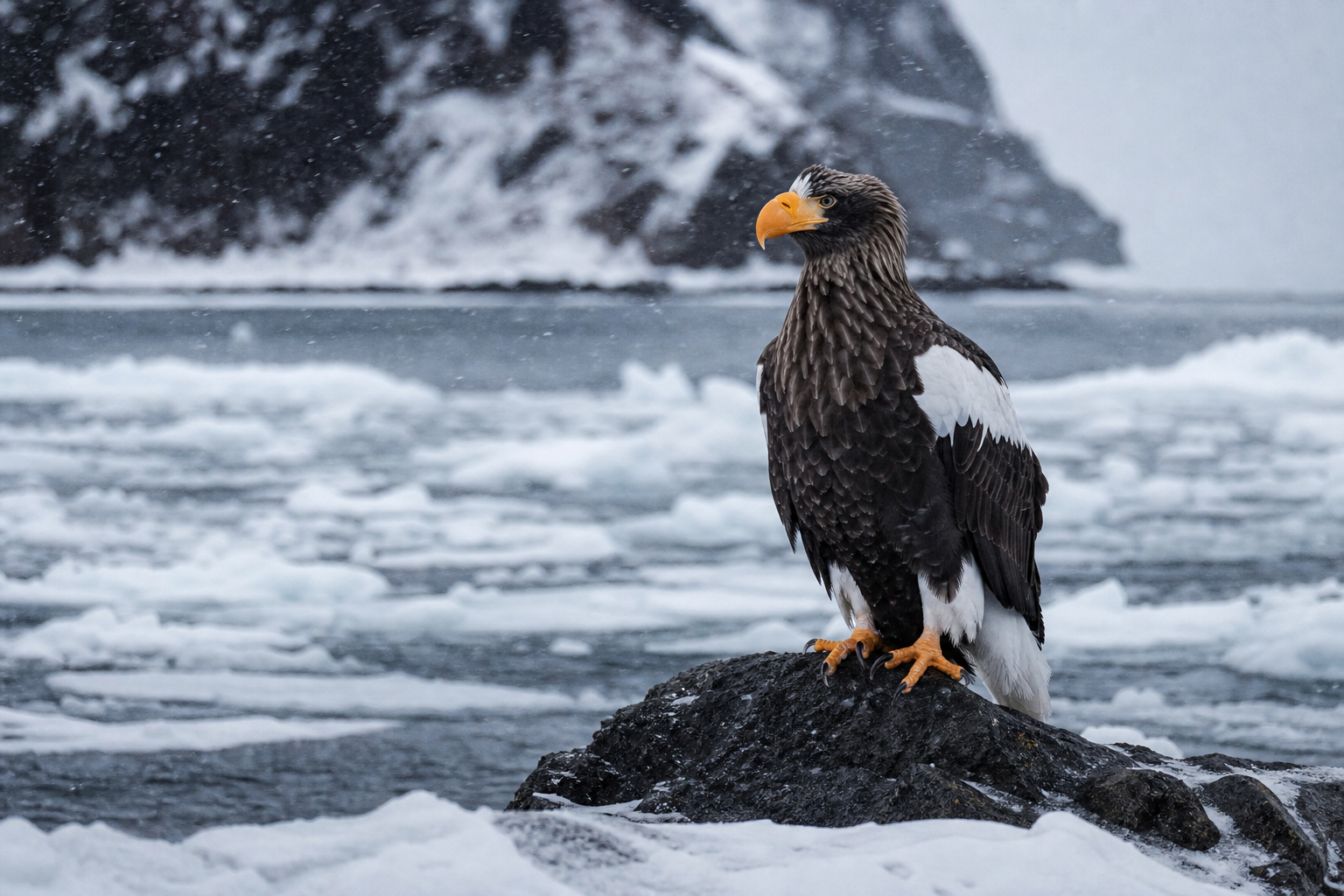
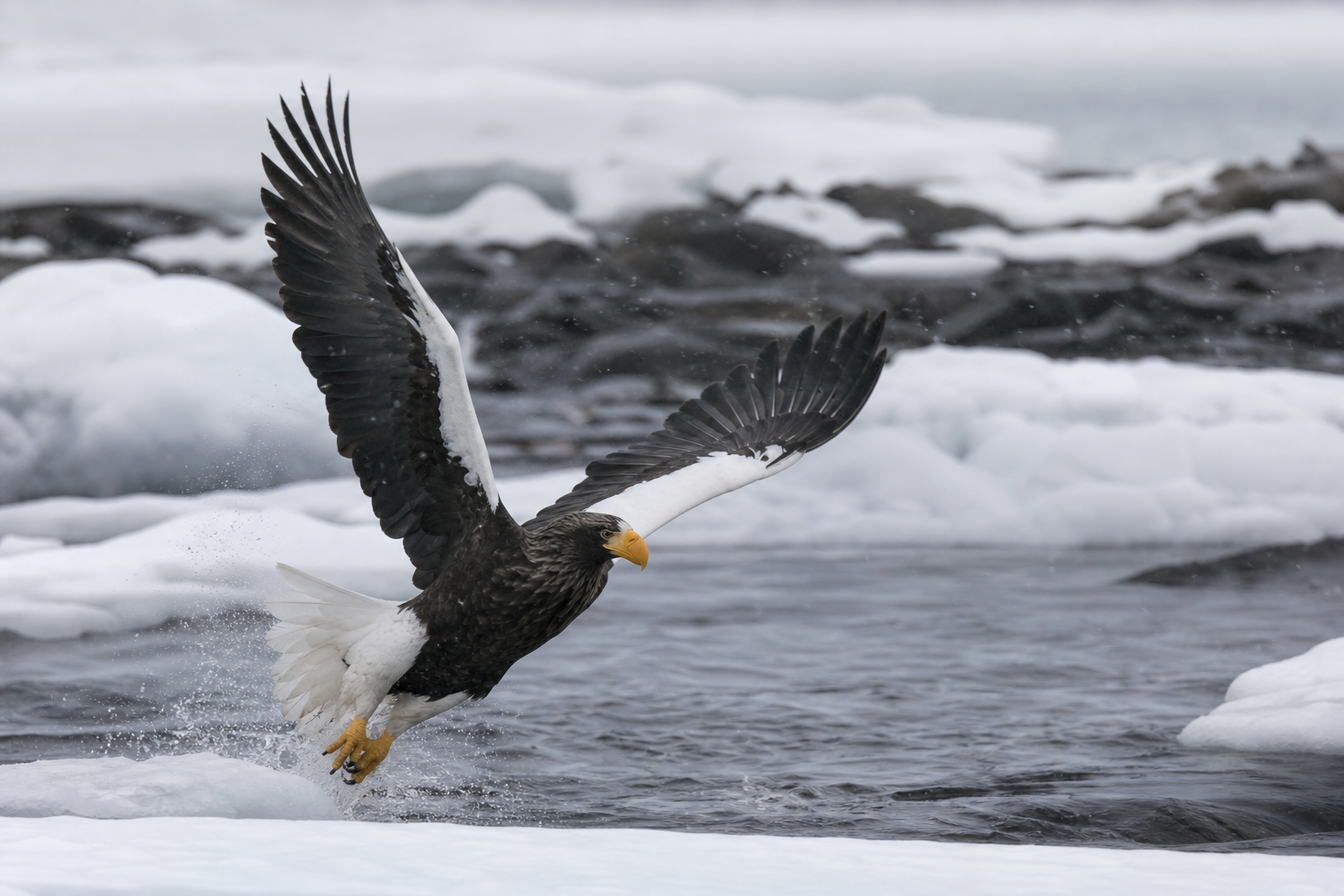
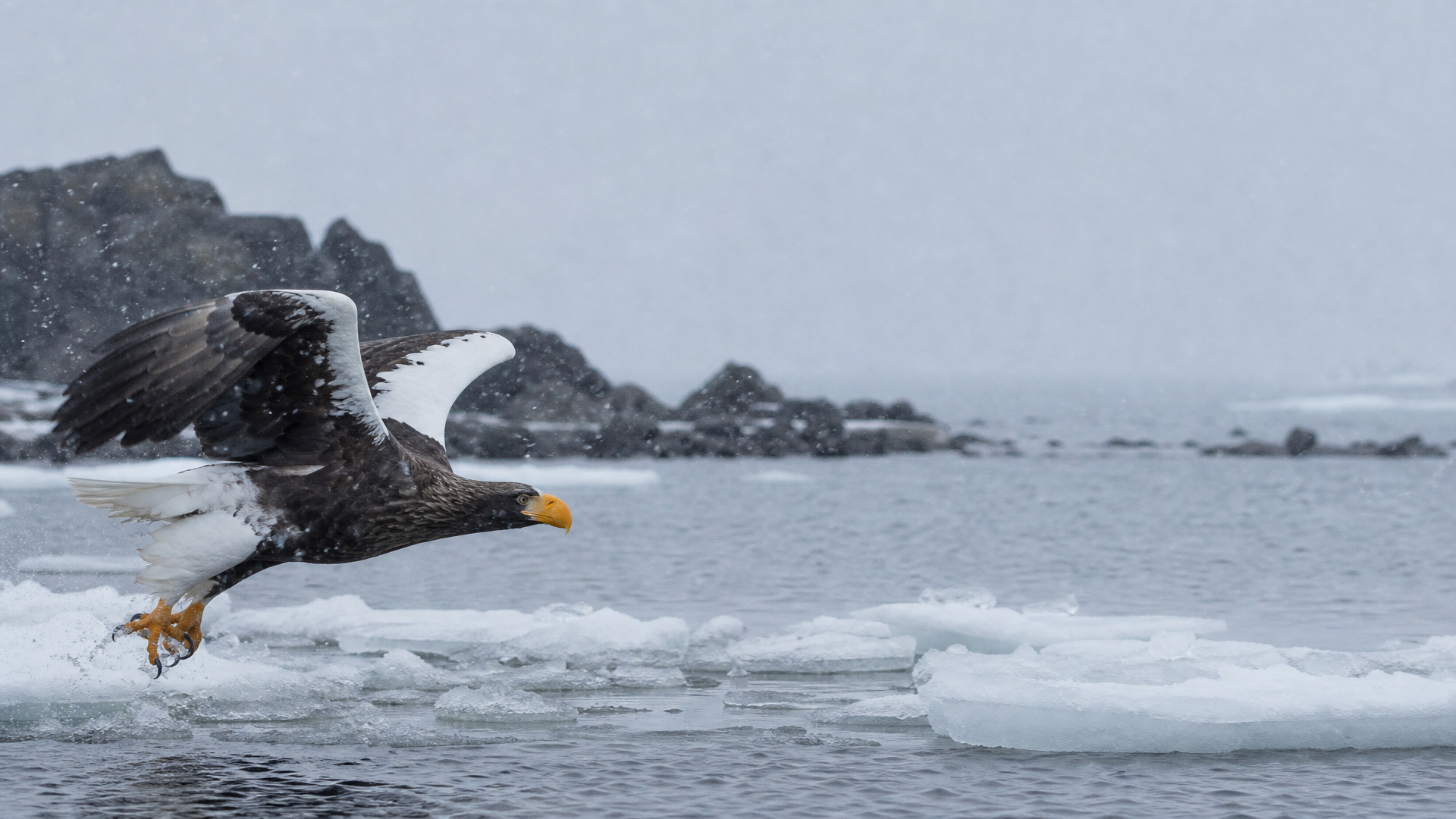
Ice shifts along the coast of Hokkaido, grinding softly in gray water. On a black rock above the tide, an eagle waits with shoulders hunched against the wind. The bill burns yellow-orange in the flat light. When the bird opens its wings, the whole shore seems to widen.
Steller's sea eagle is built on a scale that suits winter ocean. The wings are broad, the body dark, the tail and shoulders white, the bill deep and powerful enough to look almost oversized until it is used. It watches water, ice, and river mouths with the patience of a bird that knows cold can gather food as well as hide it. Fish near the surface, carrion on the shore, the movement of another eagle: all of it matters.
There is a severity to its beauty. Nothing feels ornamental. The heavy bill, feathered legs, fierce eye, and long pause before flight all belong to a life spent along coasts where weather is never background.
Its world reaches from the Russian Far East to wintering grounds in Japan, and its risks travel with it: lead, fishing gear, disturbed nesting places, and changing sea ice. The eagle drops from the rock, wings holding the wind, and for a moment the gray coast has a white tail moving through it.