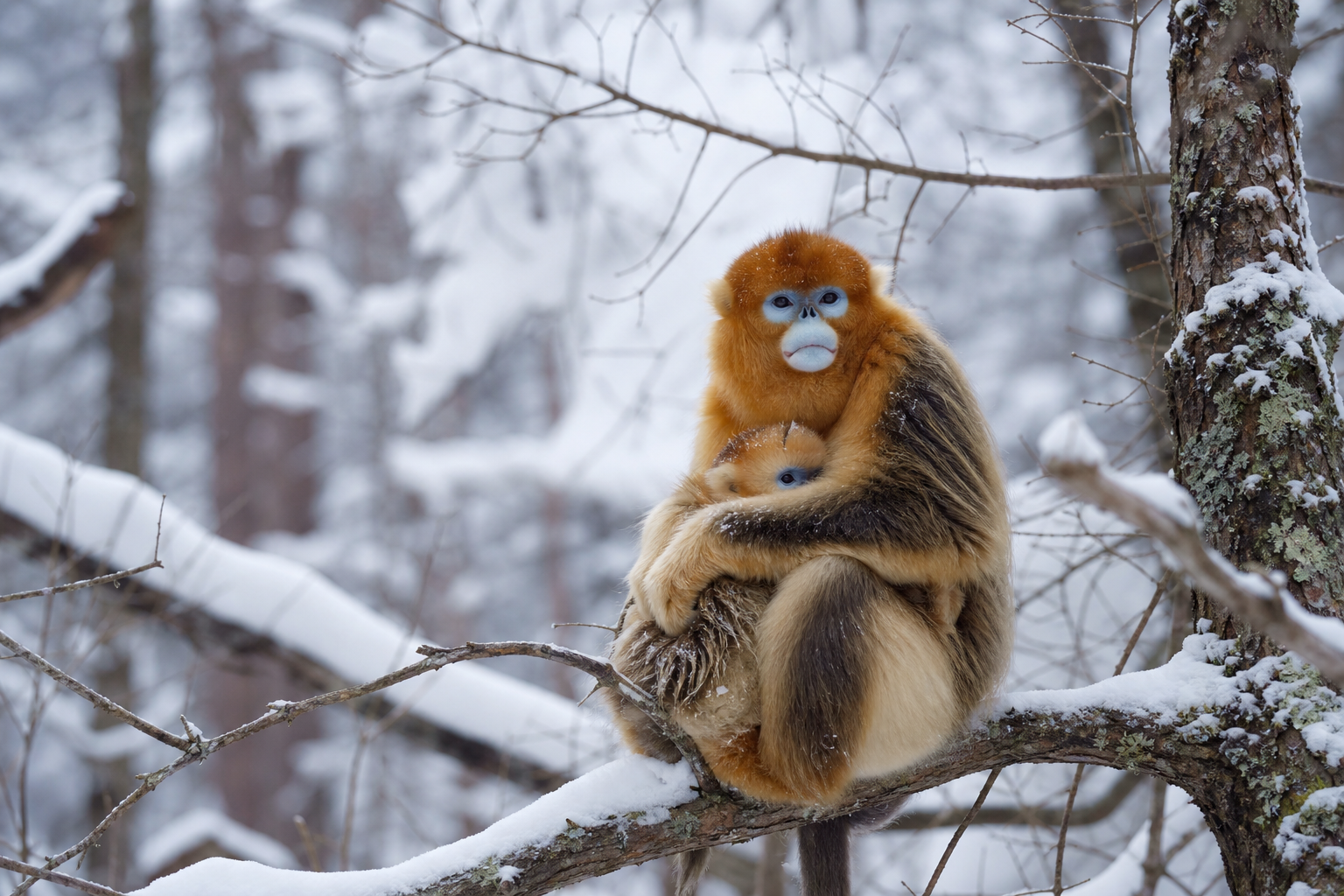
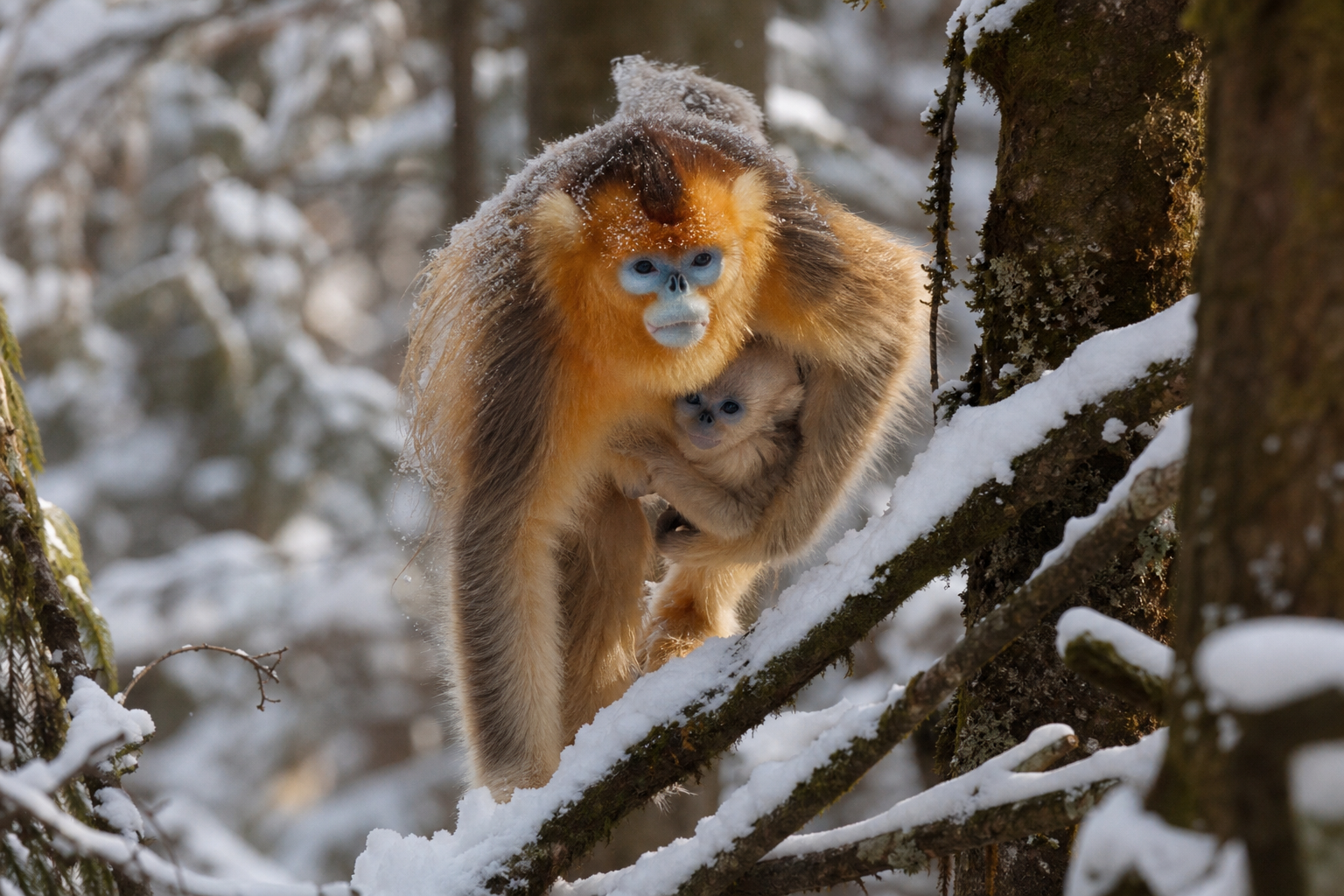
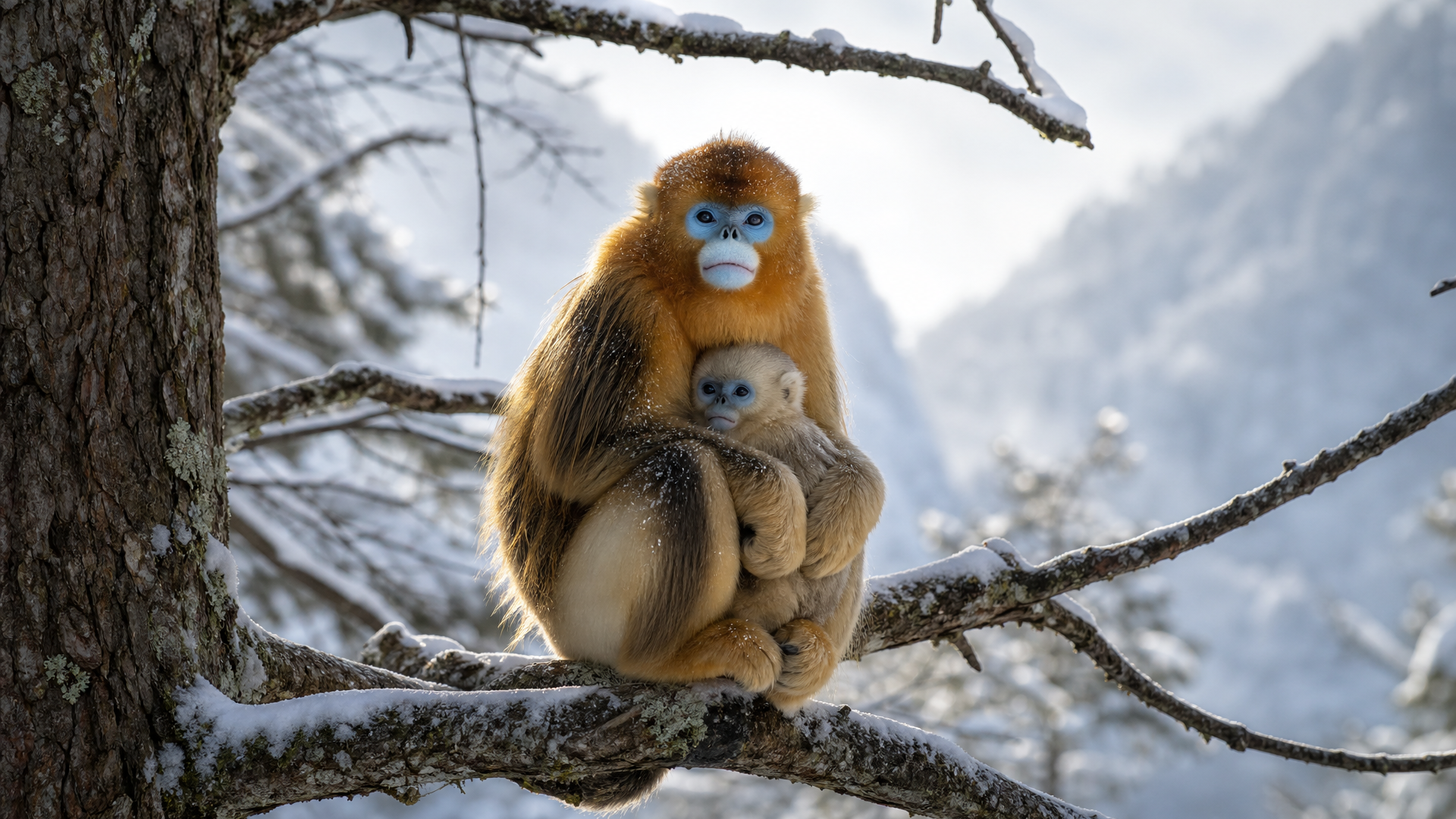
Snow rests in the forks of old trees, and the branches creak under a moving troop. Then a face appears between lichened trunks: blue skin, pale muzzle, golden fur lit by winter sun. A youngster clings to an adult's belly while the group flows onward through the high forest.
The Qinling golden snub-nosed monkey brings warmth of color to a hard mountain world. Its nose is flattened, the face strangely open, the coat long enough to turn cold into something survivable. These monkeys live by society. Families gather into larger bands, voices passing through the trees as bodies climb, feed, rest, and watch. A male sits with mantle bright against snow. Females keep infants close. Youngsters practice leaps that look reckless until the branch receives them.
There is tenderness here, but also order. Alliances, rank, alarm, and memory hold the troop together in a forest where winter can make every mistake expensive. The animal's beauty draws the eye first; its social intelligence holds it longer.
The Qinling subspecies belongs to a limited mountain range, and that narrowness gives every forest corridor greater meaning. Logging history, roads, tourism pressure, and climate shifts press against the high woods it needs. The troop moves on, blue faces flickering between trunks like small pieces of sky carried through snow.