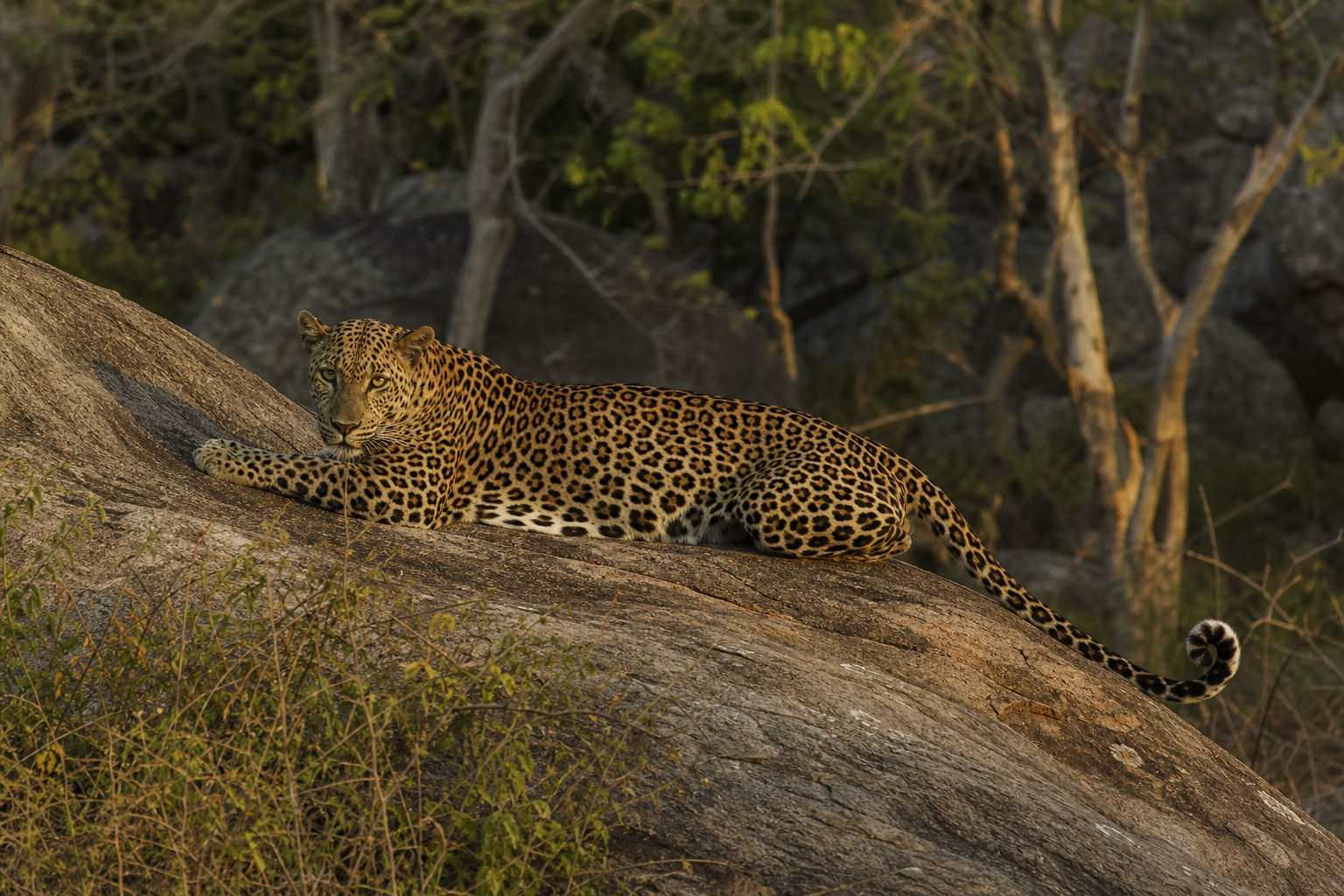
In Yala, heat gathers on granite before noon. Spotted deer drift through scrub, langurs bark from a tree line, and a leopard lies along a branch with one foreleg hanging loose into the light. Its eyes are open. Nothing in the landscape seems to have escaped its notice.
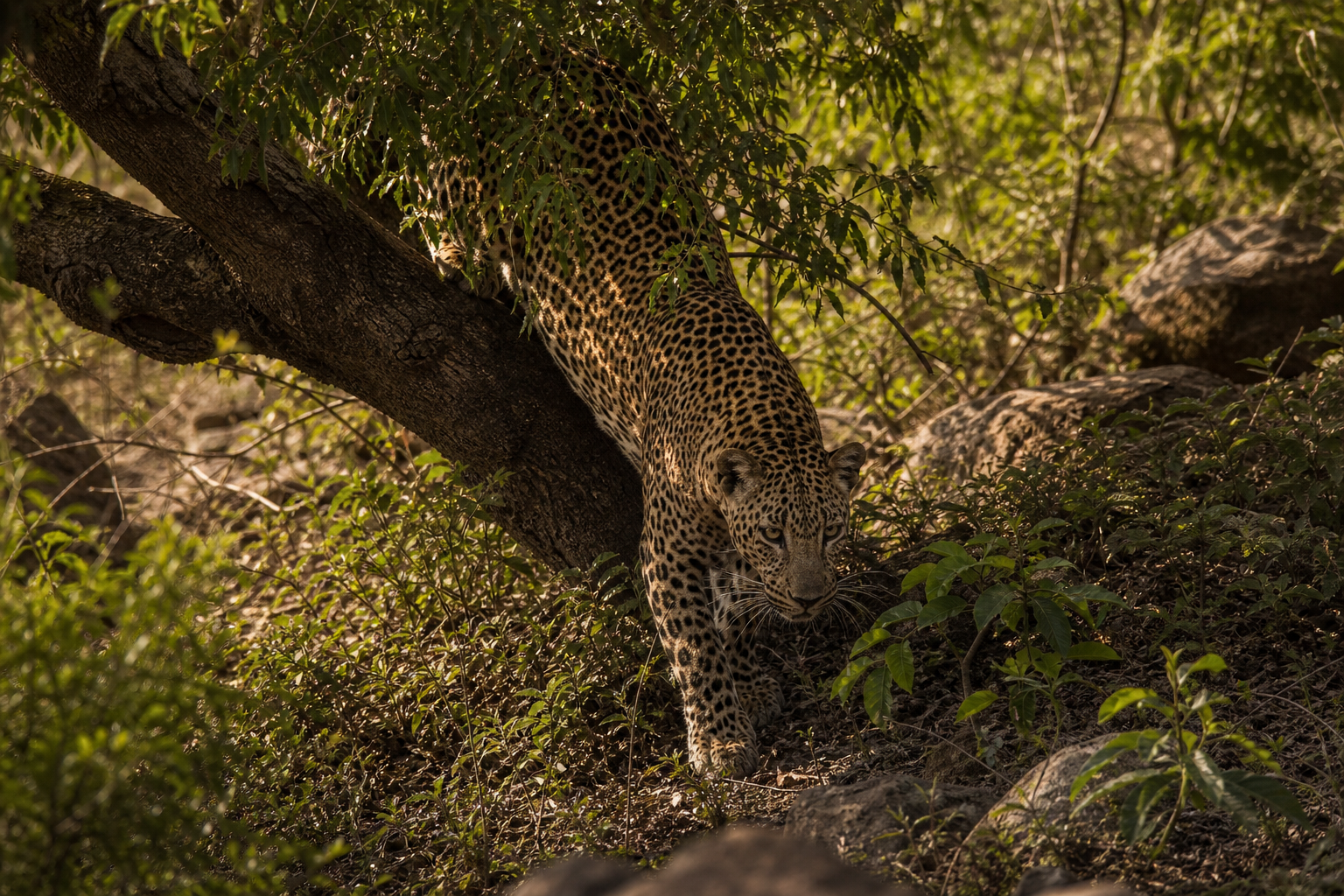
The Sri Lankan leopard is a solitary authority on an island without tigers or lions. That absence does not make its life easy. It hunts through dry forest, tea-country edges, highland shadow, and boulder country where a body can disappear in the color of stone. The rosettes break its outline. The tail balances every climb. When it descends, each paw arrives with soft precision.
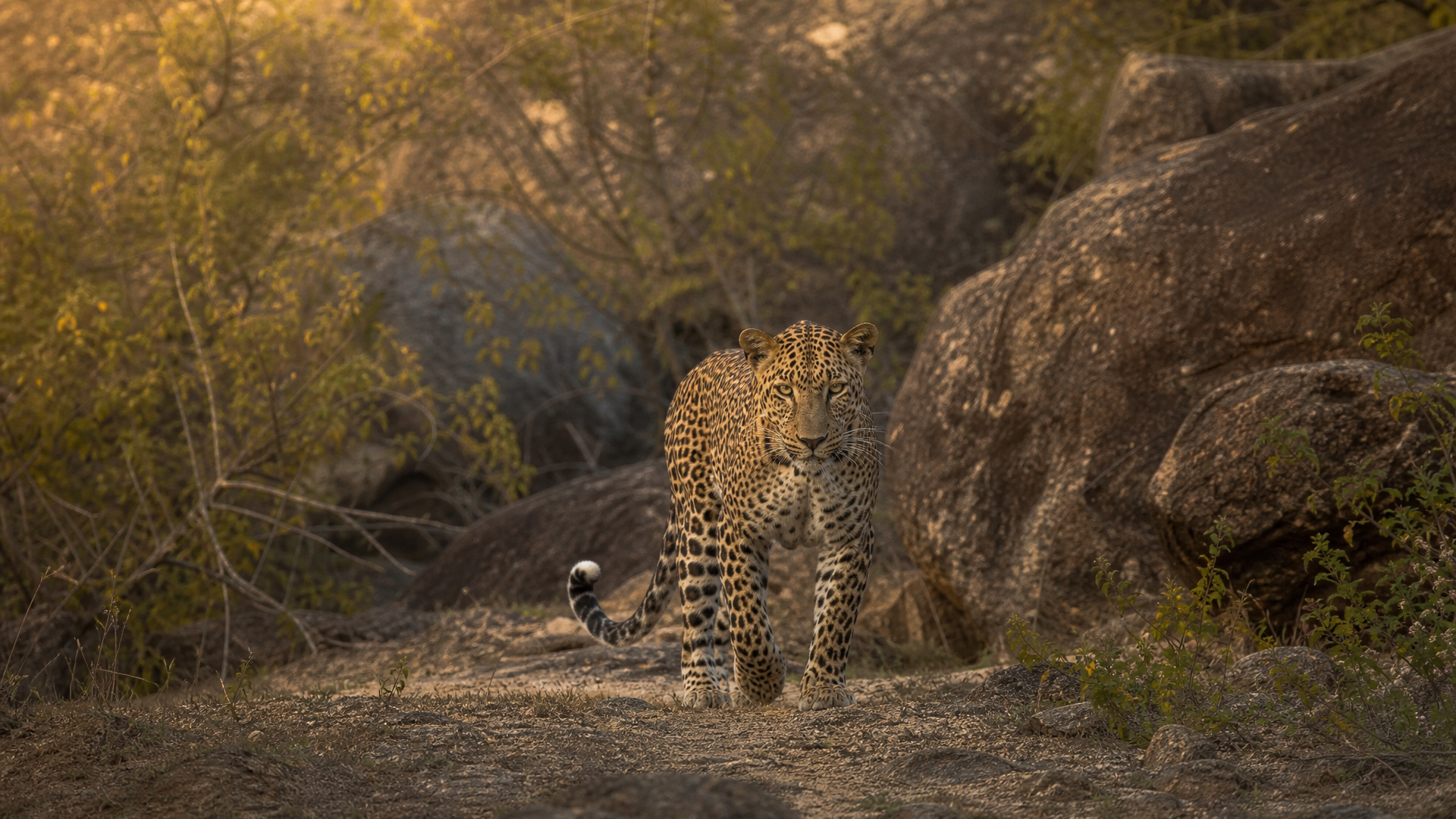
There is a calm boldness in many of these leopards, born partly from being the island's top cat. Yet the animal remains secretive by design. A glimpse may last only seconds: a face between leaves, a shoulder crossing a track, a tail sliding through lantana.
The leopard ties many Sri Lankan landscapes together through movement and fear. Deer, monkeys, boar, and smaller predators all read its presence. But snares, roads, conflict, and shrinking cover can turn a wide-ranging life into a dangerous crossing. The branch empties. Only warm bark and a fading scent remain.