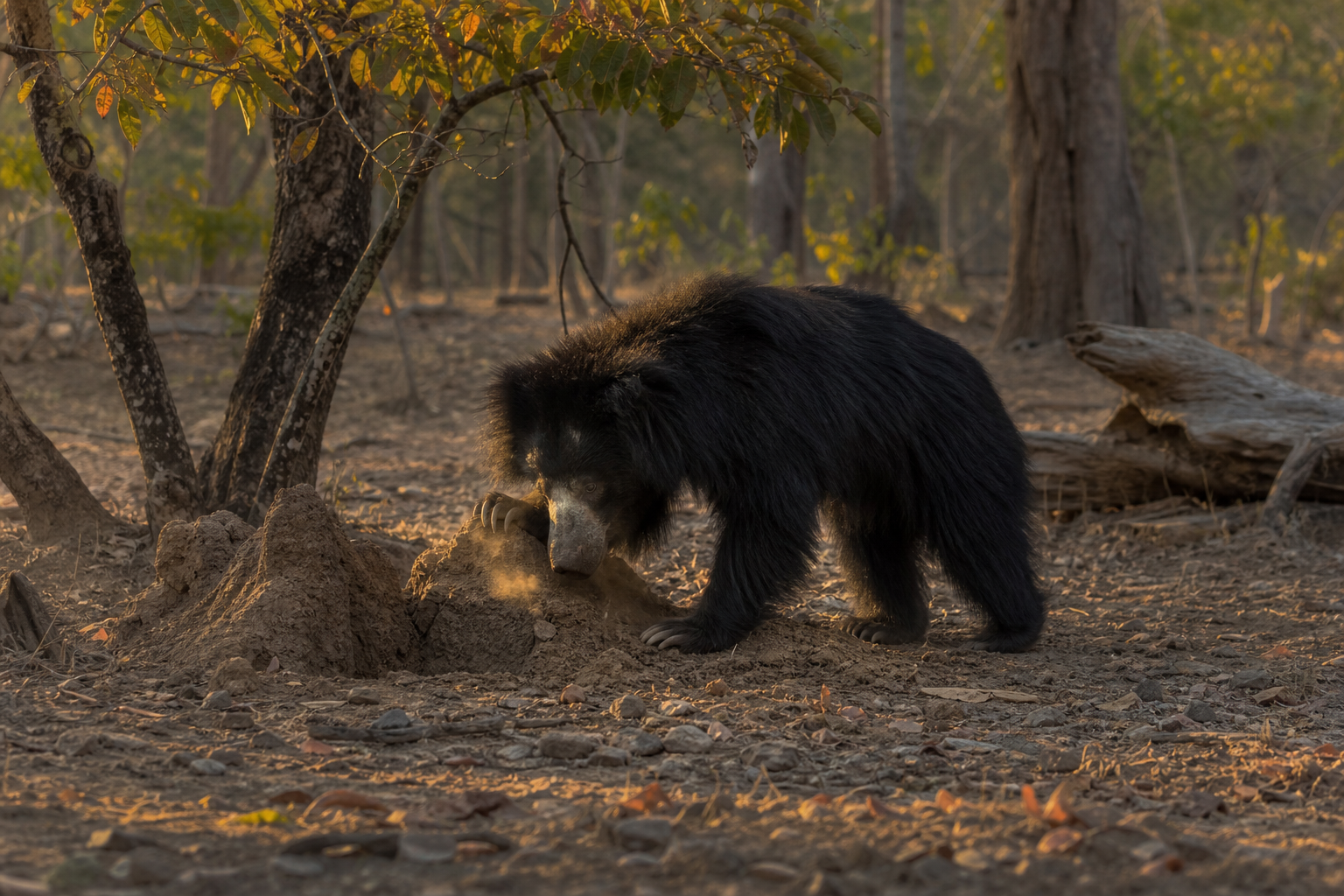
After sunset in the dry forest, a termite mound begins to break apart. Claws scrape through packed earth. Dust rises in short breaths. The sloth bear stands over the opening, shaggy coat catching burrs and leaves, pale muzzle lowered as it listens to the hidden city below.
This bear is built around searching. The long claws tear into mounds and rotting wood. The lips can close into a tube, and the sound of feeding can be heard before the body is seen: a wet, forceful pull of insects from darkness. It also climbs for fruit, turns stones, follows scent, and moves with a rolling gait that looks loose until fear or anger makes it sudden.
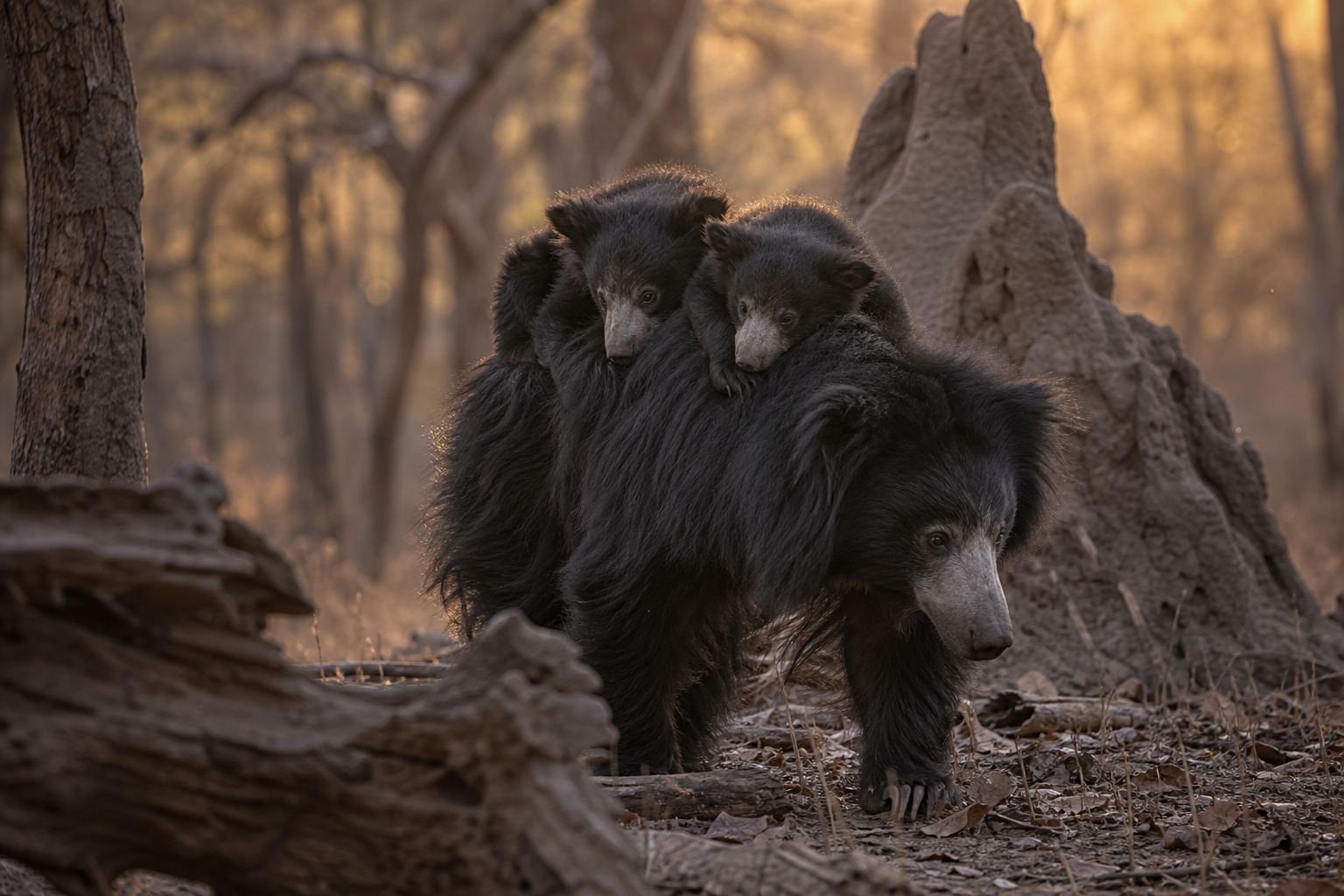
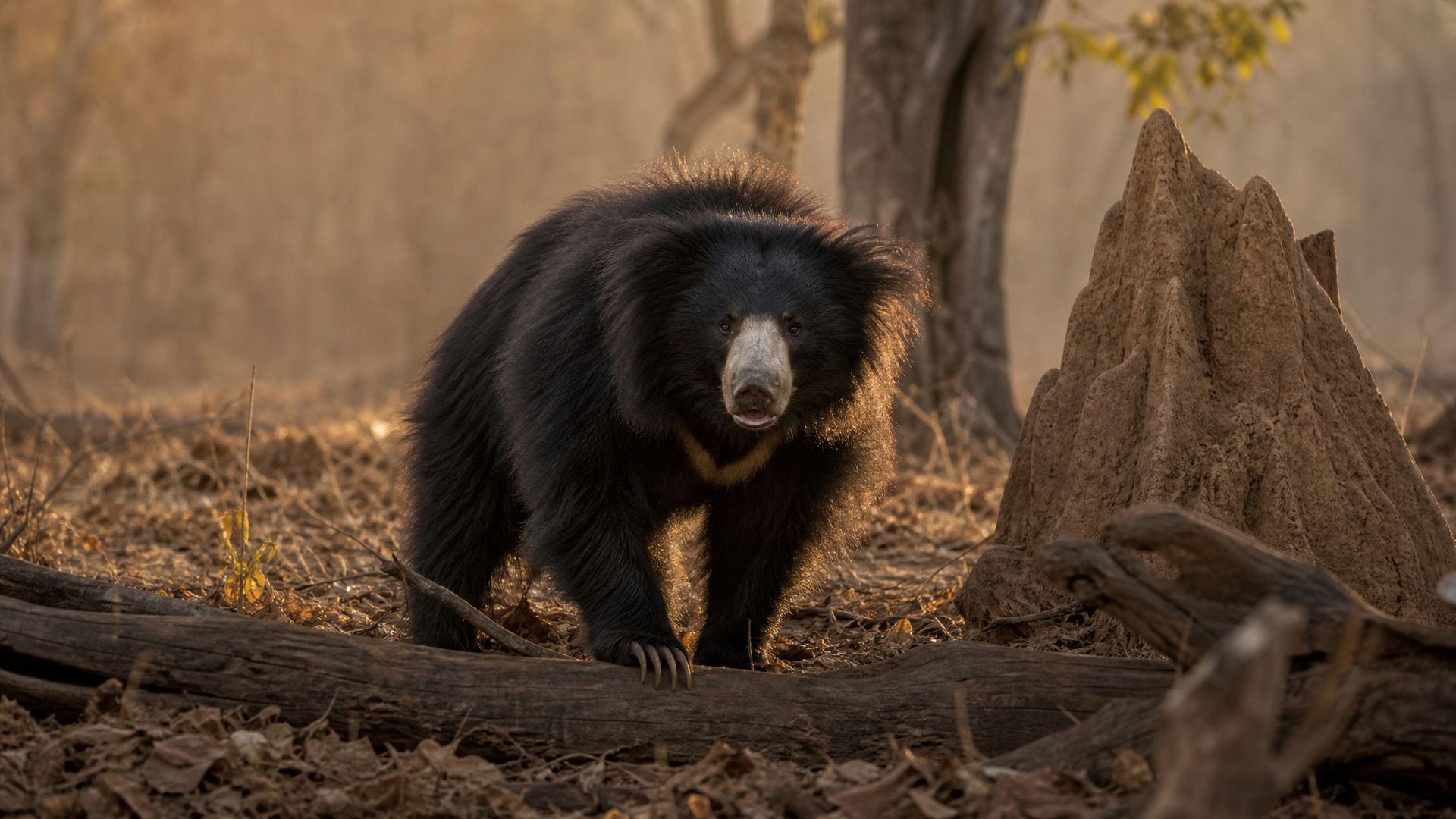
Near one, the forest feels unpredictable. The eyesight is poor, the temper quick, and a startled bear may charge before the moment has made sense to anyone else. Cubs ride on their mother's back, gripping the long fur while she moves through thicket and dust.
The sloth bear opens insect colonies, spreads seeds, and works the night floor in ways daylight rarely witnesses. But conflict, forest loss, and disturbance make surprise encounters more common. The bear lifts its dusty snout, sniffs once, and melts back into the dark scrub.