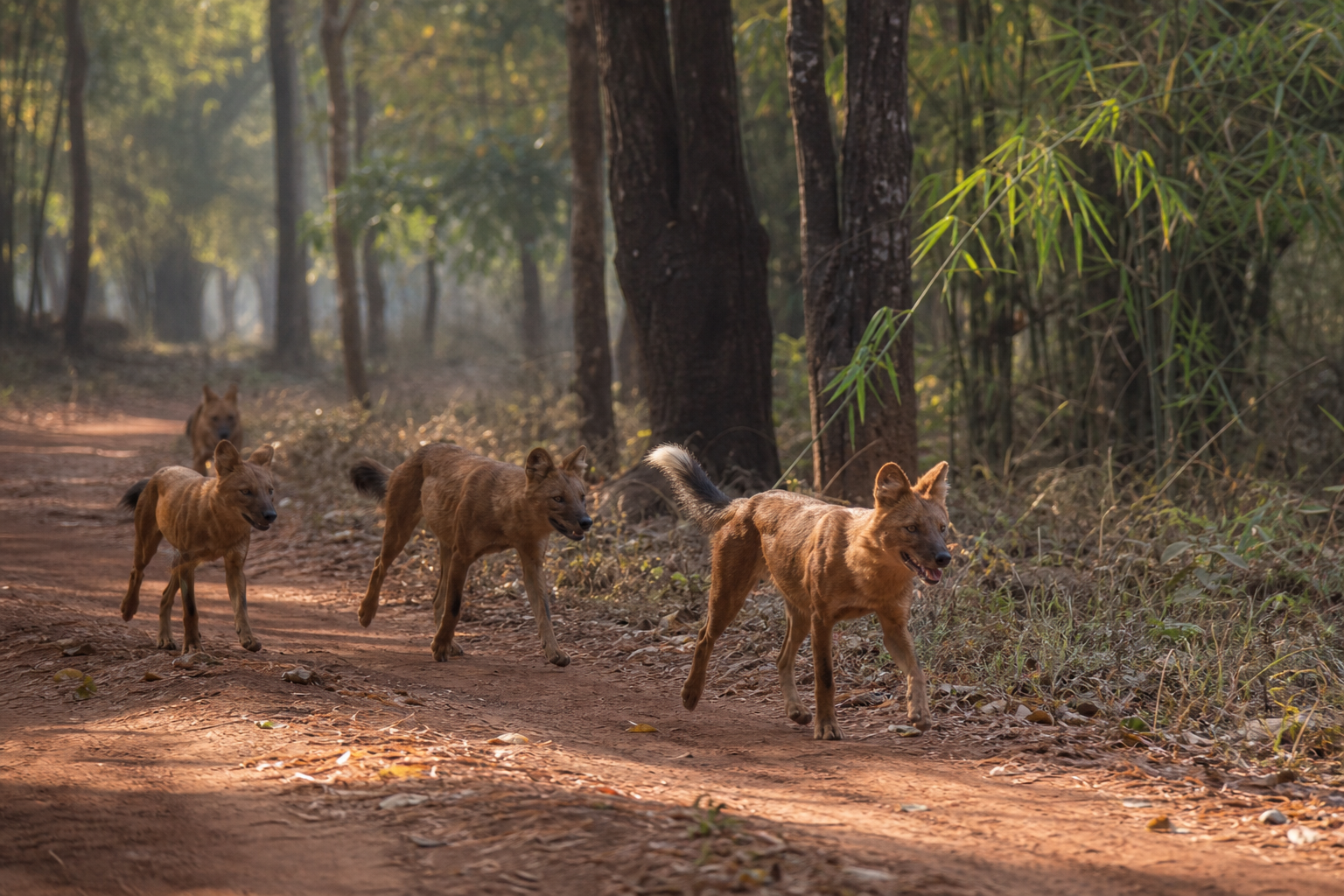
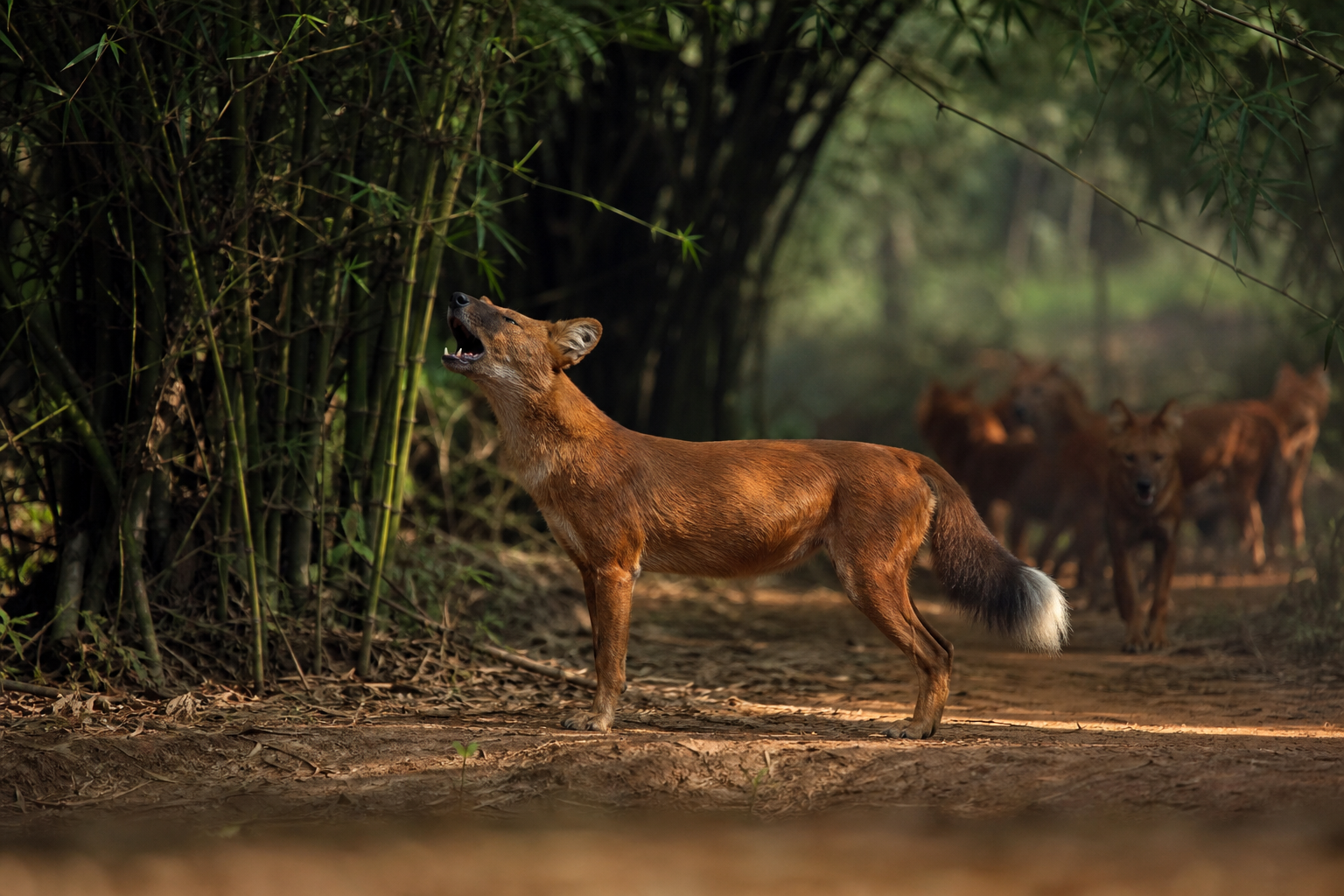
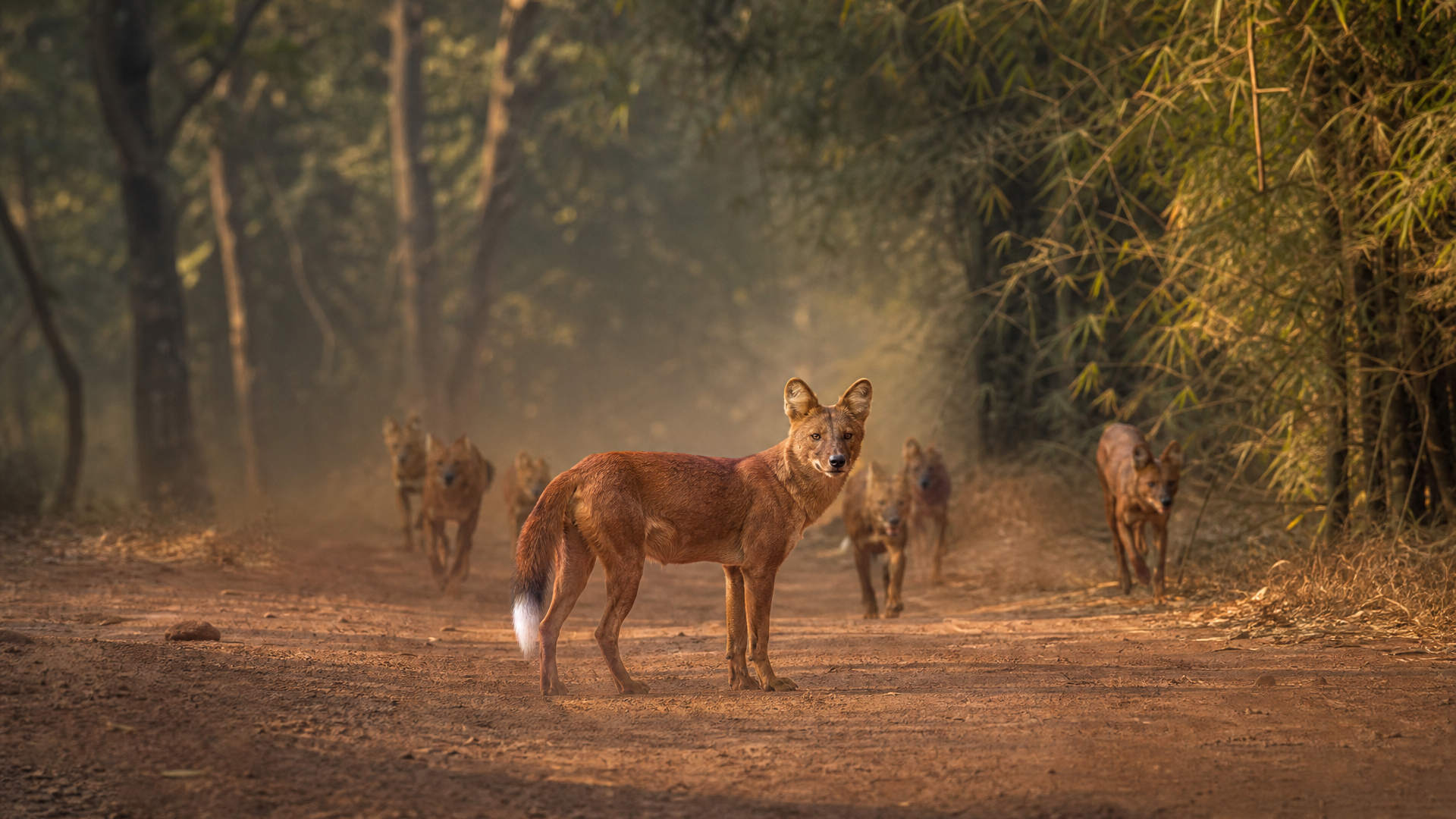
The first sign is not a body but a whistle. It threads through sal trees in the Central Indian forest, answered by another and then another, until the pack appears in quick red flashes between trunks. White tail tips lift and vanish. The ground seems suddenly full of decisions.
Dholes hunt by agreement. They are not heavy cats waiting for the perfect second. They test, turn, press, and answer one another's movements with a speed that makes the forest feel awake. Each animal is lean, deep-chested, and sharp-eared, with a foxlike face and a social life built around the pack. Pups feed early. Adults return with food held in their bodies for those at the den. A single dog is quick; the group is the true animal.
Their sounds carry their character: whistles, chatters, calls that keep bodies connected when leaves and slopes cut sight apart. They live with tigers, leopards, bears, and people, always negotiating danger larger than themselves.
Where dholes run, prey move differently and sick or unwary animals are gathered back into the forest's cycle. Disease from domestic dogs, conflict, and broken habitat narrow the routes that packs need. The last tail tip disappears in grass, but the whistle remains a moment longer.