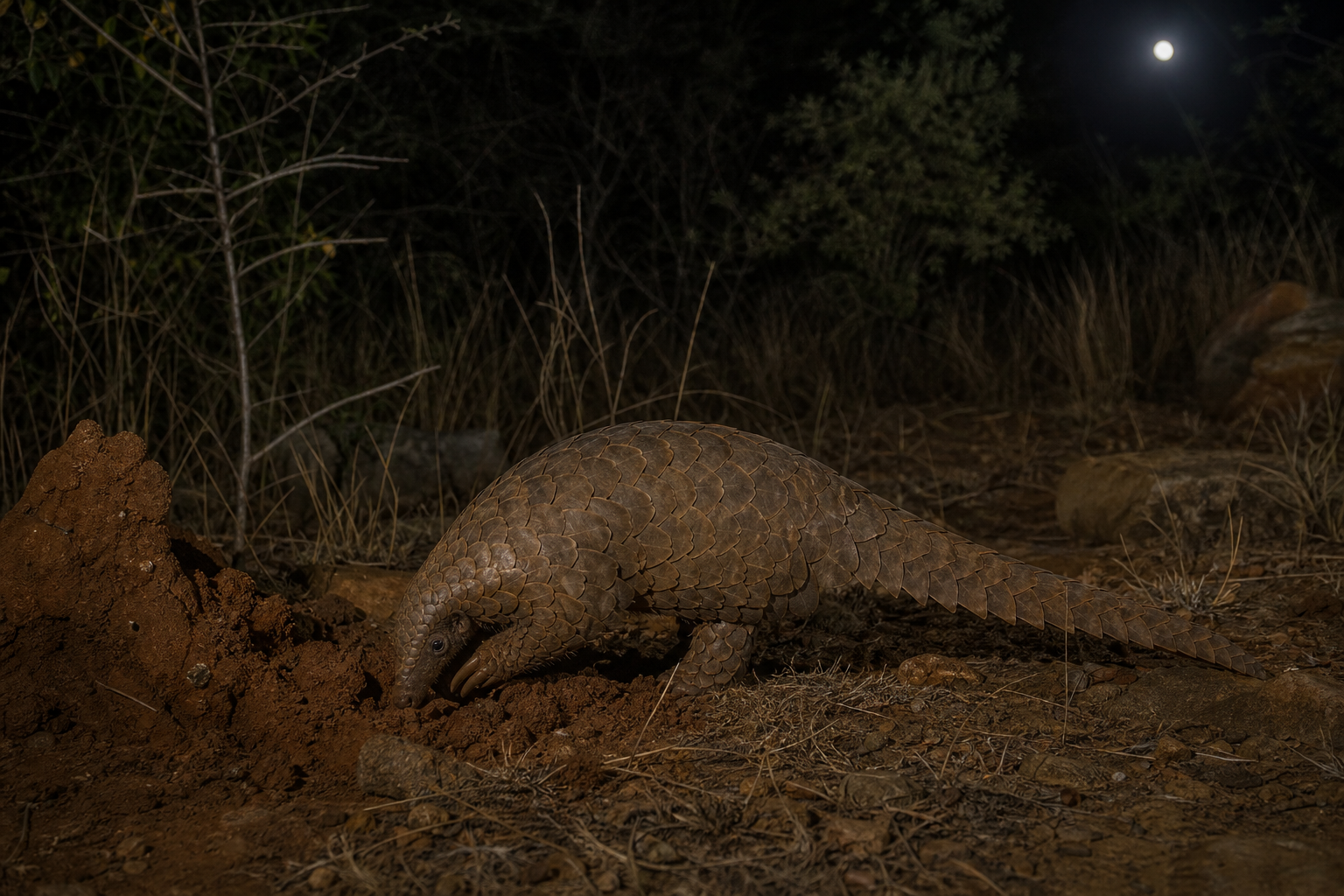
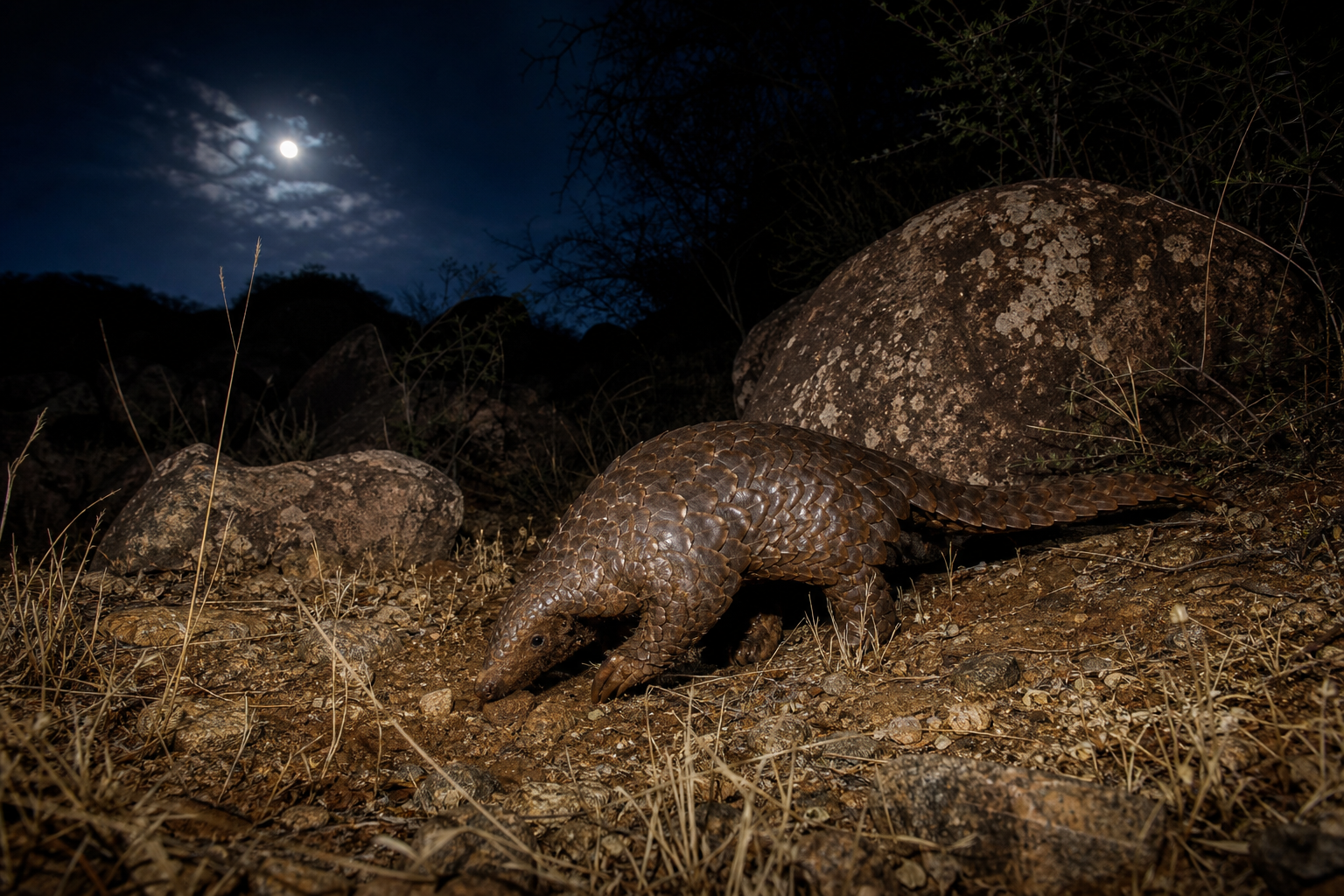
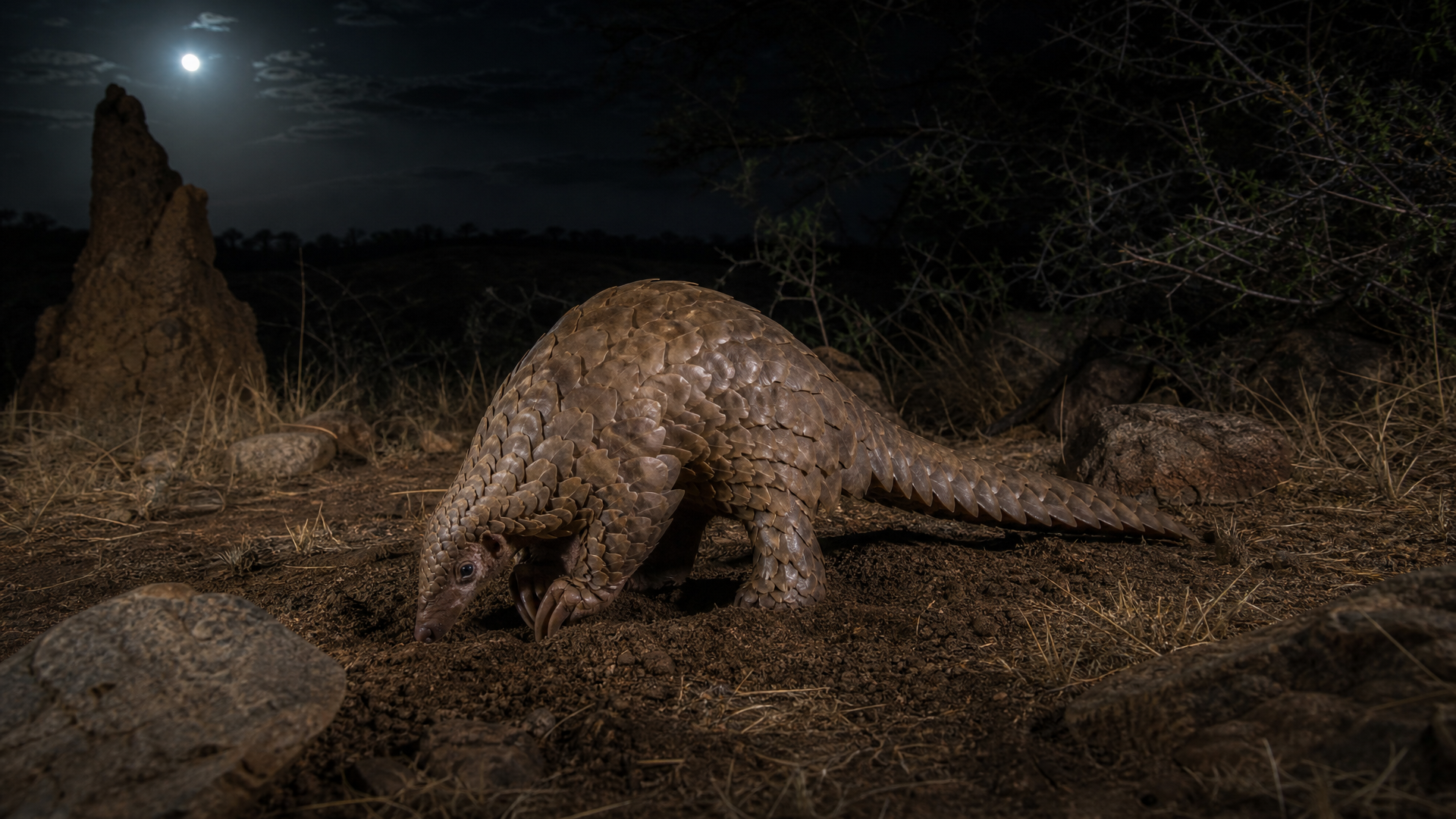
Night settles over dry scrub, and the soil begins to speak in scent. A low body moves between stones, each overlapping scale catching a faint edge of moonlight. The Indian pangolin pauses at an ant trail, lowers its narrow head, and begins to open the earth with long, curved claws.
The animal seems almost impossible until it moves. No teeth. A tongue longer than the head and body suggest. A tail heavy enough to brace the digging. Its life is a series of small investigations: mound, root, burrow, log, each tested and either opened or left behind. When threatened, it folds inward, turning face and belly away until only armor remains.
That defense works against many hunters, but not against hands. The pangolin's quietness has become part of its danger. It can be lifted whole from the night that made it so difficult to find.
Still, its work matters. It turns insect life into mammal life, opens sealed galleries, and loosens soil one feeding place at a time. In farms, scrublands, and forest edges, it follows a hidden map beneath the feet of larger animals. A scale brushes dry grass. Then the night closes over the path.