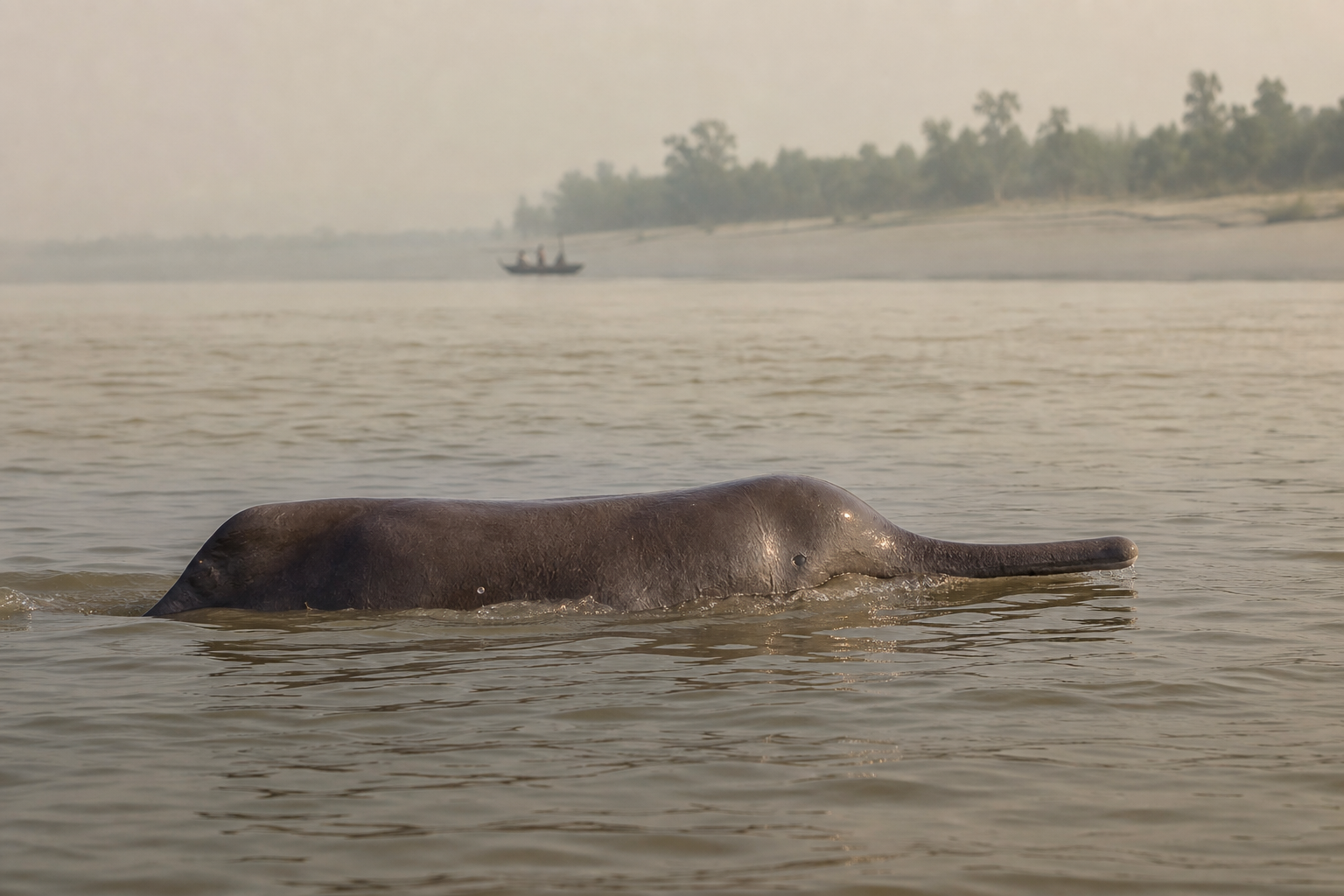
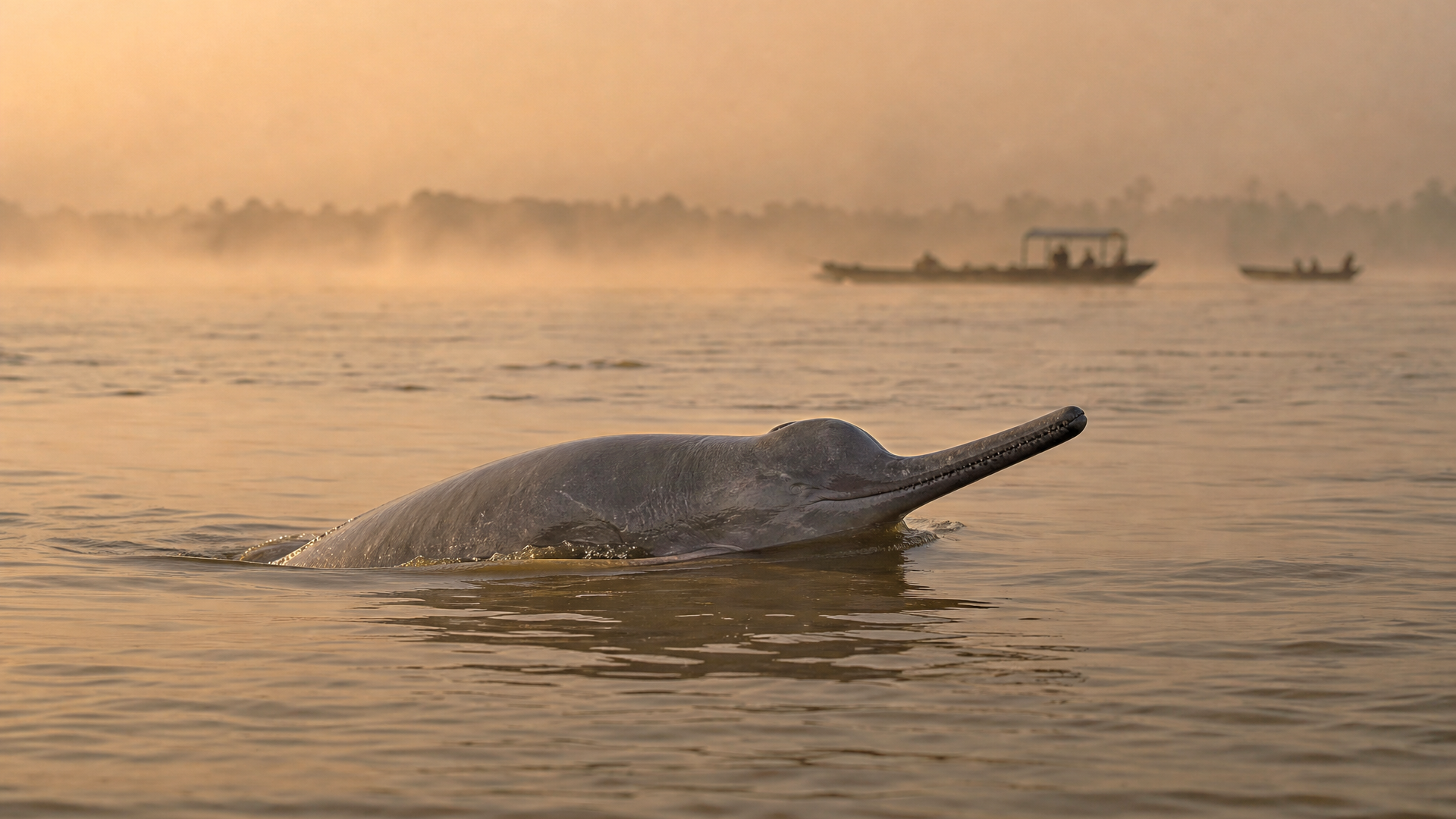
On the Ganges at dawn, the water is brown with depth and work. Boats knock softly against moorings. A sandbar glows pale through mist. Then a narrow beak breaks the surface, followed by a smooth back and a single breath, brief enough to be mistaken for the river shifting in its sleep.
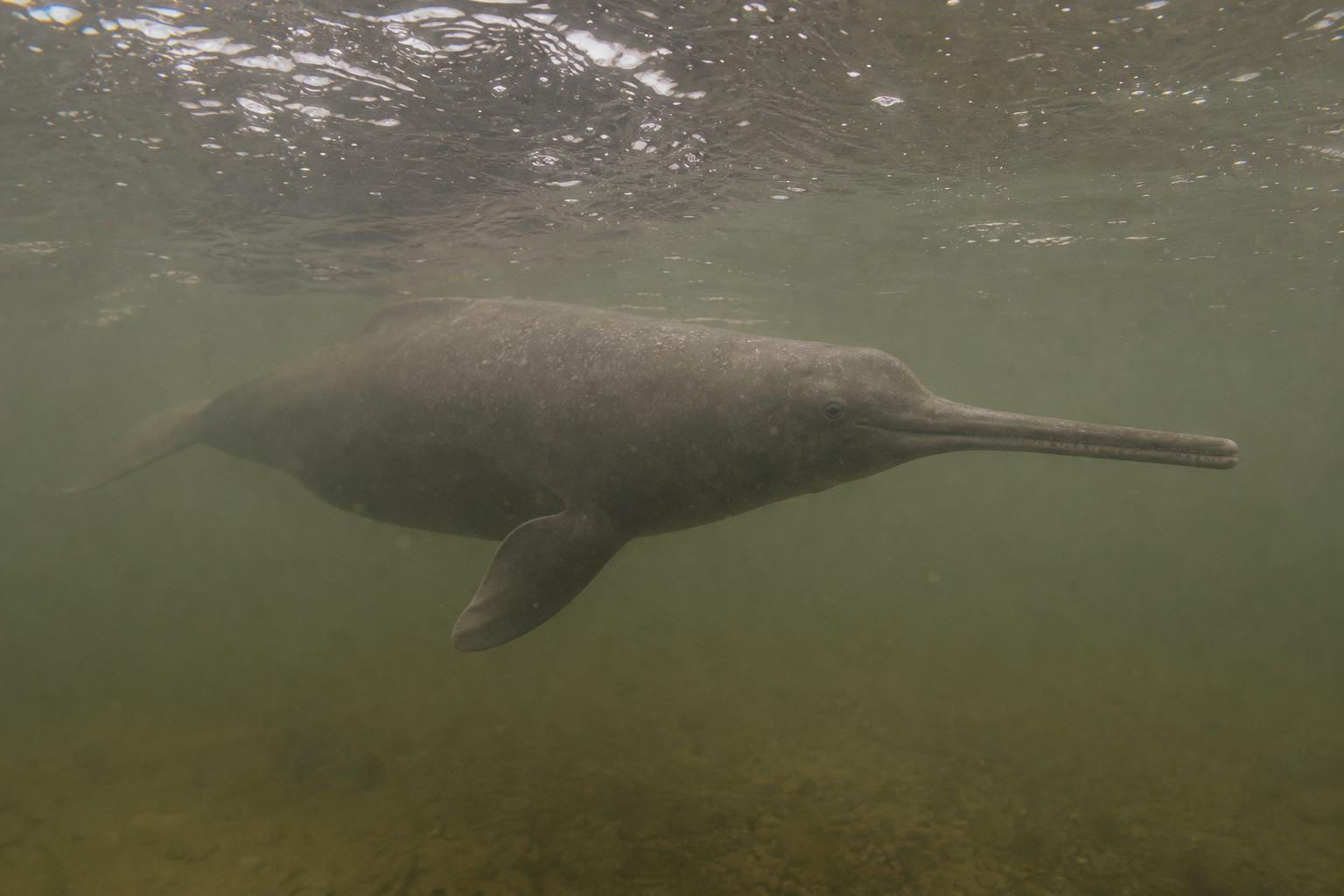
The Ganges river dolphin lives where sight has little authority. Its eyes are tiny, its world made of echo, pressure, current, and the quick signals of fish in turbid water. It swims on its side at times, feeling along the river's uneven floor, turning through channels that change with monsoon, silt, and season. Each surfacing is small, but it changes the scale of the river. Something ancient and alert is moving under the boats.
There is no display in this animal. Its power is navigation through confusion. Sandbanks move. Nets drift. Engines churn. Barrages break long water into sections. Still the dolphin rises, breathes, and sinks, carrying a map no human eye can see.
It is a measure of the river's living connection. Where flow, fish, and passage remain, the dolphin can still stitch water into home. A ripple widens behind it, and the Ganges keeps its secret below the surface.