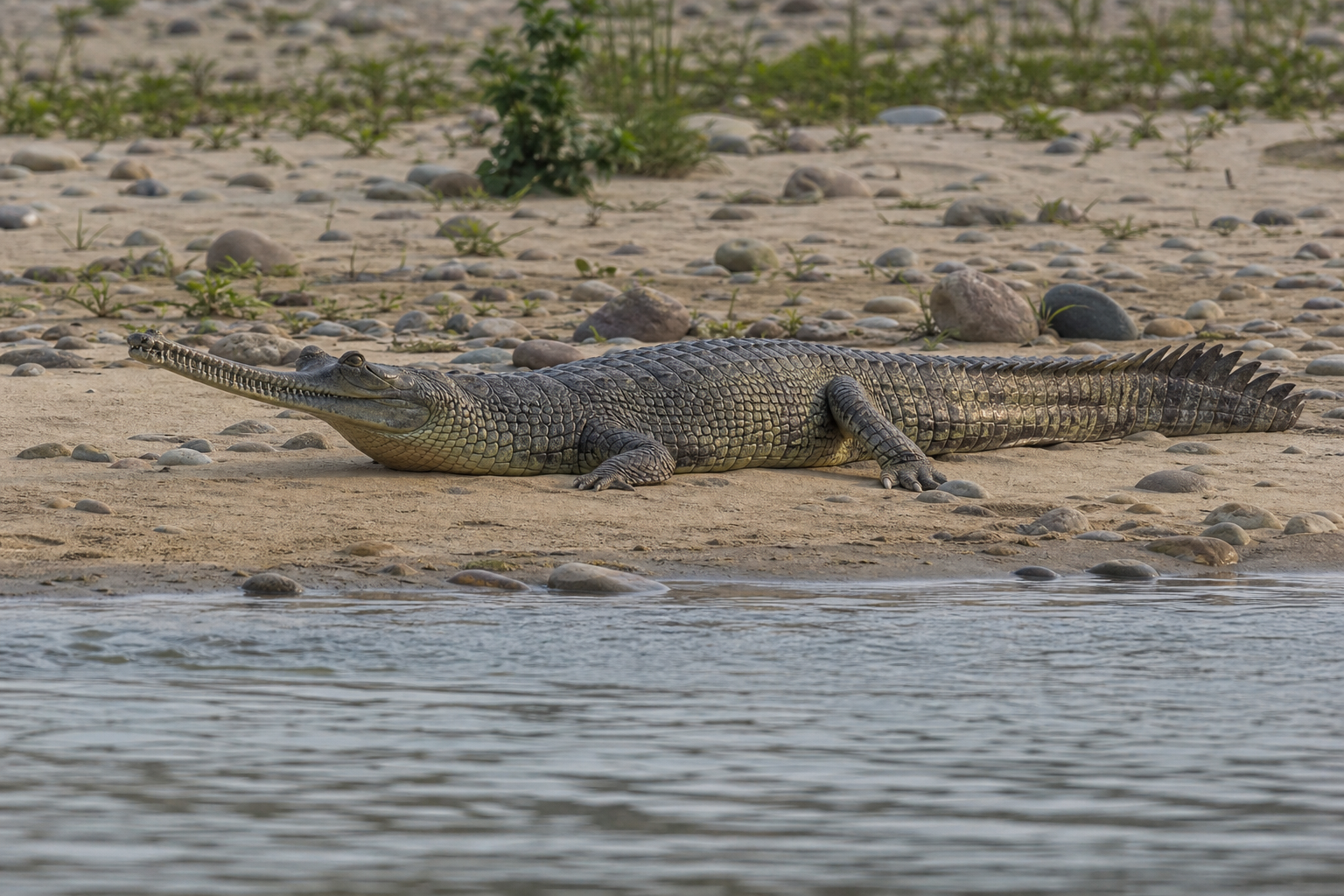
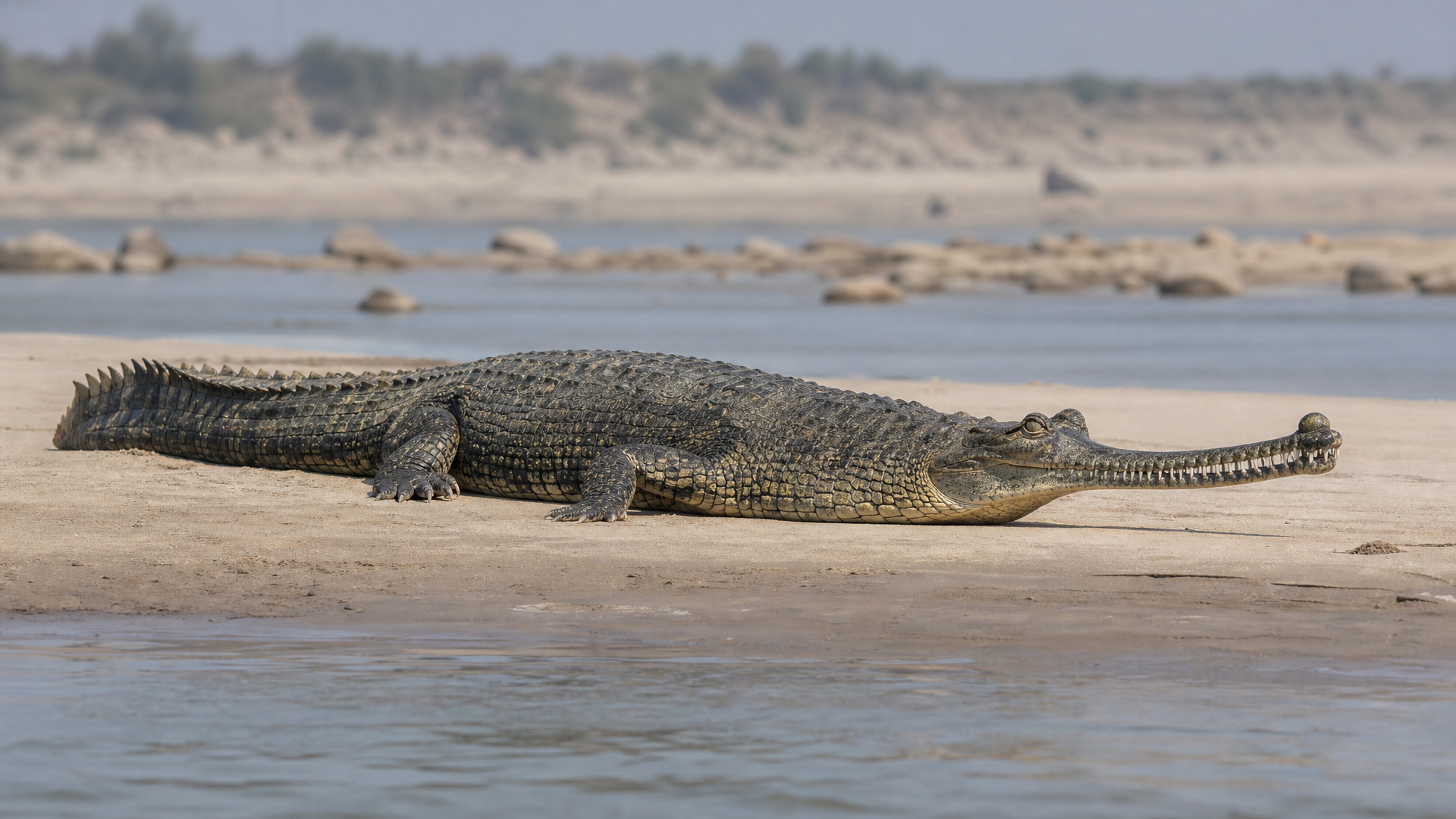
The Chambal River runs clear over stone, then slows beside a sandbank warm enough to hold the morning. A long shape lies there almost flat to the earth. At first it looks like driftwood with teeth. Then an eye opens, and the gharial's narrow snout points toward the current.
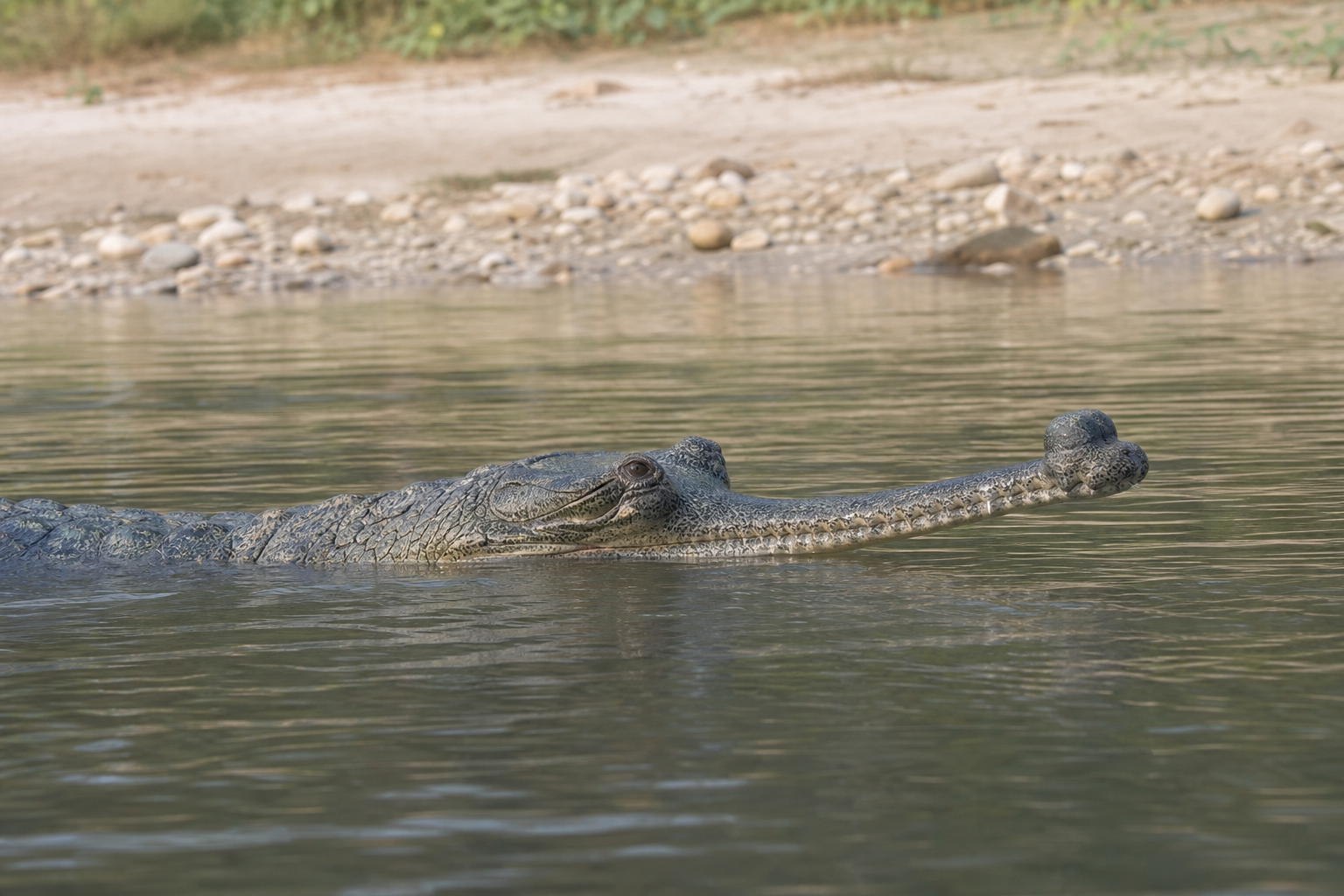
This crocodilian is not built like a swamp ambusher. Its jaws are thin, lined with many interlocking teeth, made for fish and fast water rather than brute force at the bank. The body is large, but the head gives it a strange delicacy, as if evolution pulled the face into a river tool. Males carry a rounded growth at the snout tip, a sign that turns breath and presence into signal.
On sandbanks, gharials bask in groups, bodies arranged by heat and caution. In water, the awkwardness of land falls away. The tail drives, the snout cuts, and the animal becomes part of the current's line.
The gharial needs more than water. It needs free-flowing rivers, fish, nesting sand, and quiet banks at the right season. Dams, nets, sand mining, and disturbance have taken many of those places. The animal slides from the bank, and only the long jaw remains above the river for a breath.