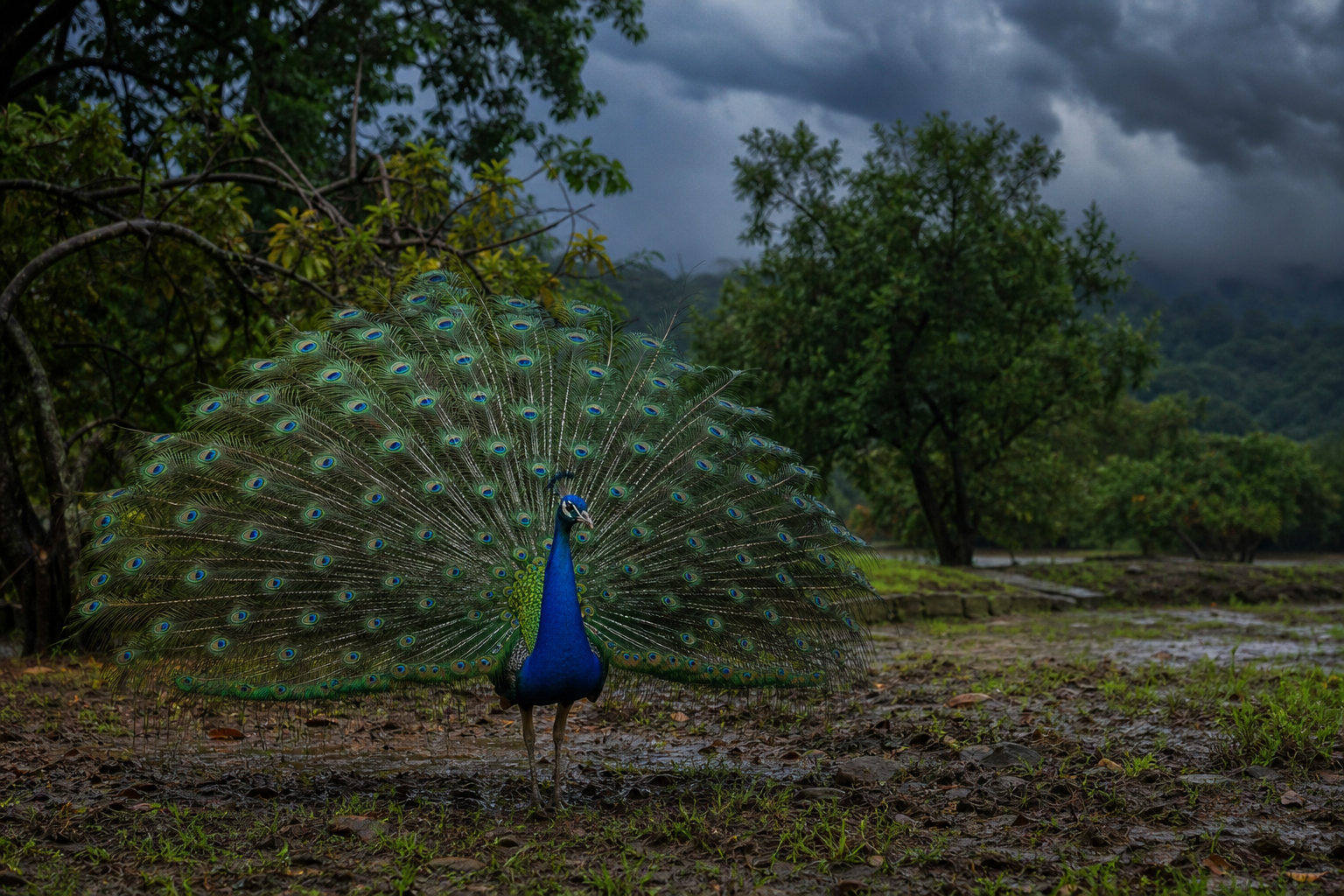
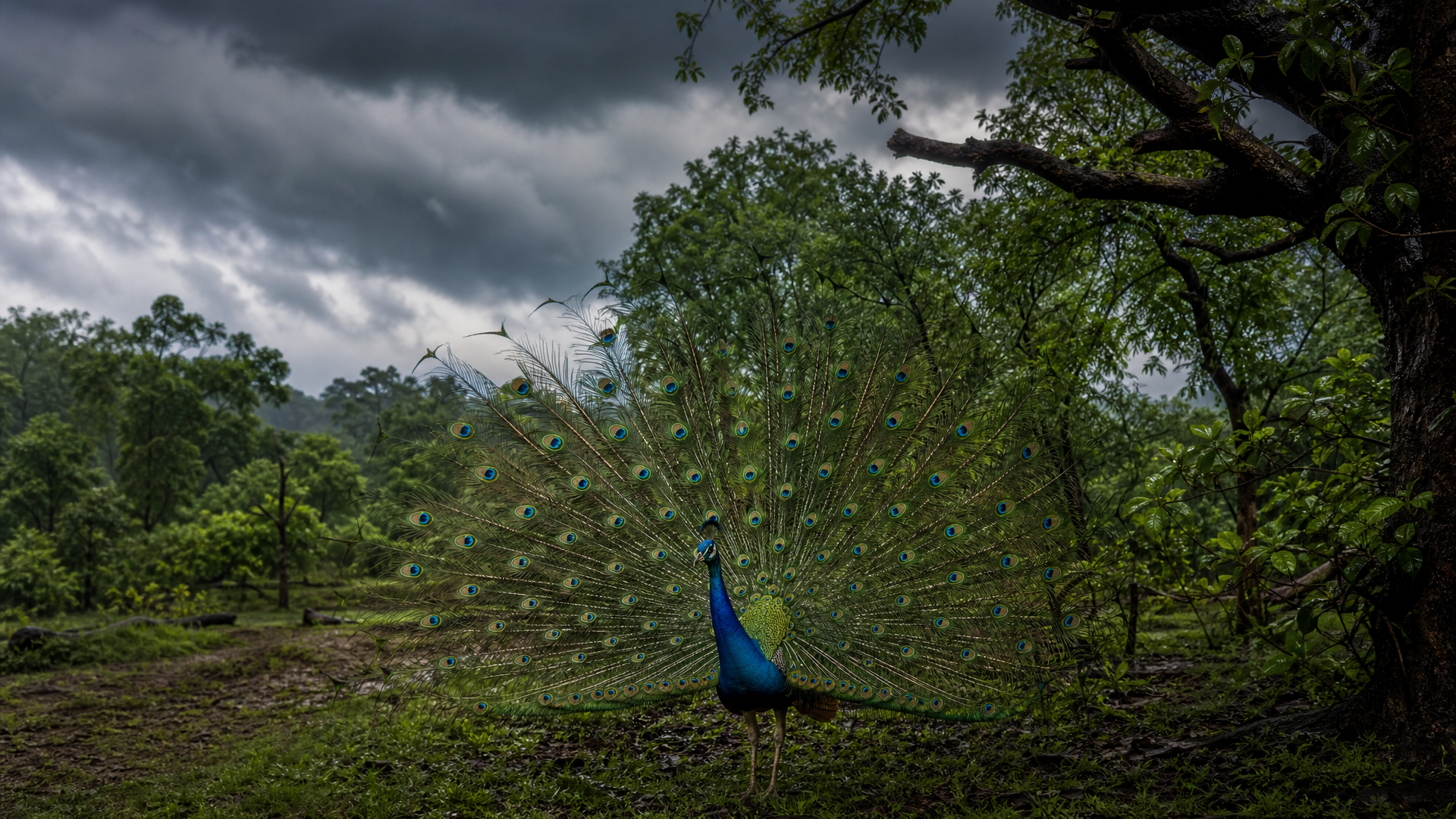
Before rain reaches the village edge, the peafowl begins to call. The sound is sharp, carrying over fields, scrub, and old trees. A male steps into the open with blue neck bright under the darkening sky, then lifts the train behind him until a hundred eye-spots tremble in the damp wind.
The Indian peafowl is familiar enough to be underestimated. It walks through temple courtyards, farmland margins, dry forest, and gardens with the confidence of a bird that has learned to live near people without becoming tame in spirit. On the ground it feeds, watches, and slips quickly into cover when danger sharpens. In display, the male turns stillness into vibration. Feathers rattle. The train shivers. The body behind all that color remains alert, ready to fold splendor into flight.
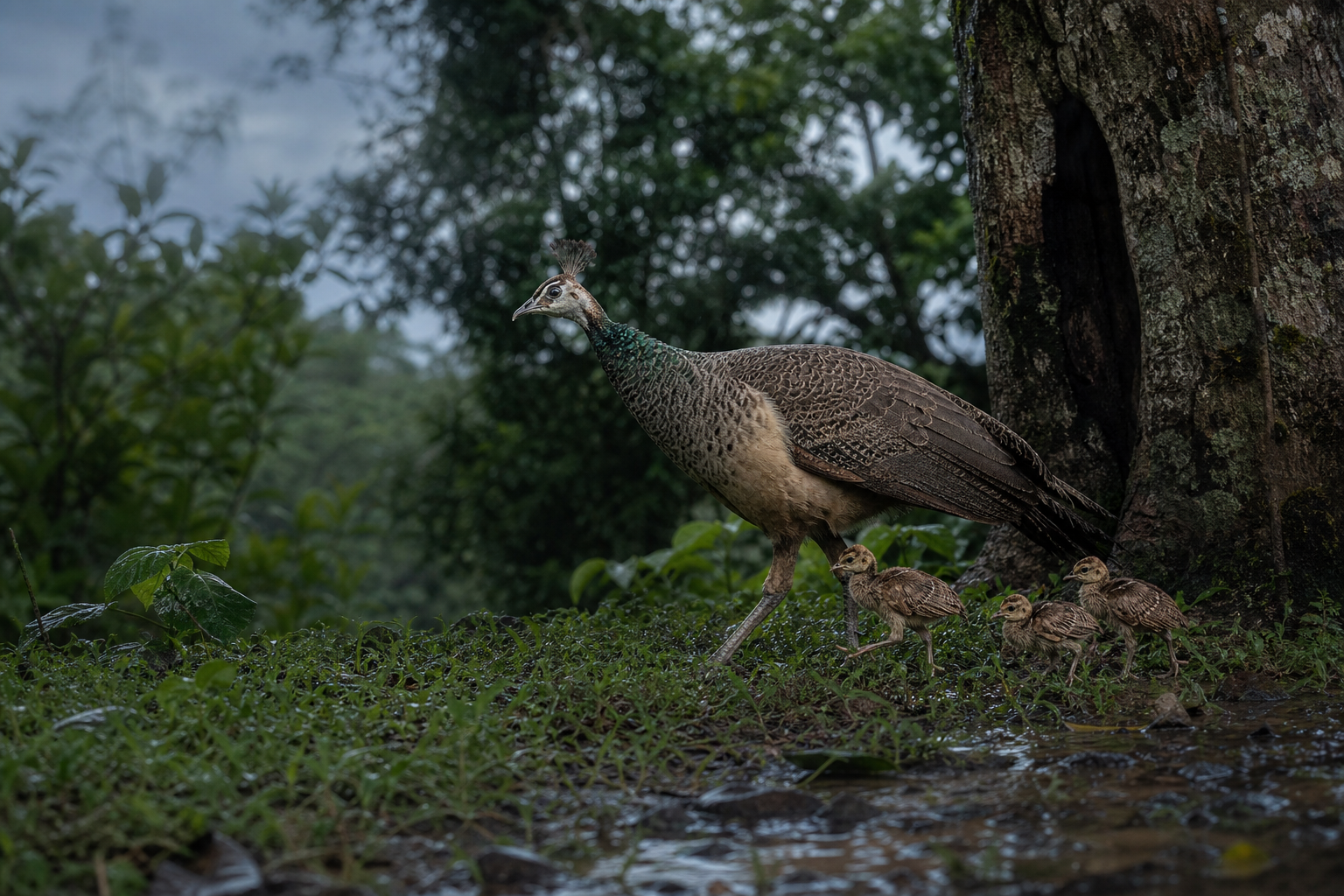
Females choose while pretending not to hurry. Chicks move through grass like small shadows, taught by calls and sudden freezes. At roost, the birds lift into trees, leaving the ground to night.
Peafowl scatter seeds, take insects, and give the monsoon countryside one of its oldest voices. They endure well in many human-shaped places, yet their wildness still depends on cover, roosts, and room to vanish. The call rises again, and rain begins in the leaves.