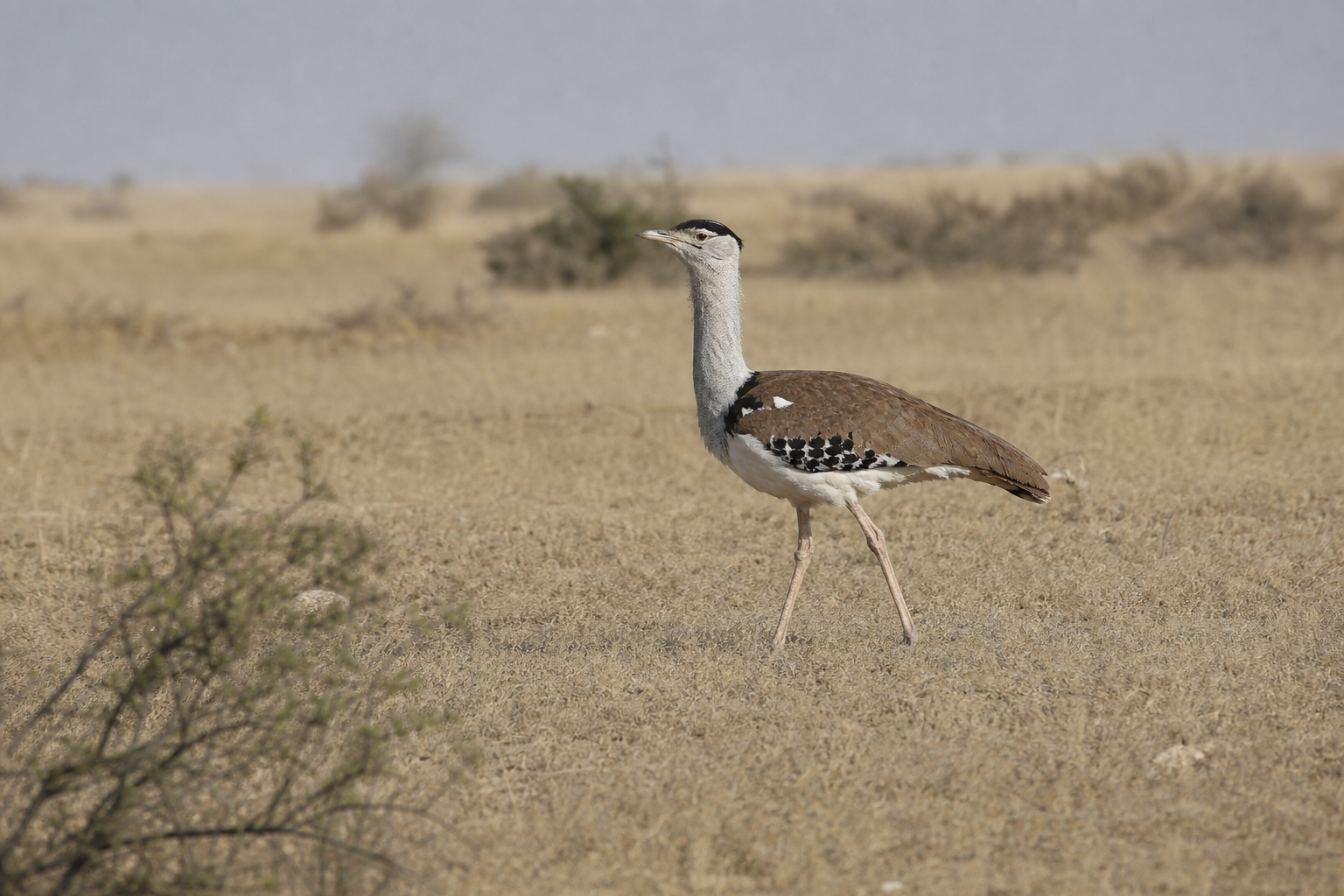
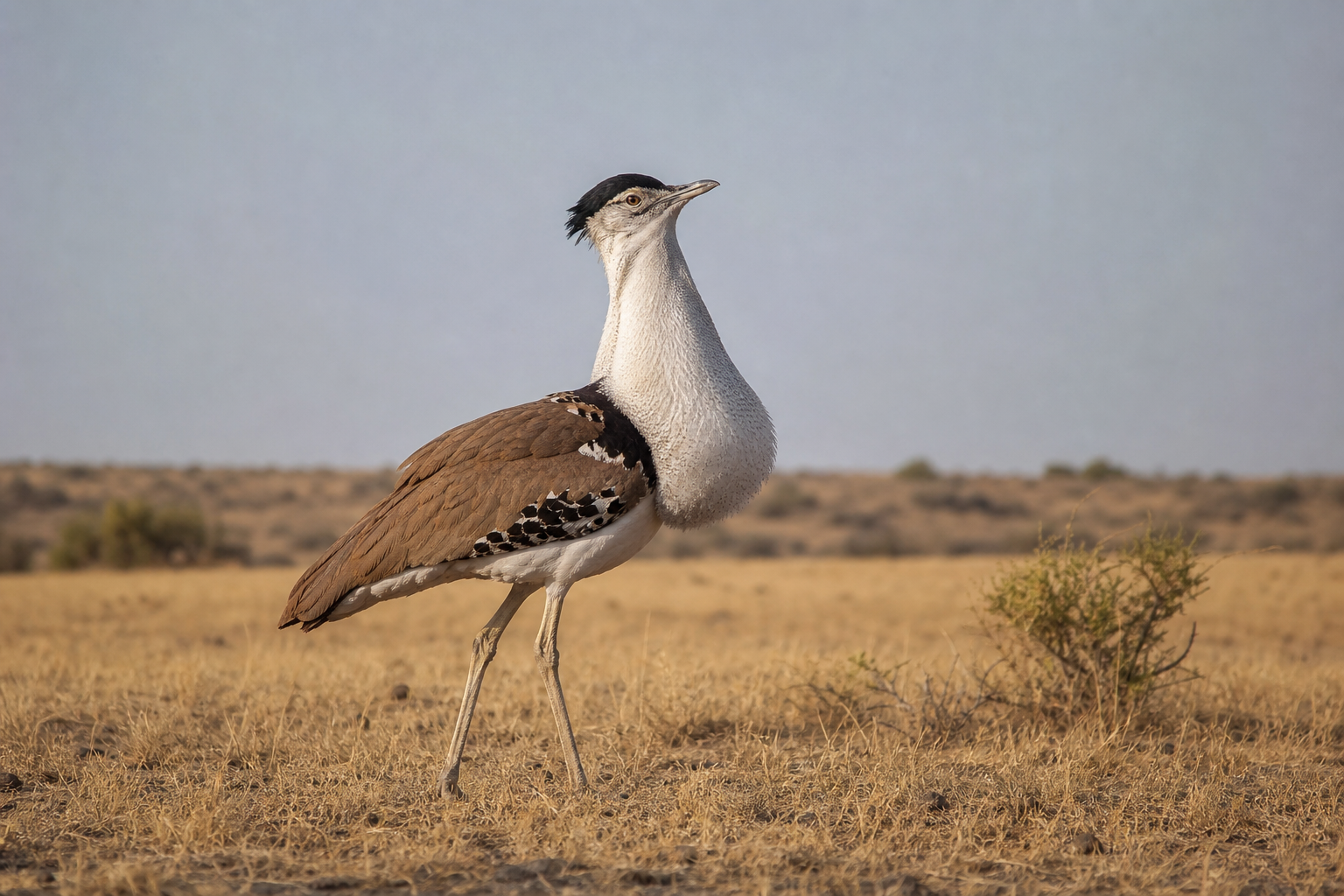
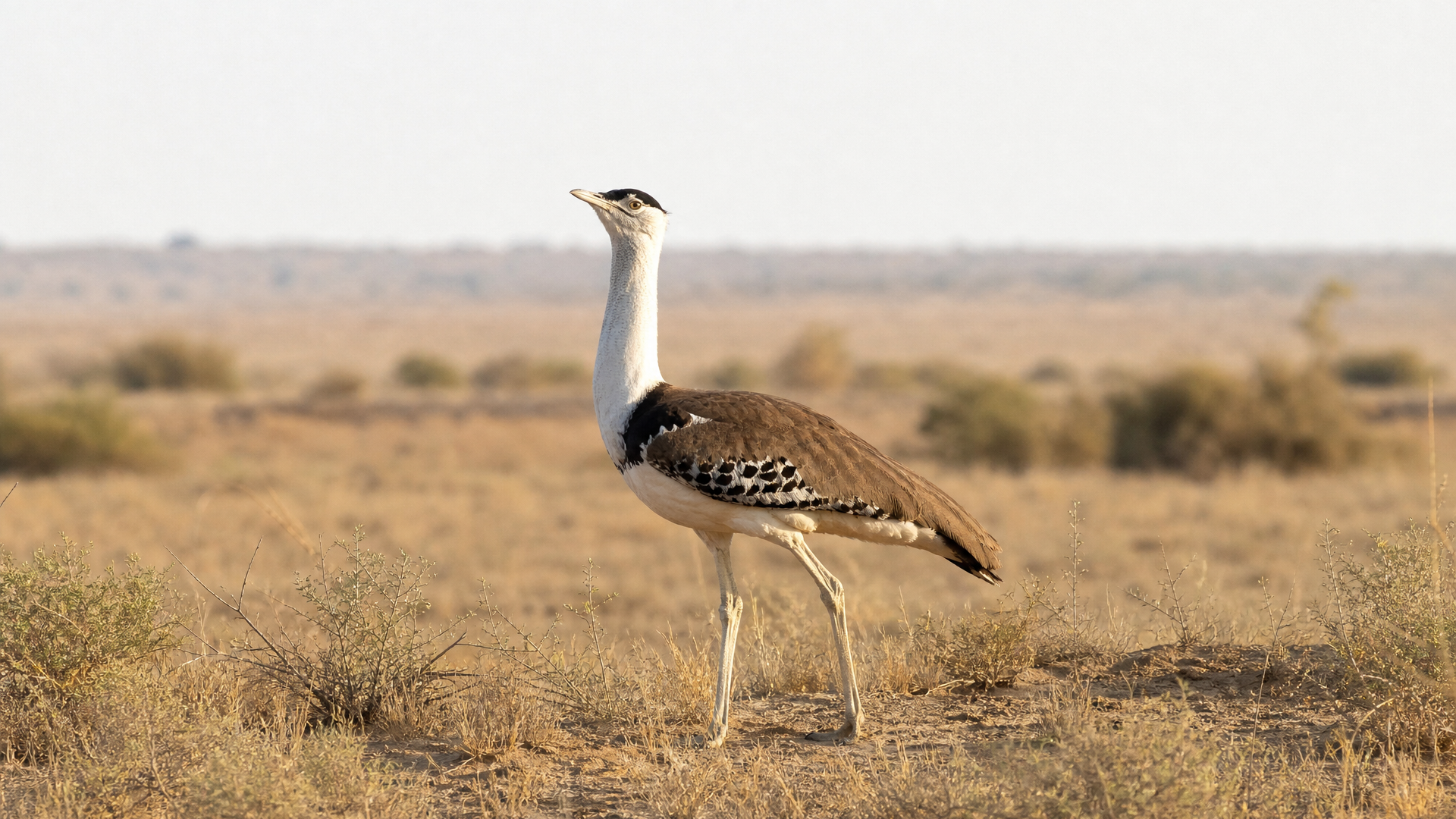
Heat lifts from the Thar grassland until the distance trembles. A pale form moves between low shrubs, slow and upright, with black cap and long legs clear for a moment before shimmer takes them back. The great Indian bustard pauses, head raised, reading a plain where danger can come from any side.
This bird belongs to openness. Its body is large, but its way of surviving is caution stretched over distance. It walks more than it flies, picking through grass with measured steps, stopping often, vanishing not by hiding behind trees but by becoming part of glare, dust, and stillness. In display, the male changes the mood of the plain, inflating the pale throat pouch and calling across country that once carried many such voices.
The bustard makes grassland feel inhabited rather than empty. Its presence says that dry open country is not wasteland waiting for another use. It is a living system of seeds, insects, lizards, foxes, harriers, and hidden nests laid on the ground itself.
Power lines, farming changes, disturbance, and shrinking native grass have made that ground perilous. The bird lowers its head and walks on. Around it, the horizon remains wide, but the safe parts are fewer than they look.