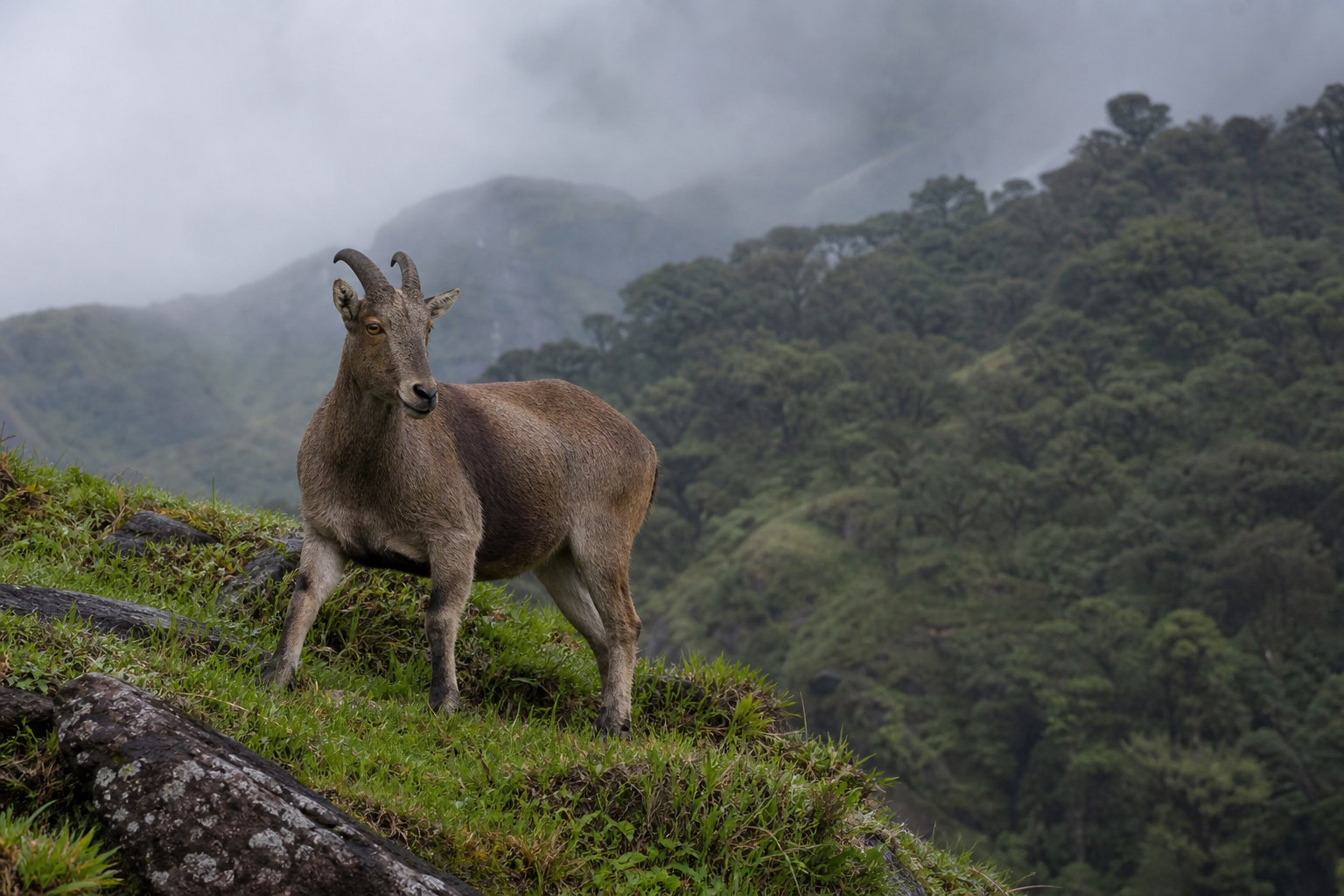
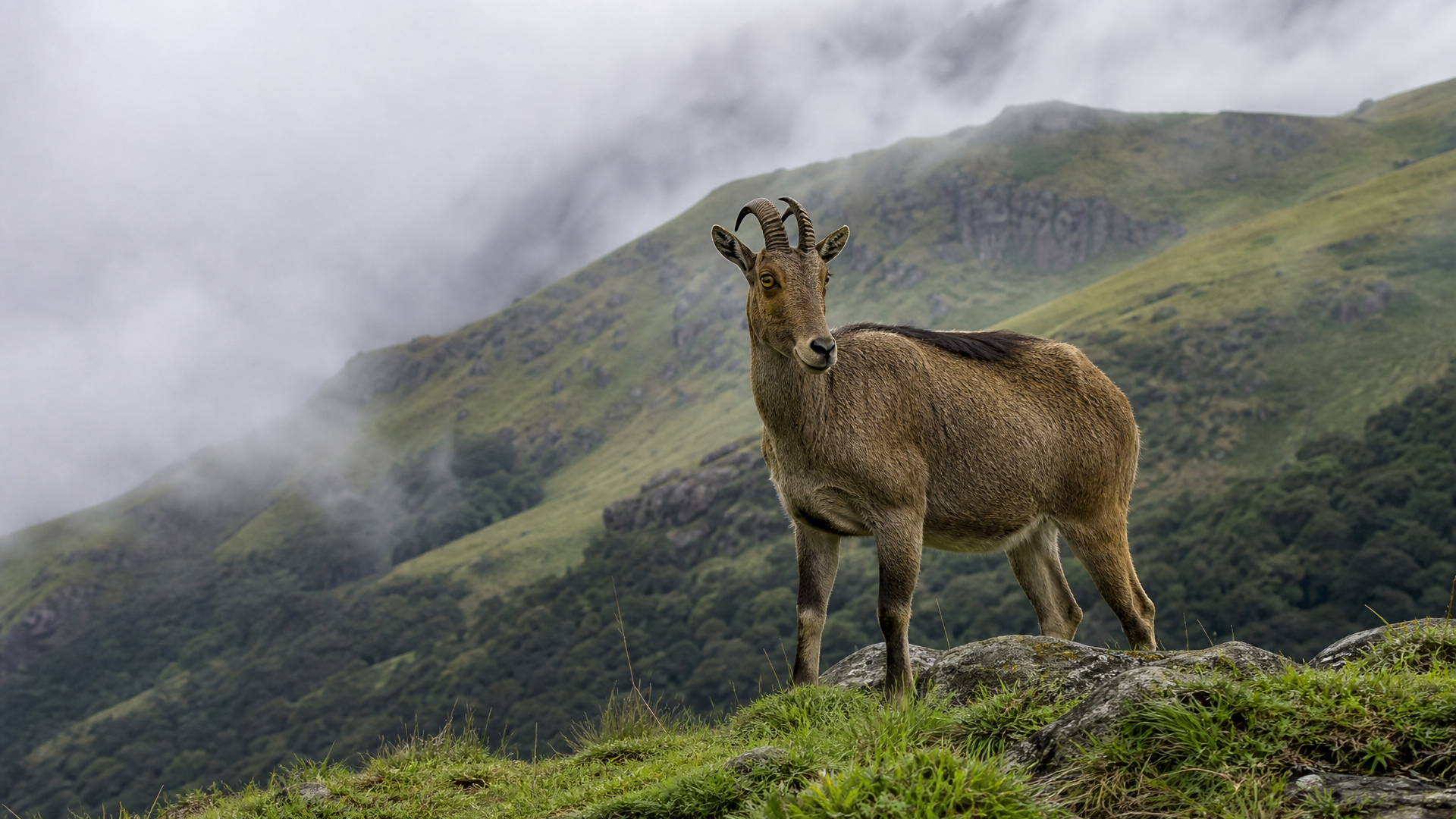
Cloud climbs the Nilgiri slopes before the sun reaches the grass. Water beads on short stems. From the edge of a dark shola forest, a tahr steps onto the open hillside, hooves finding rock and slick earth with equal confidence. Behind it, the herd spreads across the slope like shadows given weight.
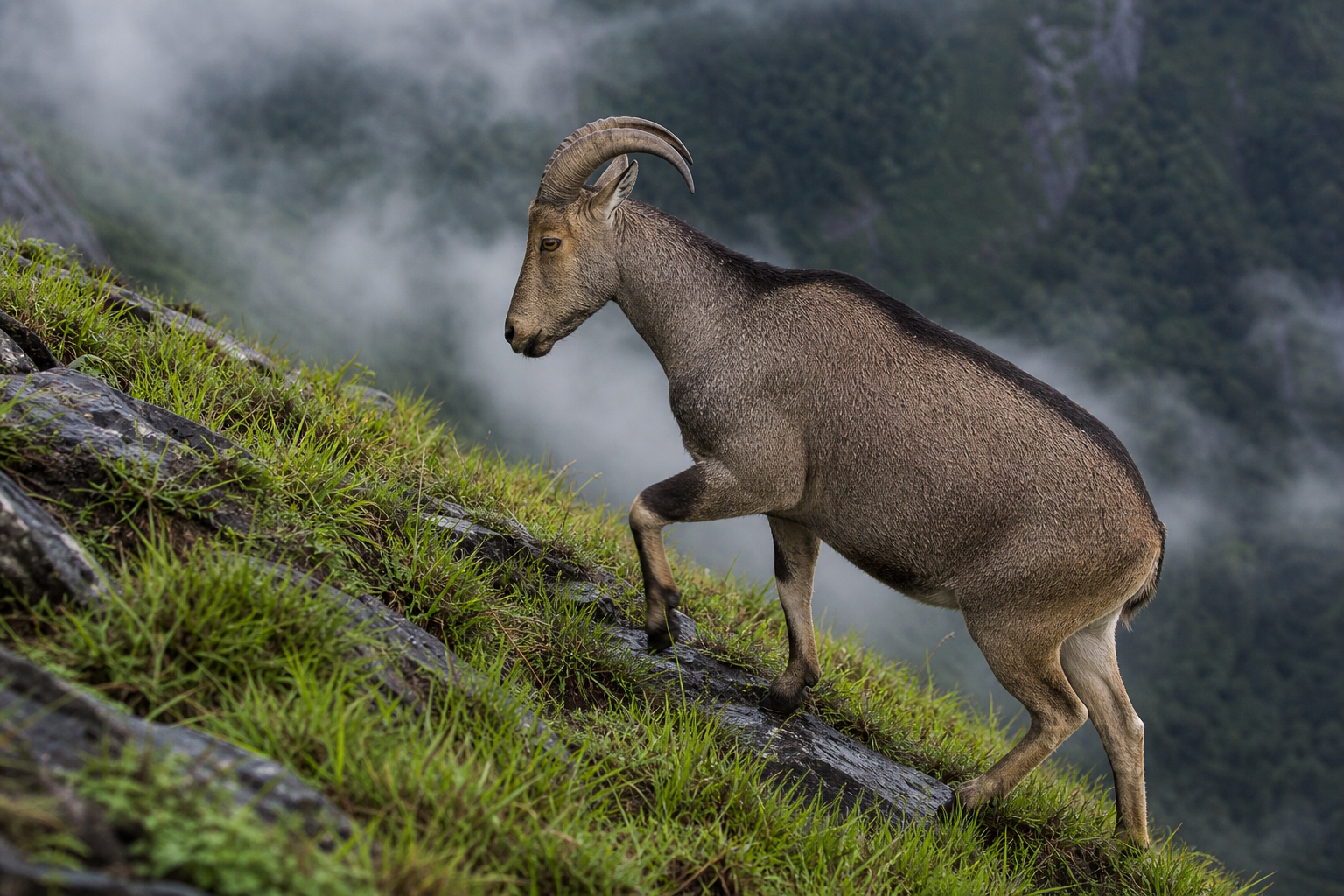
The Nilgiri tahr belongs to steepness. Its body is compact, its legs strong, its hooves made for ledges where a careless step would become a fall. Males darken with age, carrying the saddle of maturity across the back. Females and young feed with heads low, then lift together when mist thins and a sound travels from below.
To watch them is to feel how mountain grassland differs from plain. Every movement accounts for slope, wind, wet stone, and the nearest escape line. They do not conquer the heights. They fit them, placing each hoof as if the hill has spoken.
Their grazing and movement help keep these sky islands alive, but plantations, roads, invasive plants, and warming edges squeeze the grasslands between forest and human use. The mist returns. The herd fades until the hillside seems empty, though the hoof marks remain.