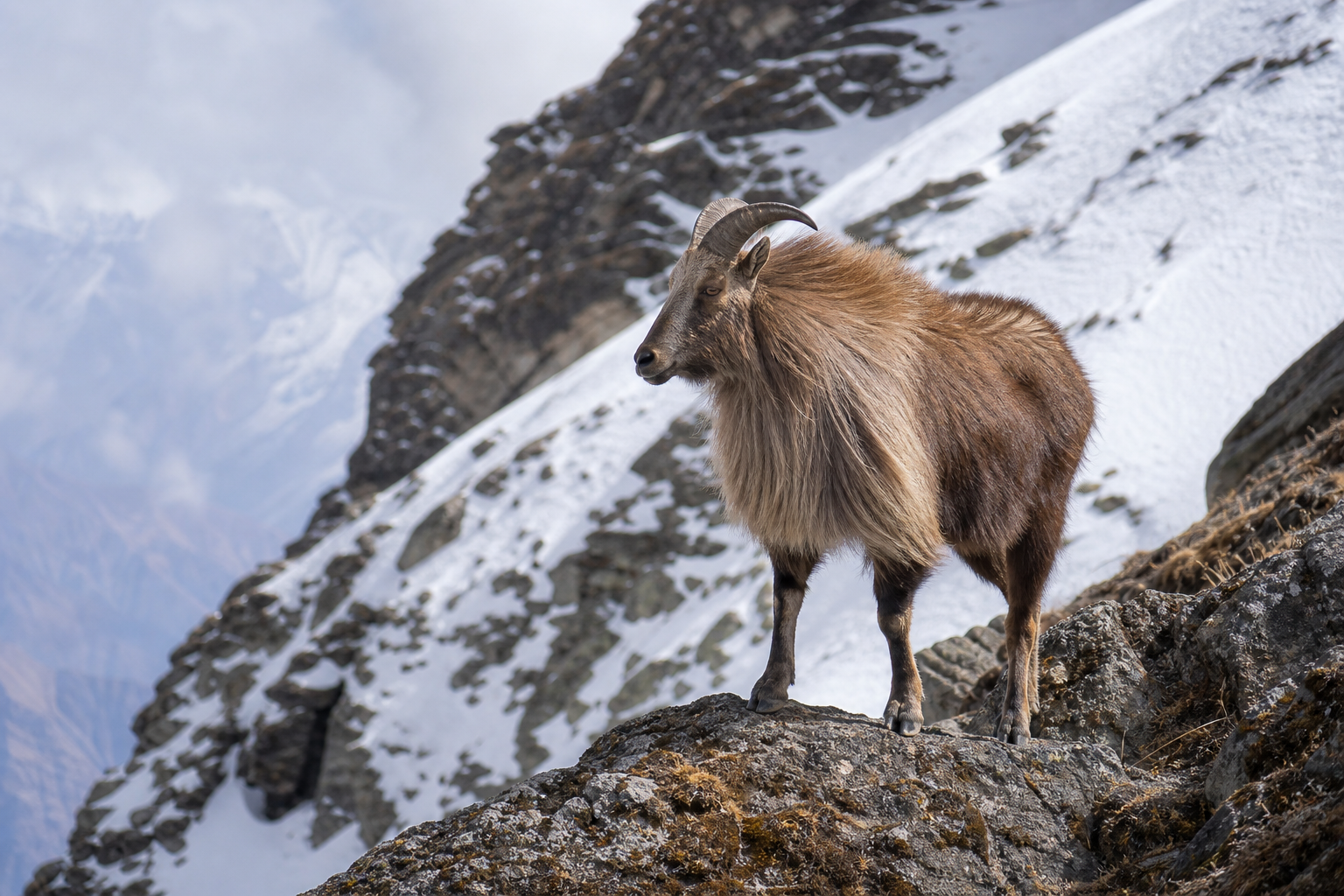
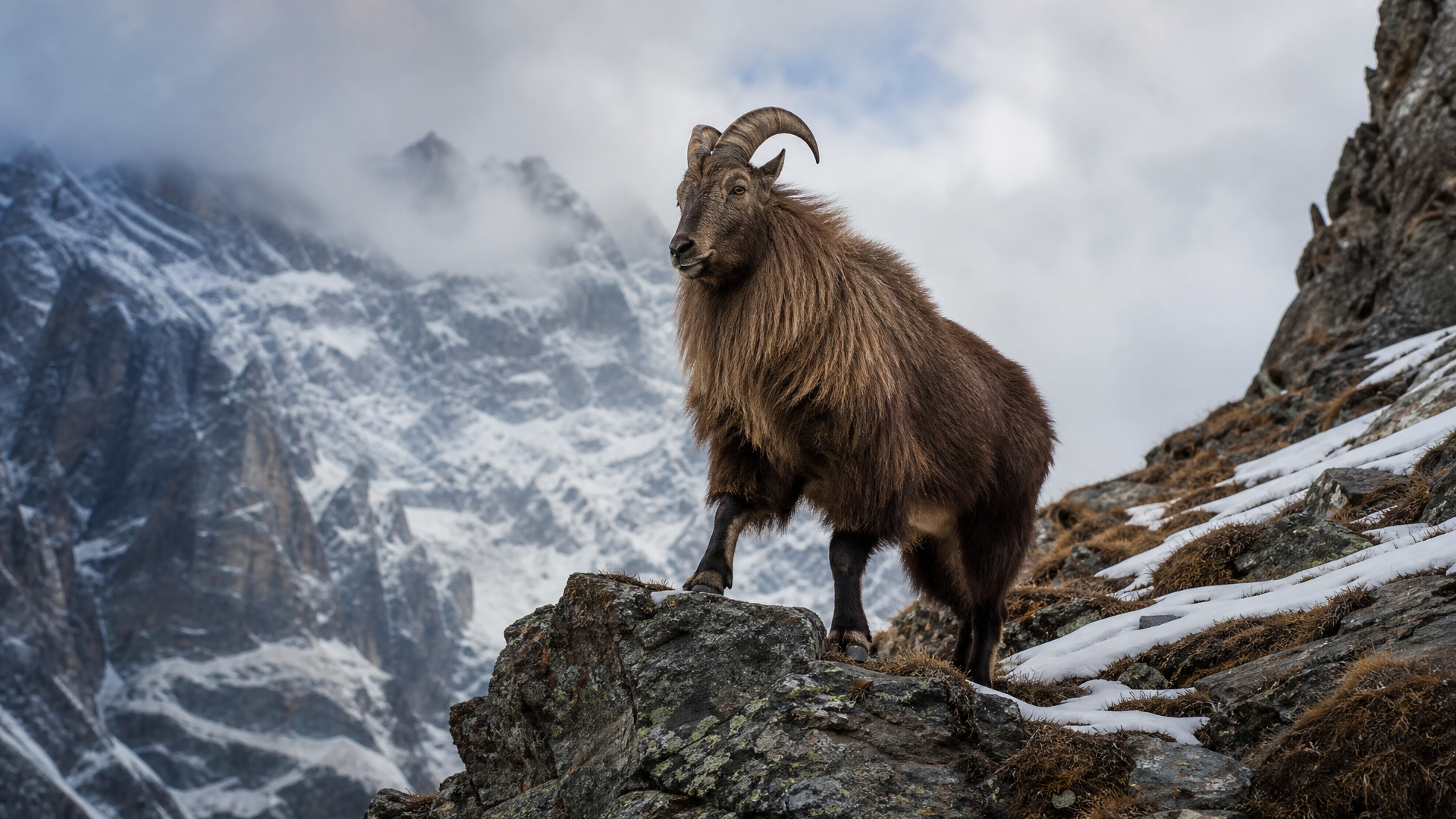
Above the tree line, the Himalaya speaks in wind before it speaks in snow. Gravel ticks down a slope. A dark, shaggy male stands against the pale rock, mane lifting in gusts, while others feed across a ledge where the ground falls away almost at once.
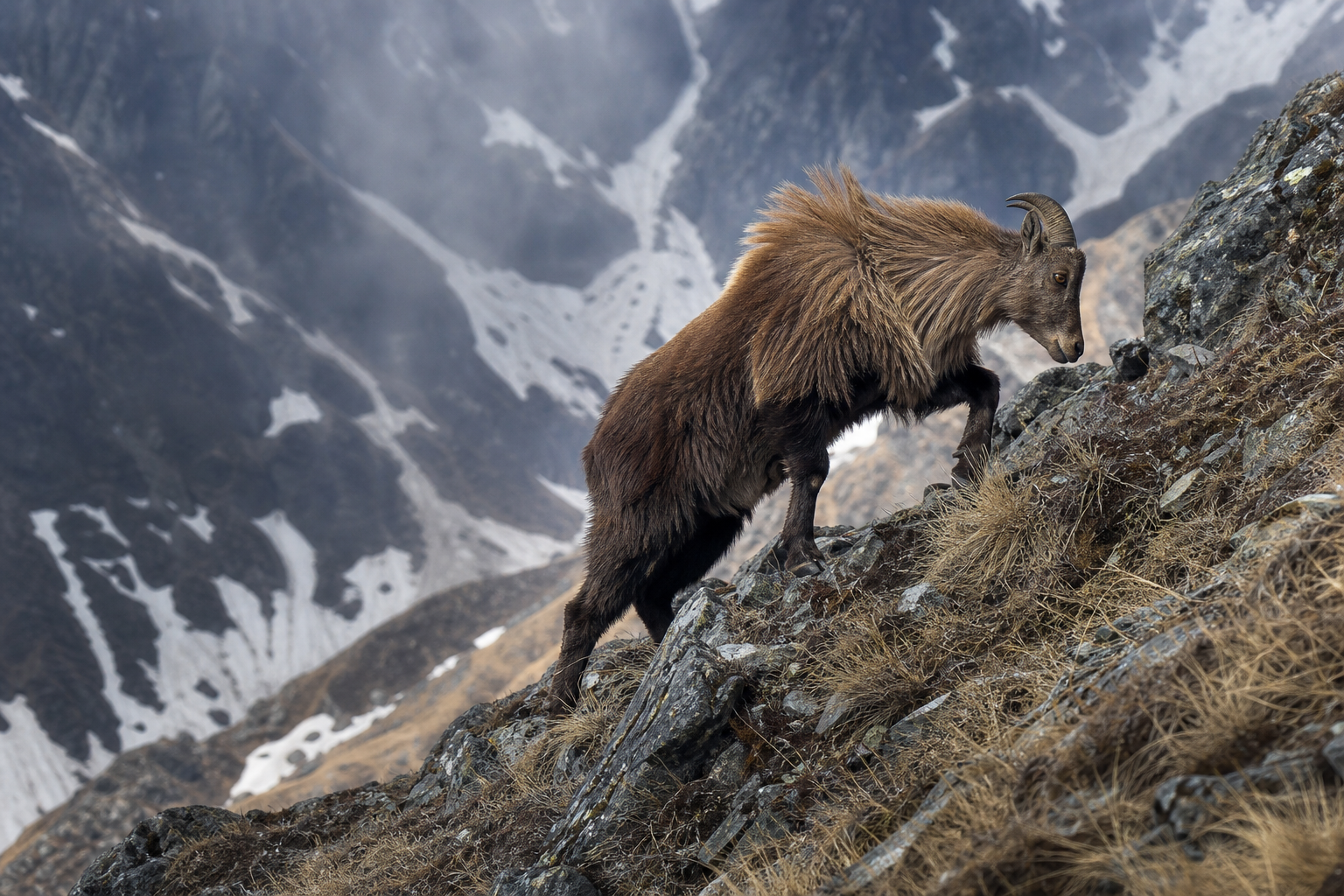
The Himalayan tahr is made for a hard angle of life. Its hooves grip broken stone, and its body carries warmth close under long hair. It climbs with a steadiness that looks calm only from far away. Up close, every step is a calculation: loose scree, ice-dark shadow, a patch of grass, a place to turn if danger rises from below.
Herds move with the mountain's moods, feeding when weather allows, bunching when alarm passes, standing still when stillness is the better shelter. Males carry weight and rank in thick necks and sweeping manes, testing one another in seasons when the cold air sharpens every movement.
The tahr holds high slopes in motion. It feeds predators, trims alpine plants, and makes visible the narrow bargain between hunger and height. Warming climates, hunting pressure in some places, and changing mountain use press that bargain. A stone rolls. The herd lifts its heads, then climbs into cloud.