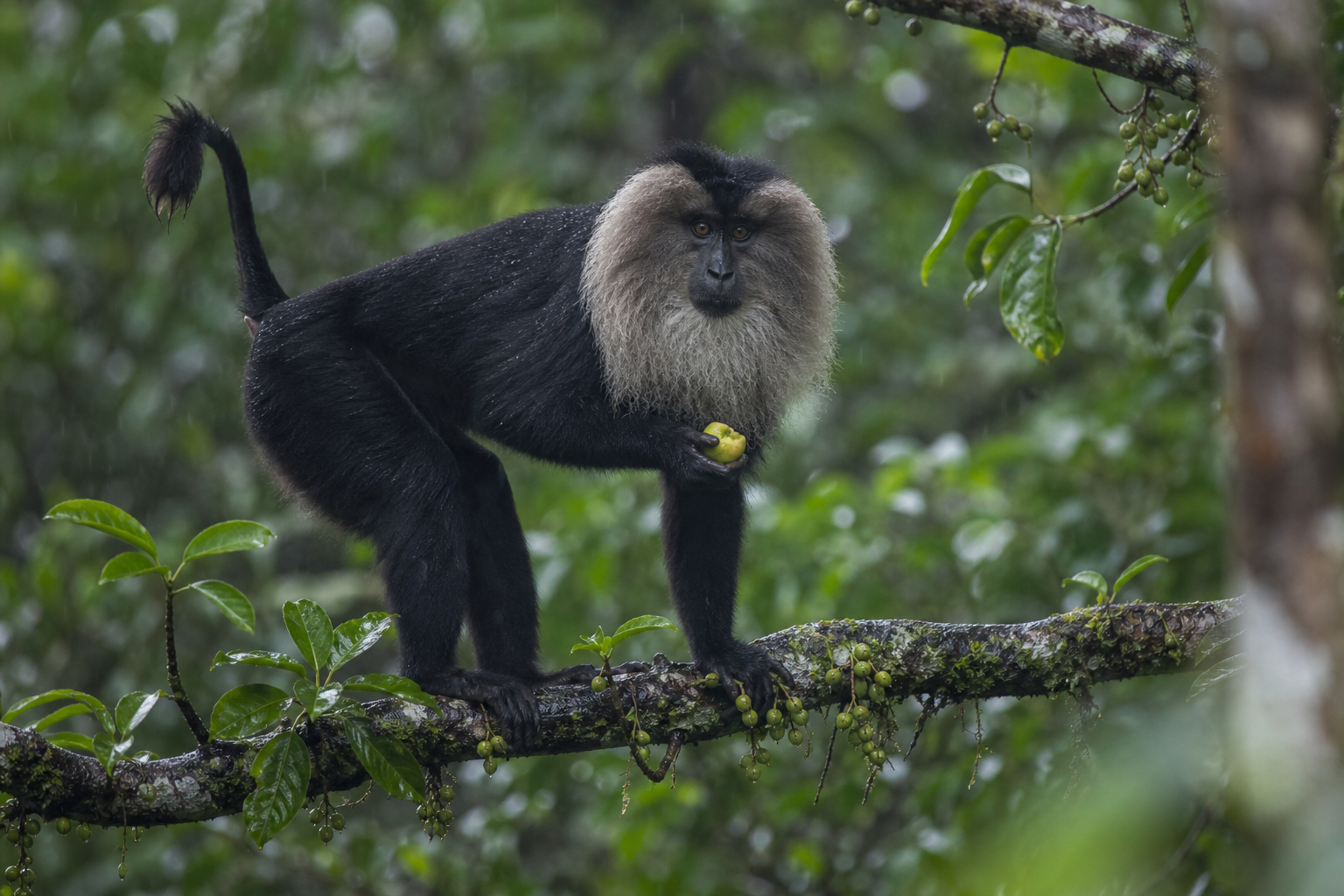
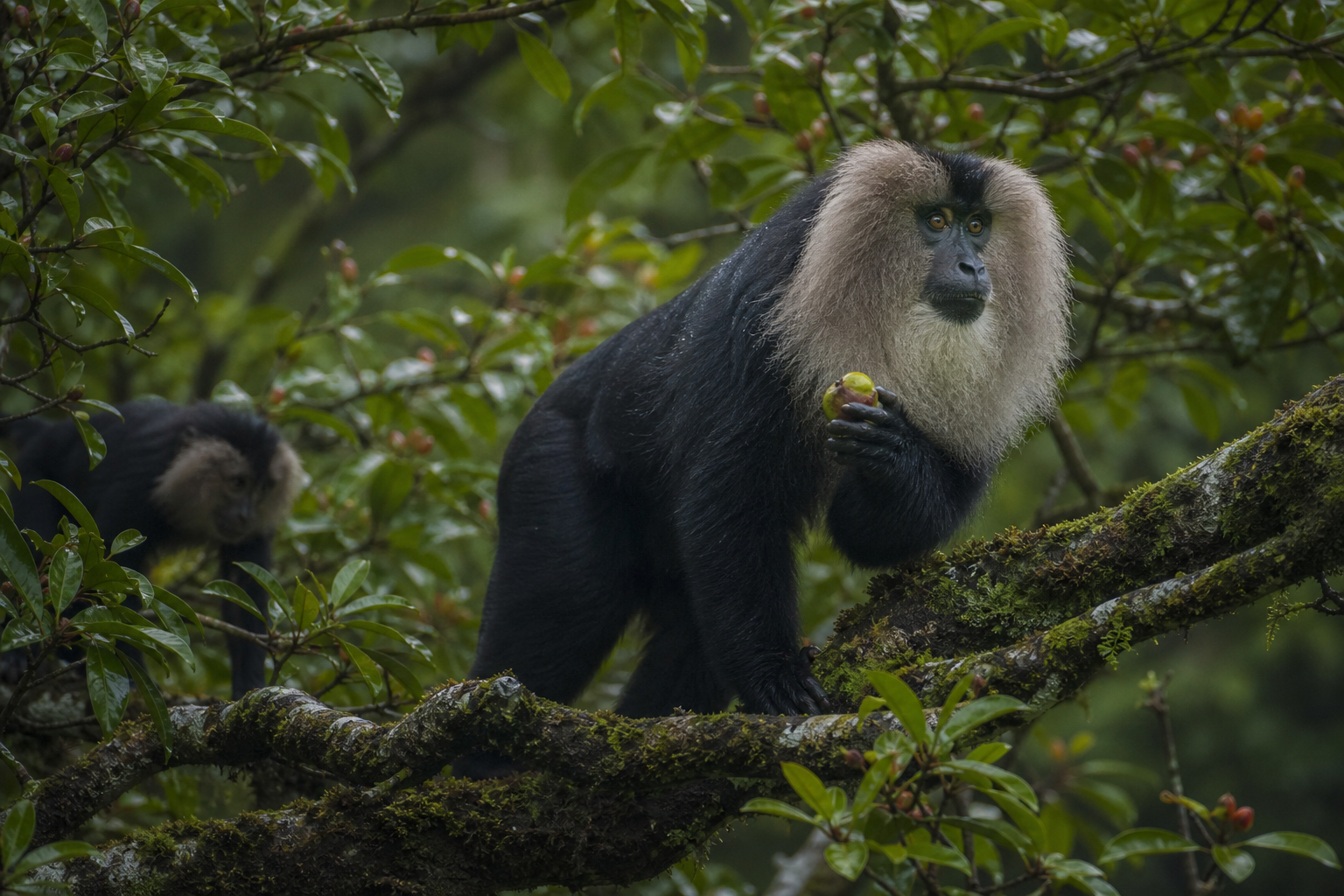
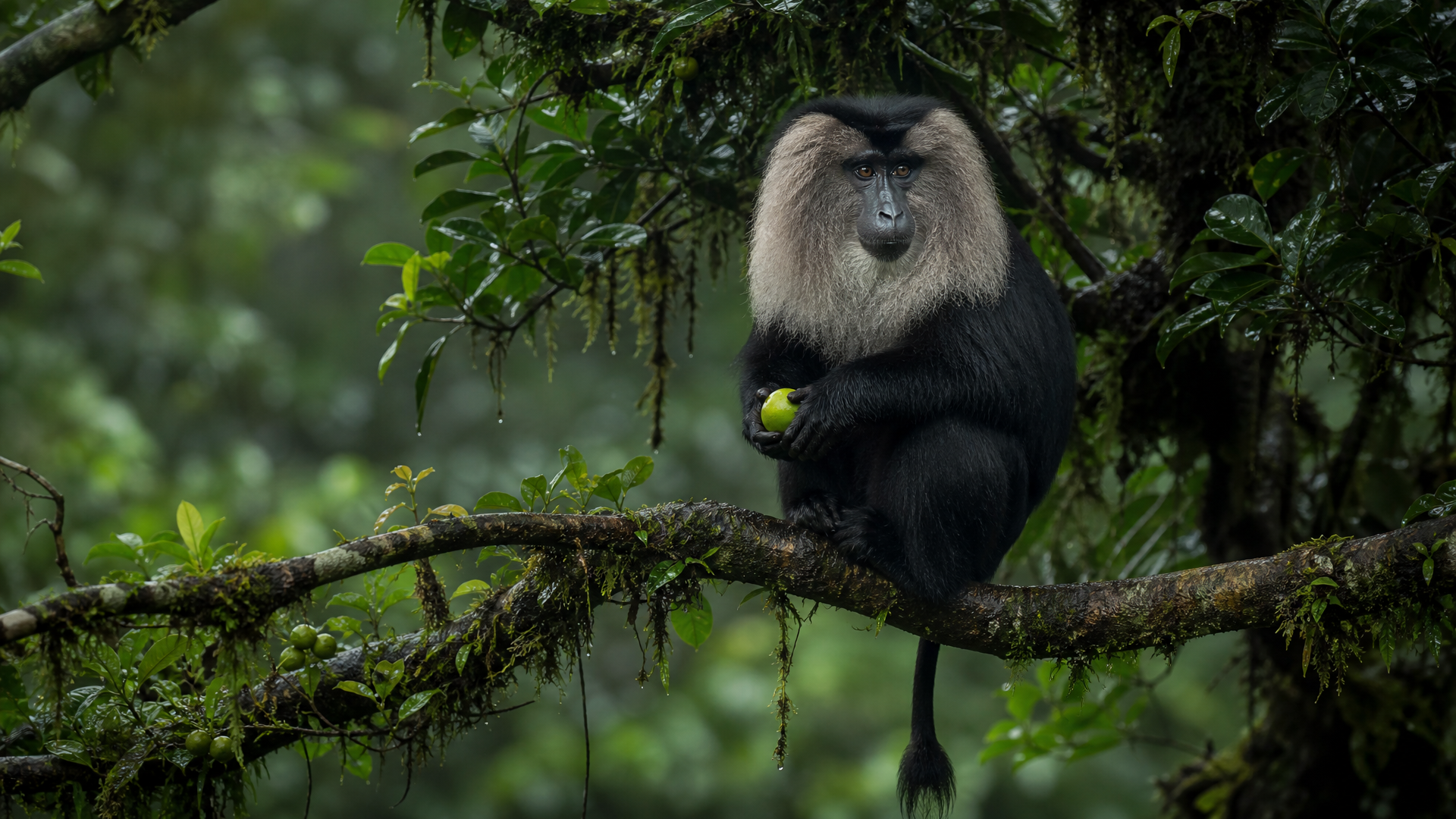
Rain falls softly in the Western Ghats, not as a storm but as a constant touch. Leaves shine. A branch bends, and a black-faced monkey looks out from a crown of wet green, silver mane bright against the shade. Behind it, the troop moves in fragments, tails arched, hands busy with fruit.
The lion-tailed macaque is a primate of old forest and connected canopy. It travels above ground with a careful social rhythm: one animal feeding, another watching, young pressed close until the route opens. The face is dark and intent, framed by pale hair that gives each expression a grave clarity. Calls pass through the trees, keeping the group together where leaves hide distance.
Its life depends on routes that remain unbroken. A fruiting tree is not just food; it is a meeting point, a memory, a future seed carried elsewhere. When a troop crosses a gap at a road or plantation edge, the forest's missing piece becomes visible in the animals' hesitation.
By moving fruit through the canopy, these macaques help the rainforest renew itself. Yet dams, plantations, roads, and fragmented hills have cut many troops into isolated pockets. The branch springs back after the last tail passes, and the rain closes over the sound.