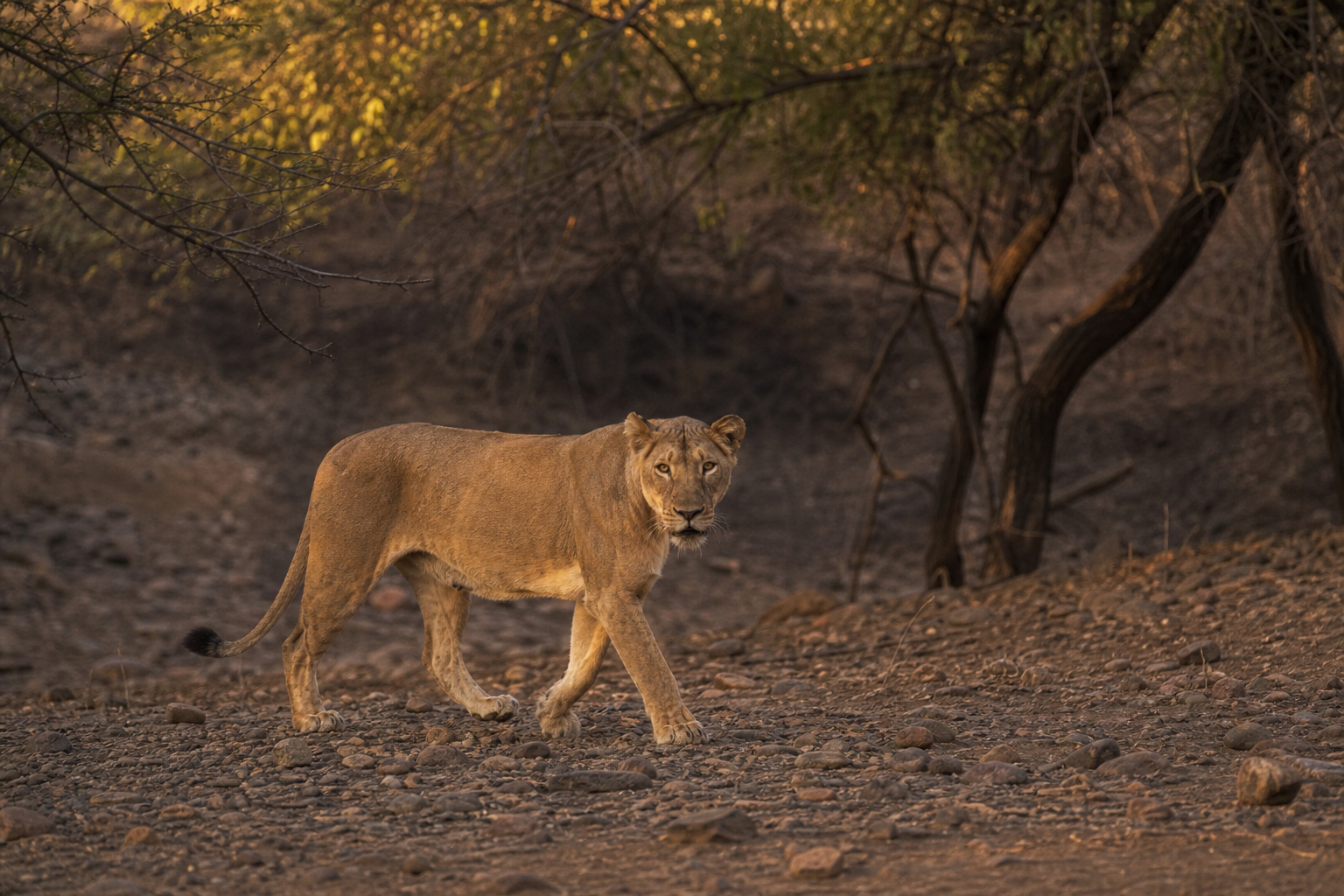
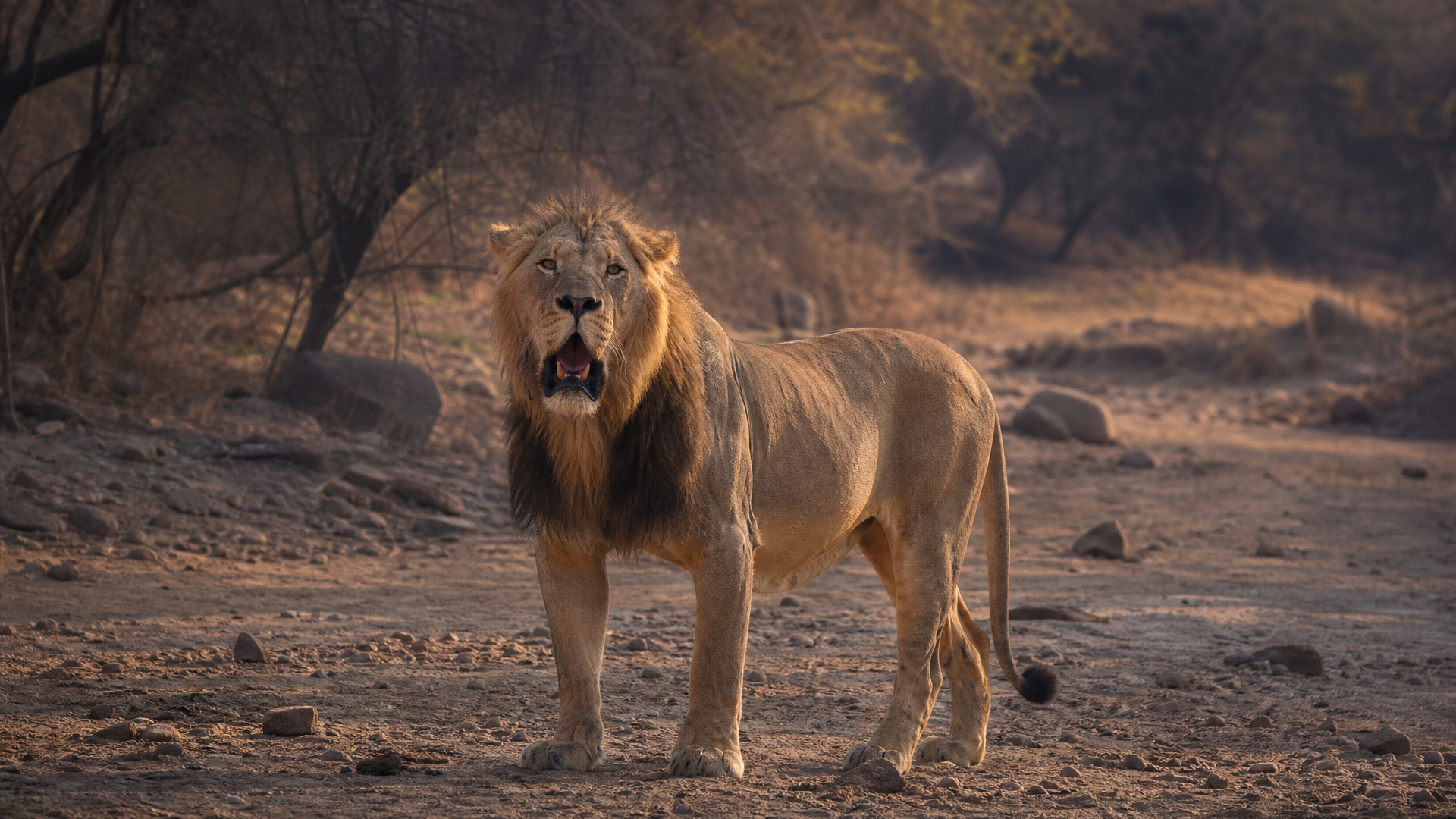
In Gir Forest, dusk gathers under teak, acacia, and thorn. Peafowl call from roosts. Dust hangs in the last light. A lioness lifts her head beside a dry riverbed, and the cubs around her go still as another sound arrives from beyond the trees: a male's roar, low enough to seem carried by the ground.
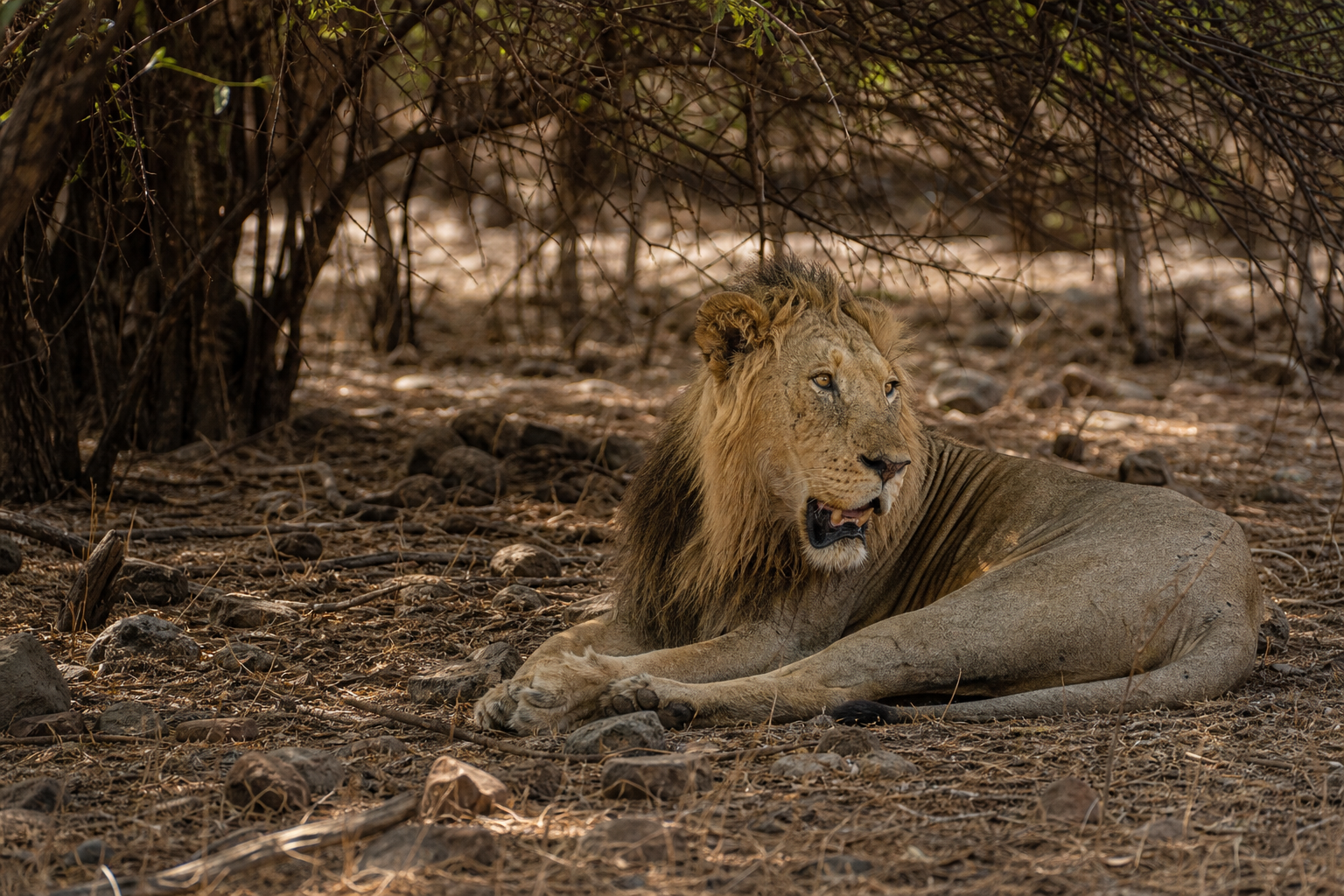
The Asiatic lion lives differently from the open-plains image many people carry. Here, the cat belongs to scrub, shade, rocky paths, and villages close enough for their sounds to enter the night. Its mane is often sparser, the body lean and purposeful, the belly fold visible when it walks. Pride life is present, but shaped by this tighter country, where cover breaks sight and every path is shared with deer, antelope, cattle, and people.
A lion in Gir feels less like a symbol than a neighbor with ancient claims. It rests by day in shade, rises when heat leaves the stones, and moves through thorn with a quiet that makes its size harder to believe.
This small population carries an entire wild history in one place. Disease, crowding, and conflict make that narrowness dangerous, even as the forest still answers to the roar. Night deepens. The lioness stands, and the dry riverbed becomes a road again.