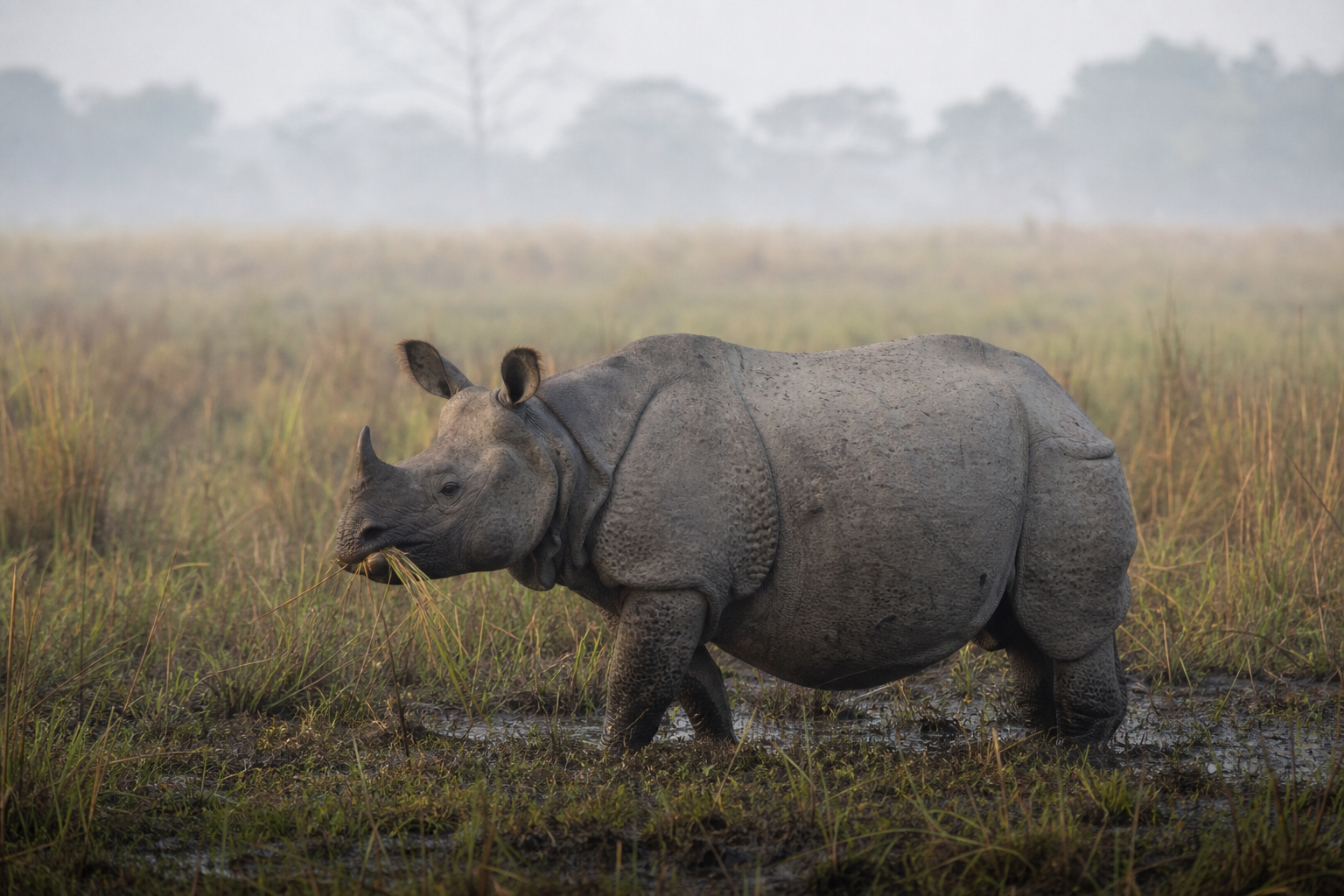
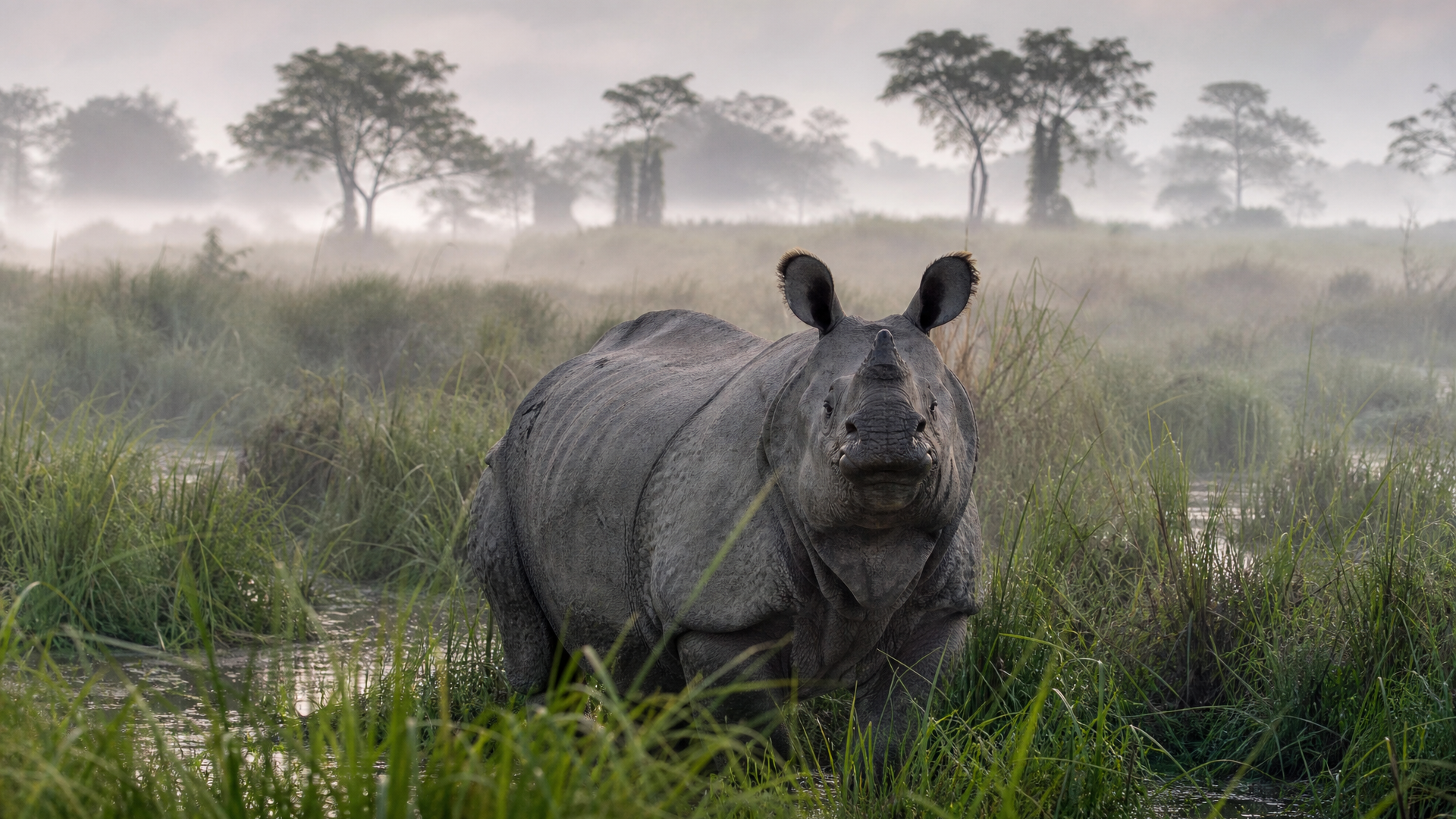
Morning mist lies low over Kaziranga's grasslands, turning each tall stem silver at the tip. A shape moves inside it, at first only a dark back and the curve of a single horn. Then the rhinoceros steps out, wet skin folded like plates, mouth working steadily through the grass.
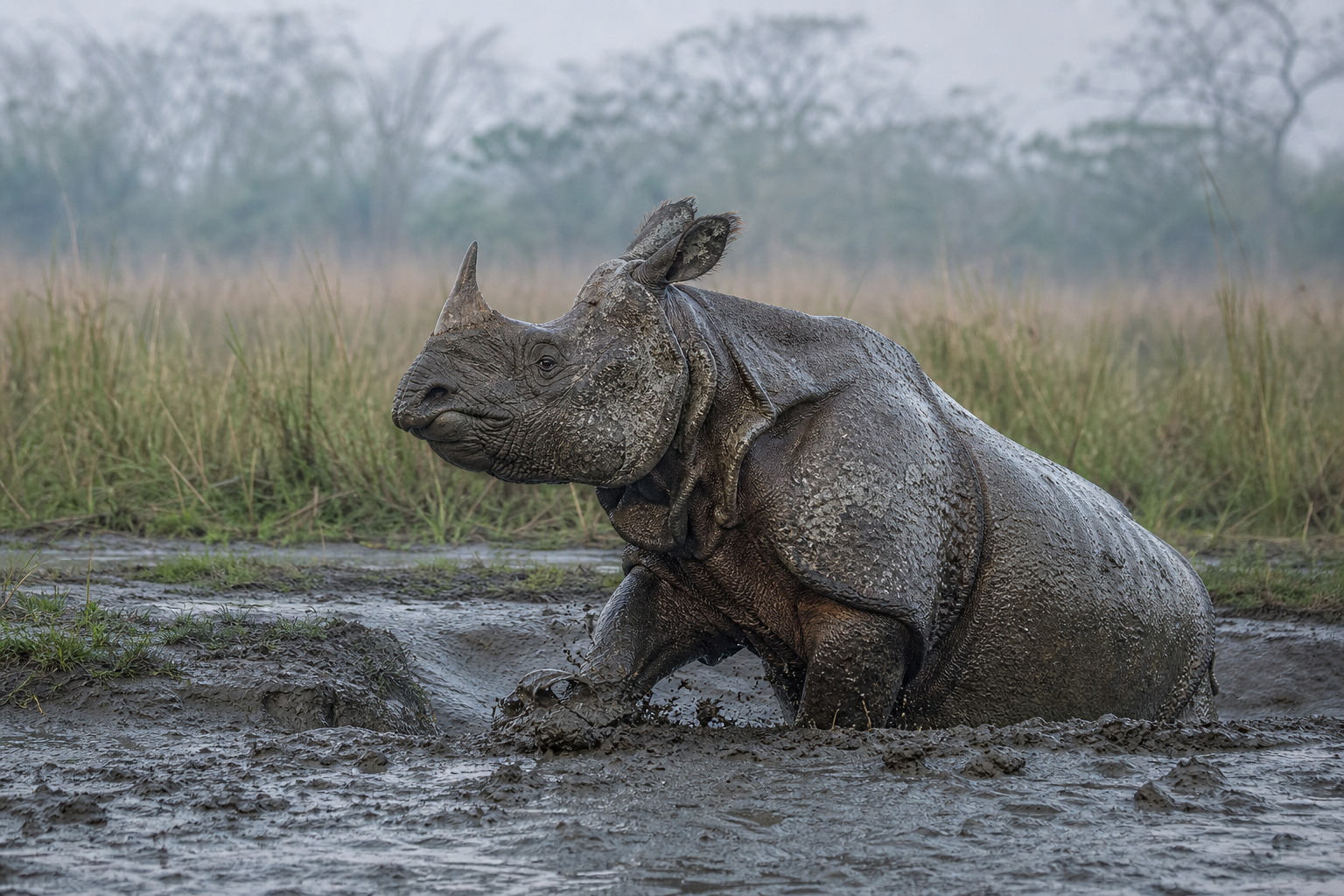
The greater one-horned rhinoceros seems built from river country itself: mud, reed, muscle, and heavy weather. It grazes with a calm that can mislead the eye. The body is immense, but the ears keep moving, and the small eyes miss less than they seem to. When it enters a wallow, mud rises around the flanks and dries into a second skin against insects and heat.
There is solitude in the animal, but not emptiness. It knows paths to water, favored feeding places, rubbing posts, and the smell of rivals. A calf follows close behind its mother, briefly making the armored body ahead of it look almost soft.
These rhinos keep the floodplain open through weight, grazing, and repeated passage. Their recovery in protected grasslands is real, but fragile where poaching, flood extremes, and crowded land press from every side. In the mist, the horn lowers. Grass parts, tears, and rises again behind it.