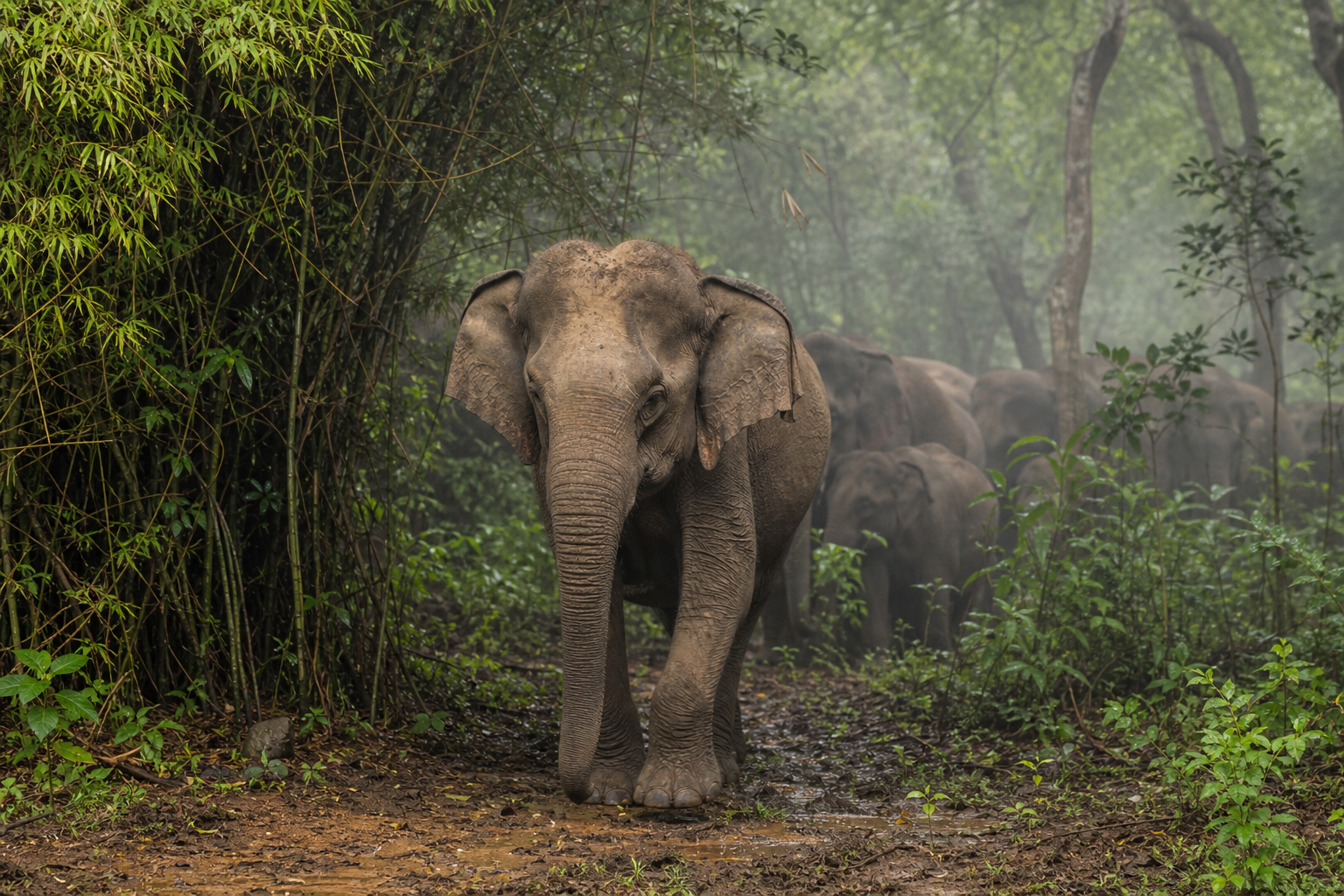
Before the herd appears in the Western Ghats, bamboo cracks somewhere inside the green. A low rumble passes through the trees more than through the air. Then a female steps into the clearing, ears fanning, trunk reaching through the damp light, and the others follow with calves kept close between moving walls of gray.
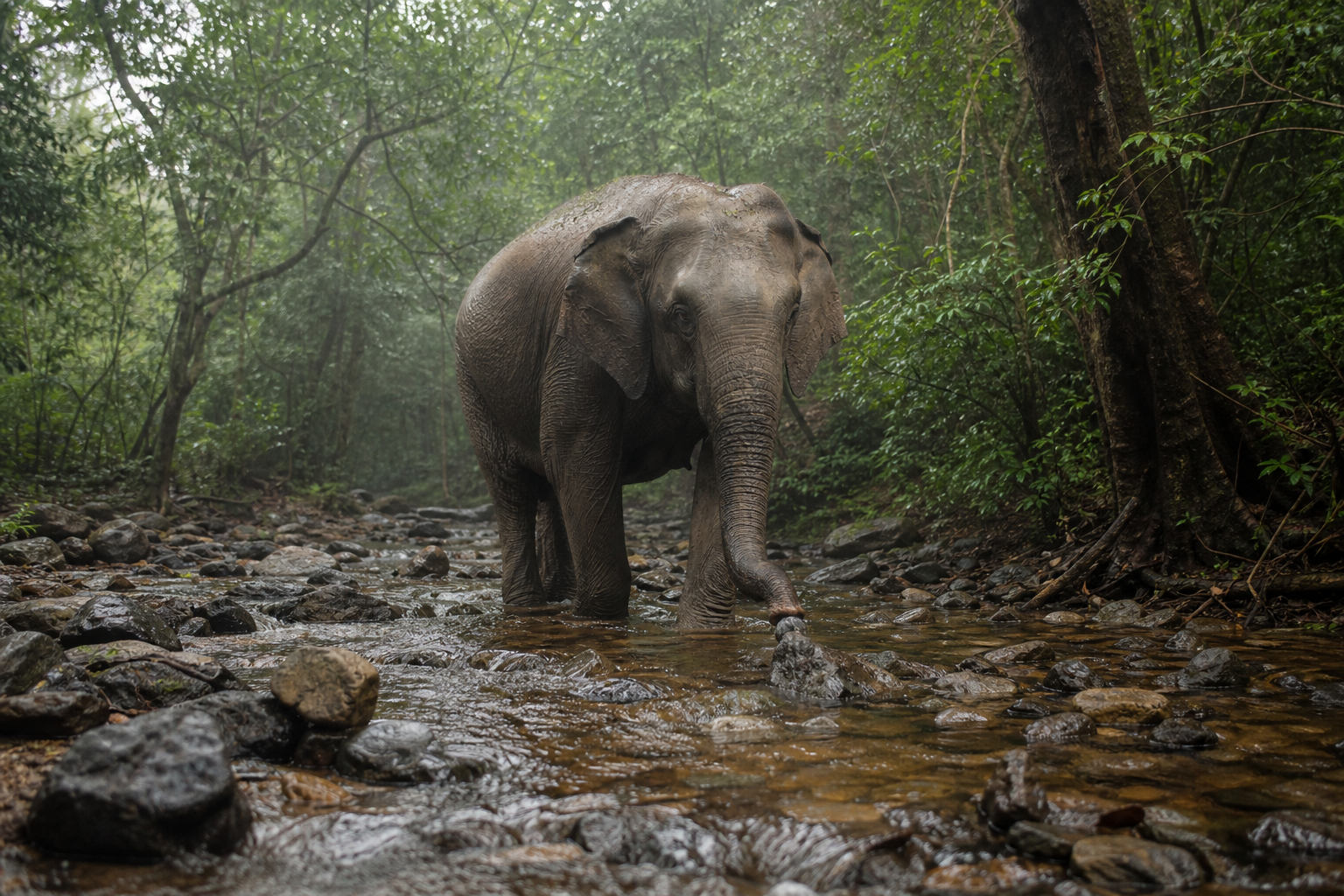
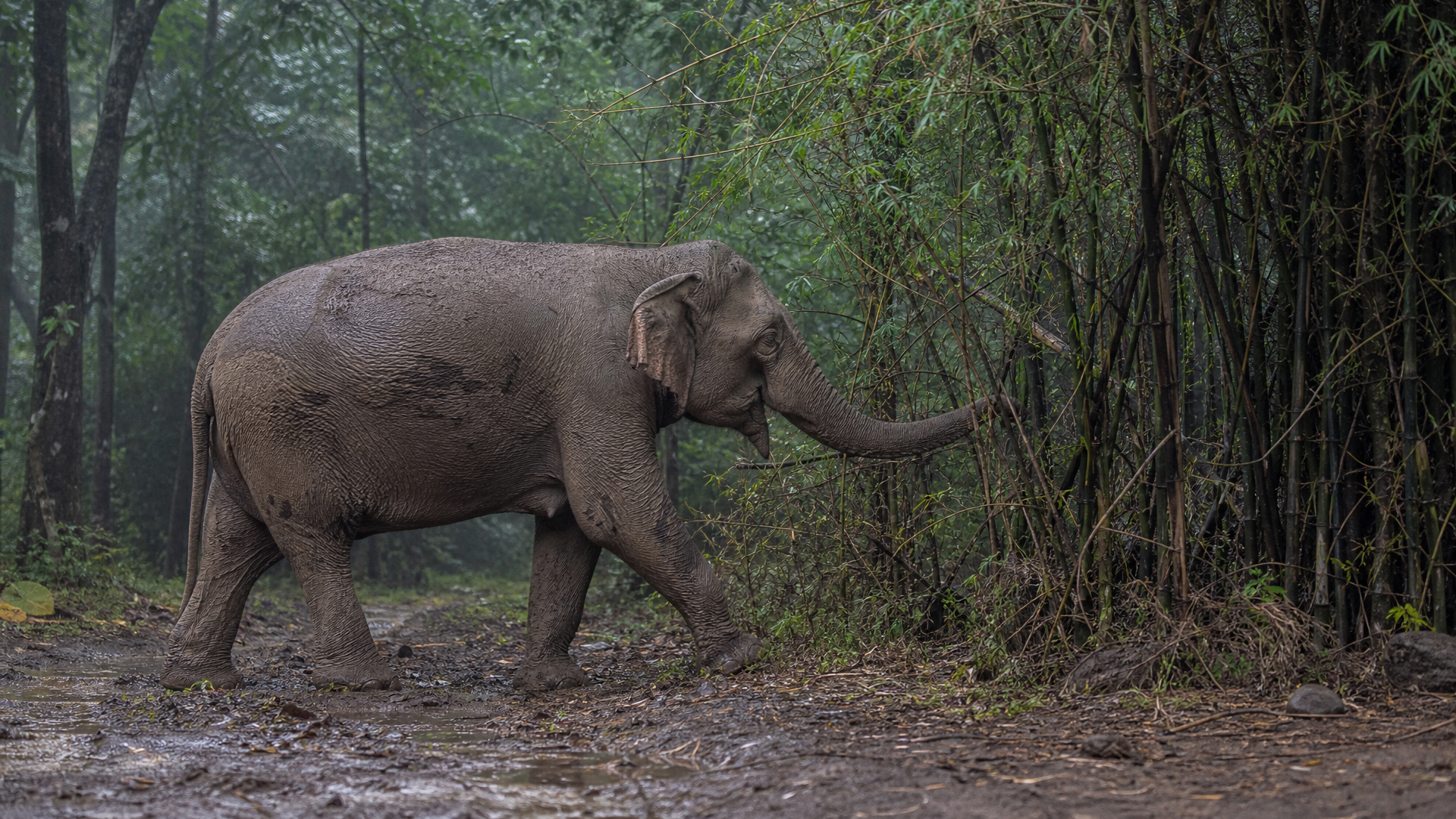
An Indian elephant carries its world through contact. The trunk searches leaves, water, dust, another elephant's cheek. It is hand, question, tool, comfort, and warning. The matriarch knows paths that look like nothing to anyone else: a salt lick beyond a ridge, a stream that still runs after poor rain, a slope where a calf must be guided slowly.
Their lives are made of appetite and conversation. Branches fall. Feet press deep marks into wet soil. Calves lean against mothers and aunties, learning the herd's language through touch before they understand the wider danger of scent, thunder, and people at the forest edge.
Where elephants pass, they open trails, carry seeds, break shade, and leave water and dung for smaller lives. Yet those same paths now meet tea fields, roads, rail lines, and fences. The herd gathers itself at the tree line. One trunk rises, reading the night before the first step.