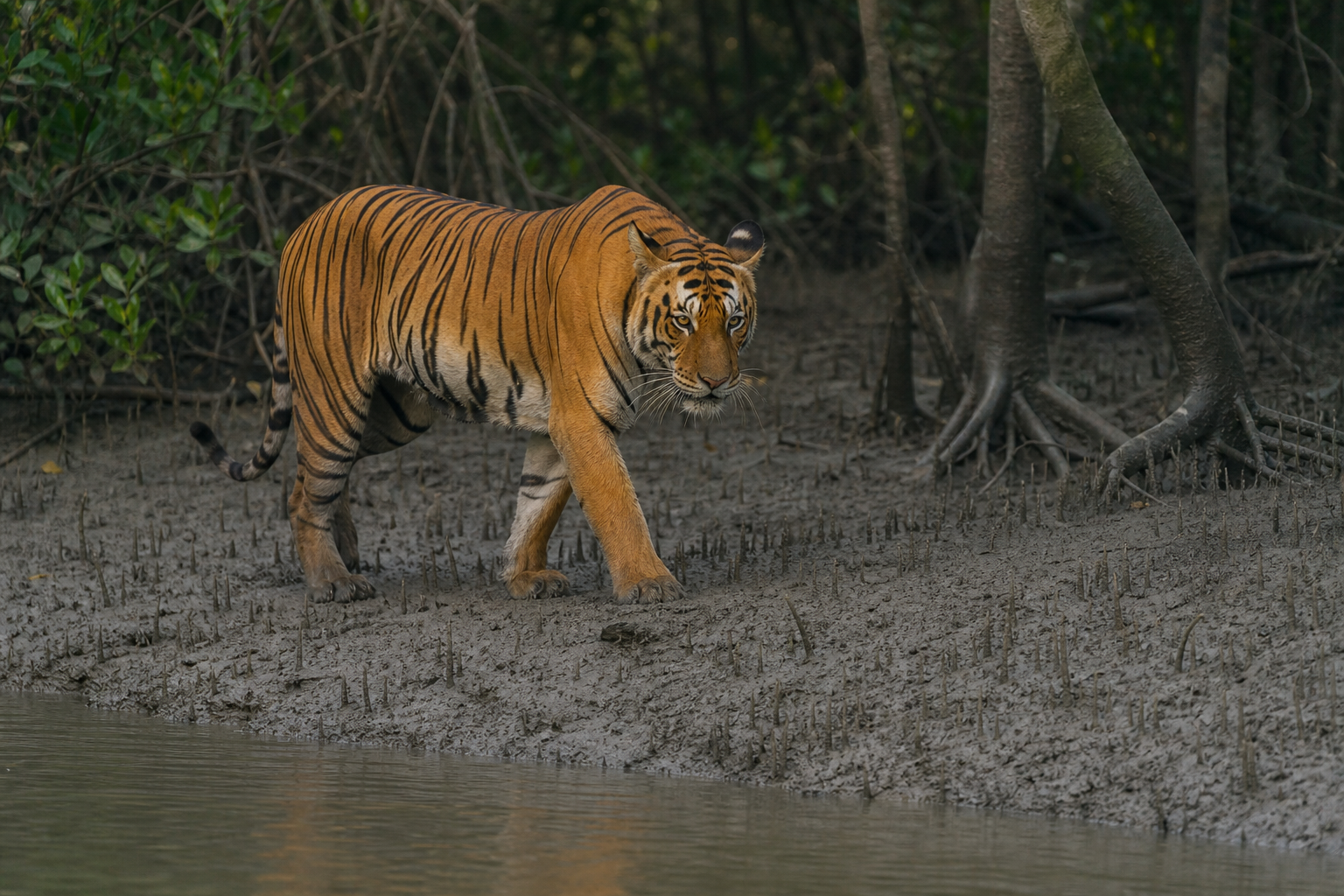
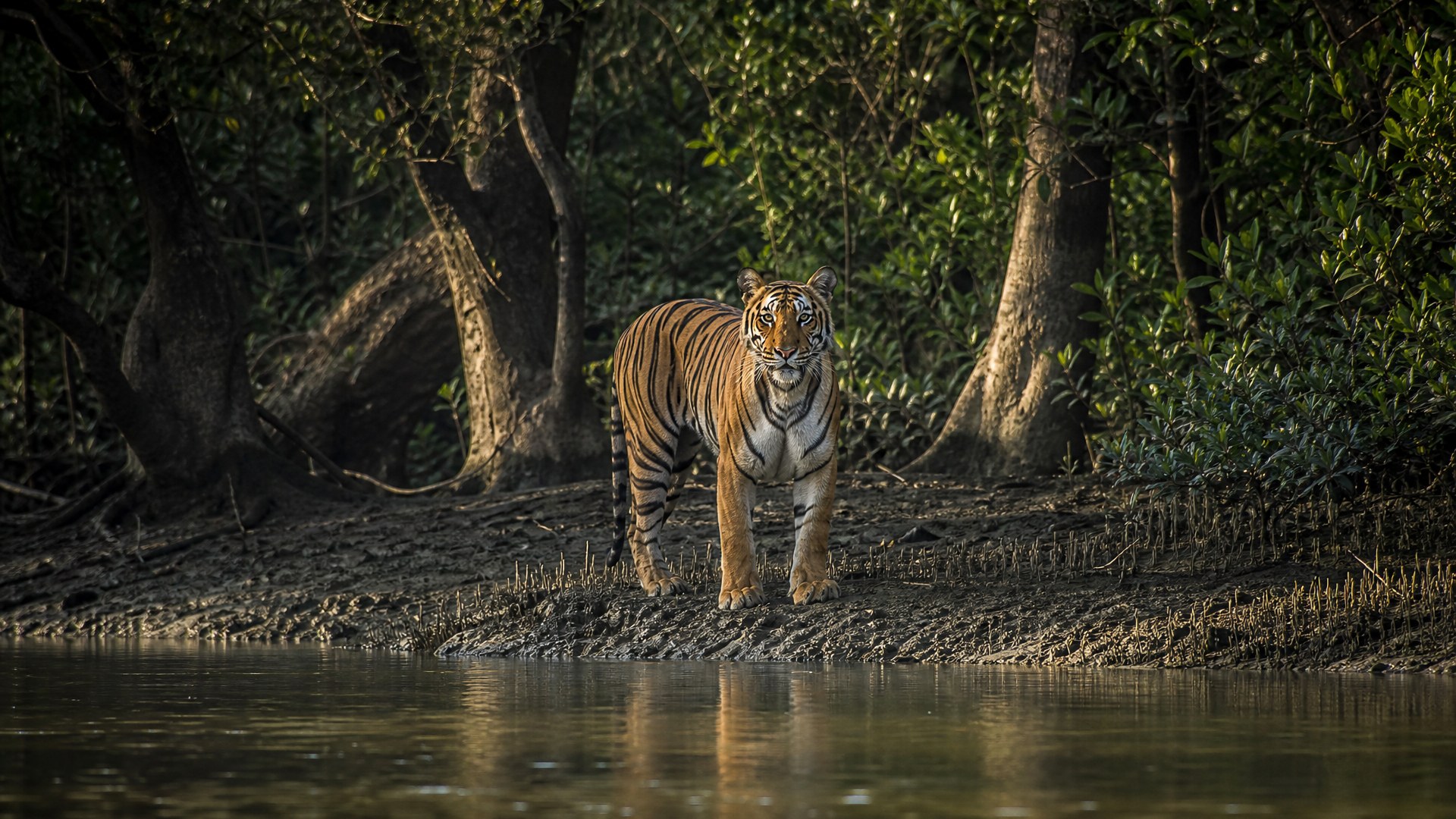
In the Sundarbans, the tide moves through trees before the morning has fully opened. Mud glistens around mangrove roots. A kingfisher flashes and is gone. Then a striped shoulder passes between shadows, so close to the water that the tiger's reflection breaks before the animal itself has made a sound.
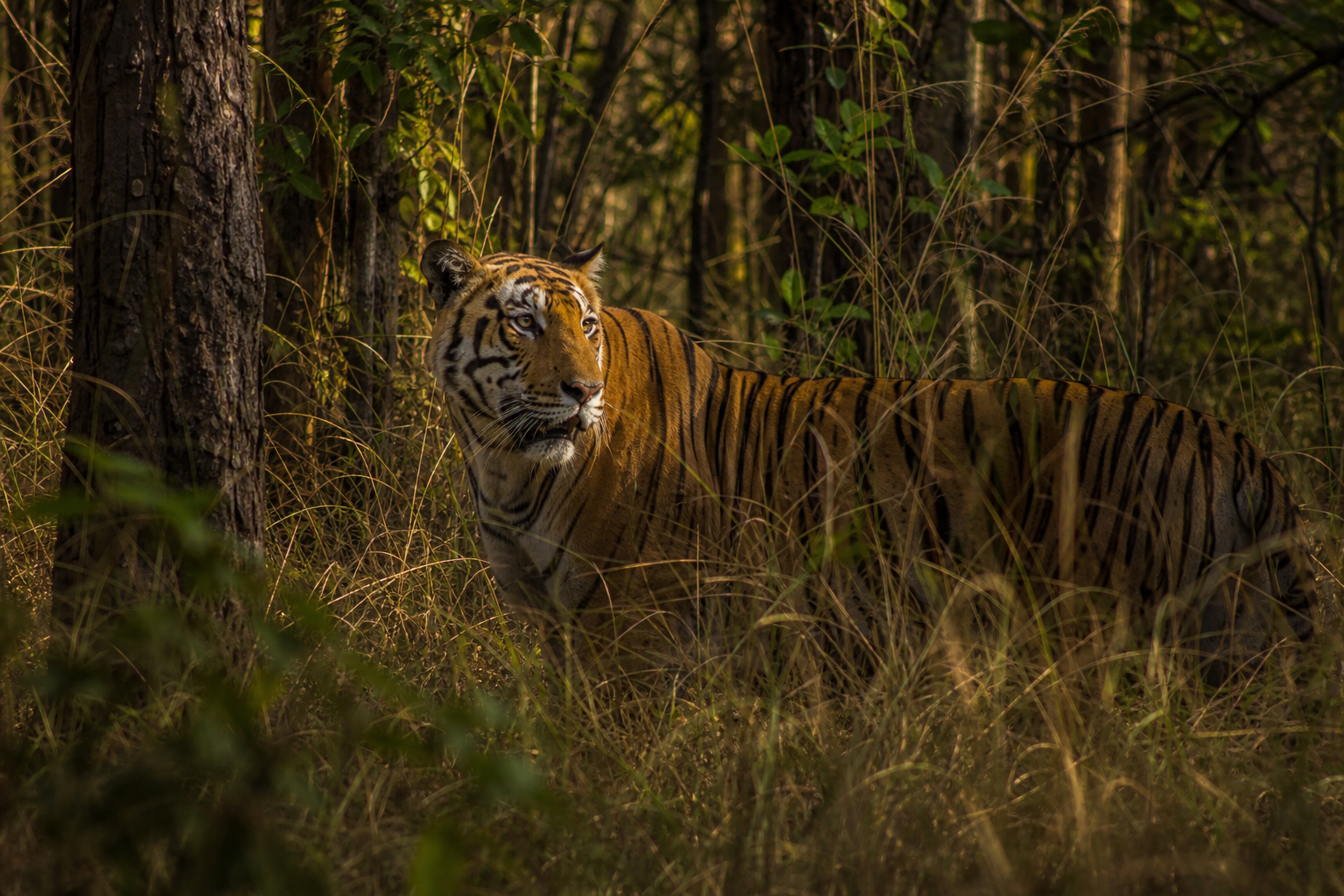
The Bengal tiger does not need the forest to be empty. It needs it to be readable. Its paws test mud, leaves, salt, and deer trails with the care of an animal that survives by distance closed correctly. In tall grass, one orange flank can vanish as completely as a flame behind a hand. The whiskers move. The ears turn. Every pause holds information.
Near a tiger, the place seems to take on a second mind. Chital listen harder. Monkeys lift alarm into the canopy. Even water feels watched. This cat is not only muscle and teeth; it is patience, pattern, and the final step after many steps unseen.
Where tigers remain, forests and wetlands still hold enough prey, cover, and secrecy for a large hunter to make a life. But roads, fields, conflict, and broken corridors press against that old arrangement. The tiger slips behind mangroves, and the stripes become forest again.