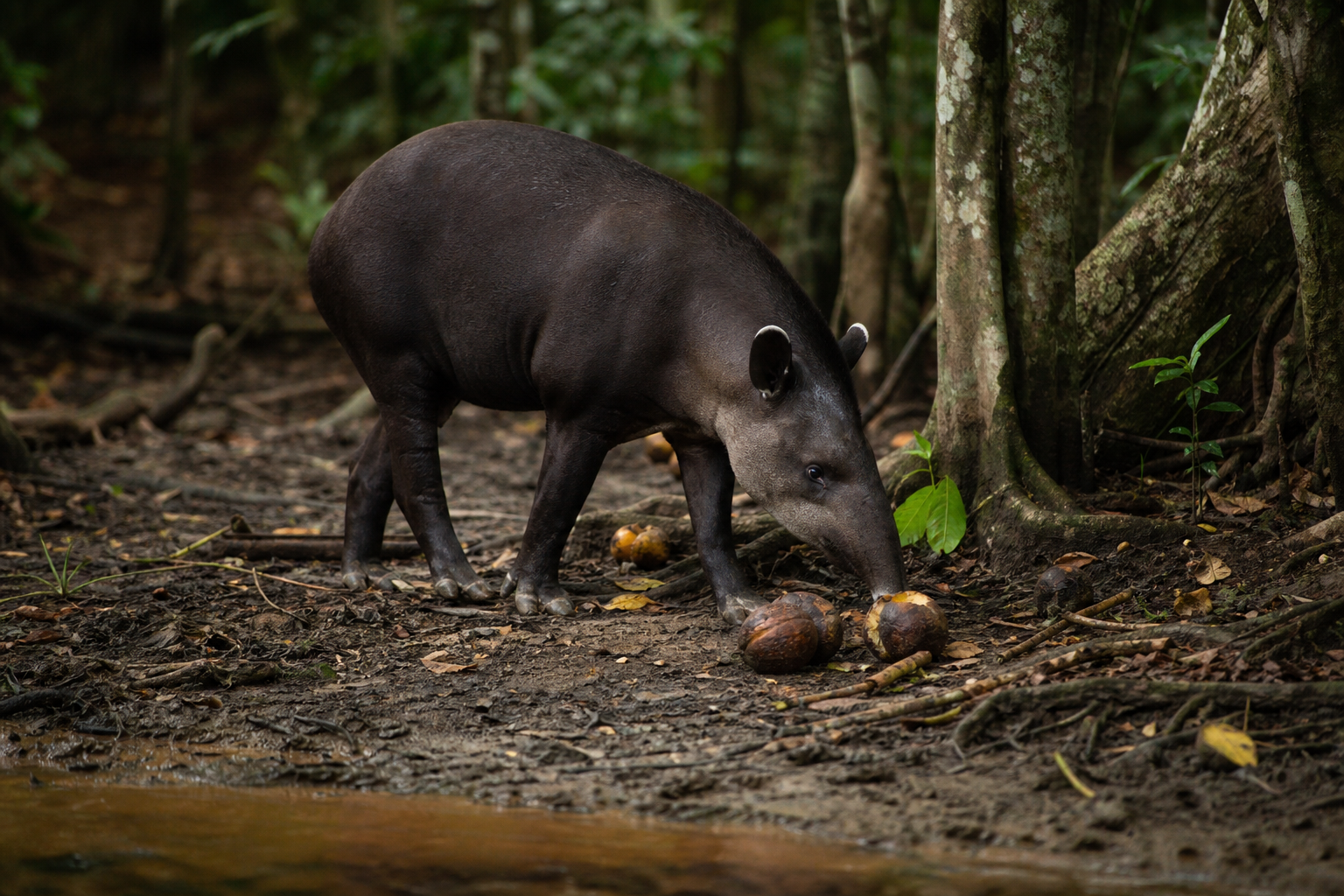
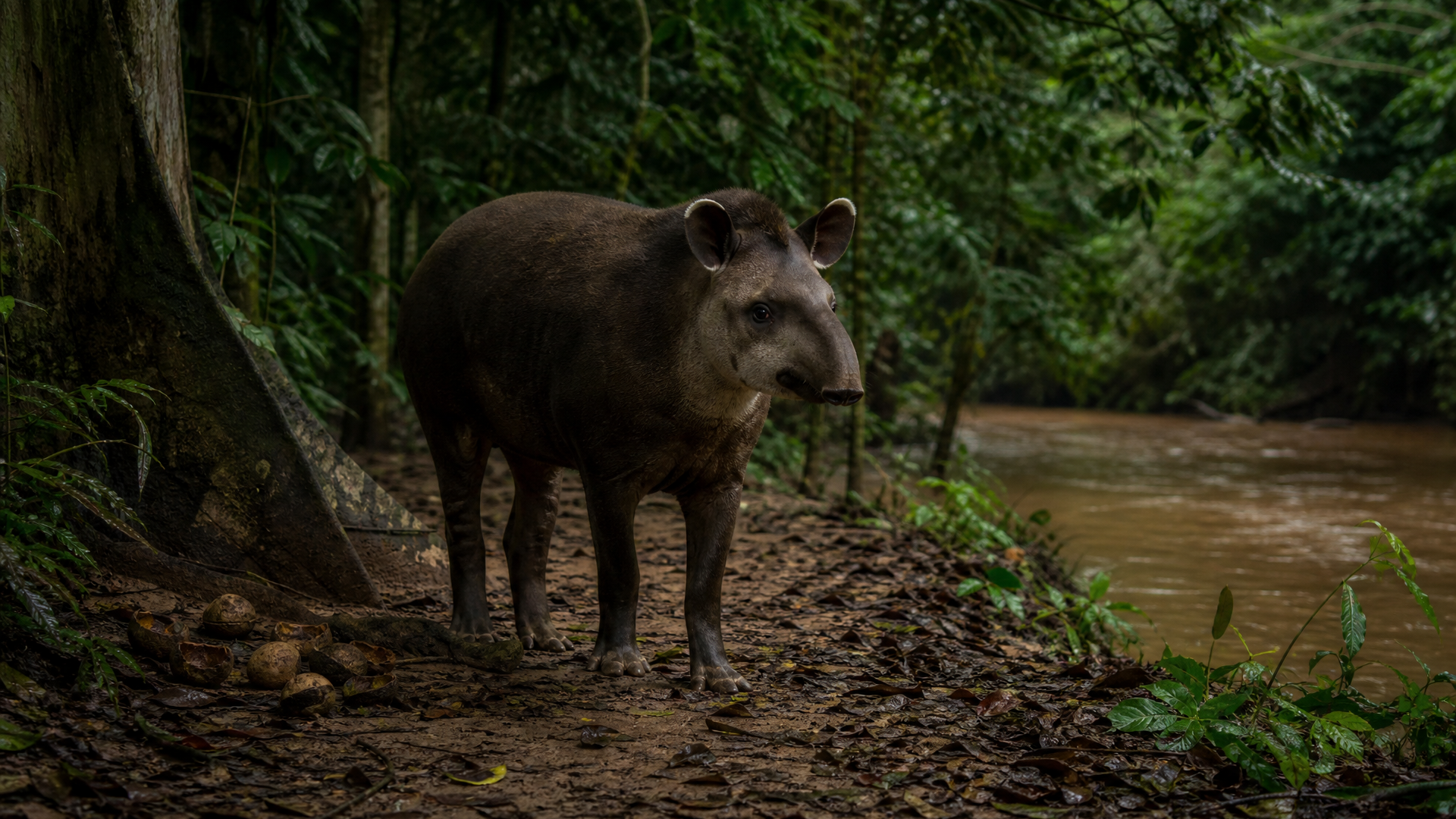
On a muddy trail below Brazil nut trees, the leaf litter stirs before the animal appears. A rounded body steps from the shade, dark and heavy, with a small flexible snout testing the wet air. It looks ancient because, in a way, the forest has been remembering this shape for a very long time.
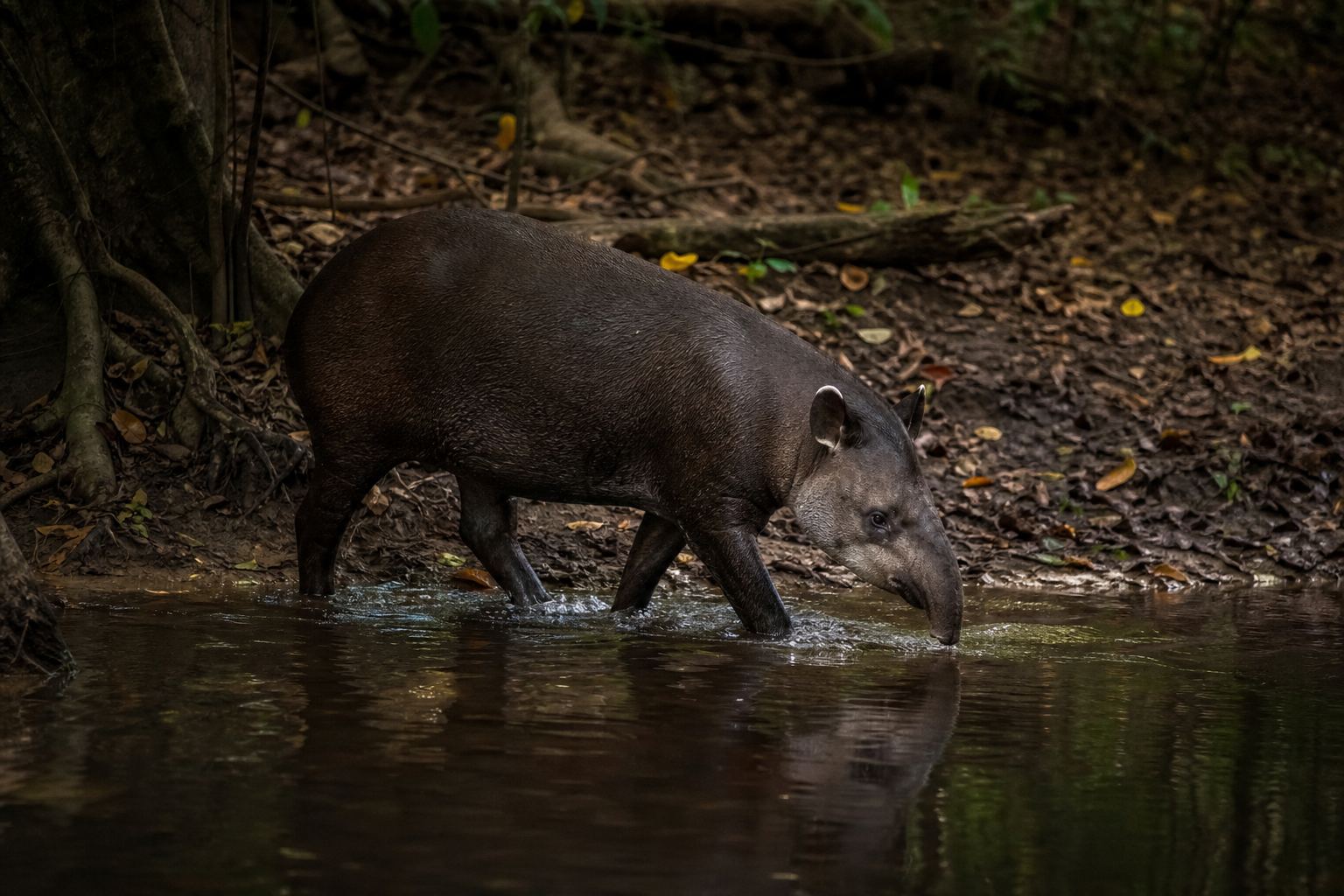
The South American tapir moves with a quiet that seems impossible for its size. It noses through fallen fruit, pulls leaves from low branches, and slips into water when heat or danger presses too close. The short trunk is delicate in its work, touching, choosing, tugging. Along river edges and forest paths, tapirs become gardeners by appetite. They swallow fruit whole and carry seeds through country that smaller animals cannot cross in the same way. At night, a tapir trail is a line of decisions through mud: where to feed, where to drink, where to vanish.
In the Amazon, this animal is one of the forest's slow mechanisms of renewal. Its absence would not arrive with noise. It would appear later, in fewer seedlings, in paths grown strange, in large fruits with fewer travelers to carry them. A tapir lowers its head and moves on, planting tomorrow without ceremony.