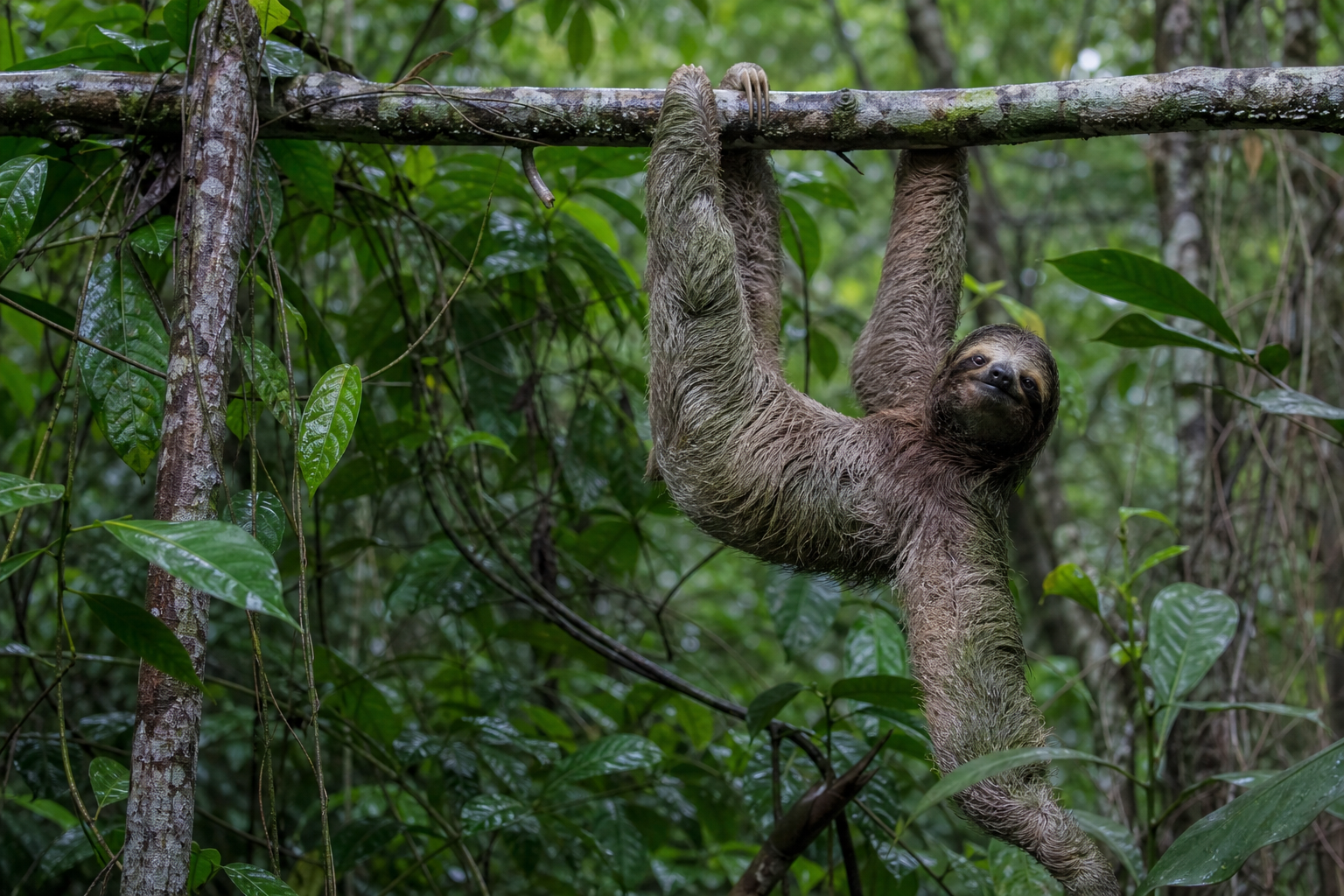
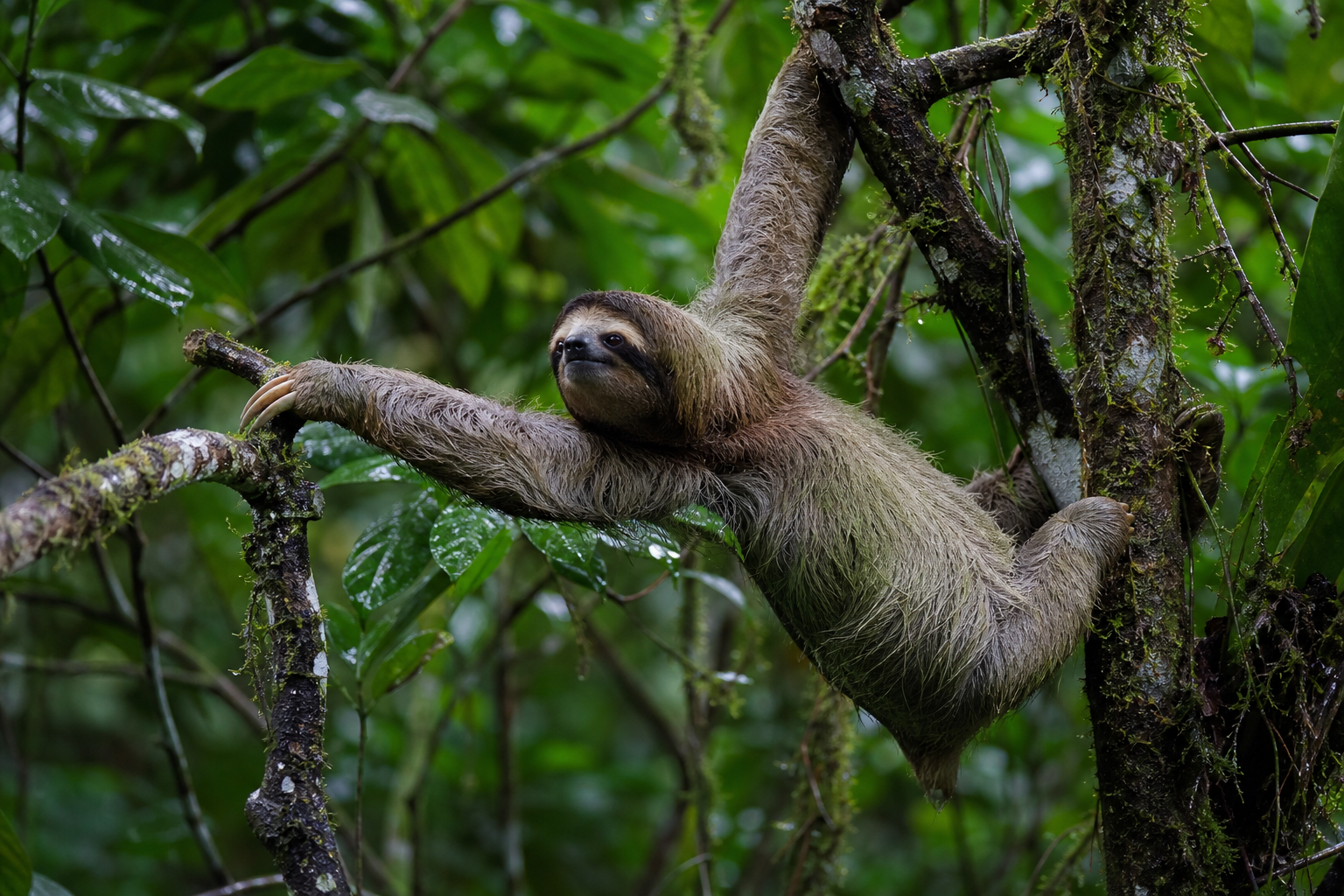

Rain beads along a branch, gathers at the tip of a leaf, and falls past a shape that has barely moved since dawn. The sloth hangs beneath the canopy with its face turned into the green, fur damp, claws locked, body so still that vines and shadows seem to accept it as part of the tree.
Speed is not the sloth's argument with the world. Disappearance is. Its fur can hold algae and tiny lives of its own, softening the animal's outline until it becomes difficult to separate from bark, moss, and leaf. It feeds slowly, digests slowly, and crosses the canopy as if every movement must be negotiated with gravity. Yet there is skill in that restraint. A forelimb reaches. Curved claws find a branch. The body transfers weight in silence. Even a descent to the ground, rare and dangerous, is carried out with the same inward patience.
In the Amazon Basin, the sloth is a reminder that survival does not always look fierce. It is canopy thrift, camouflage, and timing. Forest loss is brutal to an animal whose life depends on connected crowns and quiet cover. When it moves at last, the motion is small, and the whole tree seems to have shifted in its sleep.