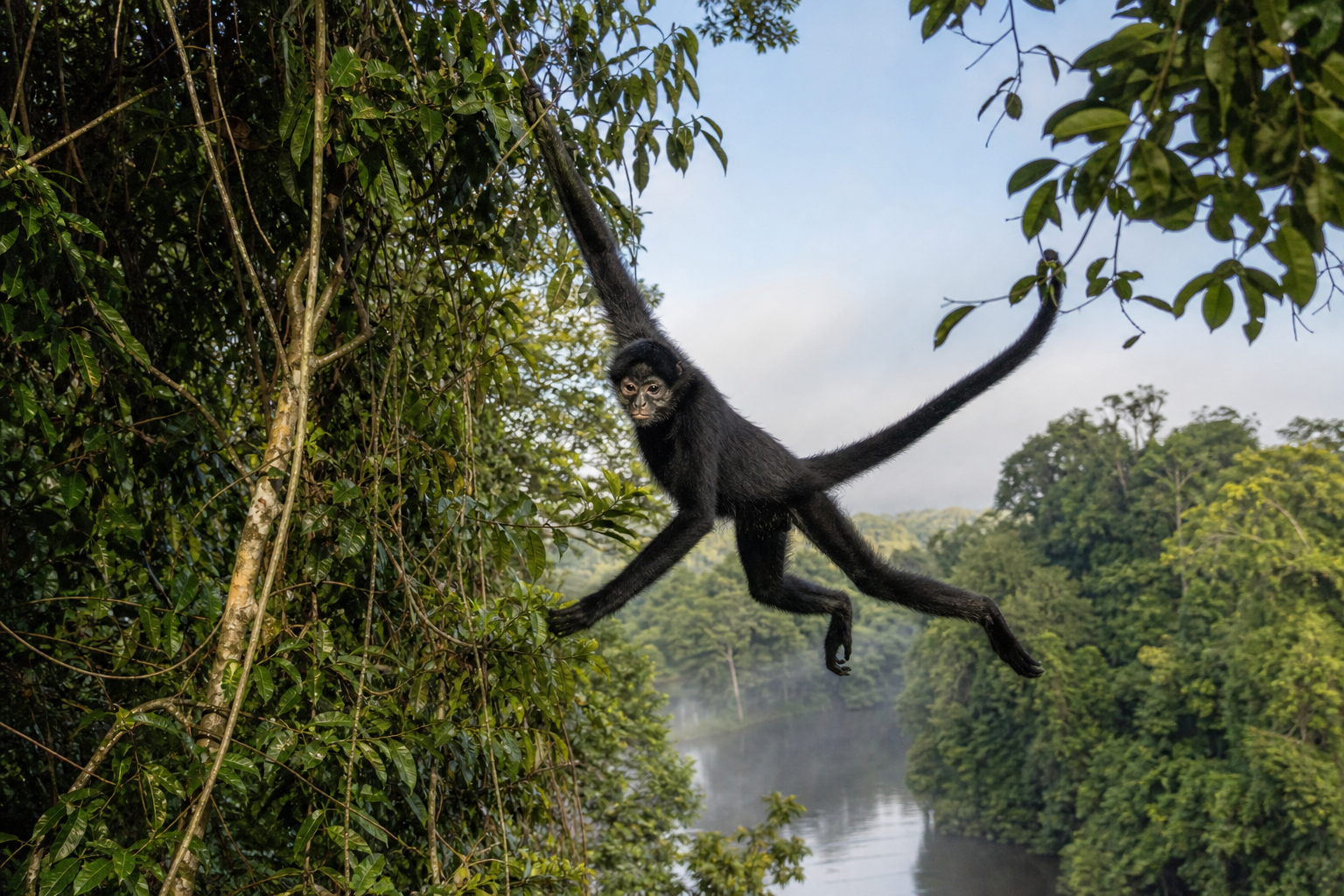
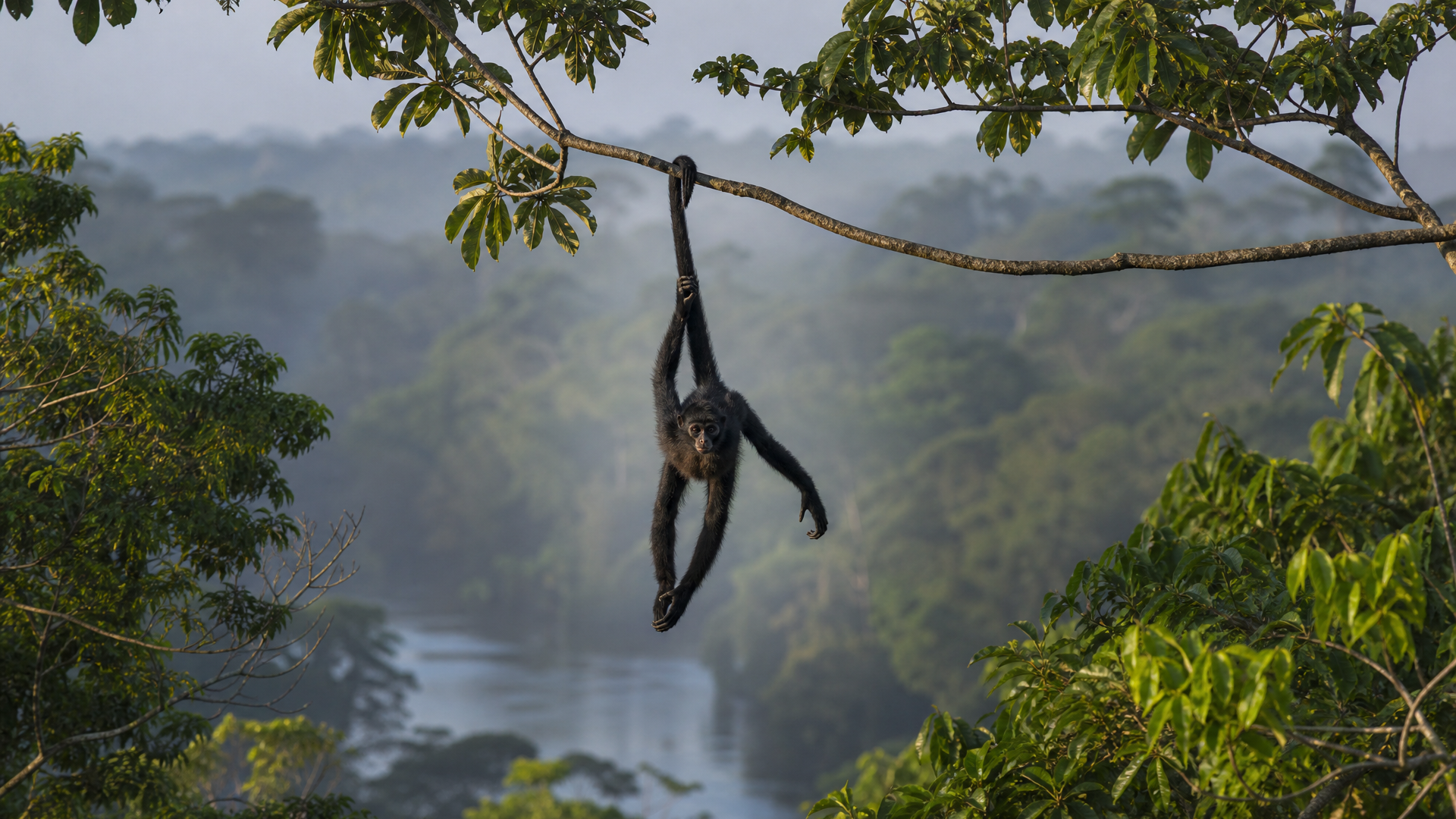
Before the monkey appears, the branch above the river swings once, then again. A black body sails across the gap, limbs loose, tail reaching behind like a fifth hand. It lands without hesitation and is already climbing higher, carrying the canopy's shape inside its bones.
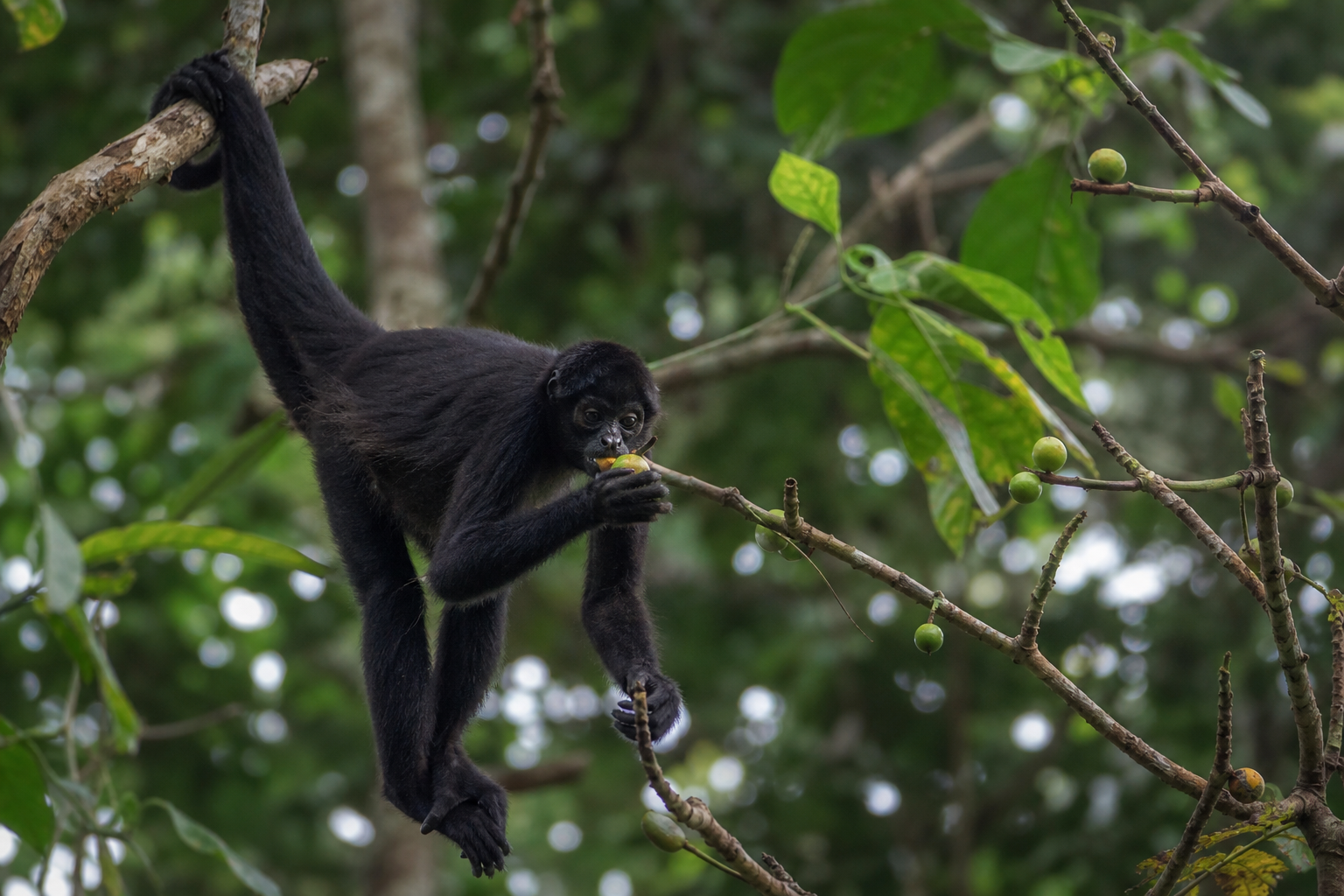
The black spider monkey is built for broken light and long distances above ground. Its arms are narrow and strong, its fingers hook-like, its prehensile tail sensitive enough to search for support before the body commits. A troop spreads through the crowns, feeding on fruit, calling across space, and keeping contact in a world where the forest floor may as well be another country. To watch one move is to understand why connected forest matters. The animal does not merely live in trees; it lives in the route between them.
Fruit ties it to the future of the forest. Seeds pass through the troop and fall far from the parent tree, stitched into new ground by appetite and travel. Hunting and fragmentation cut into that work from both sides. A spider monkey can cross a frightening gap once. It cannot make a forest out of isolated trees.