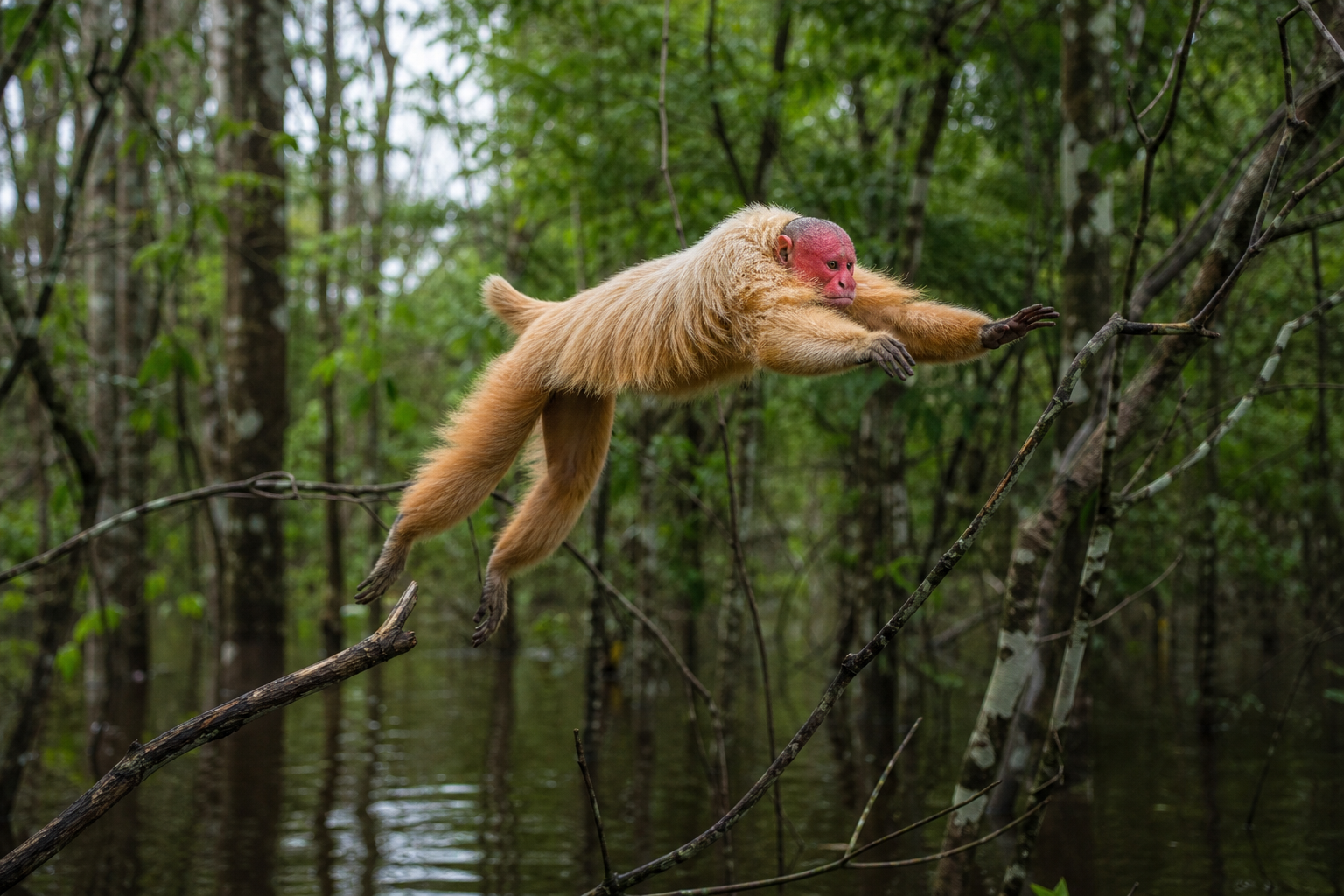
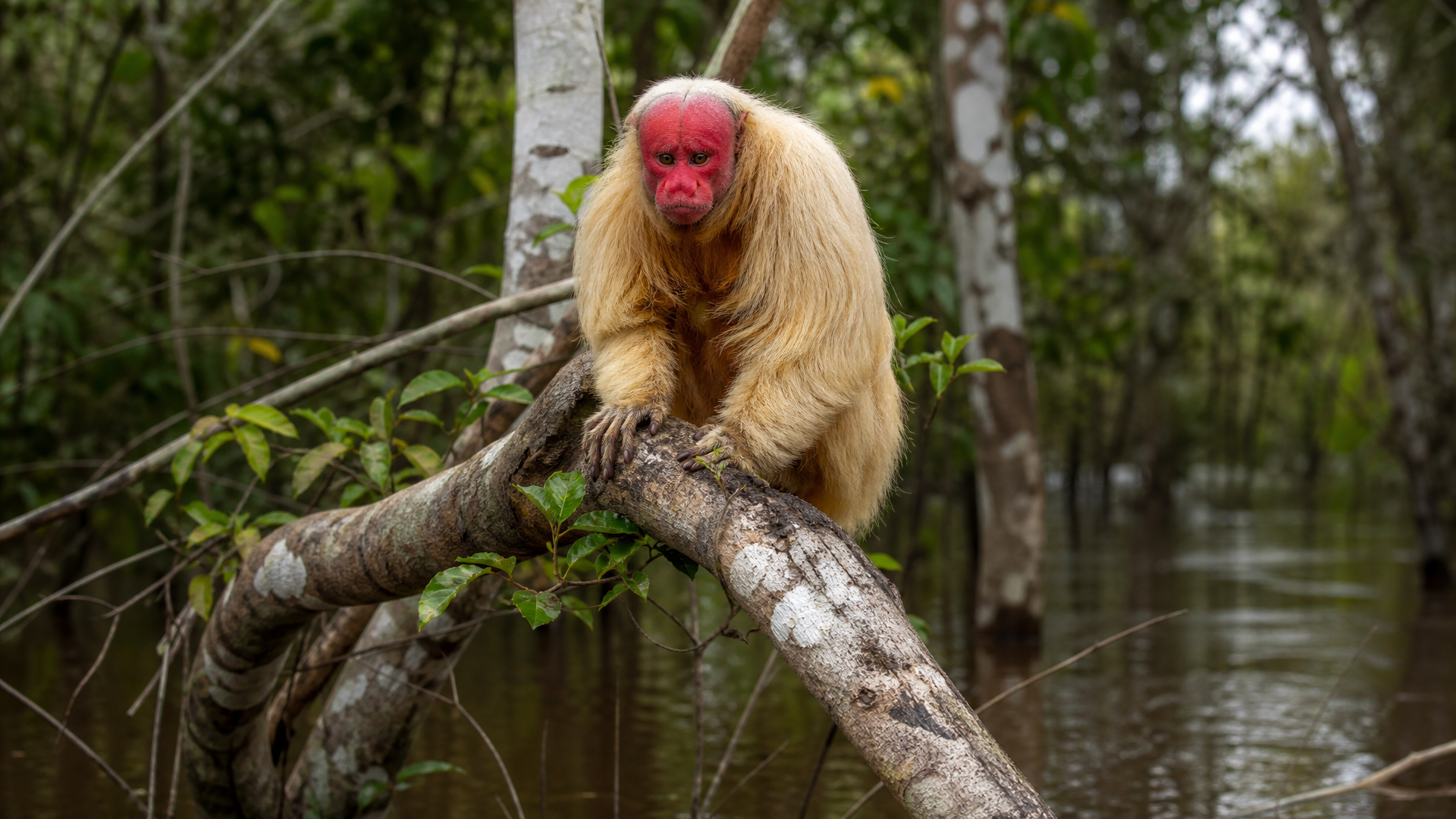
In the flooded forest of the upper Amazon, water stands between trunks and reflects the canopy in broken pieces. A pale, shaggy body leaps through the branches, then turns. The face is red, startlingly bare, alive with blood and attention, as if the forest has opened a small window into the animal's hidden heat.
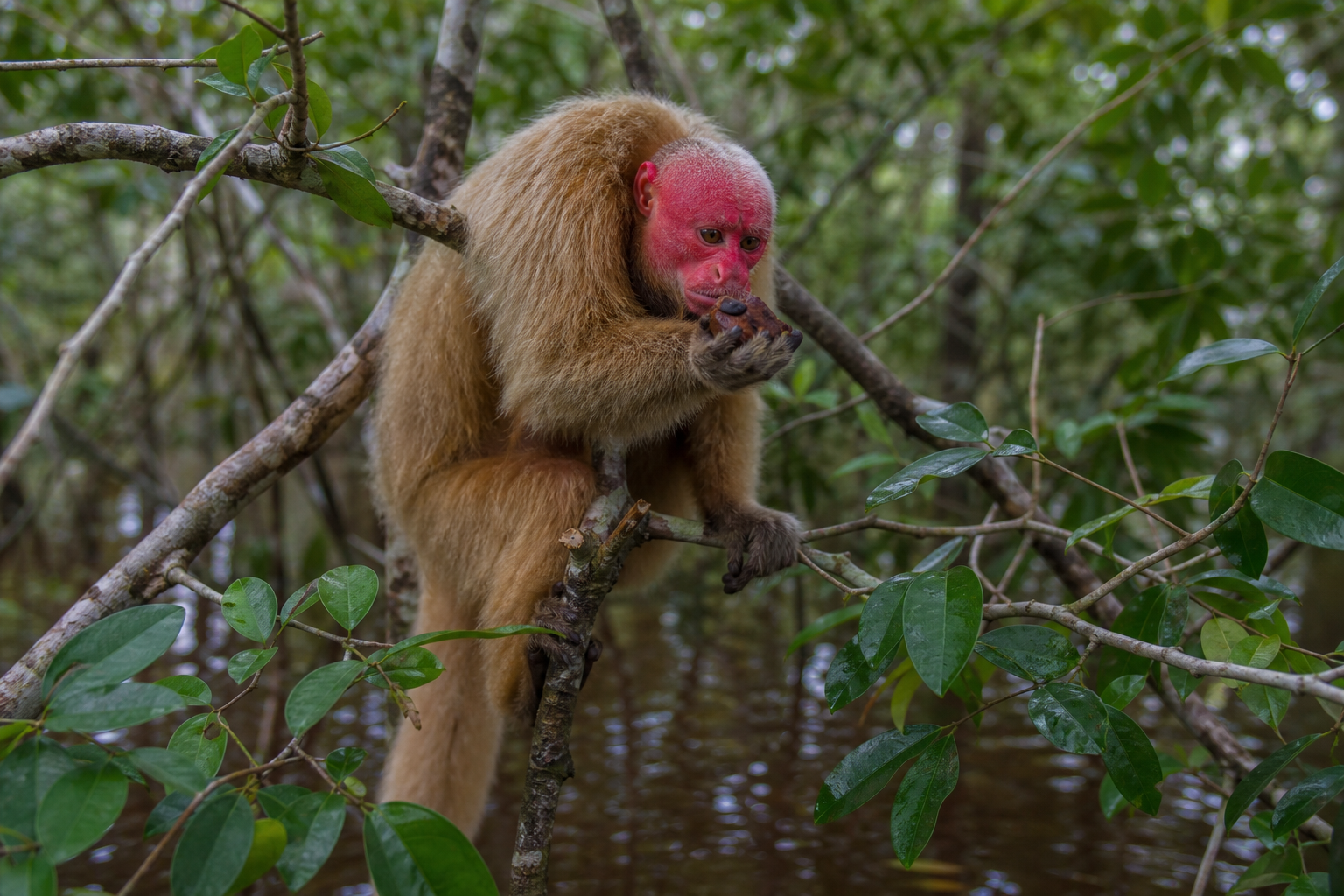
The bald uakari belongs to varzea, to forests that flood and withdraw with the river's pulse. It moves in groups through the crowns, cracking tough seeds and leaping over water that changes the shape of home from season to season. The short tail gives it a different balance than many monkeys, more committed to spring and landing than to hanging. Its red face can make the animal look unreal in photographs, but in the forest the color is a signal of condition, health, and social presence. The troop feeds, calls, scatters, gathers again, a nervous society passing through branches above brown water.
The uakari is tied to a habitat that is never still. Flood timing, hunting, disease, and damaged river forests all touch its future. When one leaps between trees, its red face flashes once, then disappears into leaves, like a coal carried through rain.