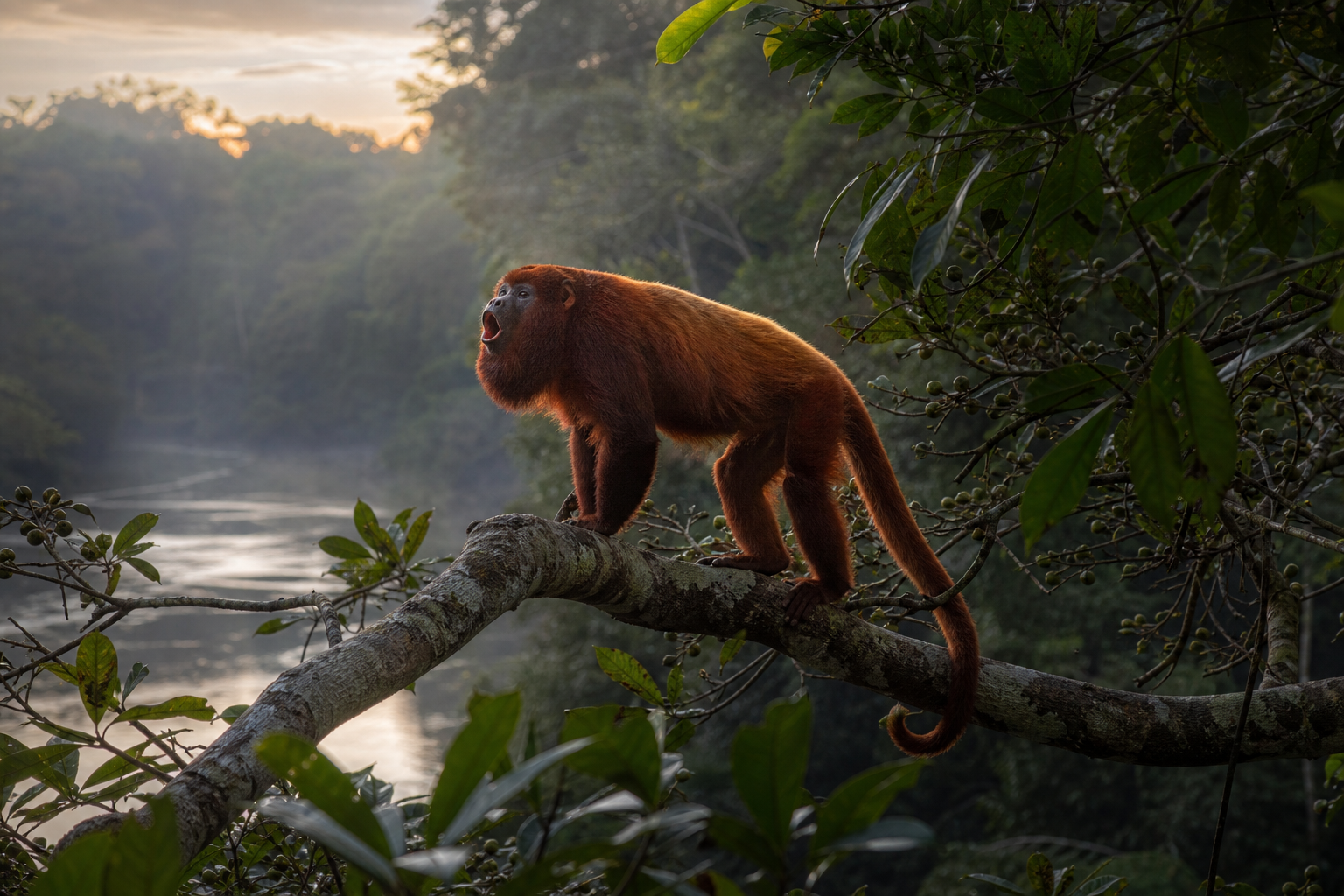
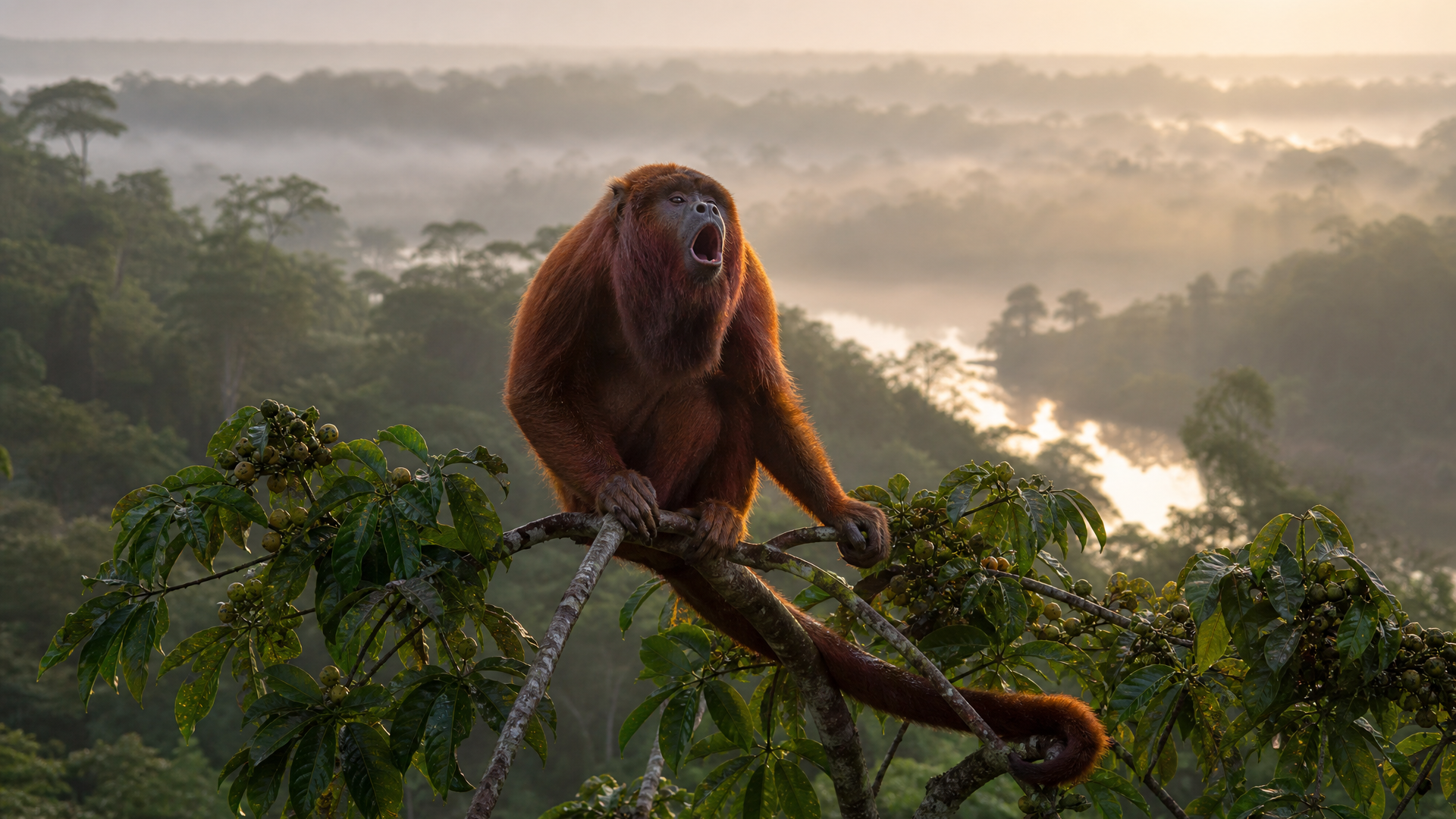
Dawn has not yet reached the river, but the forest is already speaking. A low sound rolls from the canopy, gathers in the hollows, and becomes larger than the animal making it. Then another voice answers from far off, and the dark trees seem to measure distance by sound.
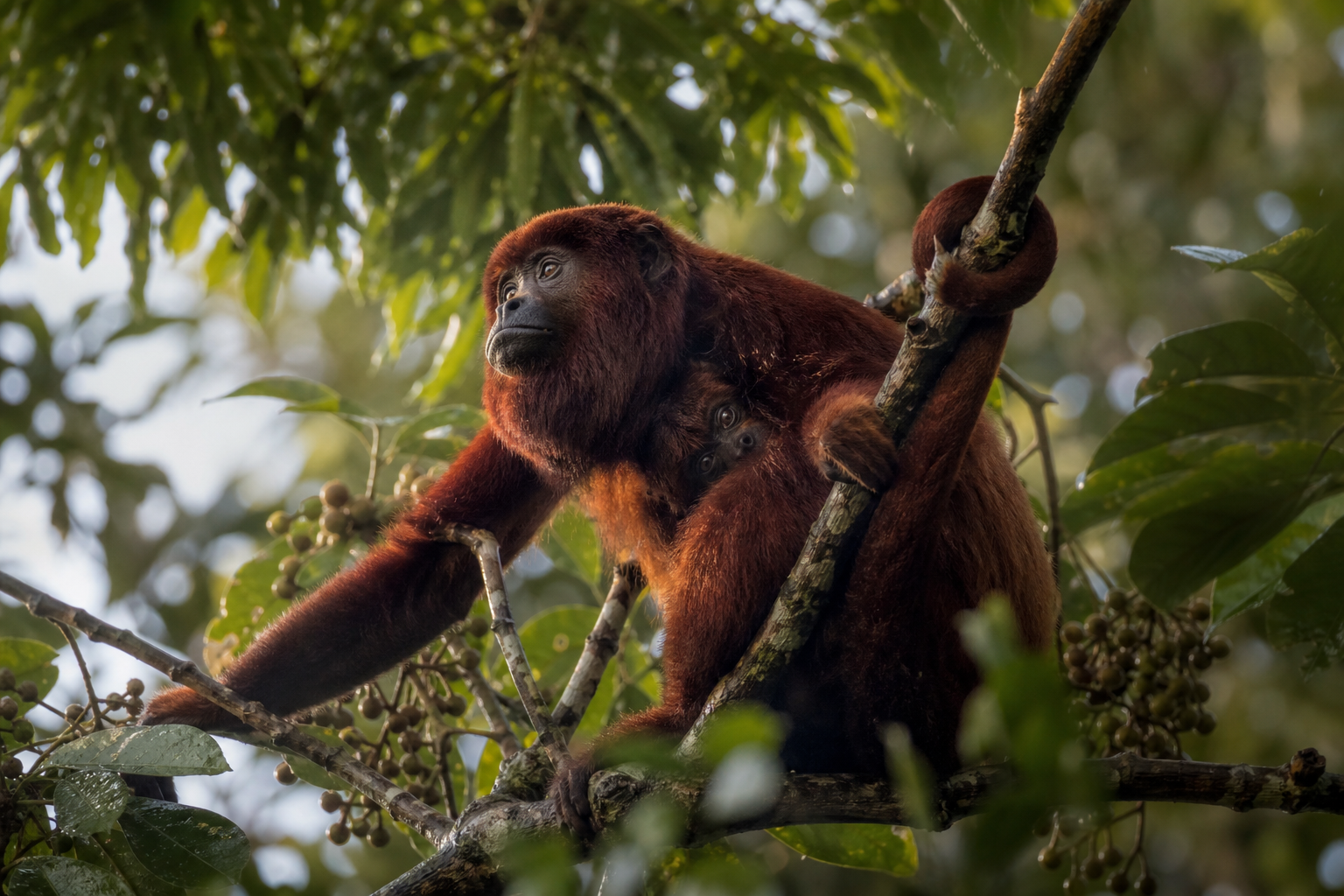
The red howler monkey is not fast in the way spider monkeys are fast, nor delicate like a small canopy bird. Its power is vocal and territorial, a deep-bodied announcement sent through wet air before the heat rises. A group feeds among leaves and fruit, moving with deliberate economy, tails curling around branches for balance. The reddish coat catches early light in patches. Infants cling. Adults rest in the long pauses between calls, conserving energy in a world where every climb is work. When the throat opens, the whole forest changes scale. What looked dense and close suddenly has depth, neighbors, boundaries.
Howlers help move seeds and prune the canopy, but their deeper gift to the Amazon page is sound. They make the reader feel unseen space. Where forest is fragmented, calls travel across gaps the animals may not cross. At sunrise, the roar fades slowly, and the silence left behind feels mapped.