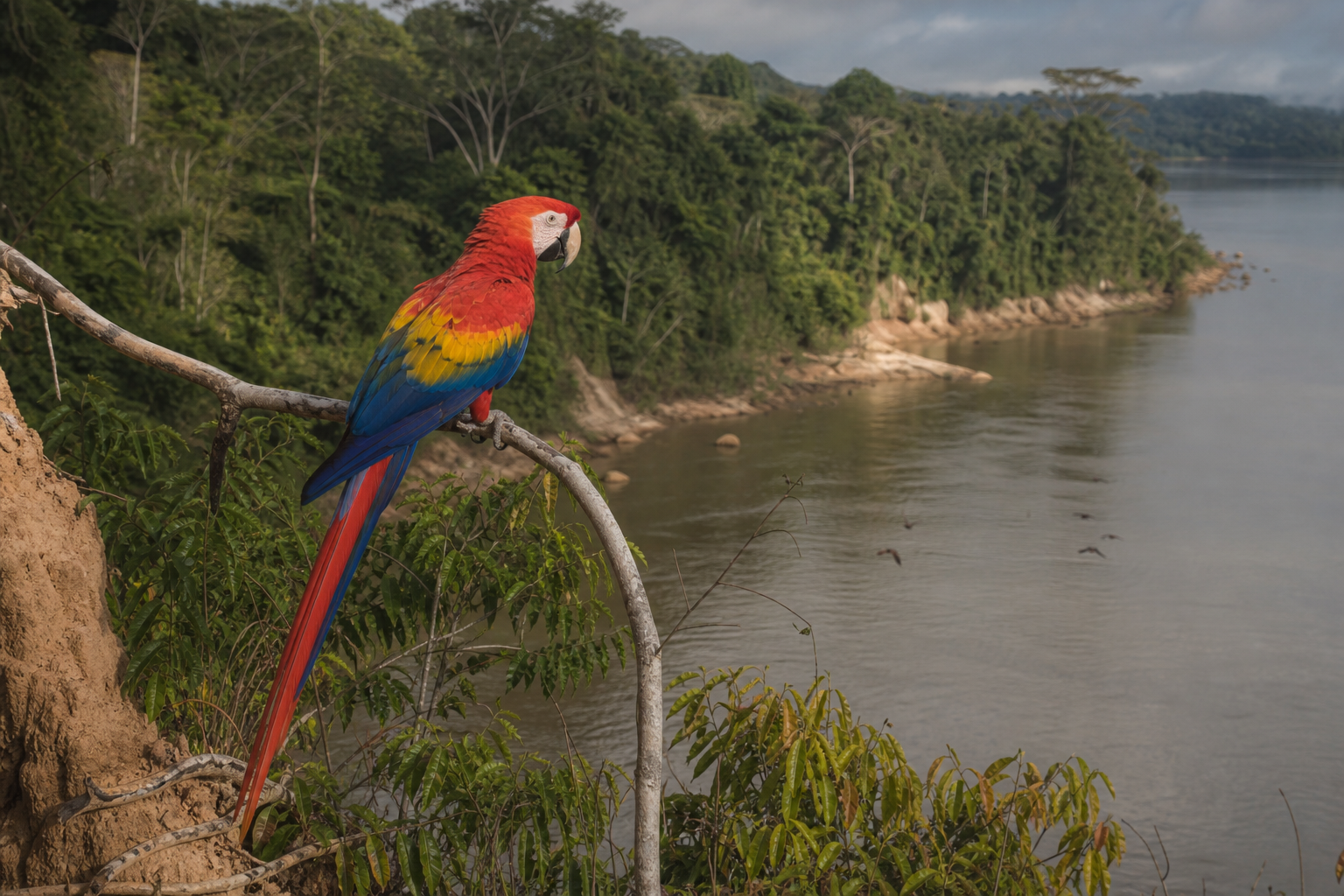
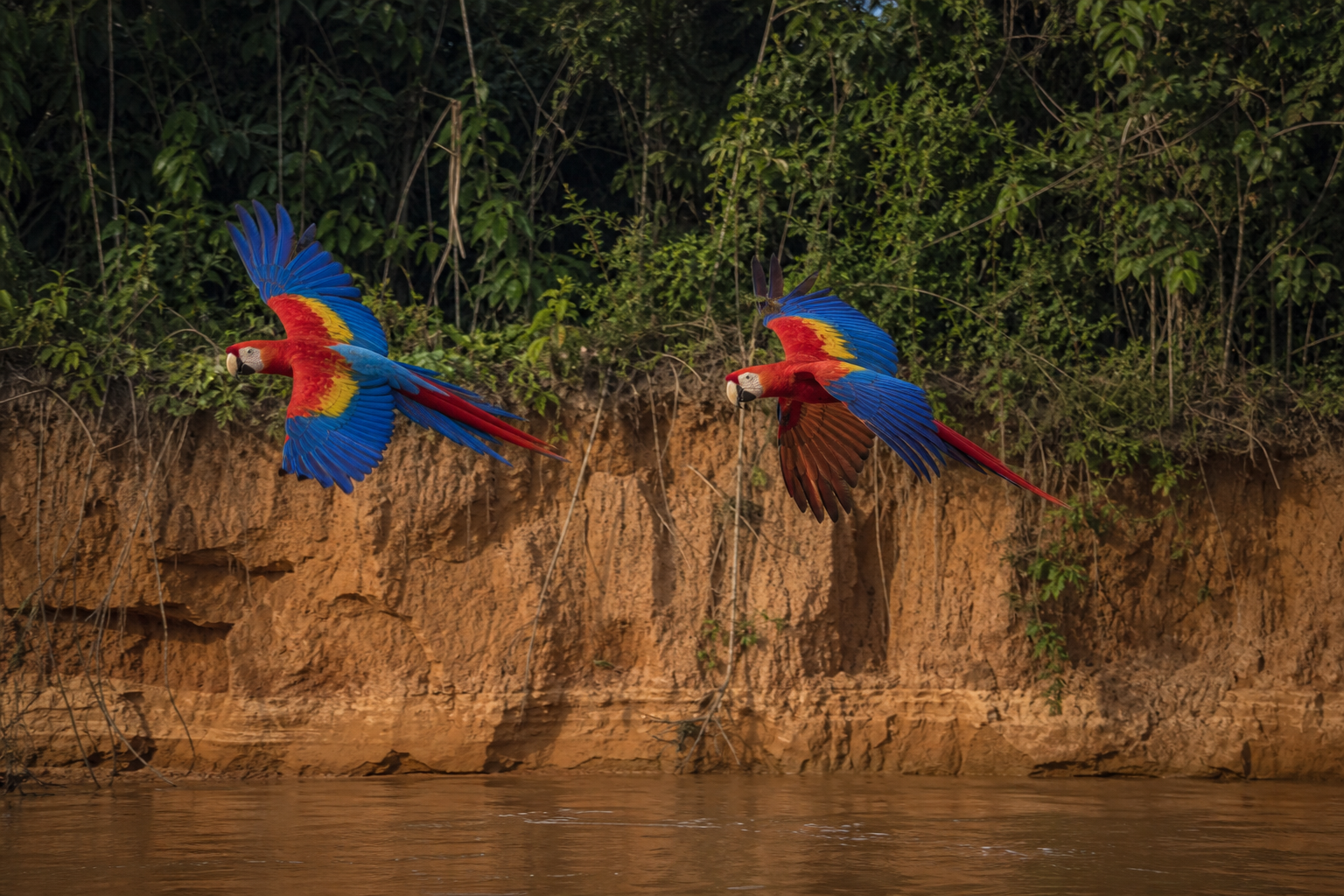
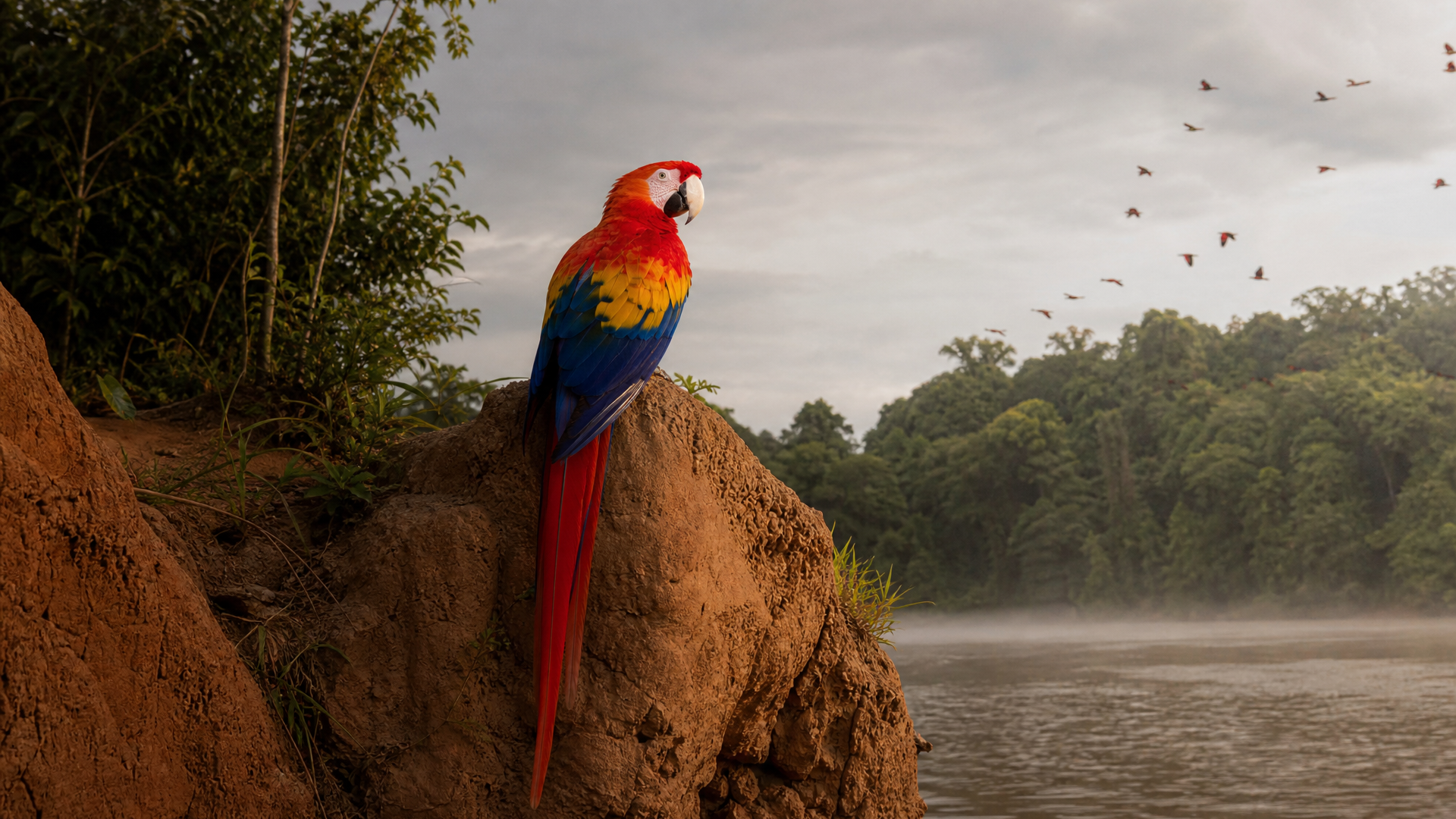
The clay bank is quiet until color arrives in pairs. Red wings cut across the river, blue and yellow flashing in the sun, and the macaws land with raucous confidence above the exposed earth. Their calls bounce from water to forest and back again, bright enough to seem visible.
A scarlet macaw is not subtle, but it is not careless either. The bill that looks ornamental can crack hard seeds with clean force. Feet handle food almost like hands. Pairs keep close, preening, calling, lifting together into the canopy when danger shifts the air. At clay licks, many birds gather in a tense, noisy congregation, drawn to minerals that help them use foods other animals leave alone. In flight, the macaw turns the river corridor into a line of color, linking fruiting trees, nest hollows, and feeding sites across distance.
Its beauty has made it vulnerable to capture, but beauty is not the only reason it matters. It carries seeds, memory, pair bonds, and sound through the basin. When two macaws cross above brown water, the forest does not become prettier. It becomes more awake.